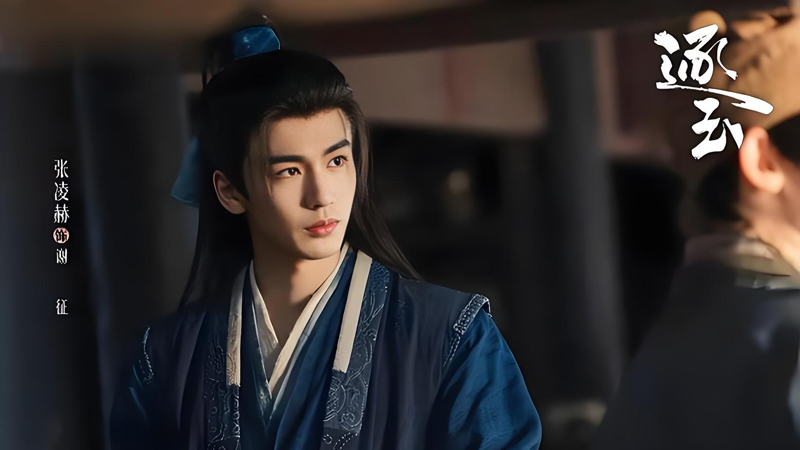
Pursuit of Jade (逐玉) isn’t just another period drama. He shattered records by doing something unexpected: grounding grand storytelling in the grit of daily life. Against the odds of a struggling genre and the bite of short-form content, he proved that substance still commands attention. Viewers didn’t just watch; they demanded more, proving that authentic craft, not spectacle, holds the real power to break through.

A Slow Burn That Resonates
In a media landscape obsessed with instant gratification and viral metrics, a drama’s opening reception can often feel like a verdict. When Pursuit of Jade premiered, the initial chatter was far from welcoming, suggesting a rocky path ahead. Yet, true success rarely conforms to the noise of trending topics; it is ultimately decided by the audience who takes the time to watch. What followed was not a simple rebound but a compelling case of quiet, then thunderous, validation. The numbers began to tell a story: a dominant market share, viewership milestones, and a surge in platform popularity. These statistics were not isolated victories but pieces of a larger puzzle, revealing a work whose impact was both broad and deeply felt.
A Rare Harmony

The truly astonishing aspect of Pursuit of Jade’s success isn't found in any single data point, but in their remarkable convergence. It achieved what many productions only dream of: a "high resonance" where internal platform metrics, independent third-party data, social media buzz, and international performance all surged in unison. This wasn't a case of one metric being artificially inflated; it was a symphony of genuine audience engagement.
This resonance extended far beyond China’s borders. On Netflix, the show climbed to the top of TV program rankings in regions like Taiwan (China), Hong Kong (China), Thailand, and Singapore. It notably made history as the first mainland Chinese costume drama to break into the top 10 in Japan. The image of a street vendor in Thailand watching while tending her stall, or a commuter in Singapore smiling at his phone on the bus, illustrates how the narrative quietly transcended cultural barriers, marking a successful cultural outreach that felt organic rather than forced.
This cross-platform, cross-border triumph is a testament to the show's universal appeal. It suggests that when a story is rooted in authentic emotion and crafted with care, its resonance is not confined by geography or demographics. The success wasn't manufactured by a marketing campaign but was built from the ground up, one viewer at a time, who then became vocal advocates for the series they had discovered.
The Art of the Slow Burn
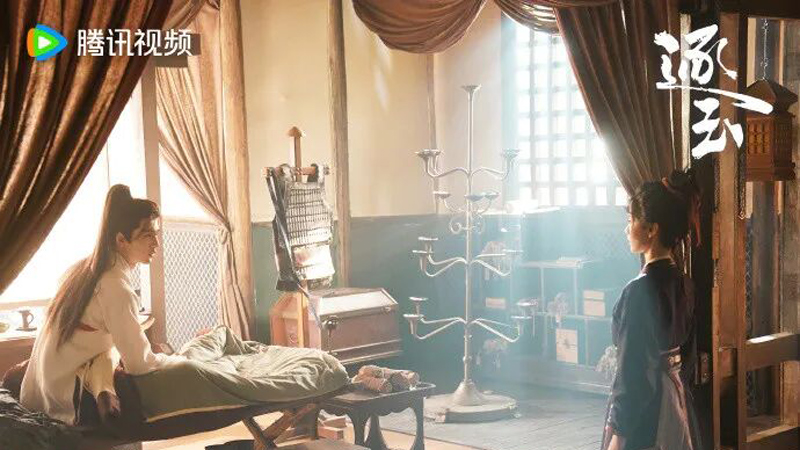
In an era dominated by short-form content promising a climax every three minutes, Pursuit of Jade’s first half seemed almost defiantly out of step. It dedicated substantial screen time to what many might consider mundane: the communal slaughter of a New Year’s pig, the meticulous preparation of braised intestines and cured meat, the small frictions of neighborly life, and the quiet domesticity captured in flickering candlelight. This "farming" style of narrative, focused on the rhythms of daily existence, risked being labeled as slow or meandering.
However, this deliberate pacing was a crucial investment. By immersing the audience in the texture of life in a small, peaceful community, the show built a reservoir of emotional capital. Every shared meal, every resolved squabble, and every moment of quiet solidarity became a thread in a tapestry of belonging. This was not filler; it was the painstaking construction of a world so vivid and its people so real that the audience became invested in their collective well-being.
The payoff was devastatingly effective. When the plot pivoted to a brutal massacre in the Xigu (西固) Lane of Lin’an (林安) Town, the warmth that had been so carefully cultivated transformed into a weapon of profound sorrow. Viewers didn't just observe a tragic event; they felt the loss of a community they had come to know intimately. This stark contrast revealed the irreplaceable power of long-form storytelling. Short-form provides the instant jolt, but long-form offers the lingering, resonant aftertaste—the grief that comes only from having truly cared.
An Audience Converted
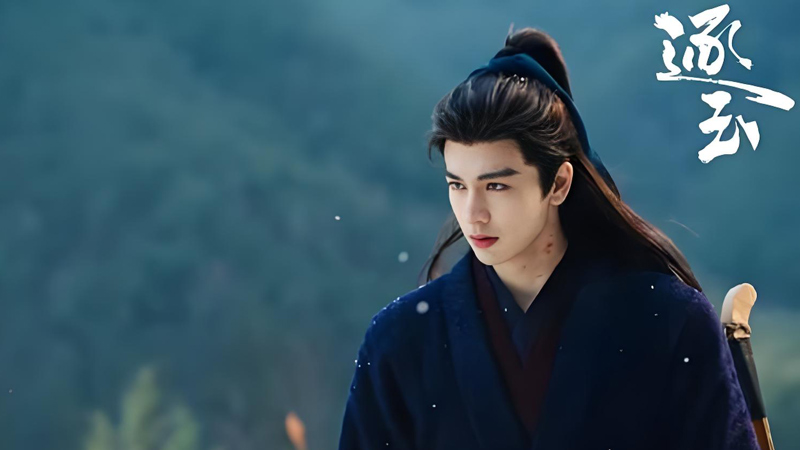
Social media soon became a testament to this shift in perception. The initial wave of skepticism, fueled by early rumors and superficial critiques, gave way to a flood of "confessions" from viewers who had given the show a chance. They began to analyze the poetic construction of the dialogue, praise the intentionality behind the cinematography and color palette, and meticulously document the exquisite craftsmanship of intangible cultural heritage elements like pheasant-tail feathers, hairpin flowers, and shadow puppetry.
Audience comments revealed a deepening appreciation that went beyond the central romance. One viewer noted, “It’s not just about the ‘sugar’ between the marquis and the butcher’s daughter. I came for that contrasting pair, but I stayed because the ensemble’s emotional arcs are all so well-written.” Another pointed to the show’s thematic weight, observing, “The real heartbreak is hidden in the supporting characters. Even the emotional lines have texture.”
This engagement extended to the show’s complex portrayal of morality in a chaotic world. The character of County Magistrate Cui (崔), initially a figure of sycophantic comedy, was later mourned by viewers after his execution. As one fan eloquently put it, “In his final moments, he wasn’t a righteous official, just a minor bureaucrat crushed by the era. His struggle made him human.” Through these nuanced characters, Pursuit of Jade earned its most profound praise: for depicting the small evils and grand principles of humanity, for showing that “stars can grow from the depths of the mud.”


Rooted in Reality, Bound by Heart
Pursuit of Jade arrived as an unassuming drama in a crowded landscape, yet it quickly carved out a distinct space for itself. In a genre often dominated by grand palaces and immortal heroes, this series found its soul in the grit of a market street and the quiet strength of people trying to survive. Its success wasn't built on a single element but on a cohesive vision that treats every character, from the leads to the supporting cast, as a person with a story worth telling. This is a show that understands that true romance is often found in shared burdens, and that heroism can be as simple as refusing to break.
Love in the Unspoken
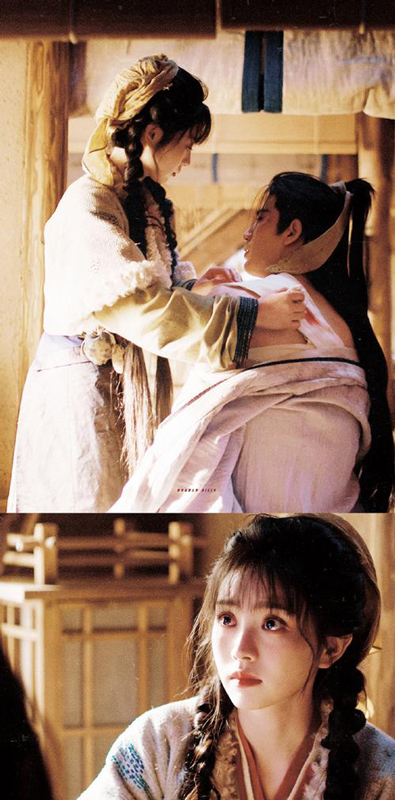
The series finds its strength in dismantling typical character archetypes. Xie Zheng (谢征) is not a polished nobleman. Introduced as a displaced commoner named Yanzheng (言正), his journey to reclaim his identity as the Marquis of Wu’an (武安) is a constant negotiation between his duty to the country and his devotion to those he loves. His dynamic with his sister, Niangniang (宁娘), is grounded in warmth, and his bickering with the female lead is where his vulnerability truly surfaces. This blend of heavy revenge narrative with light, domestic interaction prevents him from becoming a caricature of a broken hero, instead presenting a young man whose stoic mask is perpetually cracked by the simple, human connections he desperately needs.
Similarly, Fan Changyu (樊长玉) is a revelation. She is a butcher’s daughter, a woman whose hands are roughened by labor. Her strength is not abstract; it is physical and pragmatic. When actress Tian Xiwei (田曦薇) portrays her, it’s with a “tough core beneath a sweet exterior” that feels authentic. Her motivation for joining the army is not ambition but a deeply personal quest: to find her family and her husband, a mission that becomes inseparable from the larger political turmoil. Her journey makes the abstract concept of “patriotism” tangible, rooting it in the very real desire to protect her own small world.
The Language of What’s Unsaid
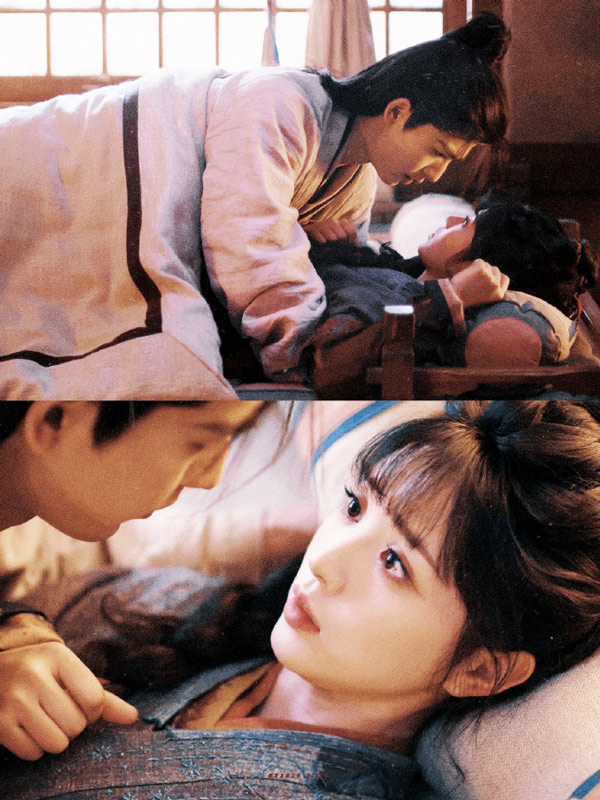
The show’s emotional resonance is masterfully crafted through suggestion rather than declaration. A scene lit by a single candle, where a character asks, “Did you eat an Chen Pi (陈皮) candy?” and receives the low, charged reply, “Do you want some now?” became a defining moment of the season. This is romantic tension built on restraint. The power lies in what is not said. The unspoken question is “Are you thinking of me?” and the unspoken answer is “I am thinking of you.” It’s a style of expression deeply rooted in a specific cultural aesthetic, one that values implication over explicit confession, creating a lingering emotional aftertaste that grand declarations often fail to achieve.
This approach to language extends to moments of profound sincerity. When Fan Changyu, upon learning Yanzheng is injured in the military camp, chokes out, “Stop being a soldier. I’ll go back to slaughtering pigs to support you,” it functions as a powerful subversion of typical romantic tropes. It is a proposal born not of poetic grandeur but of pragmatic love. The line went viral for its raw, unpolished honesty. In a later scene, the once-imposing Marquis, having shed his public persona, leans on her shoulder like a stubborn child, mumbling, “Tell me you like me.” It is a moment of pure emotional surrender, where the powerful figure is allowed to be small and uncertain, making his love feel all the more real.
A World Lit by Firelight and Reality
Director Zeng Qingjie’s (曾庆杰) visual style is a character in itself. He rejects the sterile perfection of studio backlots. Instead, he finds beauty in the mundane. A first meeting in the snow, a hiding place in a pigsty, a silhouette against flickering candlelight—each frame is composed with the care of classical painting. By moving the drama from fairy-tale palaces to vegetable markets and crumbling courtyards, he uses natural light and practical locations to give the story a tangible sense of place. This aesthetic choice finally provides a concrete visual language for the “farming” genre of fiction, proving that authenticity can be more captivating than artificial opulence.

The series’ success is also deeply indebted to its ensemble. Characters like Li Huai’an (李怀安), played by Ren Hao (任豪), transcend their origins. Despite coming from a corrupt, power-hungry family, he chooses the path of a righteous official, demonstrating that morality is a personal choice, not a family inheritance. Yu Qianqian (俞浅浅), portrayed by Kong Xue’er (孔雪儿), navigates a “forced love” narrative without losing her sense of self, displaying a clear-eyed rationality that refuses to be defined by her romantic circumstances. Even antagonist Qi Min (齐旻), given layers by Deng Kai (邓凯), is not a simple villain. His performance reveals the fragility beneath the madness, showing a soul worn down by fate rather than a born monster. And characters like Aunt Zhao (赵大娘), played by Liu Lin (刘琳), ground the story with her earthy wisdom and warm neighborliness, adding a vital layer of communal humanity to the narrative.
When Characters Stand, the Story Lives
Ultimately, Pursuit of Jade dismantles the false hierarchy between a “costume drama” and a serious historical piece. The distinction is not in the genre but in the intent. The creators here demonstrate a deep respect for their characters, choosing to explore the complexities of their lives. The measure of a good drama is simple: if the characters stand firm, the story comes alive. The value of Fan Changyu is not just in her happy ending but in the resilience she embodies. She shows that even in the most humble circumstances, one can choose to hold their head high. This respect for each individual character is what elevates the series beyond a simple romance.
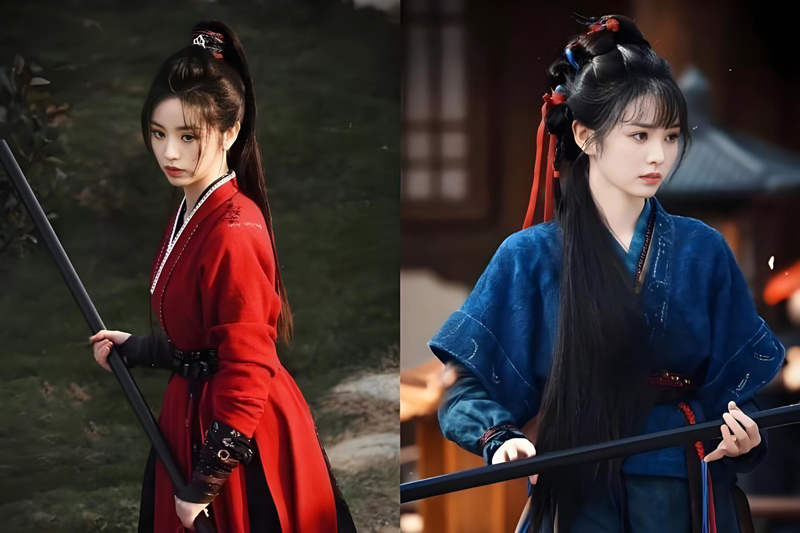
It opens the narrative to a broader, more resonant scope. When Fan Changyu takes her butcher’s knife to the battlefield to find her family and her truth, and when Xie Zheng reclaims his title to protect his country and his love, their personal fates become inextricably woven with the fate of their world. The audience witnesses not just the endurance of their love, but the strength of their independent spirits. It is this dual commitment—to each other and to their own integrity—that gives the story its lasting power. In a genre often accused of escapism, Pursuit of Jade finds its power in grounding its grand emotions in the simple, steadfast act of living.

Sincerity That Resonates
The Chinese long-form drama landscape in 2026 isn't just about surviving the shock of short-form content or the incursion of AI. It’s about evolution. The shift from pure scale to meaningful value has made the creative equation brutally simple: focus on story, on character, on resonance. Against this backdrop, one series didn't just participate in the conversation—it became the answer.
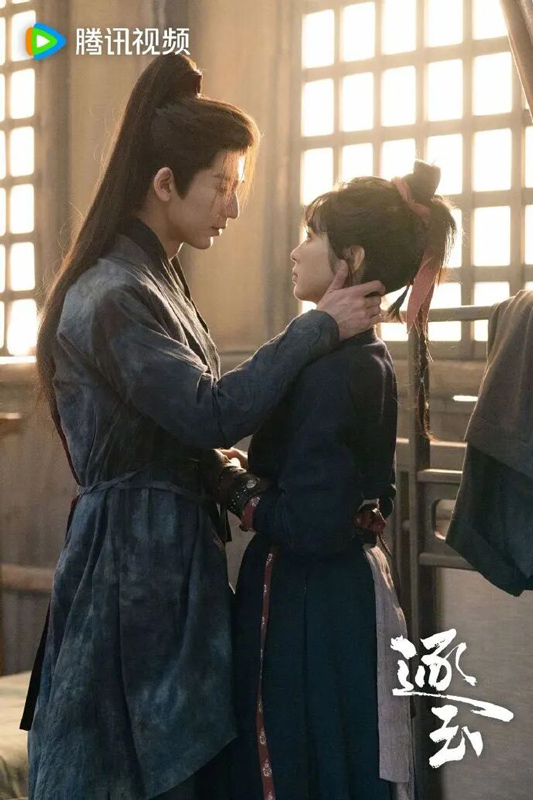
Pursuit of Jade arrived with a quiet confidence, its performance proving that audiences haven't abandoned long-form dramas; they’ve simply stopped wasting time on anything that doesn’t feel essential. For Tencent Video, already a strong player in historical genres, this wasn’t a case of sticking to a winning formula. Instead, they cultivated something unexpected within familiar soil, demonstrating that a solid foundation in historical romance can actually provide the flexibility to support deeper, more layered content. The initial debates surrounding the show’s pace reflected a broader industry anxiety, but the series validated a simple truth: truly good work can withstand scrutiny, and it’s worth the wait.
Finding the Anchor in Daily Life
The path Pursuit of Jade took to break through its constraints offers a clear lesson. The core strength of a long-form drama isn’t to mimic the rapid-fire pacing of short videos or to simply pile on conflicts. It’s to return to the essence of storytelling, using its expansive runtime to fully develop characters, emotional arcs, and a coherent vision. What some critics initially dismissed as “slow”—the intimate scenes of market life—turned out to be the very foundation for the later emotional payoffs. The “trivial” details of daily existence became the emotional anchors that made the world feel lived-in and real. The success of the series highlights a symbiotic relationship: a strong platform and authentic content elevate each other. The audience’s enthusiastic reception was a vote for a specific creative direction—one that uses story to salvage warmth and human connection from the mundane.
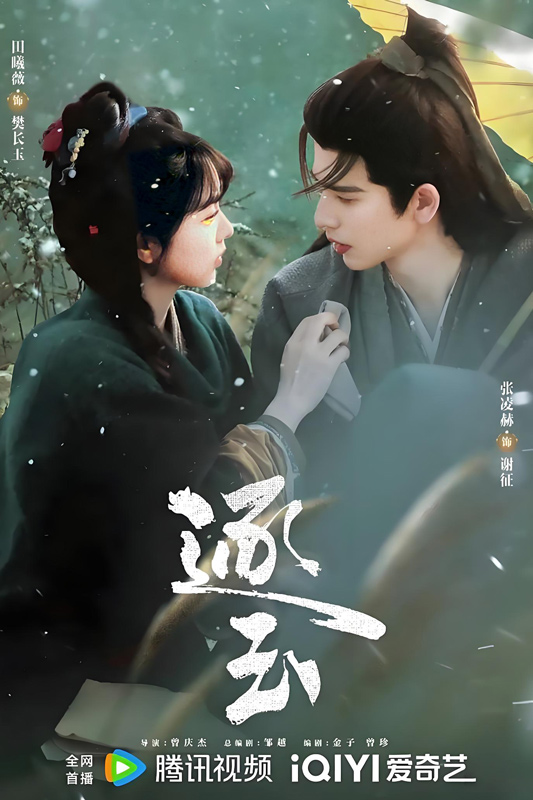
When asked how Pursuit of Jade captured viewers’ attention, the answer can be found in a single, unadorned line from its protagonist, Fan Changyu: “I’ll butcher pigs to support you.” There’s no poetic flourish here, just raw sincerity. This line perfectly mirrors the drama itself—no reliance on star power, no sense of superficial production. It possesses a fundamental respect for the material and a straightforward honesty towards its audience. What allowed this sincerity to resonate so widely was Tencent Video’s keen understanding of its audience. For Pursuit of Jade, the platform’s role was to amplify the story’s inherent strengths, translating its rustic sincerity into a contemporary context. It transformed a simple line into a social topic, bridging the gap between screen and reality, allowing the story to ferment naturally within the language of a younger generation and expand its reach far beyond the screen.
Within Tencent Video’s library of historical dramas, each title has its own unique light. The surprise of Pursuit of Jade comes from a steadfast commitment to authenticity and the unspoken understanding between the platform and its viewers. The success of any standout work ultimately boils down to one principle: genuine care. Pursuit of Jade embodied that principle, and the audience responded with their attention.
