
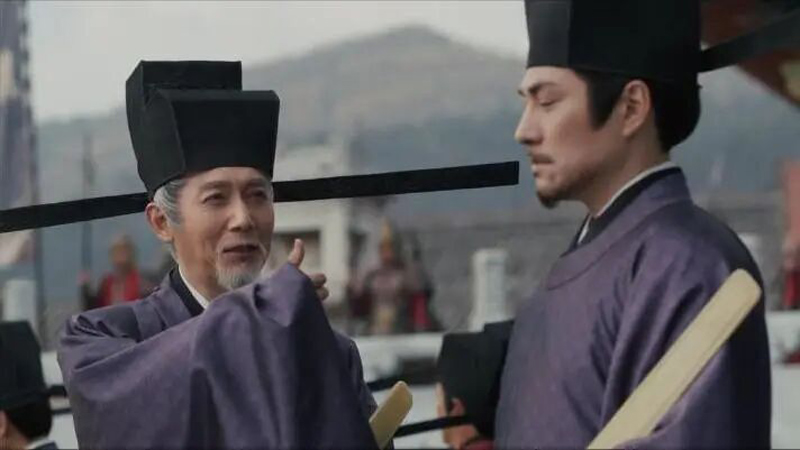
How One Drunken Joke Led to the Massacre of 100,000 Soldiers? The Shocking Truth Behind Pursuit of Jade’s ( 逐玉) Finale
The highly anticipated finale of Pursuit of Jade has left audiences reeling, not just with the fate of its characters, but with the chilling revelation of a seventeen-year-old massacre. The series culminates in the execution of Wei Yan (魏严), a moment that peels back the layers of political intrigue to expose a horrifying truth: the slaughter of 100,000 soldiers in Jinzhou (瑾州) wasn’t the result of a grand battle, but the devastating ripple effect of a single, reckless sentence spoken during a drunken New Year’s Eve feast. It is a tale where ambition, cowardice, and the silence of good men conspire to create a tragedy that stains an entire generation.
This is the story of how a whispered secret in a palace corridor doomed an empire’s finest and how, decades later, the final bill for that night comes due.
The Toast That Destroyed a Dynasty
It began with wine and resentment. On a cold New Year’s Eve, eighteen years before the series’ present, the Crown Prince, a man of immense integrity, gathered his most trusted confidants: the formidable general Xie Linshan (谢临山), the headstrong Wei Yan, the scholarly Tao Taifu (陶太傅), and the seemingly loyal Li Xing (李陉). The prince, burdened by the emperor’s blatant favoritism towards a rival prince and his own sidelined efforts, poured out his frustrations. He spoke of leaving the corrupt capital to seek honor on the battlefield. It was a moment of rare vulnerability.
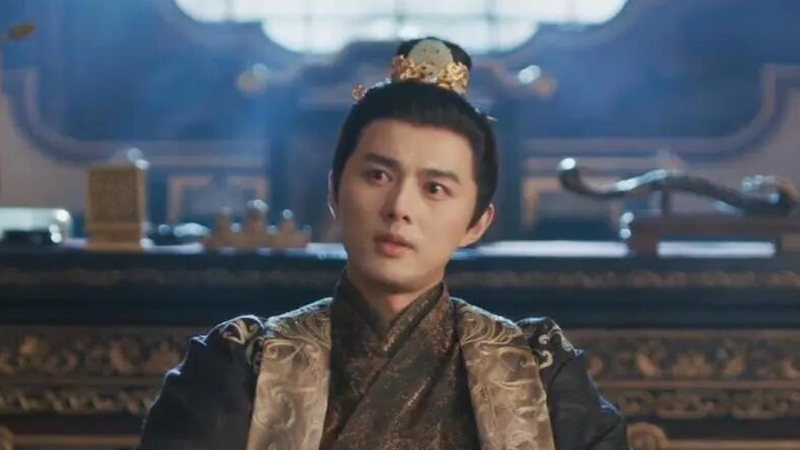
In an attempt to comfort his prince, the boisterous Xie Linshan voiced what many thought. But it was Wei Yan, young, arrogant, and far too deep in his cups, who spoke the unthinkable. With a dismissive wave, he scoffed, “If the emperor is so devoid of virtue, then let him abdicate.” The words hung in the air like a physical blow. The Crown Prince, though alarmed, attempted to laugh it off, a fatal error in judgment. He chose to smooth over the treasonous remark rather than silence it permanently, a decision that would cost him everything. The party ended, the guests dispersed, and the poison was set.
One man, Li Xing, could not let those words go. He saw not sedition, but opportunity. This self-proclaimed paragon of integrity was, in truth, a man consumed by a hunger for power and status. He did not rush to the Crown Prince’s defense; instead, he turned his horse towards the palace. Under the guise of loyalty to the throne, Li Xing became the informant, whispering Wei Yan’s drunken joke into the emperor’s ear. This single act of betrayal was the spark that ignited a firestorm. In the series’ finale, justice is finally served, but it is a bitter one. The Li family, their centuries-old reputation in tatters, faces exile to a desolate wasteland. Yet, for Li Xing, whose treachery set the stage for genocide, exile feels like a mercy, a shallow recompense for a crime that demanded blood.
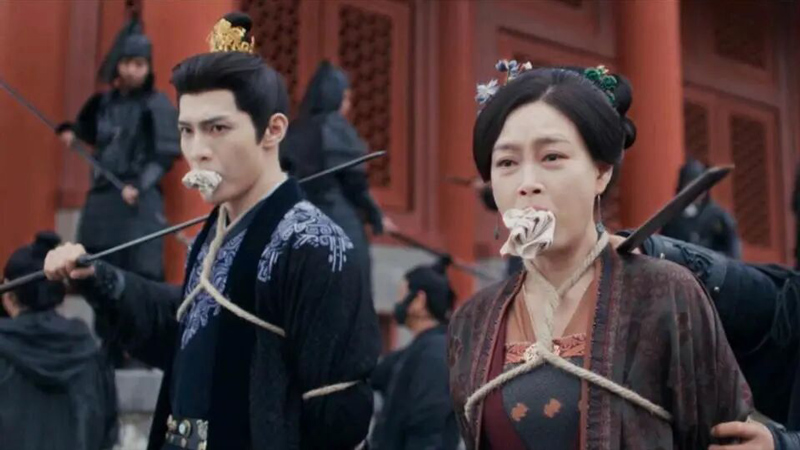
The True Face of the Jinzhou Massacre
Wei Yan’s careless words were merely the catalyst. The true architect of the Jinzhou Massacre was a paranoid emperor, Qi Yi (齐屹), who saw his own son as a greater threat than any foreign invader. Fearing the Crown Prince’s popularity, the emperor had already been plotting to destroy him, and Li Xing’s report gave him the perfect pretext. He did not simply order an arrest; he orchestrated an elaborate trap. He lured the Crown Prince and General Xie Linshan to the distant frontier of Jinzhou, promising a campaign, but in reality, sealing their fate.
The emperor’s scheme was a masterpiece of cruel calculation. He summoned his nephew, Prince Sui, a powerful warlord from the northwest, and offered him an unholy bargain: help eliminate the Crown Prince and his loyal generals, and the throne itself could be his. The emperor then systematically severed the lifeline to Jinzhou. He diverted the main supply convoy meant for the 100,000 trapped soldiers, ordering it instead to rescue his favored, captive son. The responsibility for delivering supplies to Jinzhou was given to Prince Sui, who, under the emperor’s secret orders, simply refused to move. When Wei Yan’s sister-in-law arrived with the genuine imperial tiger tally to beg for reinforcements, Prince Sui, holding the matching half, cruelly declared it a forgery, condemning the entire army to starvation and slaughter.
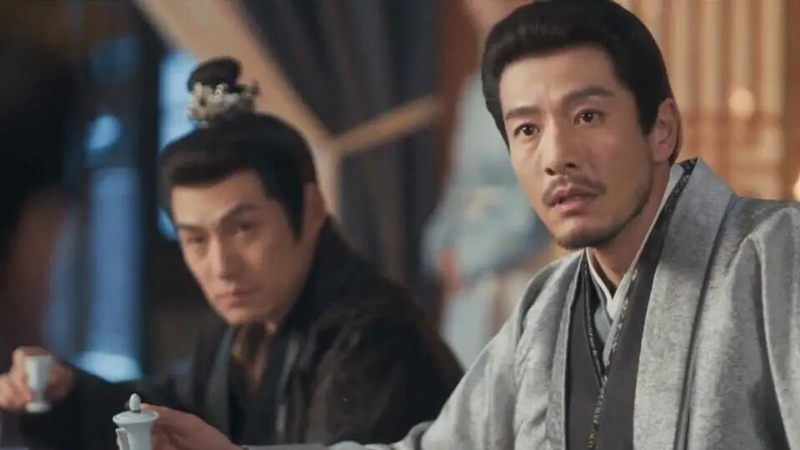
The tragedy was thus preordained. The emperor, in his desperation to destroy his own heir, had empowered a rival. He was so blinded by hatred that he failed to see he was trading a dutiful son for a predatory nephew, a man who would one day threaten the capital itself. Wei Yan’s later decision to turn back to the capital was not an attempt to alter the outcome in Jinzhou—that was already a lost cause. It was a desperate, bloody gambit to salvage what remained of his family and power. He understood that to fight Prince Sui was to die. His only path was to retreat and fight for survival in the treacherous heart of the court, a choice that would forever brand him a villain, even as the true monsters remained in the shadows.
A Bitter Reckoning and an Empty Verdict
Seventeen years later, when the final truth of the Jinzhou massacre emerges, it offers no comfort. The revelation exposes Li Xing not as a loyal minister, but as the petty, ambitious informant whose whisper triggered a national catastrophe. He is the story’s most despicable figure—a man who watched a dynasty burn and an army die, all for a promotion. Yet, his punishment in the finale is exile. The man who, through his actions, is most directly responsible for the deaths of 100,000 people and the destruction of three noble houses, is allowed to live out his days in hardship, his legacy forever tarnished.
The contrast with Wei Yan’s fate is stark and raises uncomfortable questions about justice in the world of Pursuit of Jade. Wei Yan, a complex figure whose youthful arrogance was exploited and whose later years were defined by ruthless survival, is executed. He is made to bear the public weight of his crimes, to die a “great traitor” in the eyes of the world. He is the visible villain, the man whose name is cursed in the streets, while the man who lit the fuse is simply sent away. The series’ final judgment feels less like justice and more like political expediency, a convenient scapegoating to provide a neat, if unsatisfying, conclusion.
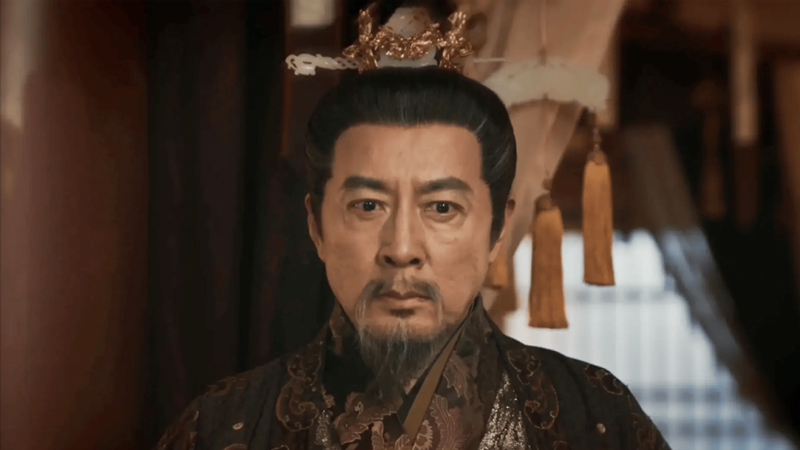
Ultimately, the finale asks the viewer to consider who the real villains are. Is it the reckless youth who spoke a forbidden truth, or the silent coward who weaponized it? Is it the paranoid emperor who sacrificed his own people, or the general who chose survival? As the dust settles, it becomes clear that the true tragedy of Jinzhou was not the battle itself, but the web of human failings that made it inevitable. Wei Yan’s legacy is a cautionary tale about the weight of words, while Li Xing’s escape is a bitter reminder that in the annals of history, the most guilty often get to walk away, leaving the scapegoats to shoulder the blame for a system built on a foundation of betrayal.
