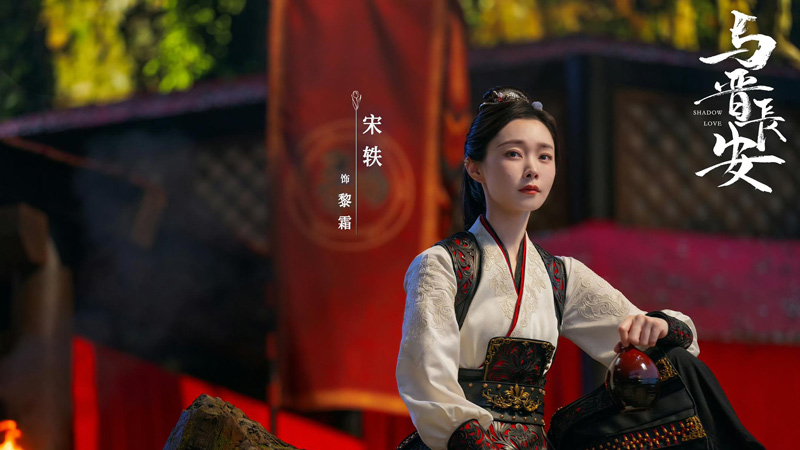
When an actor's style has already won recognition, stepping out of that comfort zone is never easy. It means facing the unknown, and it also means being judged again through the lens of past roles.
That's exactly what Song Yi attempts with Shadow Love (与晋长安), where she plays the female general Li Shuang. Unlike her well-known "talented lady" roles, Li Shuang requires both sharp intelligence and raw courage—she must be decisive on the battlefield while carrying a quiet tenderness inside. This performance matters not only because audiences bought into her mix of strength and vulnerability, but also because it shows Song Yi pushing for more complex characters and wider acting range in her career.


Act as A "Strategist General" with Both Iron and Softness
Built around a "blood pact" fantasy element, the show offers what viewers call a "manhua-style" (漫感, meaning the fast-paced, heightened feel of reading a Chinese webcomic) drama-watching experience. Since its release, Shadow Love has steadily climbed in popularity. On iQIYI International, it has already topped the streaming charts in nine regions including the US and Japan, showing clear cross-border appeal.
Data from consulting firm Detawen highlights the real driver: Song Yi's Li Shuang accounts for up to 46% of the character contribution index, making her the engine of the show's buzz. It confirms once again her strong market pull and fan loyalty. That impact comes down to the combined force of a compelling role and a convincing performance.
For years, long-running Chinese dramas have largely centered on male perspectives, with female characters often sidelined or used as narrative tools. With the rise of what's called the "She Economy" (她经济, referring to the growing influence of female consumers), this is starting to shift. The recent wave of "female general" storylines is a case in point, and Li Shuang in Shadow Love proves how far the archetype can go.
Traditionally, female generals on screen are driven to war by external pressures—family honor, revenge, or stepping in for a father or husband. Li Shuang, however, is different. Her motivation is internal and active, not just a personal vendetta. That distinction gives her character a fresh edge.
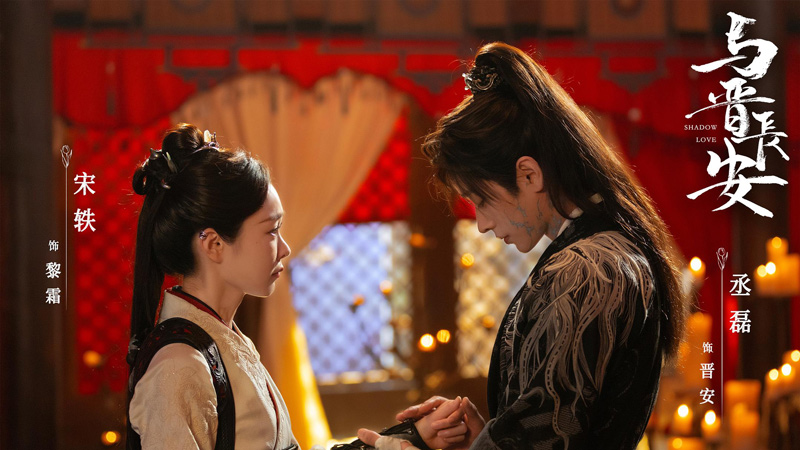
In Shadow Love, what stands out is not only Li Shuang's physical strength but her strategic mind. As a commander, she shows tactical brilliance and leadership. Whether stopping Yun Ge from taking her own life in prison, persuading him to confess by using Yan Zhi's death, or responding swiftly to frequent invasions from Da Yao, every move highlights her identity as a "strategist general." At the same time, small touches—like her love for sweets or her habit of reading storybooks—ground her in everyday detail. These choices keep her from becoming overly idealized, adding a sense of lived reality.
What matters most is how Li Shuang, stationed at the frontier of Jin, clearly recognizes the cruelty and devastation of war. She is weary and repelled by killing, yet still chooses to fight because she must. This tension—knowing the cost yet carrying on—removes her from the stereotype of a "war machine." Instead, it gives her a tragic dignity and human warmth. Her loyalty to subordinates and friends deepens this further, creating an emotional reciprocity based on protection and sacrifice. The result is a character arc that feels both complete and convincing.
Resolute yet humane, committed to her country without losing personal ties—Li Shuang reshapes the typical image of the female general in costume dramas. Public discussions around Song Yi reflect this shift: about 16% of recent online chatter about her centers on "breaking out of old roles." Shadow Love points directly to a space that had been absent in her career until now, marking a transitional and risk-taking choice.
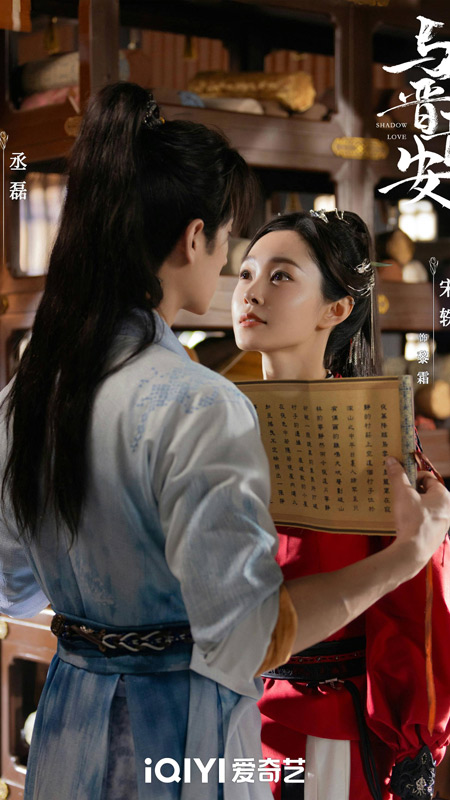

When Actor and Character Align: More Performance details
Detawen's data shows how audiences perceive Li Shuang: "balanced toughness and softness," "brave and decisive," "deeply loyal," and "compelling contrasts" are among the most common tags.
Looking at Song Yi's own name in social media word clouds, the overlap is striking. Phrases like "a great fit," "refreshingly bold," "deadly gaze," "intense," and "contrasting charm" appear again and again. The link between the two sets of data suggests that her performance successfully captured and projected the exact qualities that make the character magnetic.
Song Yi didn't stop at a flat, symbolic version of the general. She conveyed Li Shuang's contradictions and layers, letting audiences feel her strength and her fragility at once. This kind of "matched" performance has given Song Yi a distinct profile within the increasingly crowded field of female general roles.
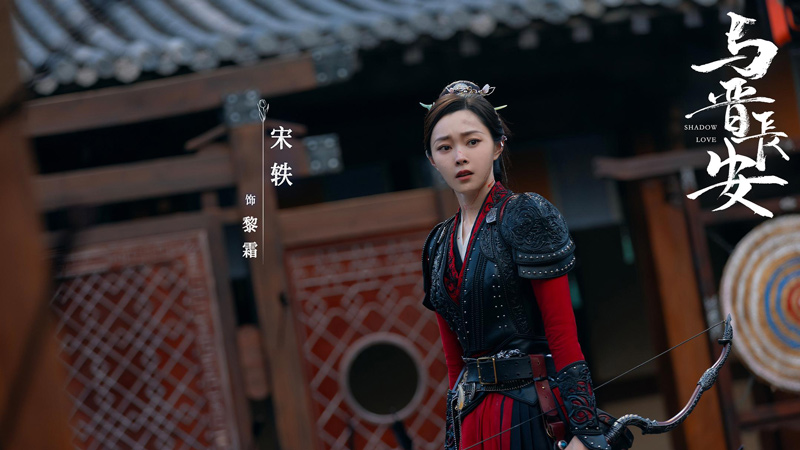
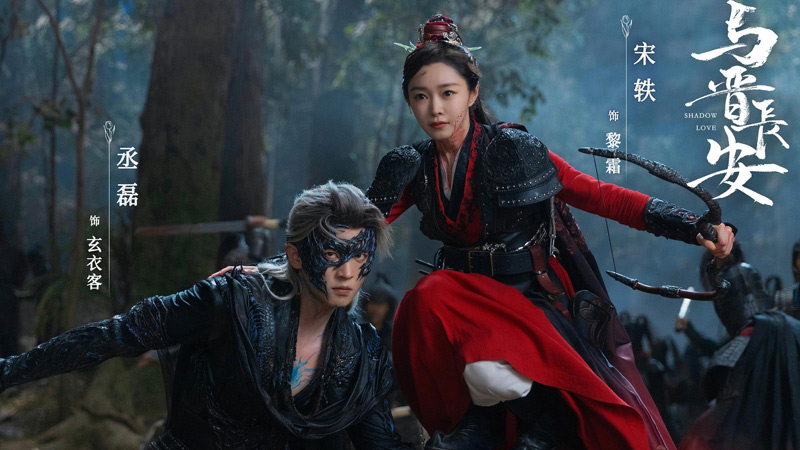
This distinctiveness first shows itself in the physical dimension—where precision and presence come together. From the opening night raid to the joint fight at the Battle of Ninglan, Li Shuang's mastery of archery defines her. Her "never-miss" ability to control the battlefield from a distance runs throughout the story. When she takes on overwhelming odds, her calm composure conveys the grandeur of a seasoned general. At the same time, details like a killing arrow to the throat, a spinning thrust at full speed, or drawing a bow while mounted highlight her flexibility and accuracy. Song Yi disappears into the role, fusing completely with Li Shuang.
If the fight scenes provide the "bones" of the character, then the handling of layered emotions provides the "flesh." One of the most memorable moments is what fans call the "fourth whip for myself." After saving her younger brother from the trouble caused by his reckless behavior, Li Shuang lashes him three times—discipline that fits her role as a commander. But the fourth strike lands on herself, a form of self-punishment that marks her shift from strict general to protective guardian.
In those three strikes, her whip lands with decisiveness, showing discipline as unyielding as iron. But when she turns the whip on herself, there's a faint tremor in her arm, a sign of her emotional defenses breaking down. Tears brim but do not fall, her mouth quivers slightly, her jaw clenches tight. The suppressed pain and guilt reveal her growth through remorse. Song Yi's gaze shifts from harsh authority to fragile self-blame. With no dialogue to explain the moment, the silence becomes space for audience empathy.
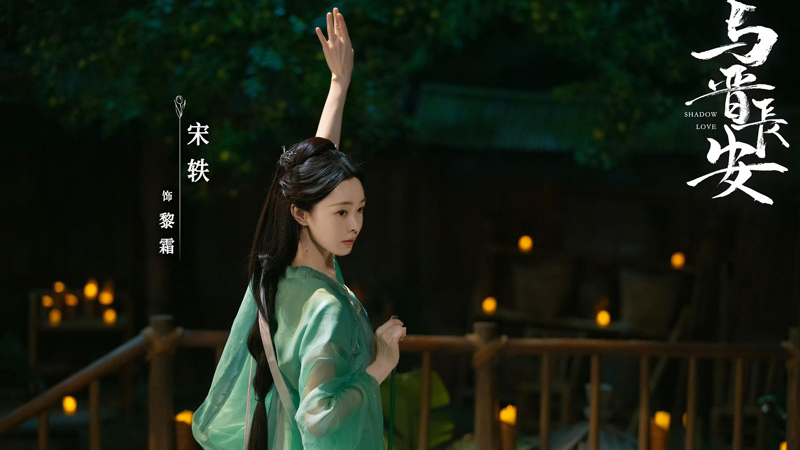
Li Shuang also feels three-dimensional because of the sharp contrast between her "wartime" and "everyday" states. For instance, when she disguises herself as a dancer to infiltrate the enemy camp, the veil and exotic costume bring out mystery and allure. By contrast, in a drunken moment later, she softens her voice while teasing, leaning her forehead against objects in a gesture of dependence. Song Yi uses delicate choices to land these transitions, making Li Shuang's battlefield ferocity and private vulnerability equally convincing.
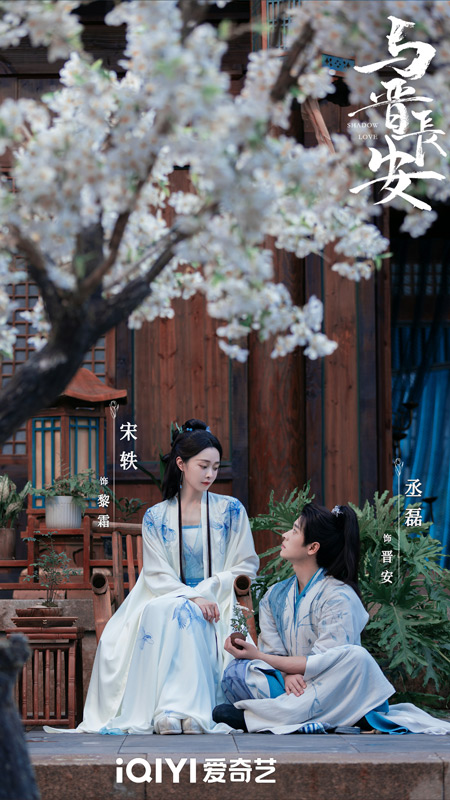
Her dynamic with Jin An adds another layer. Early on, it plays like a tug-of-war between "discipline and surrender." Later, their relationship evolves into a clash of equals as their identities collide. Song Yi proves her strong "CP adaptability" (CP in Chinese internet slang refers to "couple pairing" or onscreen chemistry). But this isn't about being a one-size-fits-all partner. Rather, she adjusts her performance to her scene partner and the stage of the story, channeling just the right mix of energy and emotion. The result is a powerful emotional atmosphere that anchors the narrative.
Recent audience impressions back this up. Word clouds show 20% highlight her expressive eyes, 18% point to emotional subtlety and fluid fight choreography, 17% emphasize her natural presence, 15% mention how well her image fits the role, and 12% recognize the strength of her delivery in dialogue. Together, these responses underline how Song Yi has absorbed the complexities of Li Shuang, turning standout moments into lasting impressions.

Song Yi: "I Want to Bring Freshness to the Audience"
In an earlier interview with China Daily, Song Yi made it clear: if she kept repeating the same type of role, she would fall into what she called a creative "dry well." That's why she has been waiting for the right opportunity to break the solidified image that her past roles—especially in costume dramas—may have built in the eyes of viewers.
Anyone who follows Chinese dramas knows that stepping outside one's comfort zone takes courage. It means pushing against market inertia, taking on opportunity costs, and managing fan expectations, all at once. Looking back at Song Yi's career path since 2021, most of her choices within the costume drama framework have leaned toward gradual breakthroughs rather than drastic risks—a steady road instead of a disruptive leap.
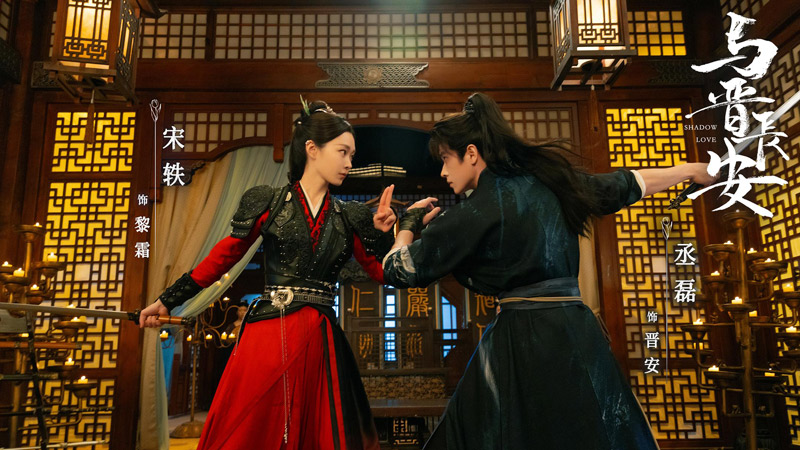
From Fan Ruoruo, the gentle and intelligent "number one talented lady of Capital" in Joy of Life (庆余年), to Su Tan'er in My Heroic Husband (赘婿), a woman who rejects poetry and music but thrives in business, then to Yan Nanxing, the sharp and resourceful traveling doctor in Follow Your Heart (颜心记), and finally to Li Shuang, the fierce and decisive general in Shadow Love—Song Yi has been steadily expanding the complexity and dimensions of what audiences call "Her Power" roles.
What's especially interesting is how Shadow Love sparked new audience interest in her past performances. A trending topic on Weibo read: "It's been 25 years and I'm still watching Song Yi with a blade" . The phrase "with a blade" literally means "playing with a blade," but in fan slang it refers to her recurring use of weapons in roles. From healer to general, the prop may stay the same, but the aura has shifted from gentle determination to bold arrogance. By tying her characters together through this symbolic blade, Song Yi has created a recognizable personal marker in the collective memory of viewers.
Her range is not limited to period dramas. In Day Breaker (暗夜行者), she played undercover cop Su Qingzhu, and in Dear Them (今天的她们), she portrayed entrepreneur Lu Zhenzhen. Both roles show her effort to widen her acting boundaries by breaking through one type at a time.
Since the premiere of Shadow Love, Song Yi has become especially popular among audiences aged 18 to 40, with the 24–30 age bracket showing the highest engagement. Her commercial value in top-tier cities is proving to be significant.
Audience profiles also reveal that her core fan base is women aged 24–40 living in economically developed regions. This group tends to be well-educated, rational, and urban. Their presence means an actress like Song Yi cannot stay confined to pure romance or sweet-love dramas. By boldly choosing to portray Li Shuang—a female lead who combines strength with multidimensional depth—Song Yi has not only positioned herself accurately in the market but also established what could be called a "two-way resonance" with this demographic.
Looking deeper, data from the Detawen user psychology database offers an interesting perspective. A report titled Summary of Public Attention Toward Women with Different Aspirations shows that today's audiences focus most on the realistic value and inner strength conveyed by female characters. Li Shuang almost perfectly covers every high-interest category in this spectrum.
Charts indicate that "career achievement and financial independence" (45%) ranks as the top priority. As commander of the Changfeng Army and a general guarding the border, Li Shuang's social status and professional success directly answer audience expectations for women to stand firmly in society.
At the same time, her decision to form a female guard unit, guiding women toward self-realization, reflects the drive for "self-fulfillment and potential exploration" (25%). Her sense of responsibility toward the nation and its people ties into "social contribution and public voice" (15%), representing an even higher pursuit.
From an industry perspective, the appearance of this "non-typical" female general in Shadow Love shows how Song Yi has keenly identified the evolution of a new kind of female lead in costume dramas. This isn't just about "going against the current." It is the result of careful calculation—considering market trends, audience psychology, and her own strengths—to expand her career map strategically.
Looking ahead, Song Yi has three unreleased projects: two urban workplace dramas—Doctor's Glory (医生荣誉) and To Be Continued (未完待续)—plus the costume romance My Heroic Husband 2 (赘婿第二季). With costume dramas as her stronghold, she is also using diverse, high-quality urban dramas to expand recognition and influence both inside and outside the industry.
Her steady, incremental approach to breakthroughs not only extends her artistic life but also injects new energy into the market, meeting audiences' increasingly demanding standards.
Song Yi's career can be seen as a journey rooted in classical charm, where her unique aura and solid acting skills have gradually flourished. She continues to challenge herself, broadening her range step by step. She did not rise overnight but earned her place through distinctive, powerful female roles that steadily built both audience loyalty and industry respect. This patience and focus—choosing to hone her craft rather than chase quick fame—have created trust capital that few actors can claim. From Yu Manli to Li Shuang, Song Yi's path to breakthrough affirms a simple truth: in a tide of fleeting traffic and hype, what keeps an actor invincible is always the strength of the roles themselves.