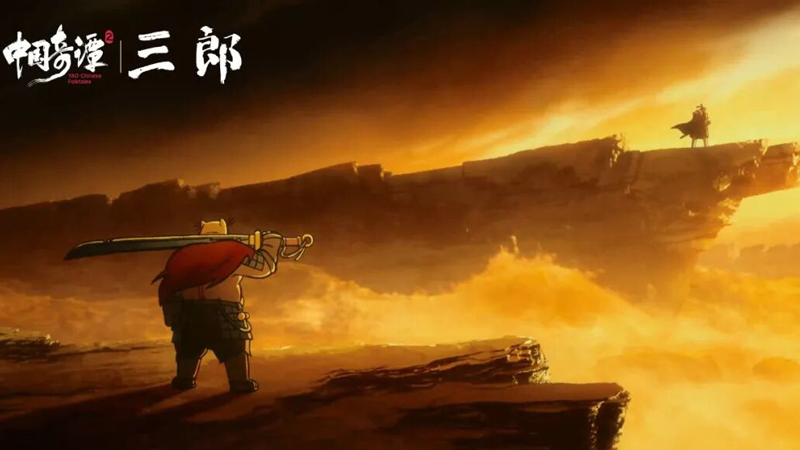
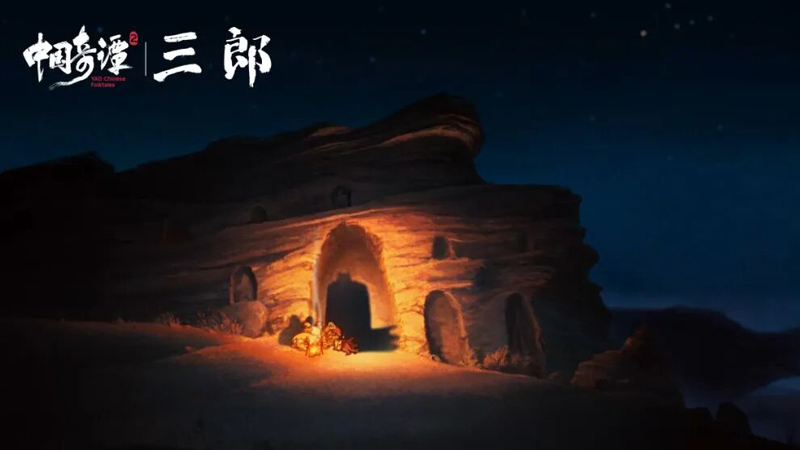
A solitary figure moves against a vast, amber expanse. This is the opening scene from Yao-Chinese Folktales 2 (中国奇谭2), in the episode titled Sanlang (三郎). There are no sprawling cities or intricate political plots here, only a lone swordsman, a dutiful camel, and a haunting forest of Hu Yang (胡杨) trees in the desert. The narrative strips away everything but the essence of a personal quest, one that begins with a declaration steeped in Wuxia (武侠) tradition: "The world's greatest fighter does not kill a nameless opponent." This statement sets a man on a path not just through physical terrain, but into the deepest recesses of his own purpose.
The Swordsman's Quest
He is a man defined by a single, consuming goal: to challenge and defeat the reigning champion. To signify his total commitment, he gives his own name, Sanlang, to his camel, vowing to reclaim it only when he returns victorious. In a roadside inn, he faces ridicule but also accepts a final request from the keeper—to find a missing daughter in the desert. Armed with a cured leg of mutton, a symbol of heritage and sustenance, and his blade, a tool for achieving fame, he enters the whispering grove of Hu Yang trees. These trees, known for surviving a thousand years and standing for a thousand more after death, form a perfect metaphor for the timeless, desolate nature of his ambition.
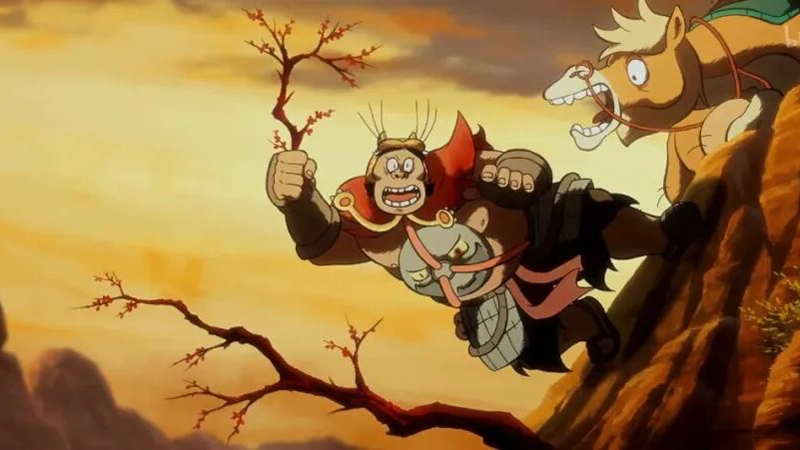
Deep within the forest, he finds his opponent behind a strange, rectangular pane of glass on a lake. Their duel is swift and decisive. The swordsman triumphs, thrusting his blade forward. Yet, his victory instantly becomes his prison. He finds himself trapped inside the very glass he just fought behind. He has not entered a hall of honor, but a cycle of entrapment. Each challenger who defeats the previous "greatest" becomes the new occupant, a hollow guardian awaiting the next nameless visitor to perpetuate the loop. The glass is not a barrier of substance, but of obsession.
The Camel's Call
Throughout the journey, four elements recur: wine, meat, knife, and heart. The wine fuels bravado, the meat represents foundational need, the knife is the instrument for carving a legacy. The heart, however, is what is most easily left behind. The camel, bearing the name Sanlang, becomes the physical embodiment of that forsaken heart. It is a silent, steadfast companion. When the swordsman is lost in the labyrinth of trees, it is the camel's presence that indirectly reminds him of his promise to the innkeeper. It is the animal that ultimately discovers and protects the lost girl, fulfilling the pledge the man had nearly forgotten in his single-minded pursuit.
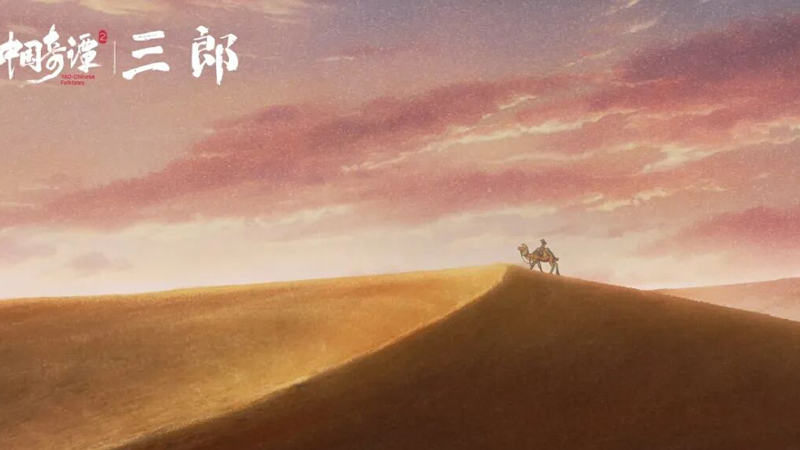
This creature does not speak, yet its actions are a constant, quiet critique of the man's chosen path. It carries the burden of his identity—his true name—while he seeks an empty title. In the economy of the story, the camel represents conscience, loyalty, and the self that exists beyond societal validation. Its stubborn progress through the sand contrasts sharply with the man's frantic, circular struggle within the glass prison, highlighting the difference between moving with purpose and being stuck in ritual.
Breaking the Glass
Confronted with the eternity of his cage and seeing the camel—his namesake—fulfilling his duty, a rupture occurs within the swordsman. The prized title of "world's greatest" loses all meaning. He realizes the victory he sought was a trap designed to consume the ambitious. His gaze falls upon the leg of mutton, not as mere provisions, but as a tangible link to a human connection he had dismissed. In a final, defiant act, he shatters the transparent prison not with his sharp blade, but with this blunt, earthy symbol of heritage and promise.
The breaking glass is the sound of a shattered illusion. He steps out, not as a champion, but simply as a man who has remembered who he is. He reclaims his purpose not from a defeated foe, but from a kept promise. The title he once coveted becomes irrelevant; what matters is the integrity of the person bearing a name. The episode concludes not with fanfare for a new hero, but with the subdued resolution of a person returning to himself, the vast desert now representing possibility rather than a barren field for glory.
Sanlang operates on a deceptively simple frame to ask a profound question: in the pursuit of recognition, what part of ourselves do we bury? The Hu Yang forest is the landscape of our consuming desires, the glass prison is the isolating ego that sustains them, and the camel is the enduring, often-ignored call of our authentic self. The story suggests that the most significant battle is never against an external "number one," but against the internal forces that persuade us to trade our name for a label. True strength lies not in becoming invincible to others, but in becoming real to oneself.

