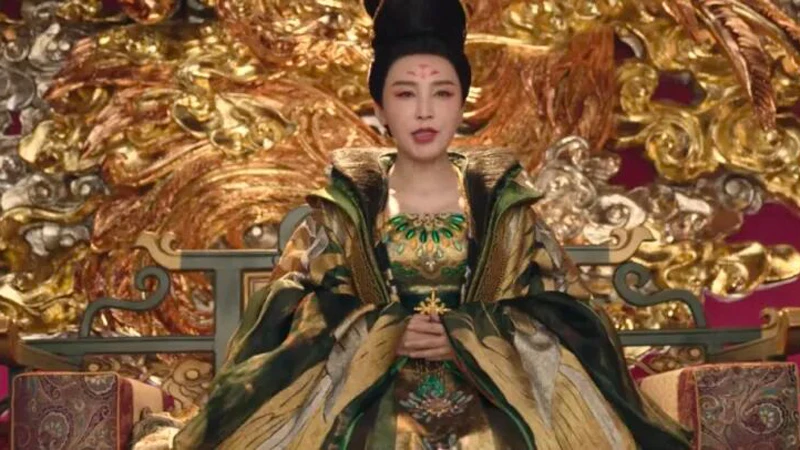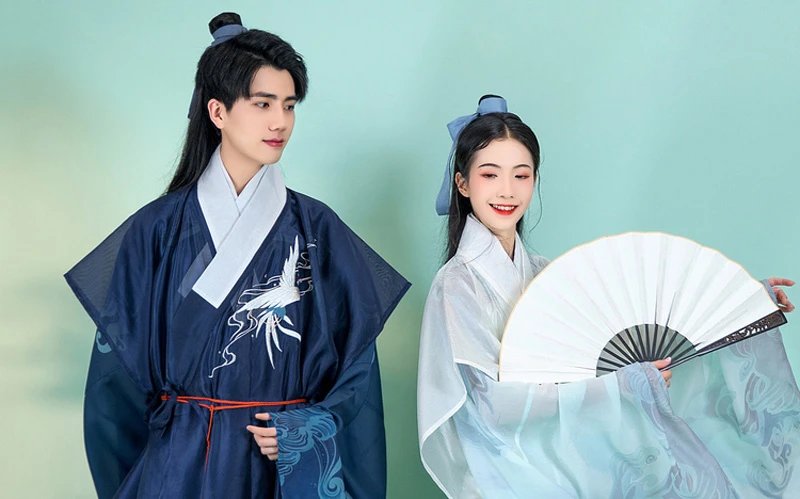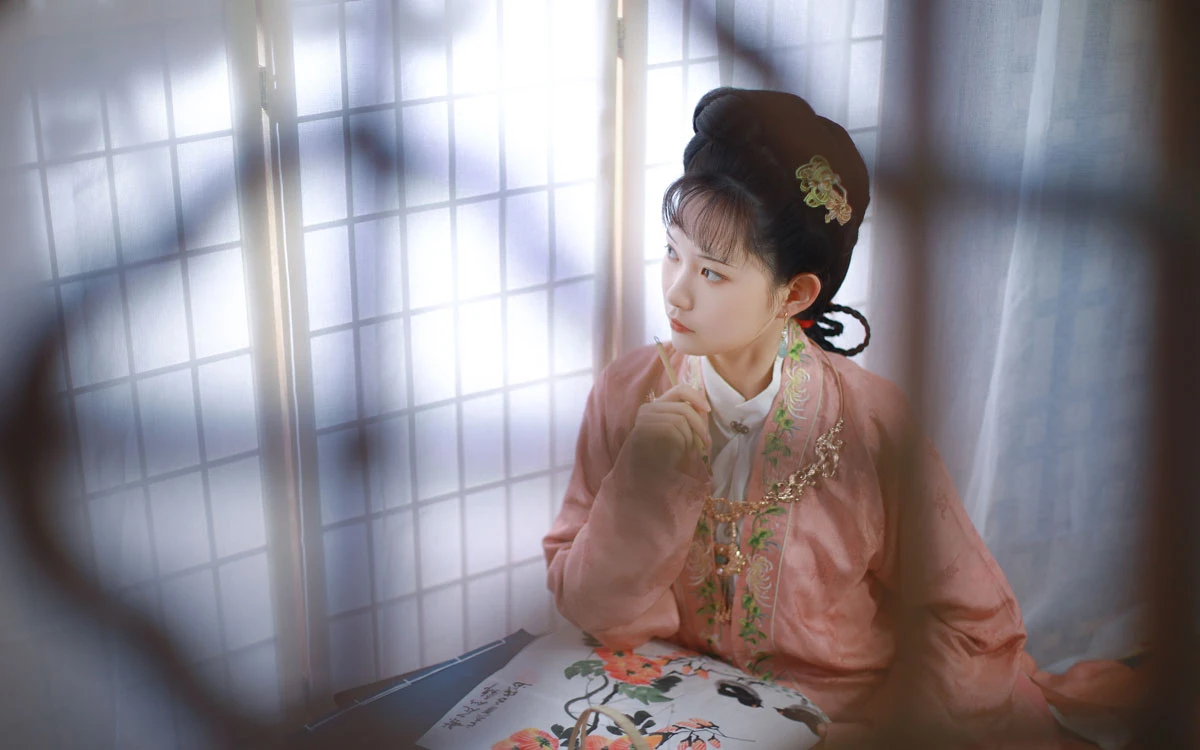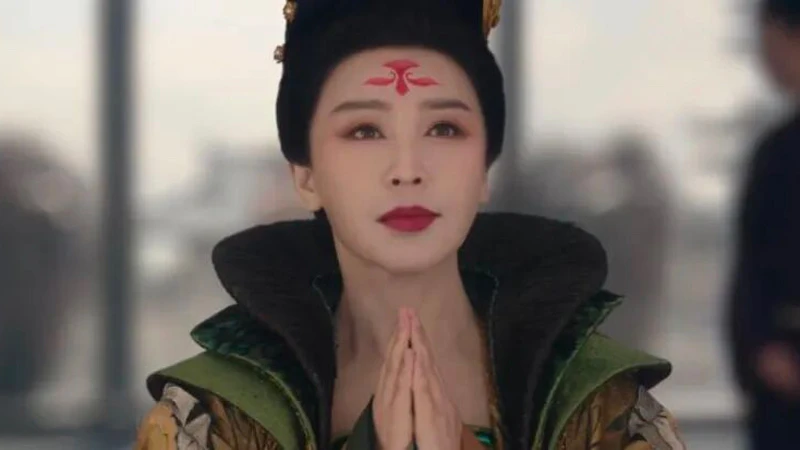
In the bustling capital of Chang’an, the latest season of Strange Tales of Tang Dynasty Ⅲ: Chang’an ( 唐朝诡事录之长安) showcases a striking visual choice that has captured audience attention. The character of the Princess appears with an oversized Huadian (花钿), a forehead ornament that spans nearly her entire brow, diverging from the subtle accents seen in other period dramas. This bold aesthetic immediately raises questions about its historical accuracy and symbolic intent.
Rather than a mere decorative flourish, this large Huadian serves as a narrative device, hinting at deeper layers of personal identity and political statement within the storyline. As viewers, we are drawn into a world where beauty standards intertwine with power dynamics, inviting us to look beyond the surface.
Early Tang Fashion
During the early Tang dynasty, particularly in the seventh century, women’s adornment practices reflected a period of cultural flourishing and experimentation. The exaggerated Huadian, as depicted in artifacts like the Dancing Maid Painting (舞伎图) from the Astana tombs, often covered most of the forehead and was typically painted with pigments like cinnabar for a vibrant, gradient effect. This style was not just about aesthetics; it symbolized a era of confidence and innovation, where women expressed themselves through dramatic makeup. Archaeological finds from this time show that such ornaments were commonly drawn rather than applied with materials, allowing for intricate, sweeping designs that emphasized facial features.
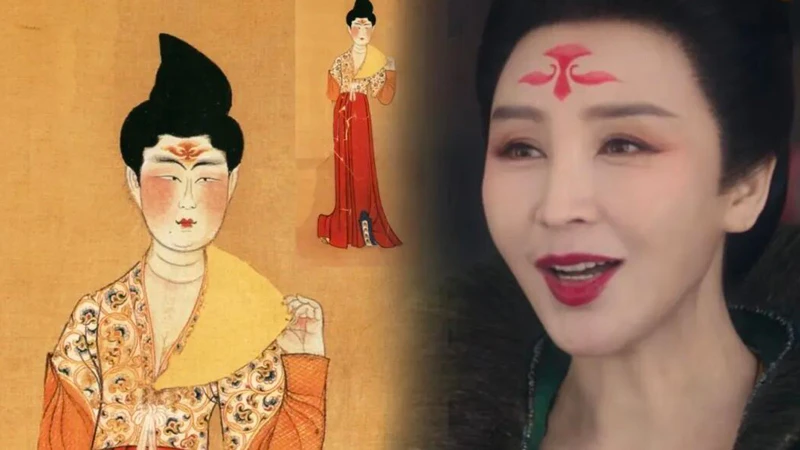
As the dynasty progressed into the reign of Wu Zetian (武则天), this trend persisted, with large Huadian representing a connection to imperial authority and feminine strength. Historical records, such as poems from the era, describe these ornaments in vivid terms, highlighting their role in social rituals and court life. The Princess’s choice in the drama echoes this historical context, suggesting a deliberate nod to a time when women held significant influence. By adopting this style, she aligns herself with the legacy of powerful female figures, making a statement that transcends mere fashion.
Over time, the early Tang approach to Huadian began to shift, but its impact lingered in artistic representations. The use of bold, painted designs allowed for personal expression, with patterns often inspired by nature, such as floral and leaf motifs. This period’s emphasis on large-scale ornaments contrasts with later eras, illustrating how beauty ideals evolve with societal changes. In Strange Tales of Tang Dynasty Ⅲ: Chang’an, the Princess’s Huadian acts as a visual anchor, reminding us of a dynamic historical moment when women’s adornment was both an art and a assertion of identity.
Stylish Transformations
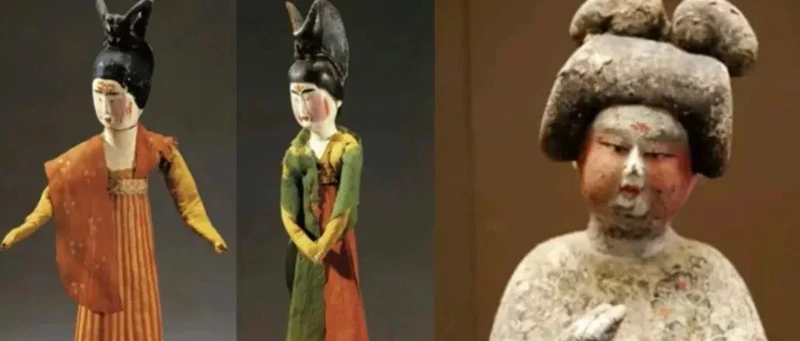
By the High Tang period, Huadian designs underwent a significant transformation, becoming smaller and more refined. Noblewomen began favoring three-dimensional decorations made from precious materials like gold foil, pearls, and carved shells, which added a tactile luxury to their appearance. These delicate pieces, often referred to as Jindian (金钿) or golden ornaments, were crafted to shimmer and catch the light, symbolizing wealth and status. This shift reflected broader cultural changes, as society moved toward elegance and subtlety in fashion, moving away from the overt statements of earlier decades.
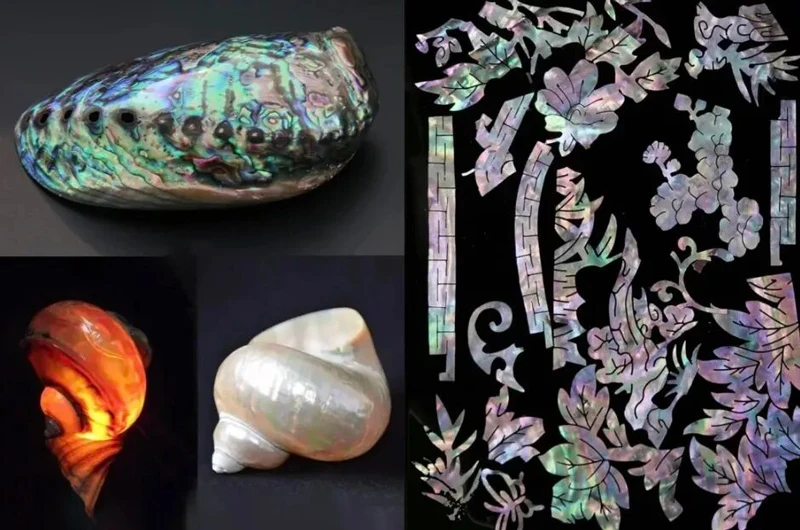
In the Late Tang and Five Dynasties, attention drifted toward other facial adornments, such as Mianye (面靥), which involved applying small designs like birds or stars to the cheeks or other parts of the face. These elements, known collectively as “face dots,” carried auspicious meanings and allowed for creative expression without dominating the forehead. This evolution highlights how beauty trends adapt to economic and social realities, with smaller Huadian and new focuses indicating a more dispersed aesthetic sensibility. The drama subtly references this by contrasting the Princess’s large Huadian with the understated styles of other female characters, emphasizing her unique position.
In contemporary interpretations like Strange Tales of Tang Dynasty Ⅲ: Chang’an, the Princess’s persistent use of an early Tang-style Huadian serves as a character depth marker, suggesting nostalgia for a bygone era of female empowerment. This creative liberty enriches the narrative, showing how historical details can be woven into modern storytelling to enhance emotional resonance. Ultimately, the changing sizes and forms of Huadian across dynasties reveal much about women’s roles and self-perception, offering a lens through which to view the interplay of tradition and innovation in Chinese history.