
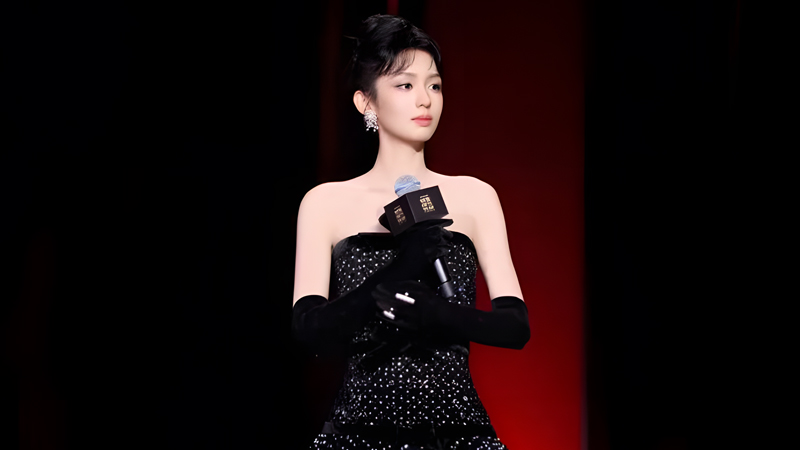
Social media platforms recently lit up, not with celestial bodies, but with images of actress Zhou Ye (周也). The buzz surrounded a single, transformative appearance where she shed her well-known persona for something entirely different. This was not the familiar, sweet-faced starlet, but a vision of cool, sophisticated elegance that marked a definitive departure.
The catalyst for this conversation was a breathtaking black gown, a garment that did more than clothe its wearer—it announced a new chapter. The striking visual shift prompted fans and fashion critics alike to reassess her artistic trajectory, questioning whether this was a mere momentary style or a sign of deeper evolution.
The Anatomy of Elegance
At the heart of this transformation was the dress itself. A strapless column of black, its surface was a meticulously crafted night sky. Countless silver crystals, heat-set into the fabric, caught the light with a subdued, star-like twinkle. From a distance, the effect was of a seamless, shimmering galaxy; up close, the intricate craftsmanship revealed itself. The clean, classic lines of the bodice highlighted Zhou Ye's collarbone and shoulders, framing her features with timeless grace.
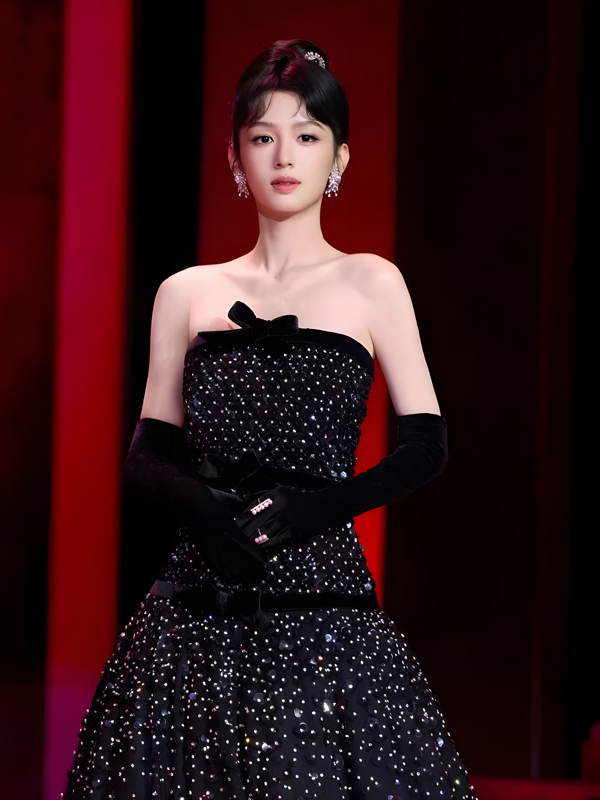
This foundation of modern glamour was anchored by a decidedly retro accessory: a pair of full-length velvet gloves. In a deep, matching black, they extended the sleek line of the dress and introduced a note of Old Hollywood mystery. The choice was deliberate and powerful, instantly transporting the look from contemporary red carpet to vintage silver screen. The gloves softened the gown's modern edge, creating a fascinating dialogue between eras.
Completing the silhouette was a high waist that flowed into a gently flared skirt, creating a statuesque proportion. Her hair, swept into a refined updo, ensured nothing distracted from the gown's architectural beauty and the mood it projected. Every element, from the sparkling bodice to the velvet-clad fingertips, worked in concert to build an aura of poised, untouchable allure.
A Stylist's Masterstroke
The dramatic success of this look lies in its calculated contrast. Zhou Ye built her public identity on a foundation of youthful freshness and approachable charm. This ensemble, dubbed the "Starlight Black Dress," directly challenged that perception. It was a statement of intent, proving her range extends far beyond typecasting. The stylist's genius was in understanding that true style evolution often requires a bold, almost oppositional, step.
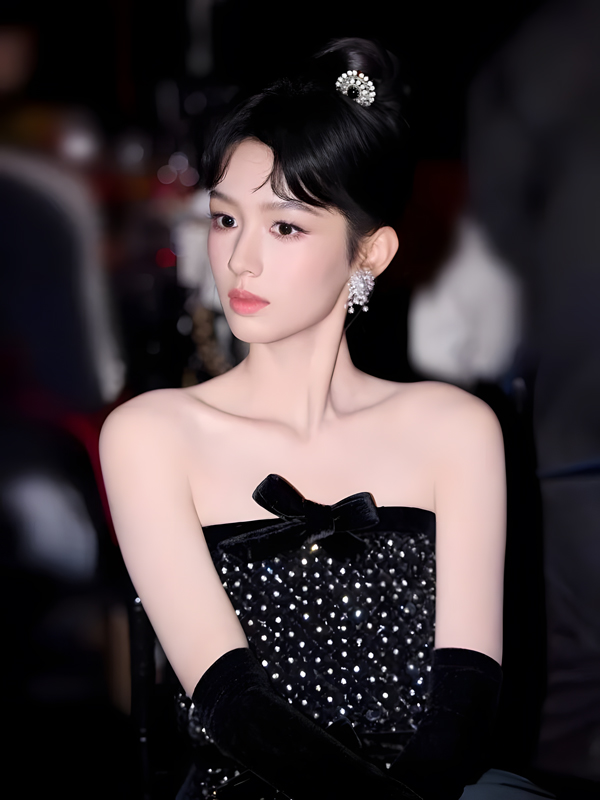
The environment magnified this impact. She stood against a stage backdrop of stark red and black, a color clash that amplified the drama and intensity of her monochrome outfit. The setting framed her not as a girl next door, but as a commanding performer, a centerpiece of undeniable gravity. This contextual styling elevated the fashion moment into a full-spectrum performance.
Public reaction was immediate and overwhelmingly positive. Fans flooded comment sections with comparisons to iconic figures of cinematic history, with names like Audrey Hepburn in Breakfast at Tiffany's frequently invoked. Industry observers noted the skillful fusion of classic Hollywood glamour with sharp, contemporary Haute Couture sensibilities. The look was celebrated not just for its beauty, but for its intelligence as a career move.
Beyond the Gown
This fashion moment cannot be viewed in isolation. It fits into a broader pattern of exploration within Zhou Ye's career. Since her debut, marked by innocent, school-age roles, she has gradually sought more complex characters and narratives. Her public appearances have paralleled this journey, showcasing a growing wardrobe confidence and a willingness to experiment.
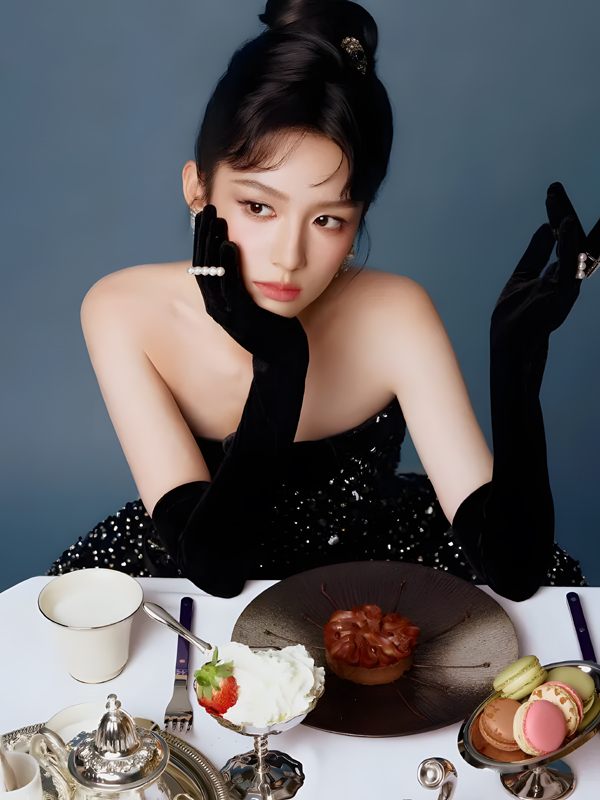
The black gown represents a pinnacle in this stylistic journey—a deliberate embrace of a mature, powerful aesthetic. It signals a performer ready to be seen in a new light, both literally and figuratively. In an industry that thrives on constant reinvention, such a clear visual pivot is a powerful tool for capturing attention and shaping perception.
Ultimately, the resonance of this transformation extends beyond fan forums or fashion reviews. It touches on a universal theme: the freedom of self-reinvention. Zhou Ye's journey reminds us that personal and professional identities are not fixed. The courage to shed a familiar skin and present a different facet of oneself—whether through clothing, career choices, or art—is a profound act of growth. Her "starlight" moment on stage was a brilliant reminder that sometimes, to truly shine, one must first dare to embrace the dark.
