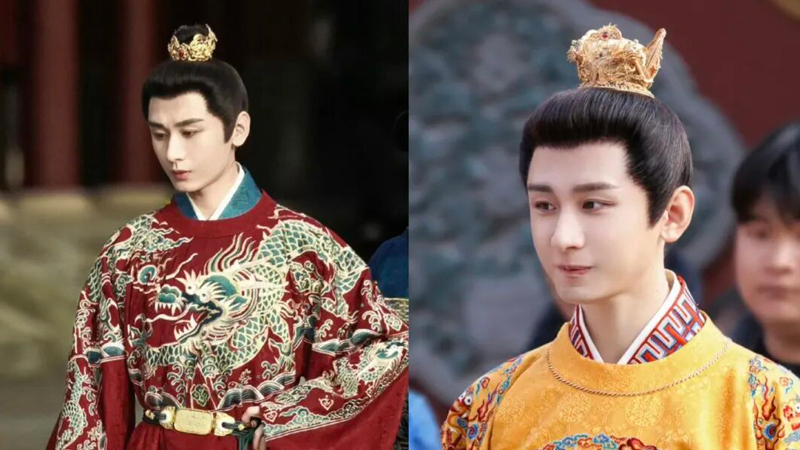
The recent reveal of actor Cheng Yi's (成毅) costumes for the upcoming historical drama Liang Jing Shi Wu Ri (两京十五日) has sent the Chinese internet into a deep dive. A particular photo showcasing his elaborate headpiece and belt sparked instant recognition among history enthusiasts. "I've seen that crown! In a museum!" exclaimed one comment, leading many to question: Are historical dramas finally getting the intricate details of court attire right?
This focus on material accuracy marks a shift in production design, moving beyond sheer visual spectacle to engage with the tangible artifacts of China's past. The specific items in question are not mere fabrications but are inspired by prestigious Ming Dynasty relics, offering a fascinating glimpse into the world of imperial regalia and the strict sartorial codes that governed it.
A Crown Fit for a King
The headpiece attracting so much attention is modeled after the Double Dragon Cavorting with Pearl Ribbon Crown, a significant artifact. This crown holds the distinction of being Object No. 1 at the Hong Kong Palace Museum, the first item officially accessioned into its collection. It was part of a monumental donation of 946 ancient gold and silver items from the Mengdiexuan collection. The original is a masterwork of late Ming goldsmithing. Its structure is supported by six ridges, forming a hemispherical top with a flat, round brim. Two wings project from the back, crafted from fine gold filigree into the forms of two five-clawed dragons playfully chasing a flaming pearl set with a ruby.
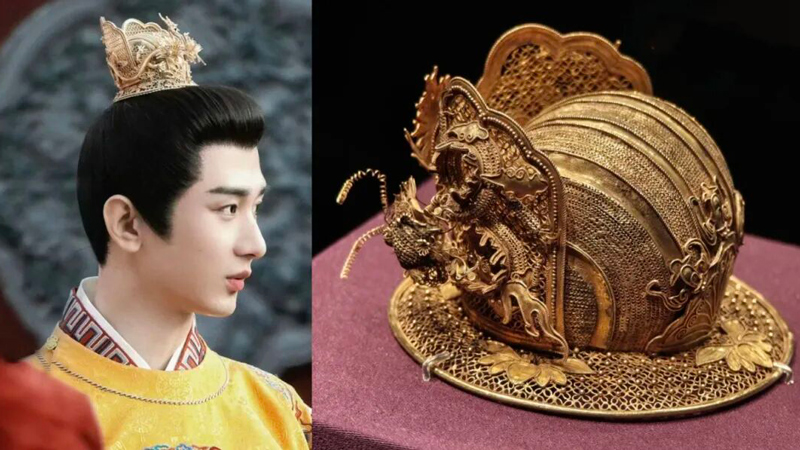
What makes this artifact truly remarkable is its ingenious kinetic design. The dragons' heads and the pearl are attached to the crown's body with delicate springs. With the slightest movement of the wearer, the dragons would tremble and sway, bringing the scene of mythical play to life. This dynamic feature showcases an extraordinary level of craftsmanship meant to display not just wealth, but animated artistry. The drama's adaptation has made a slight alteration, repositioning the central dragon-and-pearl motif from the back to the front of the crown for better on-screen visibility.
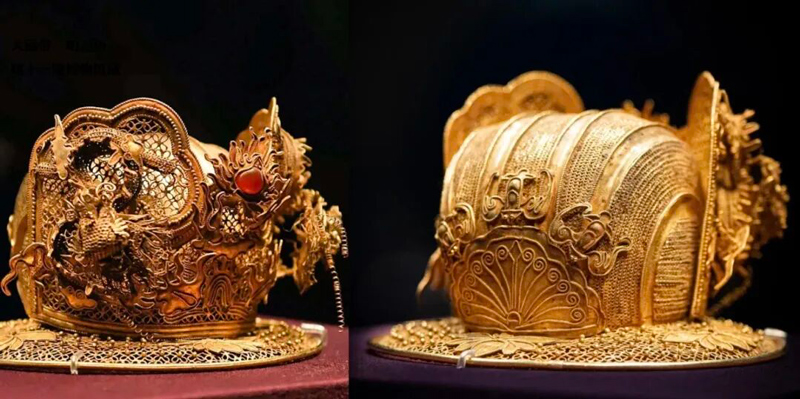
Beyond the dragons, the crown is adorned with motifs of bats and lotus flowers, symbols of fortune and purity deeply embedded in Chinese cultural symbolism. This attention to symbolic detail underscores how every element of formal wear was laden with meaning. For a modern audience, the recreation serves as a stunning visual lesson, connecting the dots between museum displays and the living, breathing characters of historical narratives. It transforms a static exhibit into a prop with a story, worn by an actor embodying the power and prestige the original object was meant to convey.
The Belt That Told a Story
If the crown denotes majesty, the belt worn by Cheng Yi's character speaks volumes about rank and regulation. Ming Dynasty belts were complex signifiers, primarily divided into three types: the ceremonial leather belt, the cloth sash, and the cord belt. The leather belt was the most formal and regulated, an essential component of court dress for high officials and nobility. Its construction and materials were dictated by sumptuary laws with little room for personal deviation. Early in the Ming era, it was decreed that formal belts must be made of leather, forming a stiff, board-like structure.
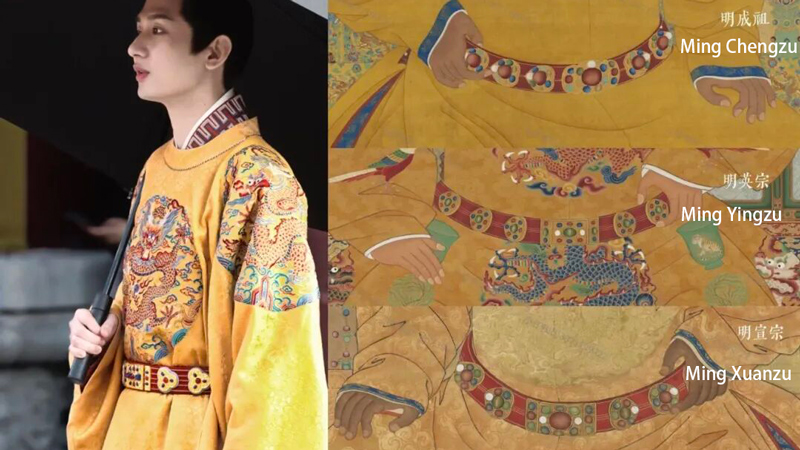
The key features of the leather belt were its decorative plaques, known as Dai Kuai (带銙). These plaques were made from materials corresponding strictly to the wearer's rank: jade for the highest princes and officials, followed by gold, silver, copper, and finally black horn. These plaques were often further embellished with precious and semi-precious stones in vibrant, contrasting colors. This practice followed the traditional belief that the presence of "five colors" constituted an auspicious sign, resulting in belts that were dazzling displays of wealth and status. Compared to these historical items, one netizen quipped, "modern luxury brands seem underwhelming."
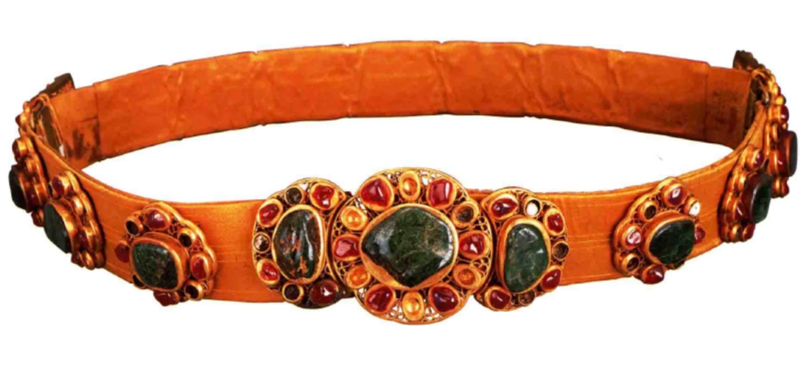
However, this rigid, ornate construction came with a practical challenge. A fully adorned belt was often too long to fit snugly around the waist. Yet, as a sacred symbol of office, it could not be altered or adjusted like everyday clothing. The solution was both practical and iconic: the belt was "worn but not fastened." Unlike in earlier dynasties where belts functioned to secure robes, Ming court robes were closed with ties under the arms. The leather belt was simply draped around the hips, a ceremonial hoop suspended from the body.
The Pose Was Part of the Uniform
This "suspended wear" led to one of the most recognizable postures in Chinese historical portraiture and opera: the act of holding the belt. Because the heavy, unfastened belt could easily slide up to the chest or slump down to the abdomen, officials needed to stabilize it with one hand, usually while walking or standing in court. This gesture, often seen in classical Chinese opera where performers grasp their broad "jade belts," is not theatrical exaggeration but a faithful representation of Ming-era reality.
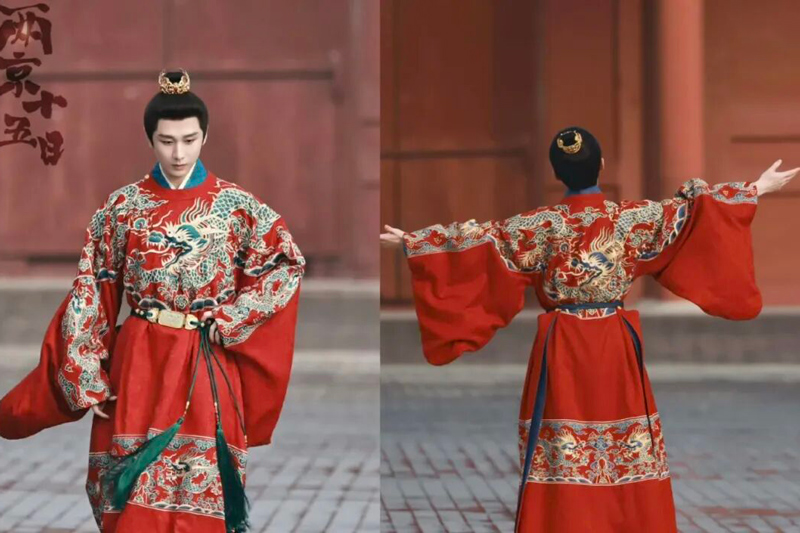
Contemporary portraits of Ming officials frequently show this precise posture—one hand lightly supporting the bottom edge of the lavish belt. The phrase "lifting the robe and steadying the belt" describes a dignified, authoritative stance befitting a high-ranking statesman. It was an essential element of courtly deportment, making the management of one's cumbersome uniform part of the performance of power and grace.
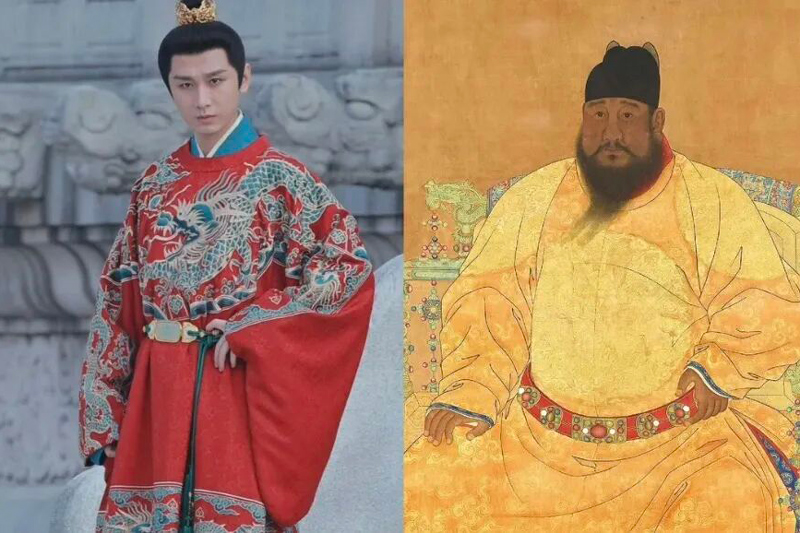
The meticulous research behind Liang Jing Shi Wu Ri thus illuminates more than just costume design; it reveals the lived experience of history. The weight of the crown, the cumbersome splendor of the belt, and the very posture it forced upon the wearer all contribute to a more authentic physical understanding of the past. For viewers, this builds a deeper connection, transforming historical drama from a simple visual narrative into a more immersive exploration of how power was literally worn and carried in one of China's most iconic dynasties.