
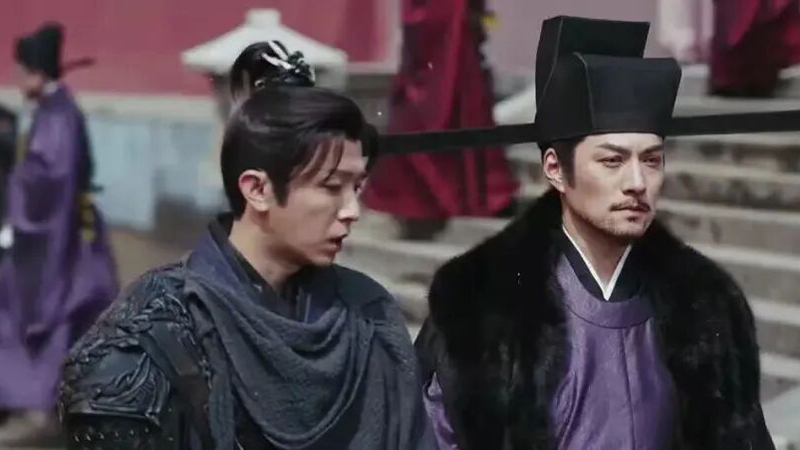
In the intricate tapestry of revenge dramas, few secrets are buried as deep as the truth behind the Jinzhou (瑾州) Massacre. The popular series Pursuit of Jade (逐玉) masterfully unravels a mystery where the obvious villain is merely a scapegoat. For seventeen years, the protagonist Xie Zheng (谢征) has hunted the man he believed murdered his father, General Xie Linshan (谢临山). That man, Prime Minister Wei Yan (魏严), finally sits in a death cell, seemingly ready to take the secret to his grave.
Yet, when Xie Zheng (谢征) sends an intermediary to extract a final confession, the story shatters. Wei Yan admits his guilt but reveals a horrifying twist: he was not the architect of the tragedy. The true mastermind, the one who orchestrated the deaths of a crown prince and 100,000 soldiers without ever drawing a sword, was the one person no one dared to suspect—the exalted Emperor himself.
The Fall Guy's Confession
For nearly two decades, the narrative was clear. Crown Prince Chengde (承德) and General Xie Linshan were led to their deaths in Jinzhou because reinforcements never arrived. Wei Yan, then a general, had been en route to save them but turned back upon hearing his lover, Consort Shu, was dying. He sent his retainer Wei Qilin (魏祁林) with the tiger tally to request troops from the Prince of Changxin (长信), who refused, eager to see the powerful prince fall. Meanwhile, the old general Meng Shuyuan (孟叔远) was given false orders that diverted the food supplies.
The result was annihilation. Wei Yan, upon returning, avenged Consort Shu (淑) by slaughtering the palace and then pinned the entire debacle on the already-dead Meng Shuyuan. In his cell, he admits to this cover-up, but his eyes hold a deeper truth. He reveals to Xie Zheng that this entire chain of events was a meticulously laid trap, and he, Wei Yan, was merely a pawn who walked right into it.
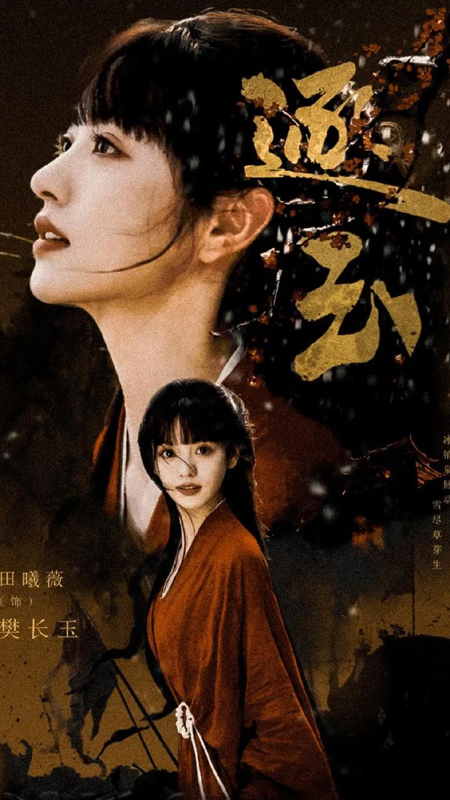
Wei Yan's confession reframes every action. His frantic return to the capital wasn't just heartbreak; it was a reaction to a setup designed to make him look derelict. The Prince of Changxin's refusal was not independent ambition but a move the Emperor anticipated. Even the ambush that captured the 16th Prince during supply transport was a calculated loss. Wei Yan explains that his subsequent bloody purge of the palace was a desperate act of self-preservation, as all evidence pointed to him as the sole conspirator. He had to bury the truth to survive, but in doing so, he became the perfect vessel for the Emperor's lies. Now, with nothing left to lose, he finally names the true culprit, forcing Xie Zheng to look past revenge and toward a far more untouchable enemy.
A Young Man's Fatal Words
To understand the Emperor's motive, Wei Yan takes Xie Zheng back seventeen years. The Crown Prince was beloved, brilliant, and backed by three of the most powerful families in the realm. His grandfather was the old General Qi, and his staunchest supporters were Wei Yan himself and General Xie Linshan, both connected to the Jinyang Wei (晋阳魏) and Xie families. This concentration of power around the heir was a direct threat to the aging Emperor. Threatened by the Prince's influence, the Emperor began favoring a rival son, the 16th Prince, and his mother, Consort Jia (贾). He publicly humiliated the Crown Prince, blocking his relief efforts and grounding him for failures engineered by his rivals. The situation was a powder keg, and the spark was lit by a young, arrogant Wei Yan.
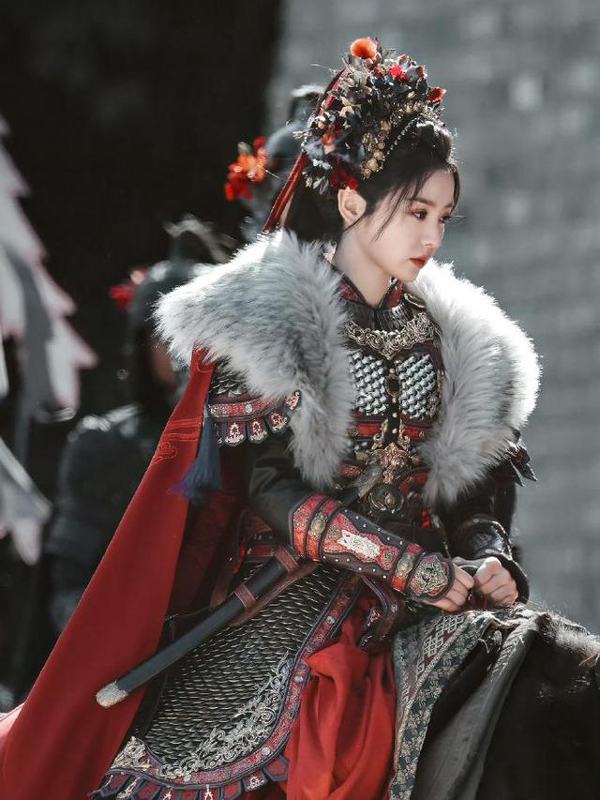
Frustrated by the constant undermining, Wei Yan suggested to the Crown Prince that the only solution was to force the old Emperor to "abdicate." It was a reckless, treasonous thought spoken in a moment of passion. The Crown Prince, hesitant and filial, took no action. But the words were overheard and reported to the Emperor. From that moment, the Crown Prince was marked for death. The Emperor's paranoia, once a flicker, became an inferno. He saw not a loyal son, but a usurper in the making. He manipulated the court, using Consort Jia to encourage the people to build a shrine for the Crown Prince—an act of imperial presumption that allowed him to strip the Prince of his regency. Terrified and desperate to prove his loyalty, the Crown Prince volunteered to lead the army against the northern invasion at Jinzhou, unknowingly walking into his father's perfect trap.
The Emperor's Ruthless Game
The Emperor's scheme was elegant in its cruelty. He couldn't simply execute his popular son without a rebellion. Instead, he engineered a disaster. Using Consort Shu, the granddaughter of General Qi and Wei Yan's beloved, he set a trap for Wei Yan, accusing him of defiling the palace. This forced Wei Yan to turn back from his relief mission, providing a convenient excuse for the lack of reinforcements at Jinzhou. The Emperor knew the Prince of Changxin, who harbored his own ambitions, would never send troops. He ensured the supply lines were cut. Every piece moved exactly as he predicted. He didn't raise a hand; he simply removed all the hands that could save his son.

Wei Yan, from his prison cell, finally sees the full scope of the game. His youthful arrogance provided the excuse, but the Emperor's pathological need for power provided the motive. The old Emperor was willing to sacrifice his heir, his loyal generals, and ten thousand soldiers to secure his throne. Wei Yan realizes his "abdication" comment was merely the trigger for a bomb that had already been built. The true weapon was the Emperor's conviction that any threat, even a beloved son, must be eliminated. The tragedy of the Jinzhou Massacre is not just the loss of life, but that the loyal men who died, from the Crown Prince to the soldiers, never knew their enemy was the very sovereign they died for. The horror lies in a father's silence, an emperor's decree, and the devastating truth that some hands remain clean only because they command others to do the dirty work.