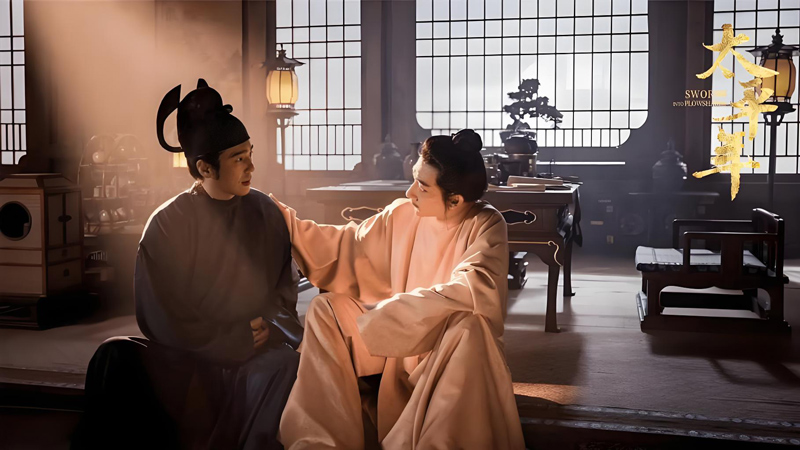
The new historical drama Swords into Plowshares (太平年) is more than a tale of war and politics. It is a profound exploration of how individual decisions, set against the brutal backdrop of the Five Dynasties and Ten Kingdoms period, can collectively redirect the course of history. At its heart are not sweeping armies, but three men whose intertwined destinies engineered China's transition from prolonged fragmentation to unified stability. Understanding the roles of Guo Rong (郭荣), Zhao Kuangyin (赵匡胤), and Qian Hongchu (钱弘俶)—the pathfinder, the architect, and the peacemaker—is the key to unlocking the series' intricate power plays and its central theme: the arduous journey from chaos to peace.
1. Guo Rong
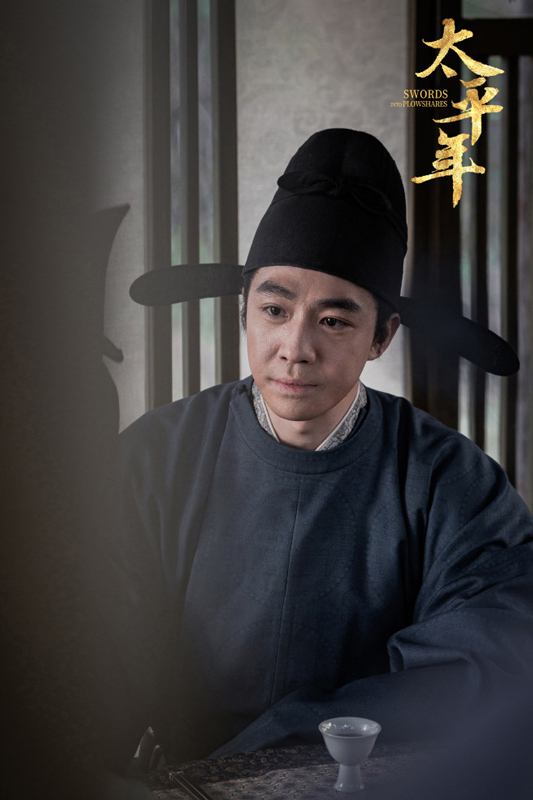
The foundation for a lasting peace was laid by a man whose time was tragically short. Guo Rong, portrayed by Yu Haoming (俞灏明), posthumously known as Emperor Shizong of the Later Zhou (后周世宗) , reigned for only six years from 954 to 959. Historians often call him the most capable ruler of his tumultuous era. Inheriting a weakened state, he launched sweeping reforms: revitalizing the military, streamlining bureaucracy, repopulating abandoned lands, and reducing taxes. His efforts brought a period of rare clarity and prosperity to the Central Plains.
He was a ruler of immense vision, launching successful campaigns against southern states like Southern Tang and planning to reclaim the strategic Yanyun (燕云) Sixteen Prefectures in the north. He transformed Later Zhou into the most powerful polity, creating the essential platform from which unification could be launched. In the drama, he is also portrayed as the mentor and patron to the young military officer Zhao Kuangyin, recognizing his talent and instilling in him the ideals of governance. Guo Rong’s sudden death left his grand ambition of national unity unfinished, a legacy that would fall to his most trusted subordinate.
His reign poses one of history’s great "what if" questions. Had he lived longer, he might have personally ended the fragmentation himself. Instead, his life's work became a blueprint, a set of unfinished plans and high ideals passed to the next generation. The political stability and military strength he built were not ends in themselves, but vital tools he forged for a successor to use. Swords into Plowshares presents him not just as a competent administrator, but as the intellectual and moral author of the coming unification. His belief in a strong, centralized state capable of protecting its people becomes the show's guiding political philosophy, a torch waiting to be carried forward.
2. Zhao Kuangyin
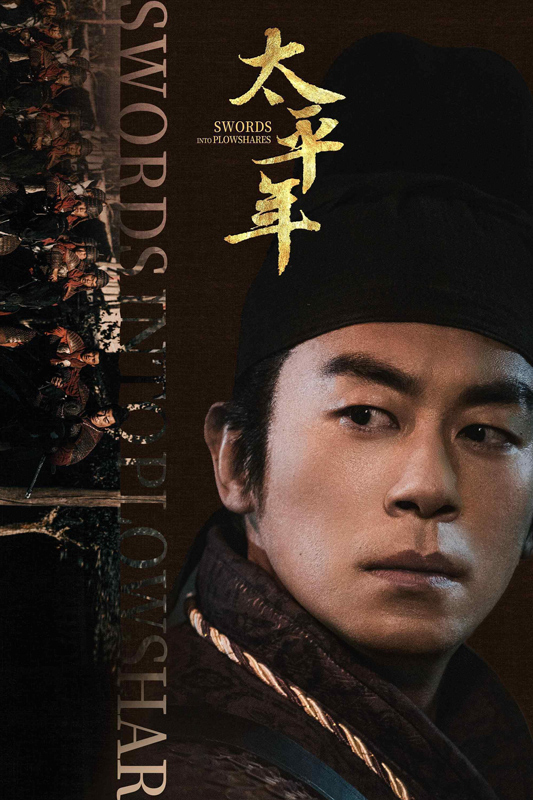
The man who picked up that torch was Zhao Kuangyin (played by Zhu Yawen, 朱亚文), founder of the Song Dynasty. A top general under Guo Rong, history remembers him for the almost bloodless coup known as the "Chen Bridge Mutiny," where he was allegedly forced to don the imperial yellow robe. He founded the Northern Song Dynasty in 960. What followed was a masterclass in consolidation. Famously, at a banquet, he persuaded his powerful generals to retire peacefully, gracefully dismantling the very system of military governors that had fueled decades of coups. This "Abolishing of Military Power Over Wine" solved a chronic problem that had plagued the previous century.
Zhao Kuangyin was a brilliant strategist. He adopted a "First South, Then North" policy, systematically absorbing the smaller, fractured kingdoms in the south before tackling the powerful northern rivals. This pragmatic approach minimized prolonged, devastating warfare. While he completed the physical act of unification that Guo Rong envisioned, his methods were distinctly his own. He combined irresistible military pressure with offers of remarkable leniency to surrendering rulers. He offered them noble titles, comfortable lives, and integration into the new Song aristocracy.
This dual strategy of overwhelming force and generous terms created a powerful incentive for peaceful submission. The drama explores his complex character—ambitious, pragmatic, yet deeply conscious of the bloodshed he sought to avoid. He built upon his mentor's foundation but constructed an entirely new political edifice designed for longevity.
3. Qian Hongchu
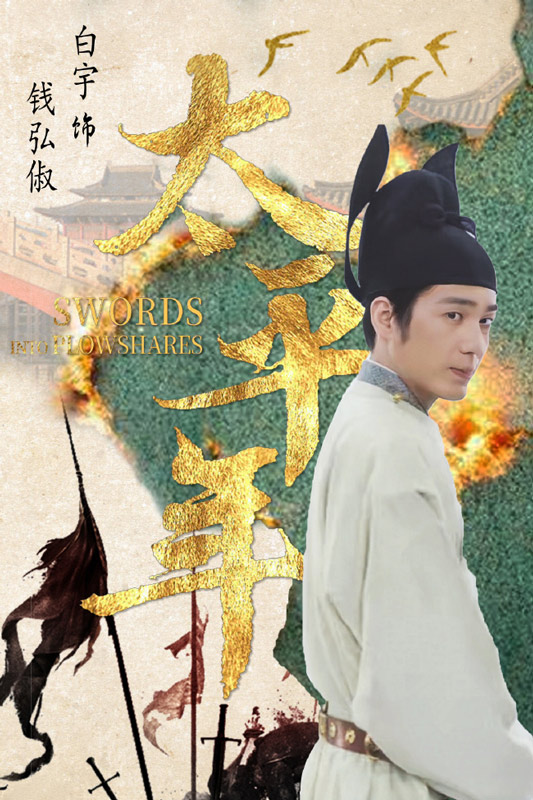
The ultimate test of Zhao Kuangyin's strategy, and the emotional core of the drama, rests with the third man: Qian Hongchu (played by Bai Yu, 白宇), the last king of Wuyue (吴越). Ruling the rich and culturally vibrant region of modern Zhejiang and Jiangsu, he was bound by his ancestor's precept: "Protect the borders and comfort the people." For decades, Wuyue maintained a fragile autonomy through diplomacy and tribute. By the 970s, the surging Song Dynasty under Zhao Kuangyin's brother and successor had become an inescapable reality.
Faced with the inevitable, Qian Hongchu made a monumental decision. In 978, he voluntarily surrendered his entire kingdom—13 prefectures and 86 counties—to the Song court. This act, known as "Offering the Territory to Song" (Natu Guisong, 纳土归宋), was unprecedented. It was not a military defeat, but a sovereign political surrender to avert certain war. His choice spared the populous and prosperous Jiangnan region from the ravages of invasion, ensuring a seamless, peaceful integration into the new empire. In Swords into Plowshares, this moment is portrayed not as a defeat, but as the ultimate act of responsible leadership. He traded his crown for the safety and prosperity of his people, embodying the series' thesis that true peace sometimes requires the powerful to relinquish power.
Qian Hongchu’s decision completes the historical trinity. Guo Rong built the engine of unification, Zhao Kuangyin steered it, and Qian Hongchu chose to open the gates, allowing the vehicle of state to pass through without collision. His action resonates with Guo Rong's ethos of putting the people first and responds pragmatically to Zhao Kuangyin's offer of a peaceful path. It provides the "peace" in Swords into Plowshares, proving that the end of an era need not be marked by cataclysm, but can be achieved through wisdom and sacrifice. His story transforms the narrative from one of mere conquest to one of conscious, difficult choice in the face of historical tide.