
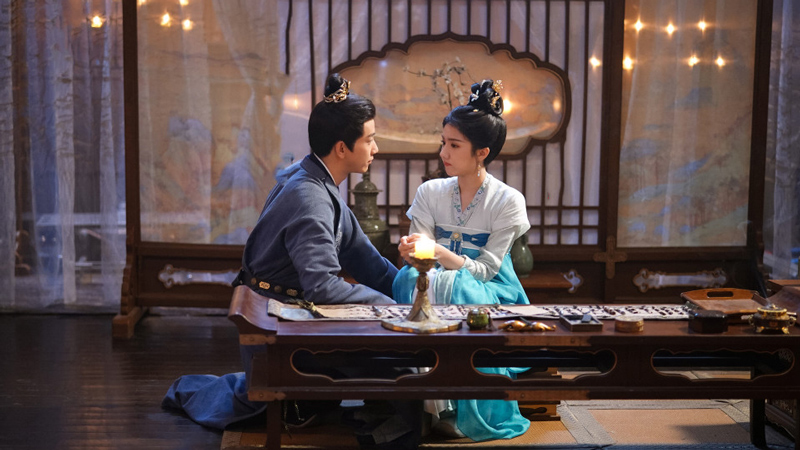
The silence of the royal morgue is broken only by the careful scrape of a tool against bone. A young woman squints in the lamplight, her entire world narrowed to the story the skeleton at her feet is desperate to tell. This is the scene viewers eagerly returned to as the long-awaited second season of the hit Chinese costume drama, The Imperial Coroner 2 (御赐小仵作2), premiered on January 15th.
The original team is back: the brilliant but restrained Prince Xiao Jinyu (萧瑾瑜), the gifted and determined coroner Chu Chu (楚楚), the sharp-witted investigator Jing Yi (景翊), and the skilled warrior Leng Yue (冷月). They reassemble as the formidable Three Law Division team, but the peaceful days of solving isolated crimes in the capital are over. A single, inexplicable case—a pile of anonymous bones discovered during a palace banquet—unravels a thread that pulls them into a web of conspiracy far greater and more dangerous than anything they have faced before.
The Team, Reforged
The core strength of the series remains the palpable chemistry and complementary skills of its central quartet. Viewers find immediate comfort in their renewed dynamic: Xiao Jinyu's strategic mind mapping out connections invisible to others, Chu Chu's forensic expertise giving voice to the dead, Jing Yi's keen eye for detail and evidence gathering, and Leng Yue's martial prowess providing crucial protection. Their tacit understanding is not static; it has deepened. They communicate with glances and shorthand, a well-oiled machine facing a more complex puzzle.

This season promises further character development alongside the mystery. Each member is pushed beyond their comfort zone. Chu Chu must navigate the political implications of her findings, while Xiao Jinyu balances his duty to the throne with his pursuit of pure justice. The personal stakes are higher, and the bonds between them are tested not just by external threats, but by the moral ambiguities of their new reality. They are no longer just solvers of puzzles; they are becoming players in a deadly game.
The seamless return of the original cast and creative team, including director Lou Jian and the writing team, ensures narrative consistency. The show retains its signature blend of intelligent deduction, respectful attention to Song Dynasty forensic techniques, and a steady pacing that rewards attentive viewers. The "hardcore" investigative style that fans appreciated is very much present, but the canvas on which it is applied has expanded dramatically.
A Capital in Shadow
The Imperial Coroner 2 swiftly establishes a pervasive atmosphere of unease. Chang'an, the glittering heart of the Tang Dynasty, is a city hiding a creeping sickness beneath its prosperous facade. The initial skeleton case is merely the first ripple in a deep, dark pond. More bizarre deaths follow, each crime scene more puzzling than the last. The clues are fragmented, pointing in seemingly contradictory directions, yet an unsettling pattern emerges—these are not random acts of violence, but moves on a board by a hidden opponent.

The narrative deftly layers these personal tragedies with a looming geopolitical threat. The southern state of Nan Zhao (南赵) has agents operating within Chang'an's borders, their motives shrouded in secrecy. This external pressure transforms the nature of the Three Law Division's work. A simple murder investigation can now trigger diplomatic incidents or expose vulnerabilities in the empire's security. The team must discern where criminal ends and espionage begins.
Adding to the intrigue is a new variable: the arrival of You Chen'an (祐辰安). His presence in the capital is an enigma. Is he a friend, a foe, or a pawn in a larger scheme? His interactions with the core team introduce an element of uncertainty, potentially offering a key to the deadlock or becoming the source of an unforeseen crisis. His role will likely force the main characters to question their assumptions and allegiances.
Beyond the Case
This season marks a significant evolution in scope. The stakes are no longer confined to uncovering a murderer's identity; they have escalated to safeguarding the stability of the dynasty itself. The "game" referenced in promotions is a high-stakes match where the rules are unclear and the opponent is invisible. The team must break the game—see beyond the immediate crime to dismantle the overarching conspiracy that enables it.
This expansion challenges the very ideals of the protagonists. They are dedicated to truth and justice, but what happens when exposing the truth could cause greater chaos? The series probes the conflict between integrity and survival, between absolute justice and pragmatic necessity. The choices they make will define not only the outcome of their cases but their own moral compasses.
The ultimate mystery, therefore, becomes twofold. The audience follows the team as they piece together the physical evidence to solve the crimes. Simultaneously, we watch them grapple with internal dilemmas and navigate a political landscape where truth is a commodity and trust is a liability. The Imperial Coroner 2 invites us to witness not just a journey of solving cases, but a profound journey of growth, conviction, and the resilient power of teamwork against the shadows of an empire.