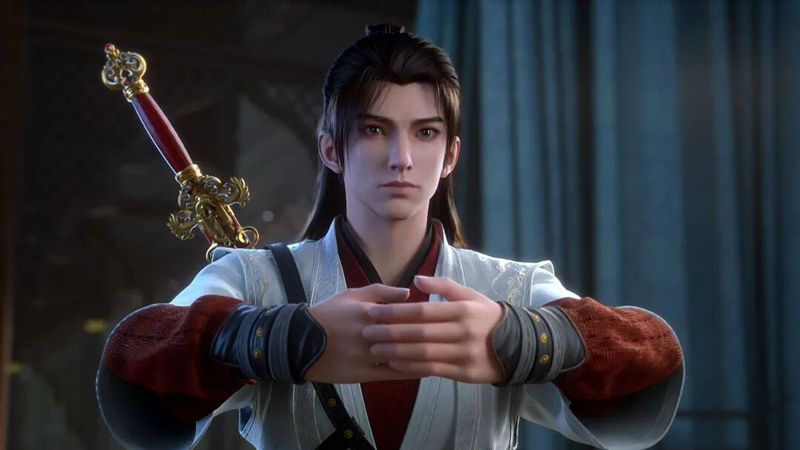
In the sprawling world of Immortality (永生), a fantastical Xianxia universe filled with cultivators and ancient secrets, the narrative shines in its complex plot and rich ensemble cast. Yet, for many viewers, a central point of contention remains: the protagonist himself, Fang Han.
While the show's overall quality is undeniable, Fang Han's (方寒) character design presents a significant hurdle to audience connection. His actions, particularly within the unforgiving expanse of the Vast Desert, reveal a personality that is often difficult to root for, creating a fascinating disconnect between the story's appeal and its leading figure.
A Desert of False Virtue
The Vast Desert arc critically exposes Fang Han's problematic nature. His behavior toward Liu Kang (刘康) is a prime example. After defeating an enemy, he chooses to save him, an act initially seeming noble. However, when Liu Kang later betrays him, using secrets as blackmail, Fang Han refuses to retaliate, citing vague "fellow disciple sentiment." This inaction directly ignores the imminent danger this poses to both himself and his steadfast companion, Hong Yi (红怡). His passivity is not righteousness; it is a performative kindness that forces others to clean up the mess. Ultimately, it is Hong Yi who makes the decisive move to eliminate the threat, protecting Fang Han from the consequences of his own poor judgment.
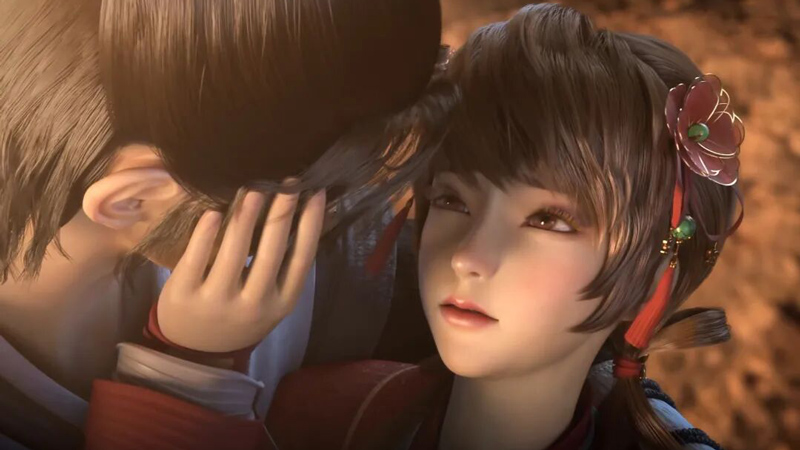
This pattern of selfish "virtue" repeats during the duel between Fang Qingxue (方清雪) and Wang Molin (王墨林). Witnessing Fang Qingxue pressured, Fang Han, still at the basic Physical Realm, rushes forward despite Hong Yi's (红怡) urgent pleas that he would only be a hindrance. He dismisses her counsel, driven by a desire to prove himself in front of a powerful figure who hardly needs his help. His impulsive charge is not bravery; it is a selfish display that forces intervention. Tragically, Hong Yi sacrifices herself, taking the full force of Wang Molin's "Heavenly Wolf Malefic Smoke" to save him. Fang Han's choices, cloaked as compassion or courage, consistently place others in peril to serve his own ego.
These desert trials strip away any pretense. He upholds hollow loyalty for a traitor but abandons all caution for a senior who doesn't require his aid. The cost is invariably borne by those around him, most poignantly by Hong Yi. This brand of self-centered "benevolence" makes him appear less a hero and more a hypocrite, a character whose core morality feels unstable and unreliable.
Mouth Without Means
Beyond his moral failings, Fang Han's standing in the cultivation world feels unearned. His innate talent is ordinary. His comprehension of techniques and laws is not exceptional. His one notable trait, tenacity, is essentially a baseline requirement for any dedicated cultivator. His true power and confidence stem almost entirely from external crutches: the mystical Vast Yellow Spring Diagram and the ancient spirit, Yan (阎), who resides within it.
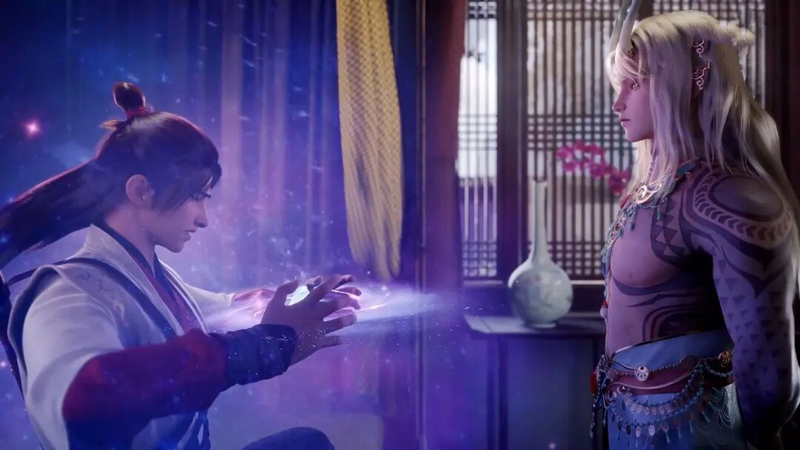
This reliance breeds a hollow arrogance. His infamous ten-year challenge to the supremely powerful Hua Tiandu (华天都) is a glaring case. Without the Diagram's devouring capabilities and Yan's timeless wisdom, such a boast would be sheer folly. Fang Han postures as a fearless challenger, but his bravado is borrowed. He fronts the attitude of a powerhouse while his own foundational skills remain lacking. This disconnect—between his perceived stature and his actual self-made ability—makes his arrogance feel grating and unjustified.
He operates with the swagger of a genius without possessing the genuine, hard-won prowess to back it up. In a genre where personal growth through bitter struggle is paramount, Fang Han's progression feels shortcut, his confidence synthetic. This reliance on artifacts and mentors, rather than fostering humility, seems to fuel a sense of entitlement that viewers often find difficult to embrace.
Disrespect to a Mentor
Perhaps the most jarring aspect of his character is his treatment of Yan. Yan is not merely a tool; he is Fang Han's guide, teacher, and the primary reason he escaped a life of servitude. Despite this profound debt, Fang Han's demeanor toward him is frequently appalling. He often speaks to Yan with a peremptory, commanding tone, more fitting for a servant than a savior and master.
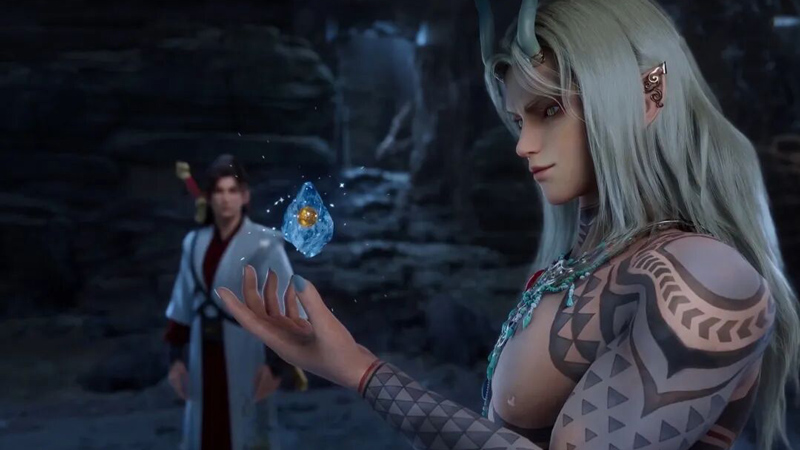
A telling moment occurs when the Lady of the Star Constellation Sect gifts him medicine. Without a word of thanks or a polite request, Fang Han bluntly orders Yan to inspect the elixir for poison. The exchange is devoid of respect, framing Yan not as a revered elder imparting wisdom, but as a utility obligated to clear his path. This expectation—that his greatest benefactor exists to serve his every need—reveals a profound lack of courtesy and gratitude.
It transforms a sacred pupil-mentor bond into a transactional, hierarchical relationship. For an audience familiar with cultivation narratives that deeply value respect for teachers and ancestors, this behavior is a major red flag. It completes a portrait of a character who is not only hypocritical and arrogantly dependent but also ungrateful, making the journey alongside him a consistently challenging experience.