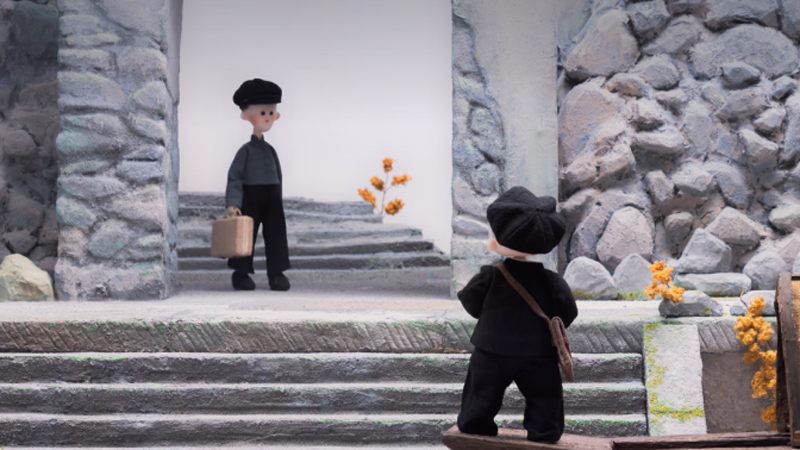
In the vast landscape of contemporary animation, a quiet storm has emerged from the second season of Yao-Chinese Folktales 2 (中国奇谭2). The latest episode, titled Xiao Xue (小雪), has captivated audiences not with epic battles or witty dialogue, but with its profound silence and tactile warmth. Directed by Chen Lianhua (陈莲华), this short film employs felt stop-motion animation to explore the intricate dance of love, expectation, and release within a Chinese mother-son relationship.
Without a single spoken word, it delivers an emotional resonance that has left countless viewers reflecting on their own familial bonds, making it a standout piece of modern storytelling that feels both intimately personal and universally understood.
A World of Wool
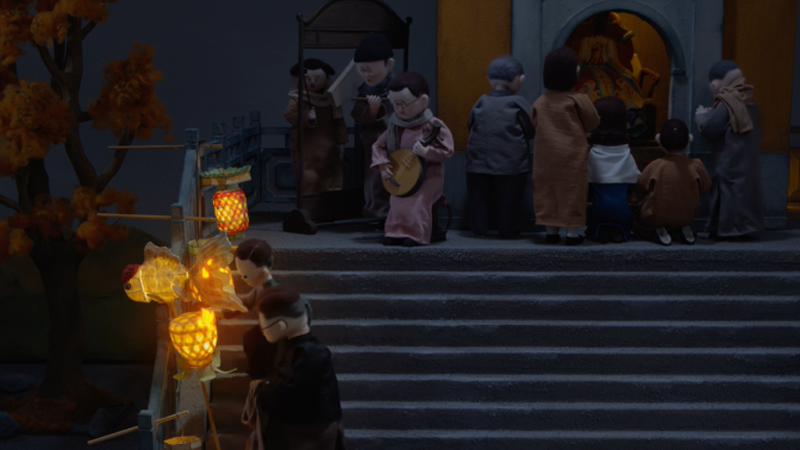
The immediate charm of Xiao Xue lies in its meticulous craft. The choice of felt, a material shaped by persistent molding and care, becomes a powerful metaphor for the central relationship. The mother’s hands smoothing ointment, the precise folds in the child’s clothing, the glowing lanterns—each detail is rendered with a tangible, textured love. This softness visually cushions the story’s more poignant themes, inviting the viewer into a world that feels handmade and heartfelt.
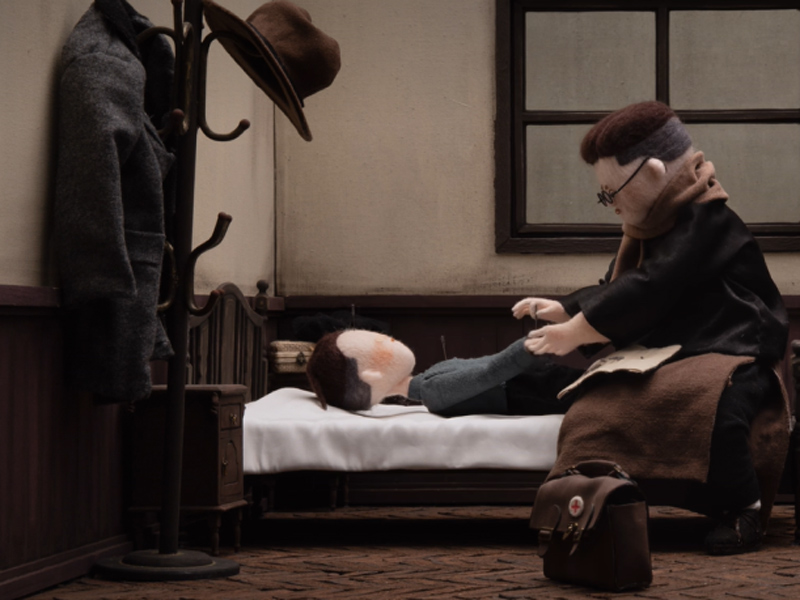
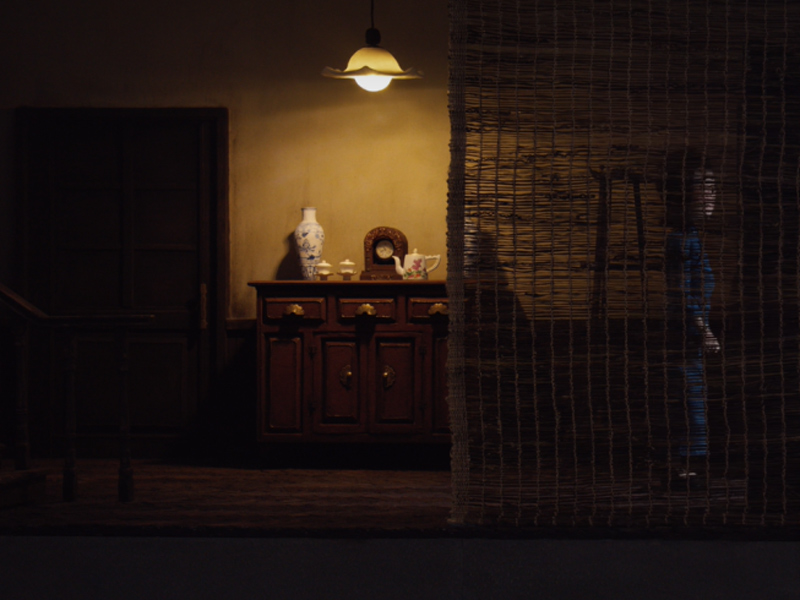
This material is placed against backgrounds with the fluid elegance of ink wash painting, a foundational element of traditional Chinese art. The contrast is striking yet harmonious. The felt figures, full of specific, relatable detail, exist within a world of poetic abstraction. This fusion creates a unique aesthetic that is undeniably rooted in Chinese visual culture while feeling fresh and innovative.
Furthermore, the inclusion of the Yu Deng (鱼灯, Fish Lantern) Festival anchors the narrative in a specific cultural moment. These vibrant, folk-art props are not mere decoration; they are central to the plot’s climax. The combination of folk custom, classical art style, and modern animation technique results in a deeply immersive and emotionally potent visual language.
The Power of Quiet
The film’s boldest narrative choice is its complete absence of dialogue. Every emotion—the boy’s restless energy, the mother’s simmering anxiety, their shared moments of tension and tenderness—is conveyed through gesture, expression, and meticulously blocked action. This silence is not empty; it is spacious, allowing viewers to project their own experiences and interpretations onto the characters, forging a deeper, more personal connection.
Sound is used with masterful restraint. The score consists primarily of simple chords and a recurring, piercing whistle. This whistle acts as the mother’s tool for control, a sharp auditory leash she uses to correct her son’s behavior whenever he indulges in his compulsive cartwheels. It is a sound that perfectly encapsulates her love, which is tangled with fear and a desire to mold.
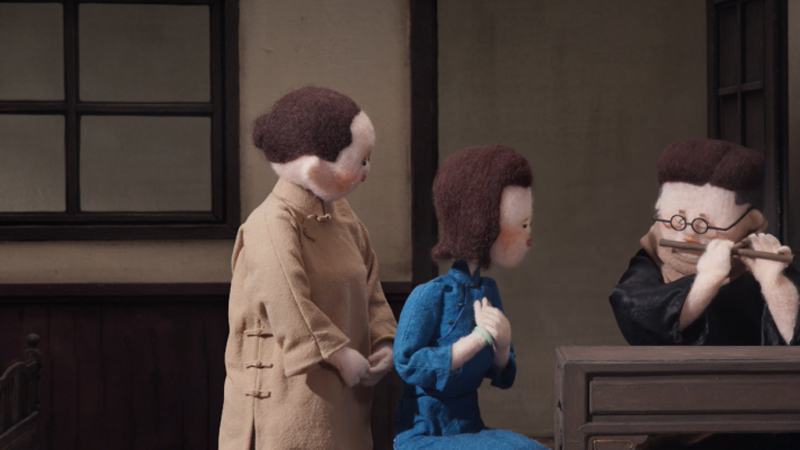
The film’s emotional turning point is signaled by a transformation in this sound. The harsh whistle gradually softens, eventually giving way to the melancholic, liberating notes of a bamboo flute. This sonic journey mirrors the mother’s internal shift from enforcing restraint to embracing release. The minimalist soundscape thus becomes the story’s true voice, speaking volumes where words would only complicate.
Objects That Speak
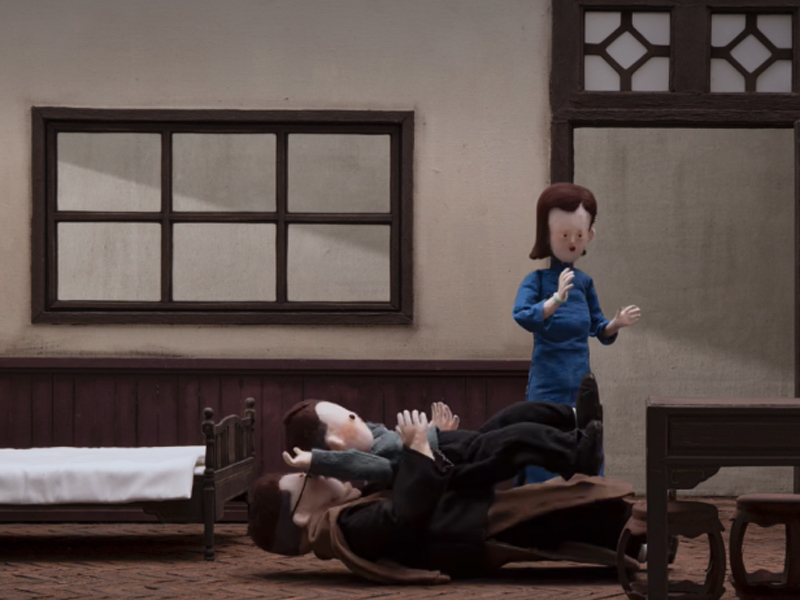
Xiao Xue builds its narrative on a foundation of potent symbols. The son’s incessant cartwheeling is more than a quirky habit; it is a physical manifestation of his innate spirit, an energy his mother perceives as a disorder needing a cure. Her quest for a treatment becomes a metaphor for the parental desire to shape a child to fit societal or personal ideals, where conformity is mistaken for health.
The Yu Deng Festival serves as the story’s dramatic crucible. The fiery lanterns ignite the boy’s rebellion, leading to a chase that culminates in a standoff on a boat—a visual scale of their relationship, perfectly balanced on the brink of collapse. His subsequent leap into the water, transforming among swimming fish, is a beautiful metaphor for finding freedom and authenticity only outside imposed constraints.
Even the smallest details carry weight. The repeated act of the mother putting a hat on her son, only for him to secretly remove it, is a tiny, perfect portrait of their dynamic. It is a silent tug-of-war over autonomy, a child’s gentle but firm declaration of self in the face of well-intentioned smothering. Together, these symbols argue that true love is found not in clinging, but in granting space to grow.
A Shared Reflection
The resonance of Xao Xue across Chinese audiences is immediate and profound. Viewers see their own parents in the mother’s worried eyes and hear familiar echoes in the controlling whistle. The film taps into a common experience where love and limitation are so often woven from the same thread, described in the vernacular as being "bound by ‘for your own good.’"
The resolution it offers is gentle yet powerful. Harmony is not found through the child’s submission, but through a dual journey of separation and self-discovery. The son gains independence through physical distance, while the mother must find purpose beyond her child, converting her anxious focus into personal growth. This path to reconciliation is poignant because it requires change from both parties.
Ultimately, Xiao Xue stands as a testament to the series’ goal of exploring real human dilemmas through a fantastical lens. It proves that the most compelling stories sometimes need no words, only feeling. By using the softness of felt and the wisdom of silence, it delivers a timeless message: the deepest form of love is one that allows both the holder and the held to find their own way, freely and fully.