
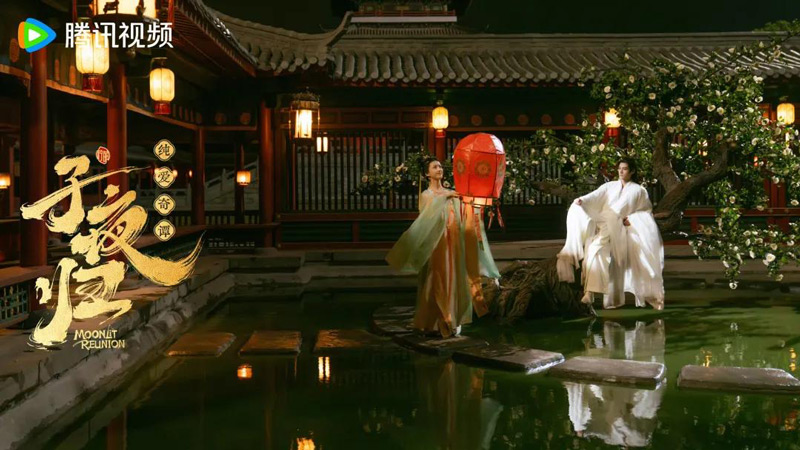
September always marks two things in China: the start of a new school year and the moment when summer dramas are reviewed and weighed.
This summer season, costume dramas once again dominated in both output and market share. Yet the creative "bottleneck" is still hard to ignore. The two main directions for period dramas—lavish historical productions aiming for grounded realism, and sweeping romances drawn from internet novels—have both hit a slowdown.
The first route demands meticulous research into historical records while still finding ways to resonate with modern emotions. That kind of project is time-consuming, high-risk, and truly good works are rare.
The second route, the all-consuming romance, is struggling in today's climate where "anti-romance-brain" (反"恋爱脑", a popular phrase criticizing shows where characters are unrealistically obsessed with love) has become a mainstream sentiment. Even if produced, creators often brace themselves for backlash and limited payoff.
But audience appetite for period storytelling hasn't waned. This is why industry players keep probing subgenres and side paths within the wider costume drama field.
One such path is the supernatural drama, a genre that thrives on imagination and often doubles as a modern allegory.
Recently, Moonlit Reunion (子夜归), now streaming on Tencent Video and produced by Linmon Pictures and its sub-label QLemon, takes another confident step forward in this supernatural branch of costume drama.

A Lavish Fantasy of Chang'an
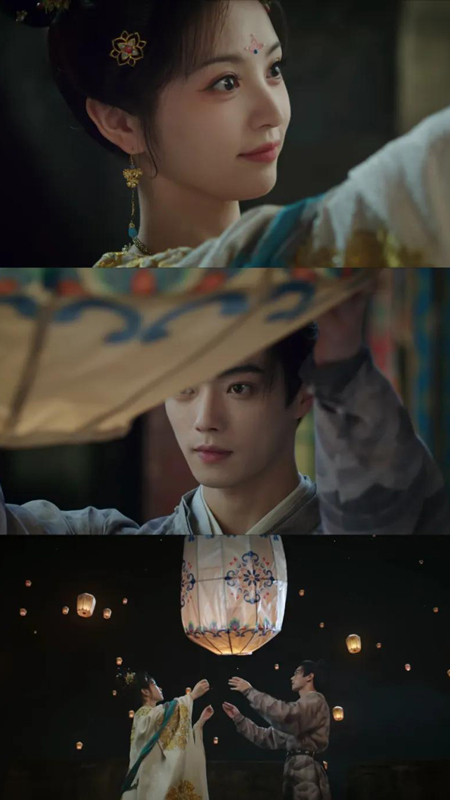
The most striking thing about Moonlit Reunion is the sheer imagination spilling out of the screen.
The show constructs a fictional Chang'an where humans and demons coexist, where prosperity and strangeness walk hand in hand. The entire narrative is tied together by the mystery of the "Great Fire of Chang'an" that took place eighteen years earlier. Against this backdrop, the male and female leads—each carrying dual identities—navigate between romance and conflict, solving case after case involving uncanny creatures, all while guarding the fragile peace between the two realms.
The outline may sound straightforward, but staging it for television is anything but simple.
Especially notable is the imagined "folded Chang'an." Historically, Chang'an was a concrete urban space, but also a cultural symbol layered with the aspirations of generations. The drama doesn't aim to reproduce the city's past glory as recorded in history books. Instead, it reconstructs Chang'an through imagination, weaving in contemporary values and aesthetic expectations.
In the show, the human side of Chang'an is anchored by settings like noble estates, government offices, common households, and bustling marketplaces.
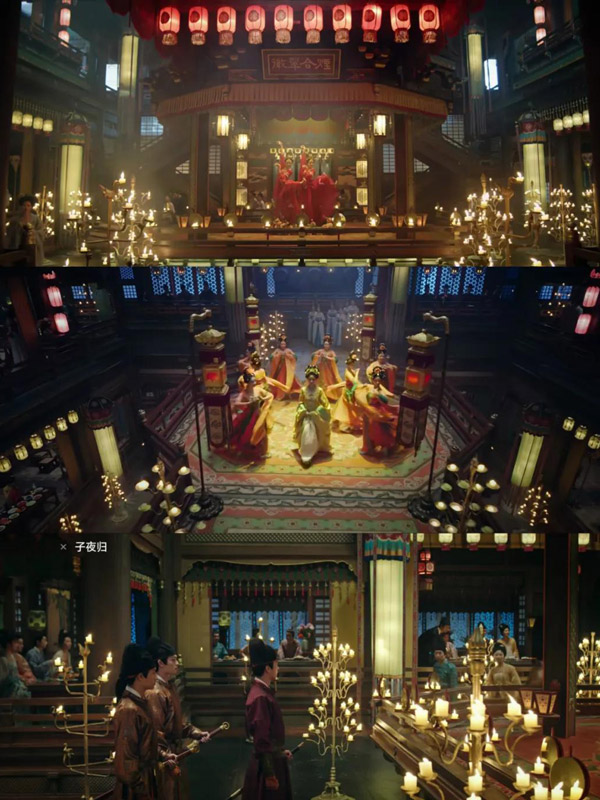
Wu Zhen (played by Tian Xiwei) lives in the Duke of Yu's residence, a mansion that perfectly matches her noble identity. It has carved balustrades and ornate halls, with a refined elegance where every corner offers a new view.
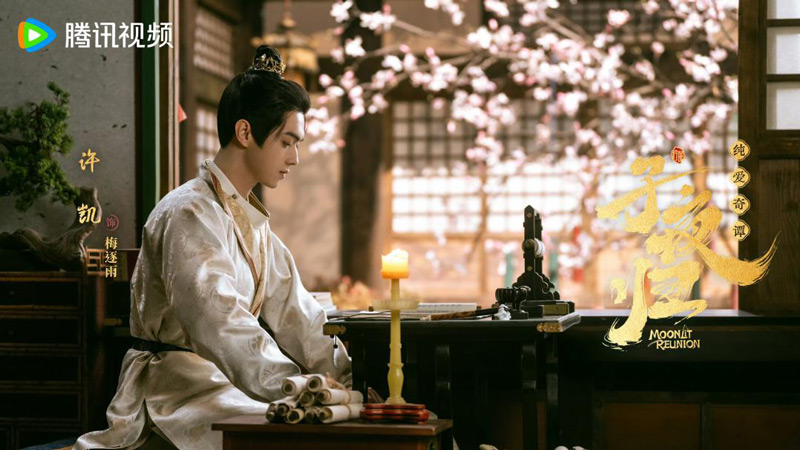
By contrast, Mei Zhuyu (played by Xu Kai) resides in a far simpler setting. His home is modest but tasteful, with plain furnishings, enlivened only by the flowers and greenery scattered around the courtyard.
The government office is represented by the Xuanjian Bureau, where Mei Zhuyu serves. The architecture here is solemn and carefully regulated. The courtyard's hexagonal skylight hints at the concept of "heaven and earth united" (天地六合), subtly echoing the Bureau's duty to oversee balance and order.
The urban market spaces are crafted with dizzying intricacy. Whether it is the Ruyi Pavilion or the Xiangsi Lane, everything from carpets to folding screens carries exquisite patterns, while every lattice window and desk has been finely carved.
When night falls, the "Demon Market" comes alive, taking center stage.
Historical records note that Chang'an once had a "Ghost Market" (鬼市). Despite the eerie name, it wasn't haunted. Instead, it was simply a night bazaar where ordinary townsfolk shopped or found entertainment after curfew. In modern terms, it was very much a Tang dynasty version of the street-stall economy.
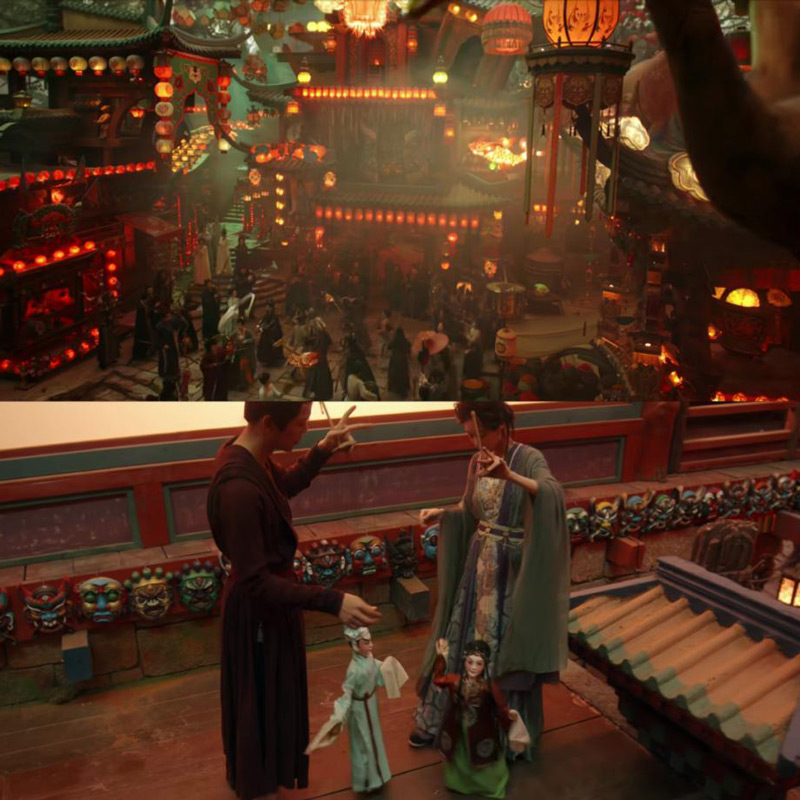
Moonlit Reunion builds on this idea and pushes it further. Its "Demon Market" is a vibrant gathering place where minor spirits and demons live, work, and trade.
Visually, the market bursts with bold, saturated colors, creating striking contrasts that demand attention.
In terms of design, the show blends traditional cultural symbols like masks from Nuo opera and puppetry, while the demons themselves display unique appearances based on their original forms. Together, these elements establish a dazzling, inclusive, and distinctly Chinese supernatural aesthetic.
Watching the Demon Market scenes, I often forgot the characters were demons at all. They felt more like ordinary citizens, unable to walk the daytime streets of Chang'an, so they built their own "underground city." What they sought wasn't dominance, but simply a peaceful life.
Viewed this way, the "supernatural" doesn't feel so bizarre after all.

Speaking of Demons, Revealing Humanity
Even though the sets and the Tang-inspired costumes radiate imagination and youthful flair, the story of Moonlit Reunion never floats off into empty spectacle.
Take the demon-related cases shown in the drama.
The creatures here are not incomprehensible, otherworldly monsters. On the contrary, they are formed from familiar things all around us.
Snakes, cats, mice, birds, camellia flowers, and rare herbs can all cultivate into demons. But so can everyday objects: a book, an earring, a shadow, an ink stain, a miasma, or even a meditation cushion. Some evolve into human form, becoming high-level demons. Others remain in their original bodies as lower-level spirits. Still others take shape only as illusions, becoming formless ultimate demons.
This choice of origin makes the demons in Moonlit Reunion less frightening because of their strangeness and instead more approachable, sometimes even endearing.
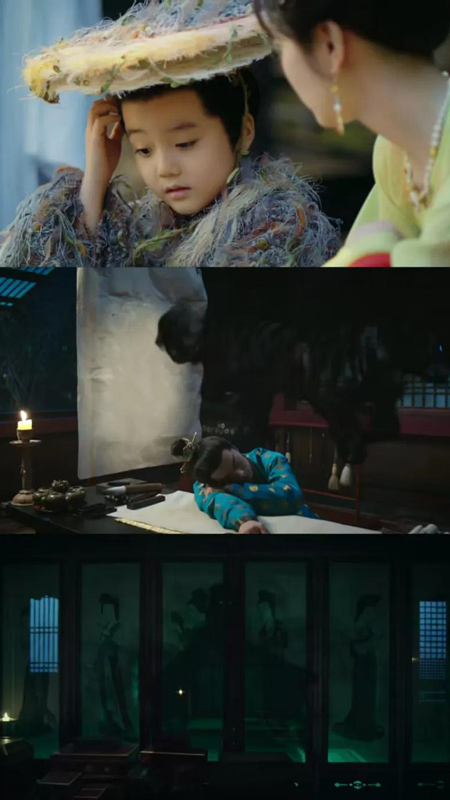
No matter how varied their forms are, or how unsettling their powers may look, the stories around them still revolve around emotions we all know well: love, hatred, resentment, longing, obsession. And the values they ultimately convey are equally familiar—independence, freedom, courage, fairness.
Take, for example, the first case with the bat demon Fuxi (played by Huang Riying). What traps her in obsession is her desperate attachment to the idea of being "two bodies born as one."
What finally awakens her is a speech from the cat spirit: possessing awareness and intelligence is already a gift, so why should one's life lose meaning without a twin companion? Walking through the world as two is beautiful, but walking alone has its own taste and worth. Each path has its beauty.
Though wrapped in fantasy, this story mirrors a very real dilemma and speaks directly to today's anxieties about relationships and marriage.
Another striking example is the "shadow demon" case, which deeply moved many viewers.
As a humble spirit hidden in the glow of lanterns, she never dared to do wrong, never dared to speak up for herself. All she wished was for a noble-born confidant to help publish her poetry. Yet that supposed confidant, a young man of an illustrious family, was nothing but a fraud. He stole her poems to claim talent for himself, and when exposed, trampled her reputation into dust. In the end, the shadow demon chose revenge on her own terms.
On the surface, it looks like a lowly demon lashing out from bitterness. But in truth, the case is a biting satire of the "poetry thief," giving voice to women who have been erased, misrepresented, or stripped of credit. How many men who appear righteous are in fact hypocrites chasing hollow fame? This demon case, with its female-centered perspective and spirit of resistance, resonates across time with contemporary gender debates.
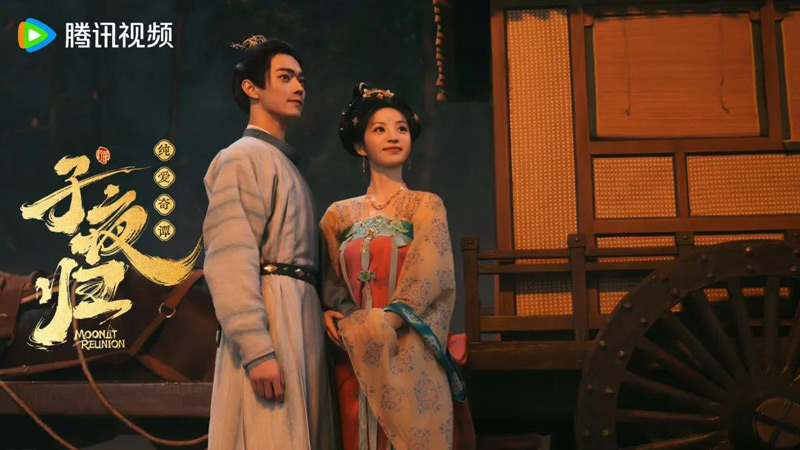
There is also the camellia spirit, who sought nothing but to guard and accompany the one she loved, ultimately giving her life for that protection. Their tragic yet tender story captures the purity of loyalty between true companions.
Or the herb demon, misunderstood and slandered, who chose vengeance against human greed. His path reveals how gossip and betrayal of kindness can twist into destructive consequences.
And then there is the goose demon case at the fragrance-tasting banquet, a chilling reflection on distorted aesthetics—people willing to harm living creatures in pursuit of the rare and the exotic.
Every case, every strange creature, comes with its own logic and emotional depth, each one echoing contemporary concerns in a subtle, thought-provoking way. This is how Moonlit Reunion uses the tales of demons to illuminate the truths of human nature.
This same grounded logic also extends to the main characters.
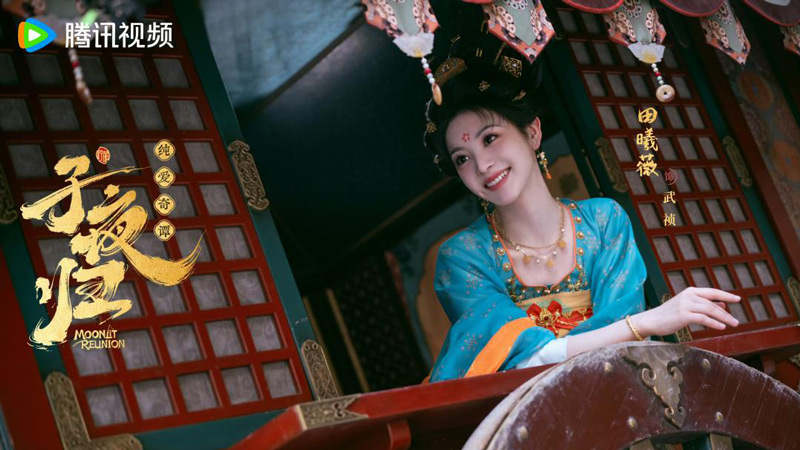
Take the setup of Mei Zhuyu and Wu Zhen. On the surface, Mei Zhuyu serves at the Xuanjian Bureau, but in truth he is a celestial master charged with hunting demons. Wu Zhen, meanwhile, plays the role of a frivolous county princess by day, but at night she becomes the Cat Lord, ruler of the Demon Market. Their relationship carries both the tension of sworn enemies and the barrier of unequal rank.
Wu Zhen stands apart from the usual female leads in costume dramas. She is not weak, trapped, or waiting to be saved. Instead, she is powerful in her own right, decisive in her emotions, and holds a social position far higher than the male lead. This fresh gender perspective makes her much easier for today's viewers to connect with.
Mei Zhuyu is no less forward-thinking in his values.
For example, the drama has him commenting on the folktale of the Cowherd and the Weaver Girl. To him, it is baffling that a divine woman would fall in love at first sight with a man who stole her clothes. And for a farmer to resort to theft just to possess a woman—he calls that a failure of character.
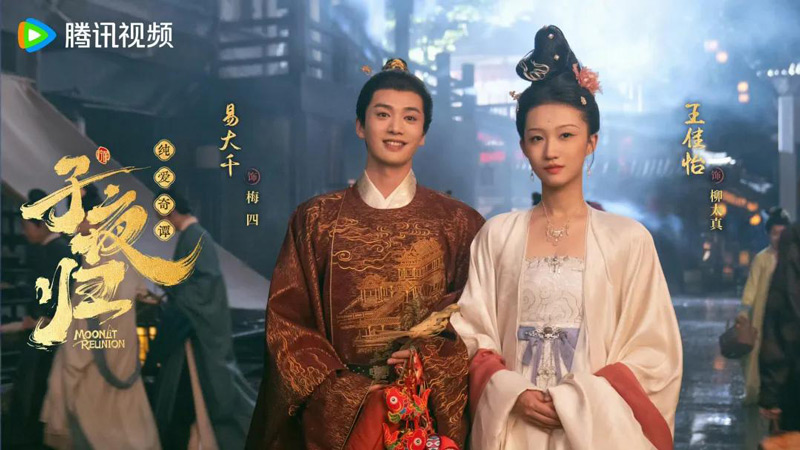
Another case is the relationship between Mei Si (played by Yi Daqian) and the snake spirit Liu Taizhen (played by Wang Jiayi).
A romance between a human and a snake demon immediately recalls the famous legend of the White Snake. But Moonlit Reunion refuses to follow the expected route. Here it is the mortal Mei Si who falls first, unwilling to let go. Once he realizes Liu Taizhen's affinity for demons, he immerses himself in related texts, eager to understand her world. Even when faced with her true serpentine form, he feels no fear—only a deeper resolve to protect her.
This kind of reimagined supernatural storytelling is exactly what makes Moonlit Reunion resonate with contemporary viewers.
As the old saying goes, supernatural tales have never been about ghosts and monsters alone. If Pu Songling wrote Strange Tales from a Chinese Studio (聊斋志异) as a vessel for his personal frustrations and hidden grievances, then the creators of Moonlit Reunion are likewise channeling their own understanding of human hearts, human nature, and human relationships in today's context.

Three Costume Drama Successes from Linmon Pictures
Moonlit Reunion is the second costume drama launched this summer by Linmon Pictures and its sub-label QLemon.
Earlier, with A Dream within A Dream (书卷一梦), a meta-drama that deconstructed and rebuilt the tropes of costume storytelling, the studio had already surprised audiences.
Until recently, Linmon Pictures was not widely recognized as a company known for period dramas. But from A Journey to Love (一念关山) at the end of 2023 to this summer's back-to-back releases of A Dream within A Dream and Moonlit Reunion, Linmon has demonstrated through QLemon that it now has a distinct standard for narrative and aesthetics in the costume drama arena—one that balances quality with unmistakable style.
On one hand, Linmon continues to deliver fresh approaches in both visuals and storytelling.
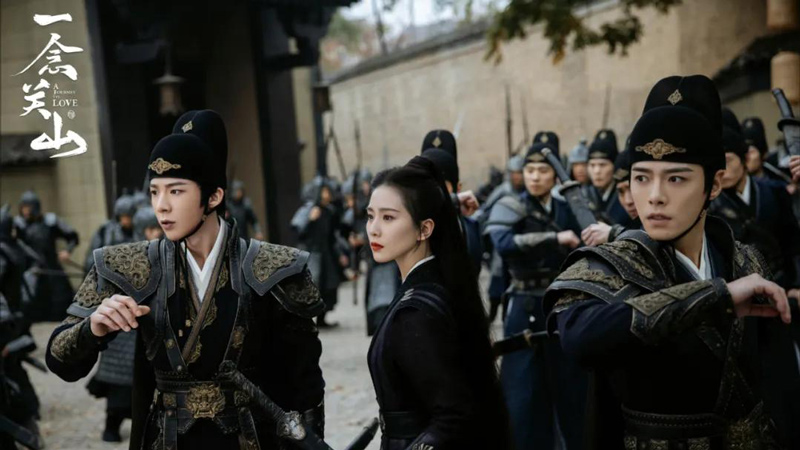
For instance, A Journey to Love broke away from the conventional framework of costume dramas by blending a "road movie" style with the grit of wuxia realism. With its fully original script, it carved out a new kind of period drama experience filled with the atmosphere of the jianghu (the martial world) and the rhythm of a journey—something especially rare in a market dominated by IP adaptations.
A Dream within A Dream combined the "entering a book" premise with a game-like structure, weaving in interactive narrative devices such as fast-forward, flashback, and multiple save points. The result was a light, playful world with a clear meta-fictional charm.
Moonlit Reunion, meanwhile, visualized the theme of human–demon coexistence through bold aesthetic choices, pushing the boundaries of fantasy within the costume drama space. Before this, few dramas had ever portrayed such a world with this level of beauty and imagination.
On the other hand, what sustains this innovation is Linmon's consistent ability to control quality.
Across projects of different genres and setups, the company has shown a unified standard for ensuring content strength:
—Whether working with original scripts or adaptations, there is always a narrative variation that aligns with contemporary audience tastes.
—Regardless of production scale, the aim is always to create striking visual and auditory memories that leave an impression.
—No matter the market profile of the actors involved, casting and character building always stress "alignment of persona with acting ability," maximizing each actor's potential.
This systemic and standardized approach to quality control ensures that Linmon's innovation in costume dramas goes beyond conceptual flair—it becomes a repeatable, sustainable content capability.
At a time when the production of period dramas urgently needs to break free from "path dependency," I believe Linmon's experience in costume drama creation is worth studying and learning from.
