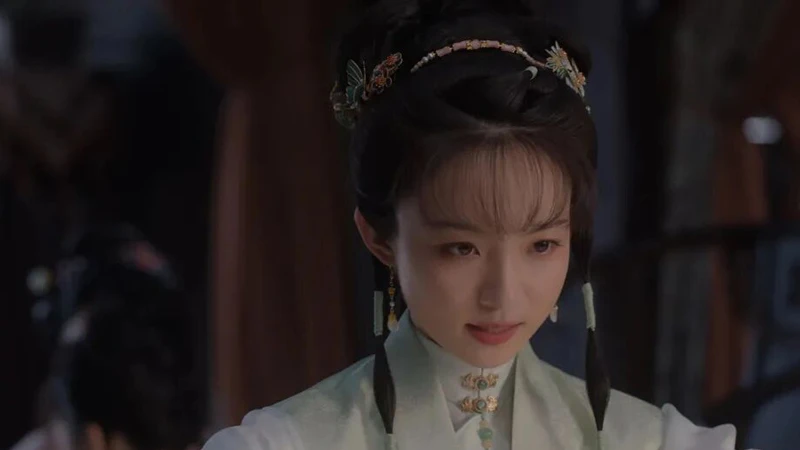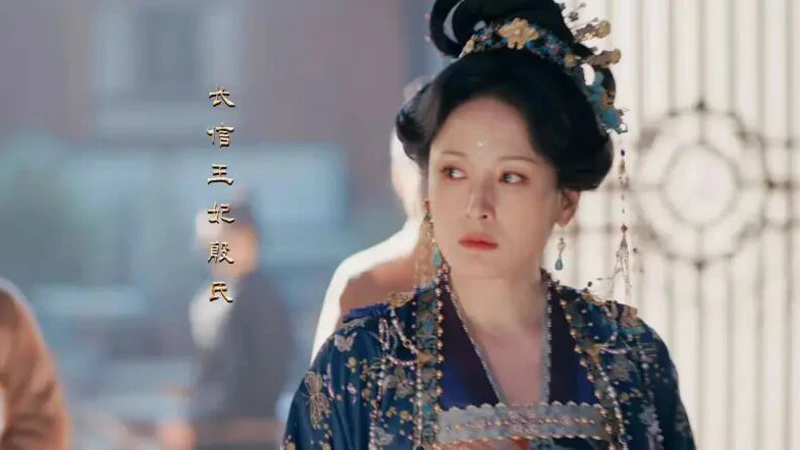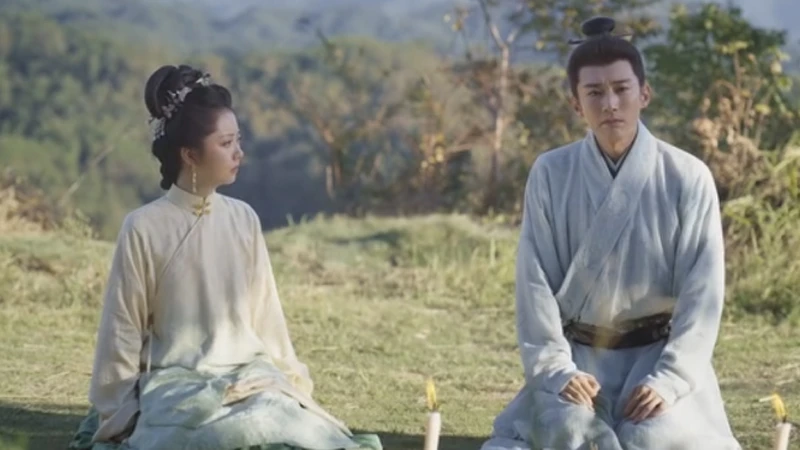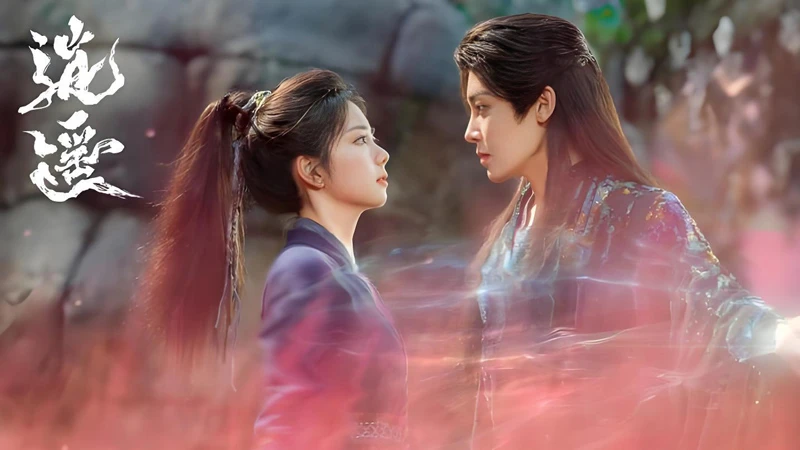
In the drama The Unclouded Soul (逍遥), a boundary between realms is shattered by a single, unwitting act. Xiao Yao (肖瑶), a young woman touched by the supernatural, accidentally awakens an ancient force and finds herself pulled into the Yaojia (妖家), a domain belonging to beings often called demons. This is not a simple refuge but a complex society mirroring our own, where she must navigate delicate alliances. Her journey questions the very lines drawn between human and Xiyao (戏妖), challenging the idea that one world must exclude the other.
The series distinguishes itself by weaving self-contained mysteries into its core fantasy narrative. Each case is more than an adventure; it reflects a facet of desire, fear, or longing, building a tapestry that feels both magical and emotionally raw. This structure allows the show to examine deeper truths while maintaining a compelling pace, moving the fantasy genre toward richer, more contemplative storytelling.

Wanyaogu and the Human Realm
In a landscape where narratives often choose between the whimsical and the weighty, a new story finds its power in refusing that choice. It builds a bridge between two realms—one a sanctuary of animated wonder, the other a testament to human struggle—and dares its characters to walk across. This journey does not pit fantasy against reality but instead reveals how each shapes and is shaped by the other, creating a narrative texture that is both enchanting and deeply resonant. The true magic lies not in the escape one world offers from the other, but in the profound, sometimes unsettling, truths that emerge when they collide and intertwine.
A Sanctuary of Spirits
The gateway to Wanyaogu (万妖谷) is guarded not by monsters, but by stone lions brought to life, their presence more majestic than menacing. Within this valley, the logic of the human world dissolves. Windows are crafted from the delicate, iridescent membranes of dragonfly wings, and classrooms for newly-formed spirits perch upon platforms designed for moon gazing. Here, every object pulses with a consciousness, a manifestation of the ancient belief that spirit resides in all things. This is a realm painted with the brushes of classical aesthetics, where mythical sensibilities are grounded in the very contours of mountains and rivers.
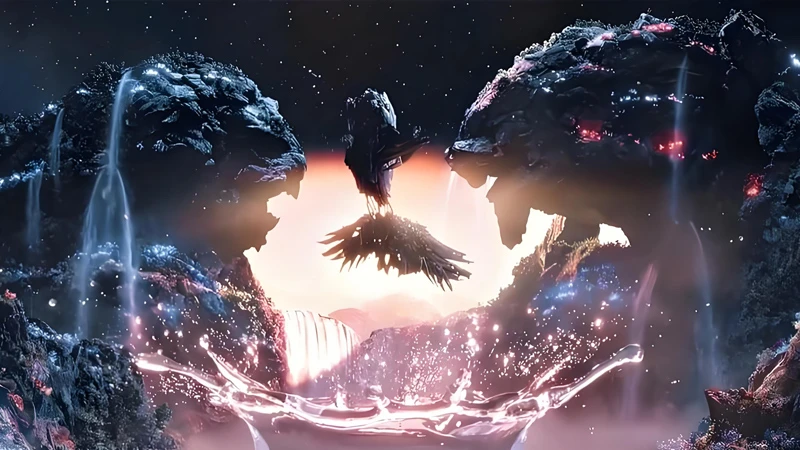
Contrary to fearful human legends, the valley is less a den of villainy and more a nursery for innocence. Its inhabitants are playful, curious beings, learning to navigate their forms and powers. The arrival of Xiao Yao disrupts their routine not with malice, but with a chaotic, relatable humanity. She sees a classmate with peony blossoms for hair and wonders aloud if they might make a good pie. A tutor with a turtle-like demeanor sparks thoughts of soup. Her actions, though outrageous, stem from a familiar, almost childlike logic of categorization—edible or not, useful or not—that is utterly foreign to the spirits.
Through her eyes, the audience experiences the valley’s daily life. The fantasy, initially vast and abstract, becomes intimate and tactile. We learn the rhythms of this place not through epic decrees, but through shared meals, communal lessons, and the gentle frustrations of a daily existence that is magical yet mundane. Xiao Yao’s human perspective acts as an anchor, tethering the ethereal beauty of Wanyaogu to a sense of lived-in, immersive reality, making its wonders feel discovered rather than merely described.
The Human Strain
Beyond the mist-shrouded peaks of the spirit valley lies a world defined by scarcity and complexity. Xiao Yao’s memories of her human life are etched in lack—a single egg carefully divided with her father, a constant calculation on the edge of survival. This “human realm” operates on a different currency: power, obligation, and thinly veiled desperation. Here, the marvelous is replaced by the mechanical grind of societal structures and the quiet battles fought within them.
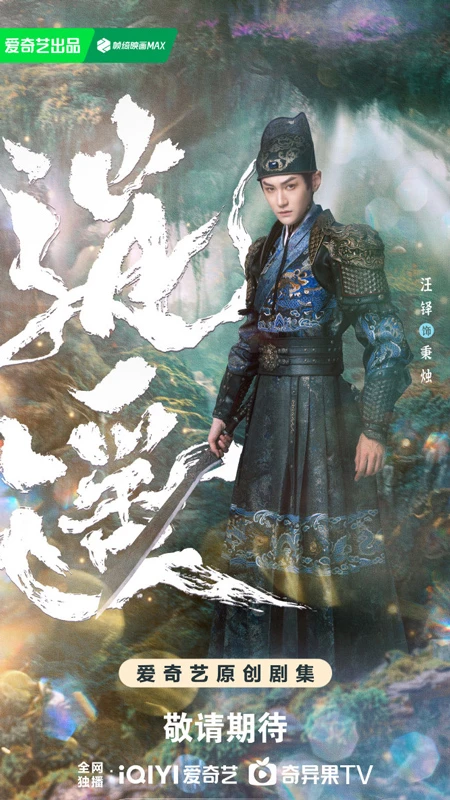
Characters like Bing Zhu (秉烛), the celebrated head of the Demon Executioners, embody this tension. His polished authority masks a precarious position. He navigates a web of scheming subordinates while bearing the weight of impossible mandates from a distant emperor. Each case he encounters peels back another layer of human struggle, revealing individuals trapped by circumstance, ambition, or loss. The problems here cannot be solved by magic; they are rooted in the intricate, often grim, soil of human nature and social order.
This world carries a tangible weight. Where the spirit valley feels light and expansive, the human realm is dense with unspoken rules and concrete consequences. The contrast is deliberate and stark. One world celebrates innate being and connection to nature; the other is a theater of performance, where survival depends on navigating hierarchies and hidden agendas. This friction between the two settings does more than define them—it creates a narrative magnetism, pulling the audience into the question of how, or if, these opposing forces can ever reconcile.
When Worlds Collide
The initial dynamic is one of observer and participant. Xiao Yao, the human, is a foreign element in the spirit valley, her instincts constantly clashing with its inherent harmony. Conversely, when elements of the valley seep into the human world, they are met with fear, exploitation, or a desire to control. This separation, however, is not sustainable. The narrative constructs situations that force a direct dialogue between these two value systems, challenging the characters’ deepest assumptions.
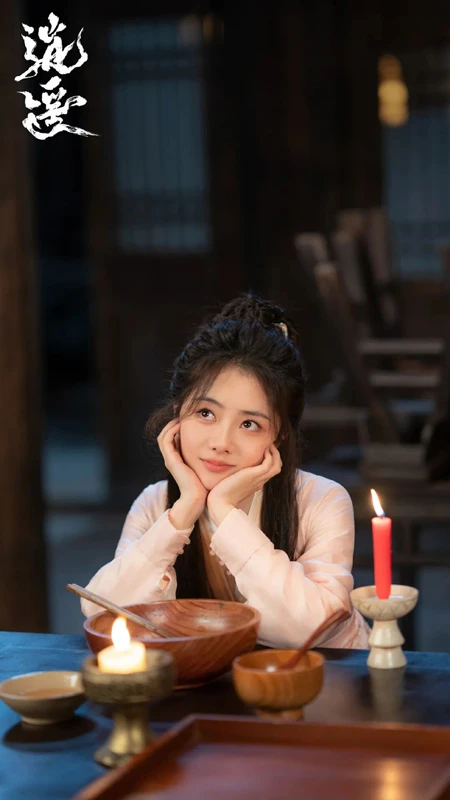
True immersion begins when each side must operate by the other’s rules. A spirit might have to comprehend human grief or ambition, while a human is forced to acknowledge a consciousness in the wind or a stone. These encounters move beyond simple conflict. They become conversations—sometimes clumsy, sometimes profound—about the nature of existence, community, and desire. The comedy of Xiao Yao’s early mishaps gradually matures into a more nuanced understanding, just as the rigid human characters find their certainty eroded by encounters with the inexplicable.
This collision is not about one world conquering the other. It is a process of mutual disruption and, potentially, growth. The innocence of the valley is challenged by the complexity of human emotion, while the cynicism of the human realm is unsettled by the valley’s genuine, unforced coexistence. The story suggests that isolation, whether in perfect fantasy or hardened reality, is a form of stagnation. The sparks that fly at their intersection are the first steps toward a more complete, if more complicated, way of seeing.
A Blended Reality
The culmination of this narrative fusion is a place like Yanxujing (烟虚境). It presents itself with all the spectacle of a pure fantasy: endless, vibrant flower fields and architecture of breathtaking beauty. Yet this is a mirage fueled by human longing. Peel back the glamour, and the flowers are manifestations of unchecked desire; the splendid palaces are revealed as crumbling facades. Here, fantasy does not offer an escape from reality, but instead becomes the very medium for its darkest expressions.
In Yanxujing, the themes from both worlds curdle together. The pursuit of immortality—a classic mythical trope—is laid bare as a brutal, human contest of betrayal and sacrifice. Well-born girls, in a grotesque mirror of courtly intrigue, vie for a chance to serve an immortal lord, their methods as cutthroat as any political schemer. The setting uses the language of the fantastical to amplify, rather than soften, the harsh truths of ambition and moral compromise. It is the spirit valley’s aesthetic married to the human realm’s most unforgiving instincts.
This represents the narrative’s final, sophisticated evolution. The story abandons the easy dichotomy of light fantasy versus dark reality. Instead, it proposes that the most potent tales exist in the blended space, where the symbolic power of myth illuminates the contours of real human experience. A flower can be both a thing of magical beauty and a metaphor for consuming greed. A sanctuary can also be a prison of one’s own making. By weaving the threads together so inseparably, the narrative achieves a lasting depth, reminding us that the stories we need most are those brave enough to hold wonder and truth in the same hand.
The Unclouded Soul: A Mythic Romance Across Human-Demon Realm

The Dual-Timeline Heart of a Fantasy Drama
Modern fantasy narratives often dazzle with spectacle, yet the most compelling ones anchor their magic in the intricate landscape of human feeling. A recent series distinguishes itself not through grand battles alone, but through a deliberate and sophisticated exploration of emotion, woven across multiple lifetimes and narrative layers. It crafts a world where past sorrows whisper to present joys, and where side stories reflect and deepen the central heartache, creating a resonant tapestry of connection and loss.
The Tapestry of Time
The central relationship between Xiao Yao and Hong Ye (红烨) forms the series’ emotional backbone, defined by a poignant dual-timeline structure. In their present incarnation, a gentle courtship unfolds. Hong Ye, once a cold and aloof demon king, softens, his actions speaking of deep care—preparing birthday noodles, arranging fireworks, sharing moments of simple joy. This present tenderness, however, exists in the haunting shadow of a shared, tragic past. Fragmented memories reveal a previous life ending in betrayal and death at their own wedding ceremony.
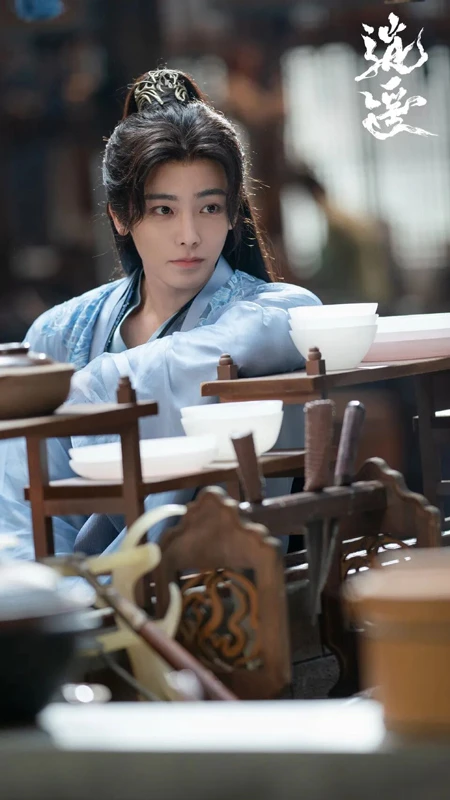
This narrative technique creates a powerful tension for the viewer. We are charmed by the current, growing affection while being acutely aware of the ominous historical footprint. Xiao Yao’s own emotional journey is rendered with subtlety. Her initial wariness gives way to complex feelings—pangs of jealousy, confusion over being perceived as a replacement for Hong Ye’s past love, Ning’an (宁安), and a fierce, protective instinct that surfaces when he is threatened. Her love is not a sudden revelation but a slow, believable accumulation.
The storytelling actively engages the audience as emotional archaeologists. Each present smile is tinged with the question of how such a gentle connection could have previously shattered so violently. This layering of timelines prevents the romance from feeling simplistic or predictable. The past is not just backstory; it is a living, aching ghost that shapes every present interaction, adding profound depth and a lingering sense of fragile beauty to their bond.
Side Stories as Emotional Mirrors
While the main romance provides vertical depth across time, the series widens its emotional scope through contained, novel-like side arcs. These are not mere filler but carefully crafted narratives that echo and amplify the core themes of redemption, obsession, and the complexity of bonds. They introduce characters whose struggles mirror or contrast with the protagonists’, enriching the drama’s overall psychological landscape.
One early arc features Chi A Li (魑阿离), a creature born for vengeance, whose path is irrevocably altered by the compassion of a sect leader’s wife. Their dynamic is not one of romantic love, but of profound, tragic salvation. Her influence transforms him from a killer into a healer, and their ultimate, shared demise carries a heavy sense of fatalistic grace. This story explores redemption outside of romance, presenting a bond built on mercy and a shared release from worldly suffering.
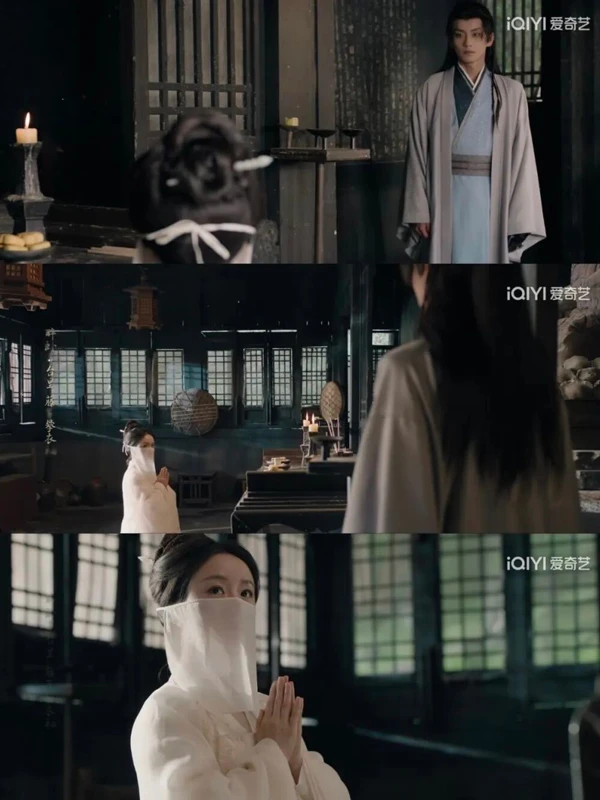
A later, darker arc within the Yanxujing pits the characters against a corrupted immortal, Sui Meng Xian Jun (碎梦仙君), whose descent was triggered by mortal betrayal. This realm acts as a crucible, warping desires and testing loyalties. Most strikingly, it fractures what seemed a pure friendship. Da Li (大丽), a flower spirit and Xiao Yao’s companion, reveals a bitter envy, unable to bear living in her friend’s shadow. This subplot delivers a jarring, realistic blow, reminding viewers that even in a fantasy world, friendships can be fragile and vulnerable to hidden insecurities.
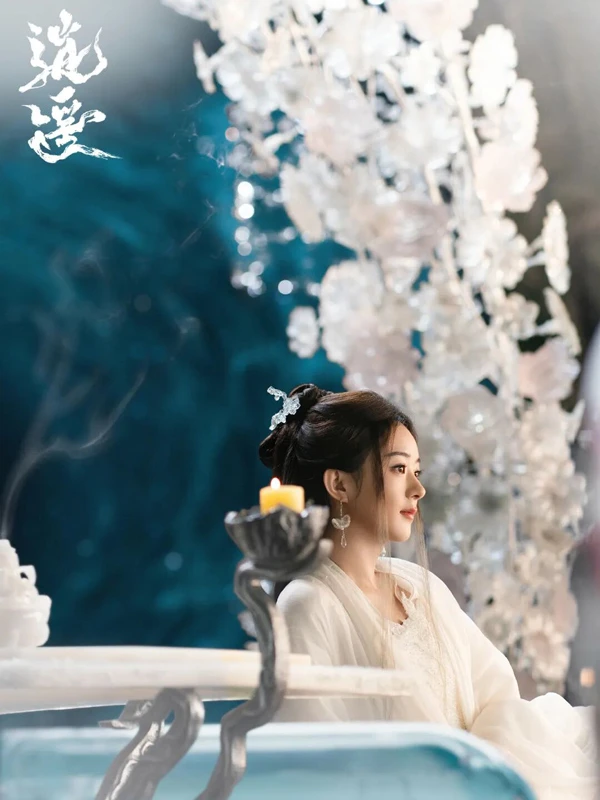
These ancillary stories succeed because they are given space to breathe and conclude with their own emotional weight. They demonstrate that the world of the drama is populated by individuals with complete, often painful, inner lives. They move beyond the typical, showing that love is not the only transformative force—grief, mercy, envy, and the quest for purpose are equally powerful drivers, making the drama’s universe feel genuinely inhabited and emotionally vast.

Desire and Its Turbulent Wake
A new Chinese drama is quietly reshaping the rules of its genre. The Unclouded Soul begins with familiar ingredients—a fated romance between realms, a timeless power source, and beings caught between human and demon worlds. Yet, it assembles these elements into something strikingly different. Moving past a sole focus on romantic entanglement, the series constructs its narrative around discrete, case-like units. This structure does more than vary the pacing; it opens doors to weightier questions about choice, morality, and the nature of desire itself, granting the story a resonance that extends far beyond its fantastical setting.
A New Narrative Architecture
Traditional costume fantasy often orbits a central, all-consuming love story, tracing its characters across lifetimes. The Unclouded Soul acknowledges this legacy but deliberately decentralizes it. While the bond between Xiao Yao and Hong Ye provides an emotional throughline, the plot is driven by a series of contained mysteries. Each unit operates almost as a standalone genre piece, refreshing the viewer’s experience from one chapter to the next.
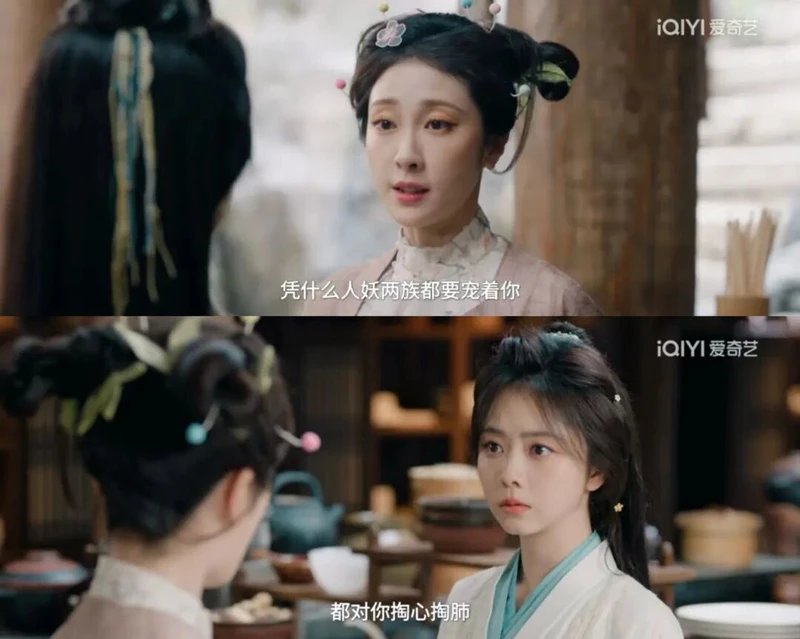
One case plunges the characters into a detective-style investigation within a mist-shrouded forest. Another traps them in a haunted manor, evoking the claustrophobic tension of a puzzle-filled escape room with distinct Chinese aesthetic tones. This approach constantly shifts the dramatic lens, ensuring the story’s momentum never relies on a single type of conflict or emotional beat.
Most significantly, this architecture redirects the series’ core inquiry. Audience investment shifts from merely wondering if the leads will end up together, to observing how they navigate each new moral landscape. The focus expands toward understanding how individuals and societies coexist, and what they choose to uphold when confronted with profound choices.
The Wellspring of Conflict
At the heart of this world lies the Jade Spring, a font of primordial power. It acts as the story’s ultimate MacGuffin, but its true function is symbolic. The spring represents pure potential—it can rewrite fate—but it manifests most consistently as a magnet for desire. It visualizes the idea that unchecked want is the root of endless strife, drawing every character into its turbulent wake.
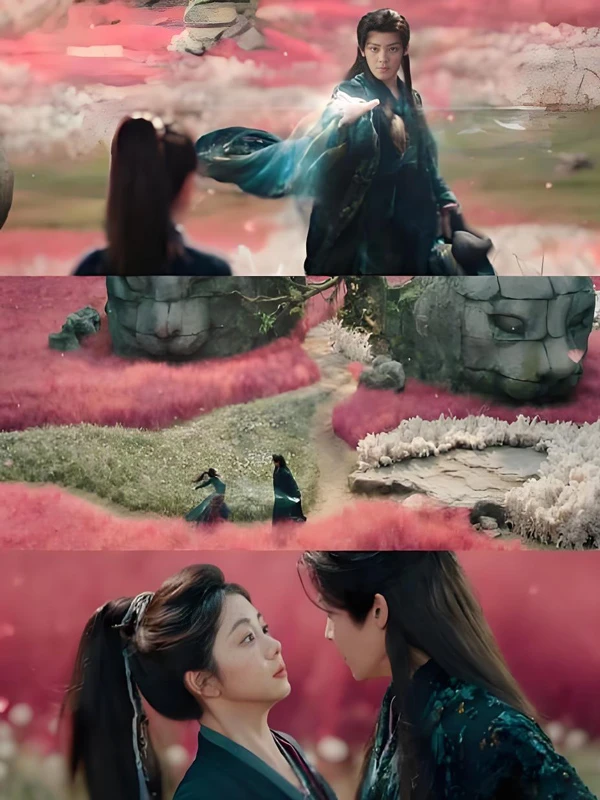
The series’ individual cases serve as detailed studies of this central theme. They take abstract concepts like greed, fear, and longing and translate them into concrete, dramatic situations. Through these stories, the show refracts complex slices of real-world human psychology onto its fantastical canvas, asking what truly defines a monster or a savior.
Characters consistently defy easy labels. A revenged-filled outcast finds redemption in healing, while a revered leader succumbs to corruption. A seemingly innocent figure turns malevolent, and a suspected villain reveals a capacity for good. These arcs suggest that morality is seldom a fixed position, but rather a path shaped by circumstance, fear, and the deep-seated hunger for recognition or belonging.
The Choice to Remain Human
Amidst this exploration of desire’s distorting power, The Unclouded Soul presents a counterpoint through its protagonist. Xiao Yao exists in a liminal space, never fully accepted by either humans or demons, and is perpetually viewed with suspicion. This position, rather than embittering her, becomes the source of her unique clarity.
While others are consumed by the promises of the Jade Spring or lost in their personal grievances, she maintains a singular focus and a foundational empathy. Her goal is not to possess power, but to fulfill a promise and protect a connection. In the cruel trials of the illusory realm, where others fall prey to their own amplified wants, her steadfastness becomes her defining strength.
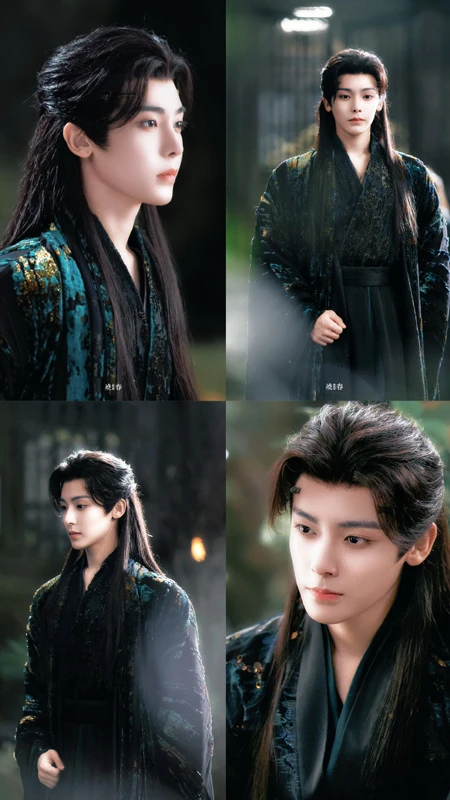
This conscious rejection of corrosive desire points toward the drama’s essential meaning. The title The Unclouded Soul implies a state of carefree liberation, a freedom often sought through external power in fantasy tales. Here, however, it is framed as an internal achievement. True freedom arises not from mastering the world, but from mastering oneself—from maintaining one’s core integrity against the relentless pull of external temptations and internal fears.
The Unclouded Soul constructs a world where fairy tales meet philosophical inquiry. By dismantling genre conventions and building a narrative of thoughtful episodes, it engages the mind as much as the heart. It suggests that the most compelling fantasy is not about escaping reality, but about understanding it more deeply through a different lens.
A Journey to the Unclouded Soul
The Unclouded Soul transcends its fantastical premise to offer a profound meditation on integrity and coexistence. By masterfully weaving intimate character studies with philosophical inquiry, the narrative moves beyond simple clashes between human and spirit worlds.
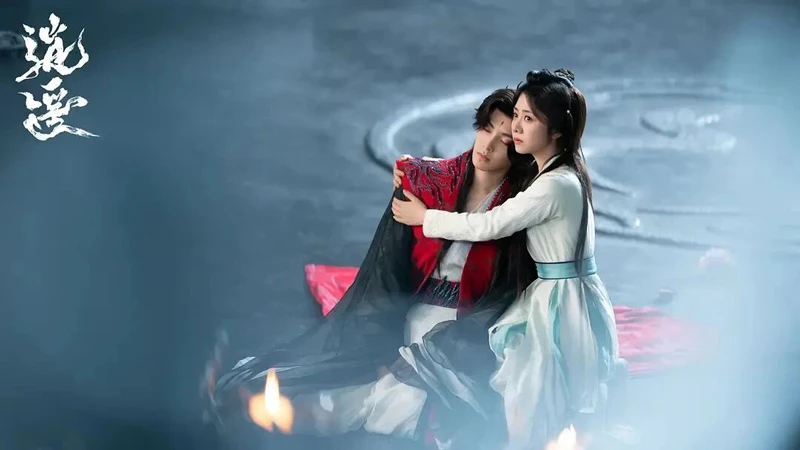
Instead, it finds its resolution in the blended spaces where these realms meet, challenging both characters and audience to reconsider rigid boundaries. The series concludes not with the triumph of one domain over another, but with the hard-won understanding that true clarity—the unclouded soul—is achieved through empathy, self-mastery, and the courage to embrace a more complex, interconnected reality. It is an invitation to find liberation not in escape, but in mindful presence within a beautifully intricate world.