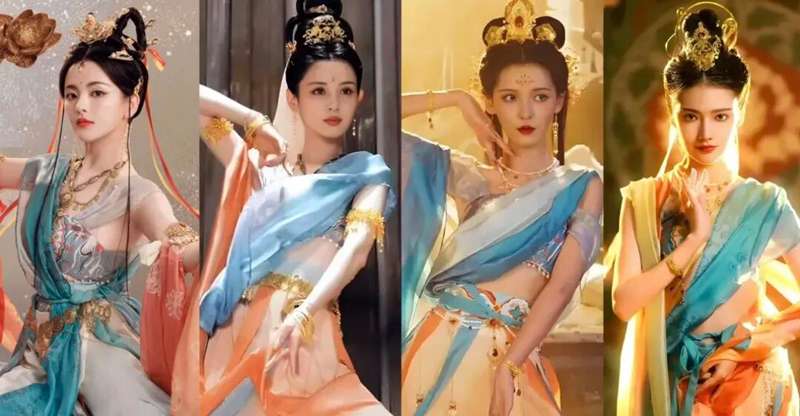
Scrolling through social media, you've seen her. The dancer in the flowing, high-waisted skirt and delicate wrap-top, a long silken scarf dancing around her shoulders. She's labeled a "Tang Dynasty style" Hanfu or a "Dunhuang (敦煌) Feitian (飞天)" look. It feels ancient, elegant, and quintessentially Chinese. Yet, within dedicated Hanfu communities, this very image sparks debate. Is this beautiful ensemble truly Hanfu, or is it something else entirely? The answer lies not in its beauty, but in a journey through history, art, and cultural identity.
Defining Hanfu
To begin, we must understand what Hanfu represents. It is not a single costume but the traditional clothing system of the Han ethnic group. Two core principles define it: a foundation in the historical dress systems developed by Han people, and adherence to verified historical shapes and construction. It is rooted in documented reality, not artistic fantasy. The question, therefore, shifts. We aren't asking if the outfit is beautiful or inspired by Chinese art, but if its lineage is authentically Han.
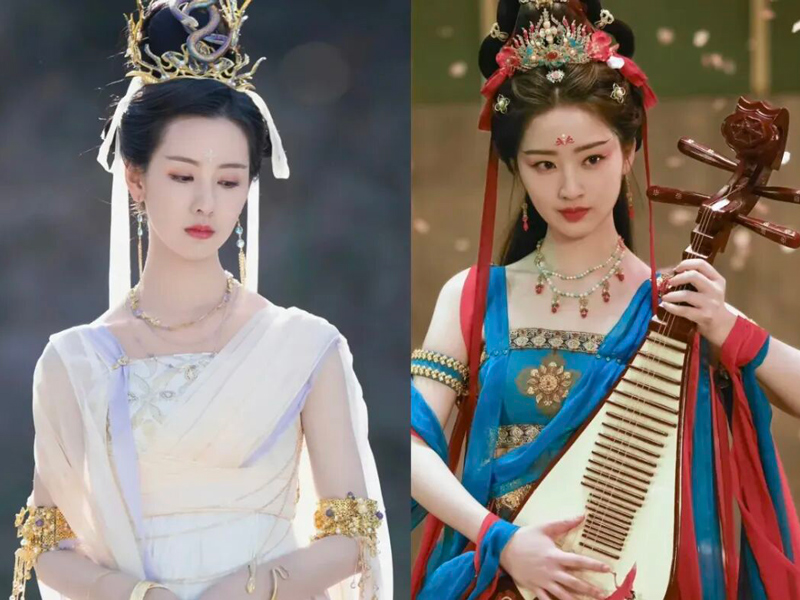
Many assume the "Feitian" style belongs to Hanfu because it evokes the Tang Dynasty, a golden age often associated with classic Chinese aesthetics. It is frequently used in traditional dance, further linking it to cultural performance. This association, however, confuses artistic adaptation with historical clothing. The Tang Dynasty was cosmopolitan, but not every popular visual motif translates to daily Han attire.
Feitian's Foreign Roots
The Feitian, or "Flying Apsara," figure did not originate in Han culture. This celestial being traces its roots to India, initially appearing in Brahmanical and later Buddhist art. When Buddhism traveled the Silk Road to China, the Feitian came with it. Early depictions in the Mogao Caves show figures with distinct South and Central Asian dress: bare chests or snug bodices, crossed sashes, and narrow, clinging skirts known as "sheep-gut" skirts.
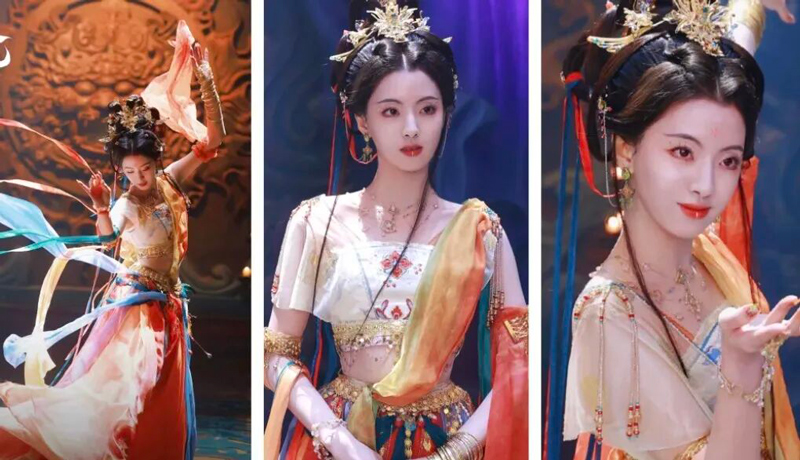
This early form shared little with the layered robes and wide sleeves of contemporaneous Han clothing. The Feitian was a divine, otherworldly symbol, and its attire reflected its foreign origins. Its purpose was religious iconography, not to document the fashion of the Han people. This is a crucial distinction. The clothing of gods, especially imported ones, is not a reliable guide to what ordinary people wore.
Evolution in China
Over centuries, a fascinating fusion occurred. Following reforms like those of Emperor Xiaowen of Northern Wei (北魏孝文帝), foreign influences gradually blended with local traditions. The Feitian began to absorb elements from Daoist imagery of feathermen and incorporate Han decorative patterns. The tight skirt sometimes widened; Han-style ribbons and floral borders appeared. The core silhouette—a wrap-top, a long skirt, and flowing scarves—remained, but the visual language became more familiar to Chinese viewers.
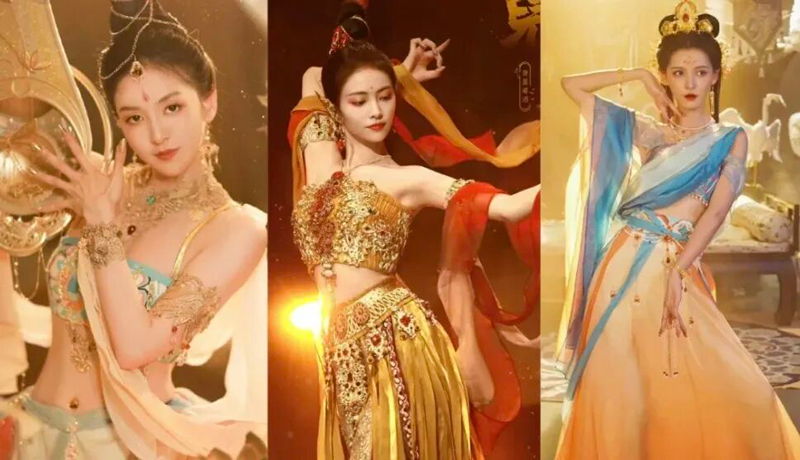
Yet, even this sinicized Feitian remained a supernatural being. The exaggerated scarves, impossibly long ribbons, and gravity-defying drapes were artistic tools to convey ethereal beauty and divine motion. No practical historical garment would mimic this purely symbolic design. The modern "Feitian style" dress is largely a creative interpretation by artists and retailers, inspired by these murals but without a direct counterpart in the archaeological record of Han civilian dress.
Modern Identity and Enjoyment
So, what does this mean for the stunning outfit in your feed? It may not fit the strict, historically-minded definition of Hanfu. However, it comfortably and proudly belongs to the broader category of "Han-style" or "Guofeng (国风)" fashion. This is where traditional inspiration meets contemporary creativity. For most wearers, the goal isn't historical reenactment but to connect with a perceived ancient elegance and grace.
There is no need for disappointment or conflict. The key is understanding context. For a historical study group or a formal ceremony focused on accuracy, a documented Hanfu style is appropriate. For daily wear, photoshoots, or stage performance, the Feitian-inspired dress is a valid and beautiful expression of cultural appreciation. It celebrates an artistic legacy that, while not purely Han in origin, was profoundly reshaped by Chinese hands.
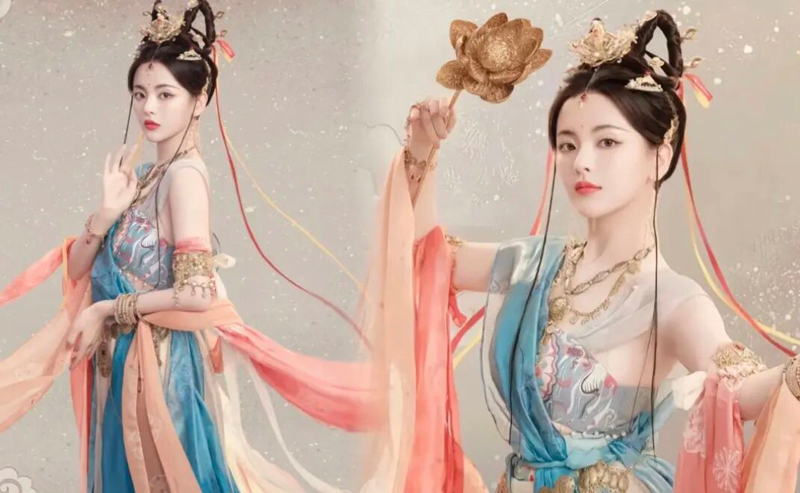
Ultimately, clothing serves many purposes: identity, ritual, and art. The Feitian style draws from a deep well of cross-cultural artistry centered at Dunhuang. We can appreciate it for what it is—a modern, romantic evocation of divine beauty from the Silk Road—without forcing it into a rigid historical category. The debate itself shows a passionate engagement with heritage. That engagement, paired with knowledge, allows the beauty of both history and imagination to thrive.