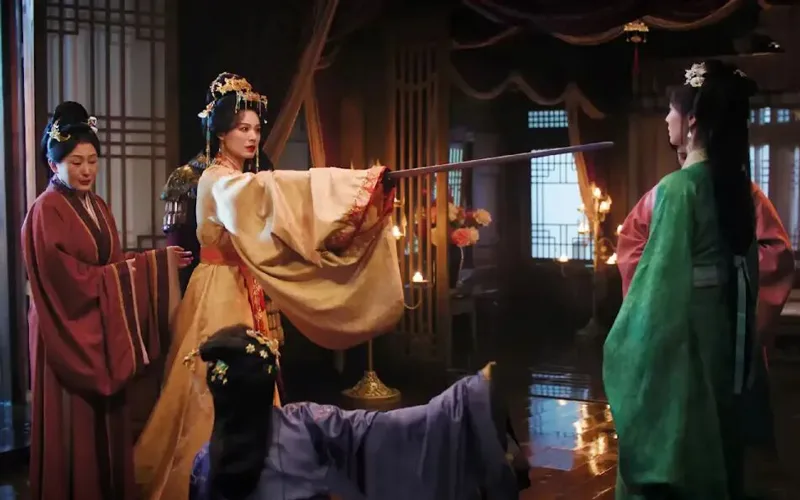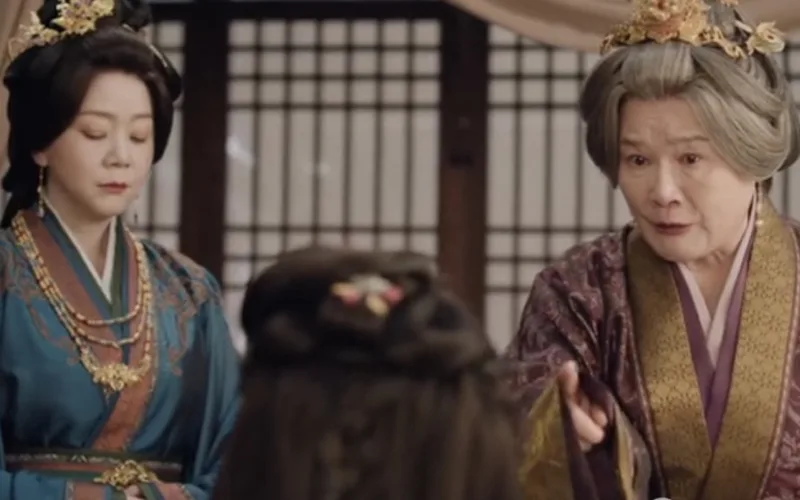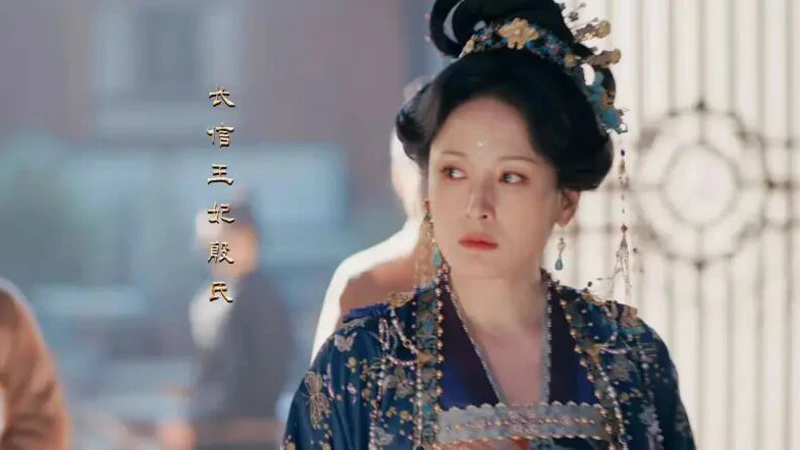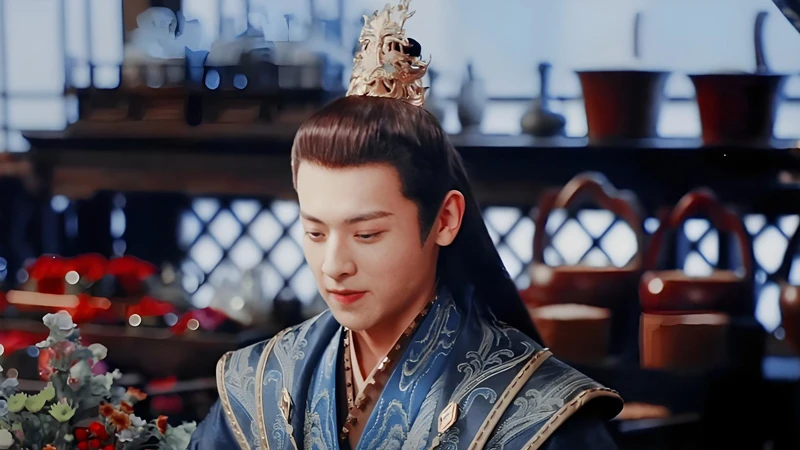
In the tumultuous world of Blood River (暗河传), the saga of Xiao Ruofeng (萧若风) stands as a poignant tale of sacrifice and unintended consequences. Set against the backdrop of the Beili (北离) empire, his life unfolds like a classic tragedy, where personal virtues clash with political realities. As a central figure, he navigates a path filled with loyalty, love, and the heavy weight of destiny. This story delves into how his choices, meant to preserve peace, instead ignited conflicts that reshaped kingdoms.
Through his journey, we see the fragile balance between ambition and selflessness, offering lessons that resonate beyond the screen. What begins as a tale of brotherly devotion spirals into a web of power struggles, leaving audiences to ponder the true cost of integrity in a world driven by force.
Throne Denied
Xiao Ruofeng’s early life was marked by a bond with his brother, Xiao Ruojin (萧若瑾), that seemed unbreakable. Their childhood struggles, including a moment when Xiao Ruojin threatened a physician to save him, forged a deep connection. When their father, Emperor Tai’an (太安帝), favored Xiao Ruofeng for the throne, it placed him in an impossible position. The Dragon Seal Edict bore his name, a symbol of legitimacy in Beili politics. Yet, he recognized his brother’s burning desire for power and chose to step aside, tearing the edict publicly to support Xiao Ruojin’s ascent. This act, meant to uphold family harmony, instead sowed seeds of future strife, as it left him with immense influence but no official crown.

His decision resonated through the court, where many had rallied behind him due to his charisma and fairness. Figures like the Zhenxi Hou (镇西侯) had seen him as a beacon of stability. By relinquishing the throne, Xiao Ruofeng aimed for a simpler life, dreaming of wandering the Jianghu with his love, Situ Xue (司徒雪). However, this selflessness bred uncertainty among his followers, who now questioned the empire’s direction. The void he left allowed others, including the powerful eunuchs like Zhuo Qing (浊清), to manipulate events, setting the stage for broader conflicts. In trying to avoid one crisis, he inadvertently created others, highlighting the peril of noble intentions in a ruthless world.
Xiao Ruojin, now Emperor Mingde (明德帝), initially seemed grateful, but the dynamics shifted quickly. Xiao Ruofeng’s retention of the elite Hu Ben Army (虎贲军) and the vast Langya Army (琅琊军) made him a figure of awe and fear. His military prowess, celebrated across the land, cast a long shadow over the new ruler. This division of power, though unintentional, fueled tensions that would define their relationship. The brothers’ once-strong bond frayed as political realities took over, showing how easily personal ties can unravel under the weight of authority. Xiao Ruofeng’s hope for a peaceful existence faded, replaced by the looming specter of distrust and ambition.
Love’s Cost
The forced marriage of Yi Wenjun (易文君) to Emperor Mingde became a pivotal moment in Xiao Ruofeng’s story. Intended to secure the throne through an alliance with the Ying Zong (影宗) sect, it tore at personal loyalties. Yi Wenjun’s heart belonged to Ye Dingzhi (叶鼎之), and this union pushed him toward darkness, sparking the eastern campaign of the demonic sect. Xiao Ruofeng, ever the peacekeeper, intervened to prevent wider chaos, but his actions only deepened the rift. He found himself trapped between duty to the empire and the lives of those he cared for, a conflict that would haunt his every move.
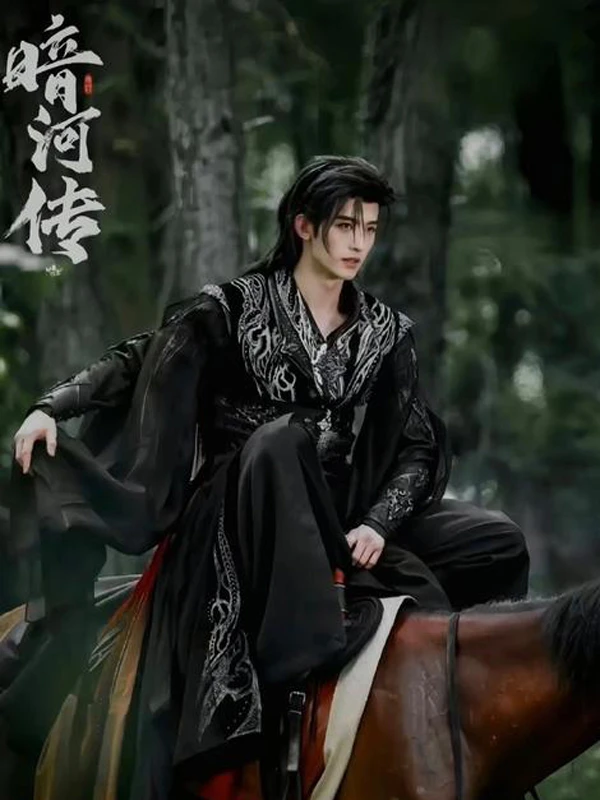
As war erupted, cities across Beili suffered, with civilians displaced and landscapes scarred by battle. Xiao Ruofeng joined forces with allies like Yin Yi Hou (银衣侯) Lei Mengsha to repel northern invasions, achieving notable victories. Yet, each success amplified his reputation, making Emperor Mingde increasingly uneasy. The very skills that had once saved the realm now painted him as a threat. In the shadows, the eunuchs’ scheming exploited this tension, weaving plots that targeted his influence. Xiao Ruofeng’s efforts to mediate, such as aiding the Dark River organization against the Ying Zong, were twisted into evidence of ambition, further isolating him from the court.
Amid this turmoil, his relationship with Situ Xue offered a glimpse of the life he desired—one of freedom and love, far from political machinations. But the pressures of loyalty to his brother and the empire pulled him back into the fray. His subordinates, inspired by his strength, began to advocate for rebellion, seeing him as the true leader. This internal push toward conflict weighed heavily on him, as he struggled to balance his ideals with the growing demands of those around him. The personal became political, and every choice carried the weight of potential disaster.
Final Sacrifice
Emperor Mingde’s patience snapped, leading to Xiao Ruofeng’s arrest and a public trial. In a dramatic turn, Li Xinyue (李心月) fought her way to the execution grounds, showcasing the depth of loyalty he inspired. Outside the walls, the Langya Army stood ready for battle, poised to plunge the empire into civil war. Faced with this brink, Xiao Ruofeng made his ultimate decision: he took his own life to prevent widespread bloodshed. This act of self-sacrifice was meant to quell the rising storm, but it left a legacy of sorrow and unanswered questions among his followers.
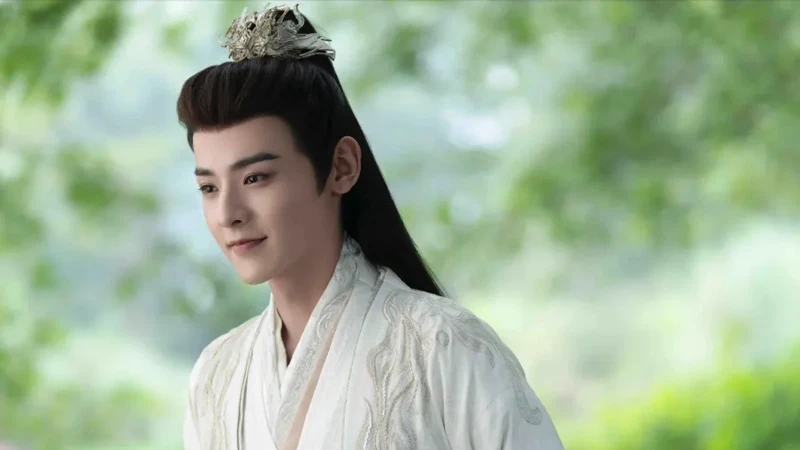
In the aftermath, Li Xinyue succumbed to her injuries, adding to the tragedy. The empire, though spared immediate collapse, grappled with the void left by his death. Emperor Mingde’s rule continued, but the shadows of distrust and regret lingered. Xiao Ruofeng’s story serves as a cautionary tale about the limits of selflessness in a world where power dictates outcomes. His life, filled with good intentions, ultimately underscored how easily virtue can be twisted into vulnerability.
Reflecting on his journey, one sees the irony of his sacrifices—meant to protect, they often led to greater harm. The themes of Blood River echo through his experiences, reminding us of the complex interplay between personal desires and collective responsibilities. In the end, Xiao Ruofeng’s legacy is not one of failure, but of the poignant struggles that define the human condition, inviting viewers to reconsider what it means to lead and to love.