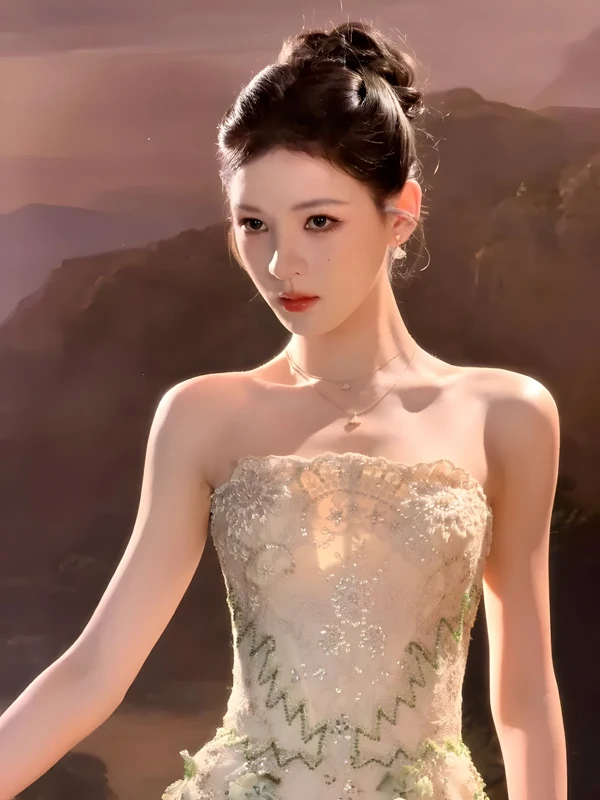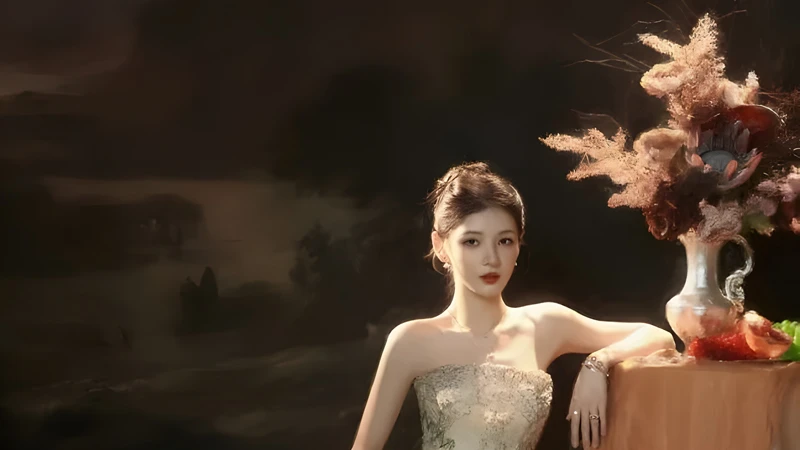
When actress Zhang Yuxi (张予曦) stepped into view recently, she did not merely wear a gown; she wore a narrative. Her ensemble, an off-white fishtail dress adorned with green-hued embroidery and scattered crystals, sparked immediate fascination. It evoked the meticulous, living artistry of a medieval horticultural masterpiece, translating verdant vines and delicate blooms into a language of thread and bead. This was not just a fashion choice but a deliberate sartorial statement, blending historical grandeur with a modern, cool elegance.
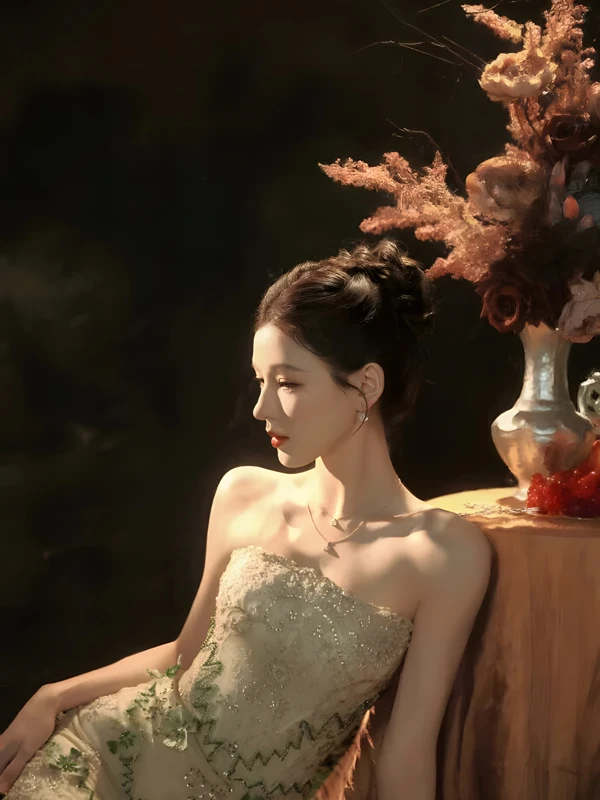
The image she presented was strikingly complete, from the styling of her hair to the subtle accessories, culminating in a portrait that felt less like a photograph and more like a recovered painting from a noble’s hall.
Crafting the Illusion
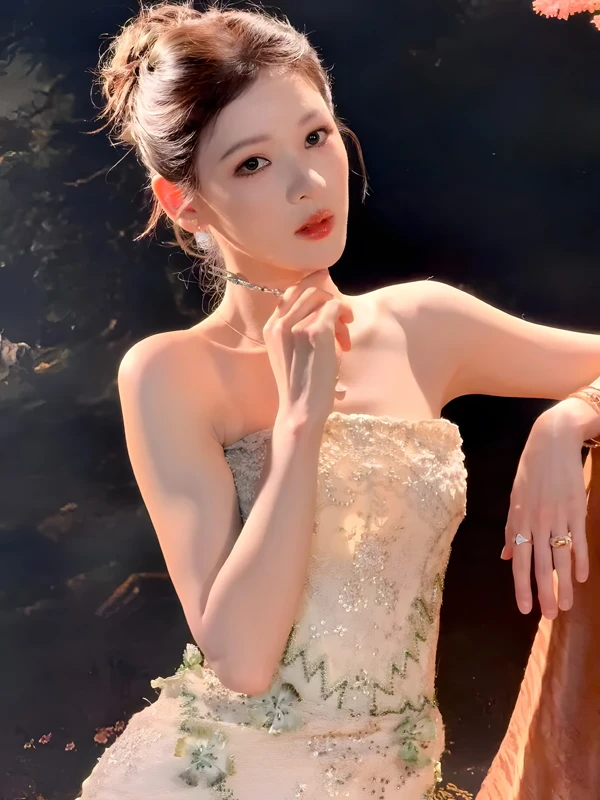
The dress itself is a study in intentional design. The structured bodice highlights graceful shoulders and a slender waist, creating a silhouette that is both regal and softly feminine. The true marvel lies in the surface. Intricate embroidery in shades of moss, emerald, and sage crawls across the fabric, reminiscent of ivy climbing ancient stone walls. Each stitch builds a tapestry of flora, while strategically placed crystals catch the light like morning dew on petals.
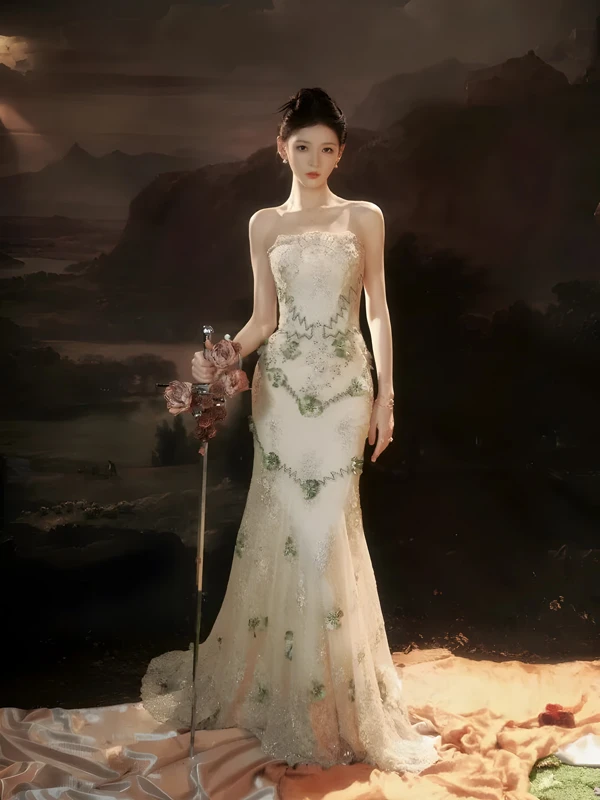
This botanical motif finds its boldest counterpart in an unexpected accessory: a floral-adorned sword held delicately in her hand. This piece is far from a mere prop. It introduces a narrative edge, a hint of stoic fortitude beside the gown’s inherent romance. It suggests a character from a forgotten legend, a noble figure as capable as she is elegant, instantly deepening the story the outfit tells.
Styling choices reinforce this crafted vision. Her hair is swept into a clean, polished updo that offers an air of dignified authority. Jewelry is minimal—a conscious decision that allows the dress’s elaborate craftsmanship to command attention. The overall effect is one of controlled opulence, where every element has purpose, and nothing is superfluous.
Roots in History
The aesthetic draws clear inspiration from the art and status symbols of medieval European nobility. For the aristocracy of that era, cultivated gardens were not just pleasant spaces but powerful displays of control over nature and vast resources. These walled paradises, or hortus conclusus, symbolized purity, privilege, and a curated ideal of beauty.
Designers are increasingly looking to such historical concepts, moving beyond simple retro styles to weave deeper cultural motifs into contemporary fashion. Translating the essence of a garden—its structured wildness, its symbolic wealth—into a wearable form is a sophisticated design challenge. It requires balancing ornate detail with a clean, modern line.
Zhang’s gown executes this balance. It references the lavish botanical tapestries and illuminated manuscripts of the period without becoming a costume. The color palette of ivory and green is directly lifted from those traditional art forms, while the fishtail skirt and sleek cut anchor the look firmly in the present. This fusion creates what observers have called “vintage cool-luxury,” a trend gaining momentum where the past is not copied but conversed with.
A Style Evolution
This moment is a significant marker in Zhang Yuxi’s own fashion journey. She initially captured public attention with a fresh, girl-next-door appeal, often seen in playful, accessible styles. Her red-carpet appearances and editorial features have charted a steady progression toward more complex and authoritative looks.
Her ability to now carry a concept as weighty as this “medieval garden” speaks to a refined confidence and maturing aesthetic sensibility. It shows a willingness to embrace bold, character-driven fashion that makes a statement beyond mere beauty. This evolution mirrors a broader trend among public figures who use clothing as a tool for storytelling and personal branding.
The public and critical reception confirms the success of this approach. Fans and fashion commentators alike praised the look for its authenticity and artistic merit, with many noting it resembled a portrait come to life. In an age of fleeting trends, such a response highlights a desire for fashion with depth, history, and a touch of unforgettable drama. Zhang Yuxi’s garden, meticulously embroidered on silk, proves that sometimes the most compelling stories are told without a single word.