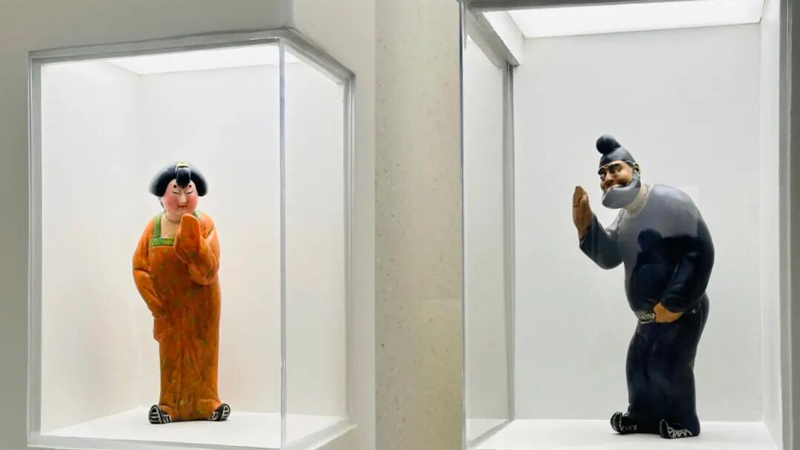
Have you ever hesitated in front of a restroom door, puzzled by an abstract symbol? In the ancient city of Xi'an, this everyday experience is being transformed into a subtle cultural lesson. Forget the universal stick figures; here, history itself is guiding you. A shopping mall in the city has become an unlikely hotspot, not for its stores, but for its three-dimensional restroom signs. These aren't just signs; they are miniature exhibits. They feature intricate figures—a woman in elegant Tang-style attire and a man in a traditional round-collar robe, both rendered with such detail that they seem to step out of a history book.
This innovative approach is part of a broader movement where public facilities are becoming canvases for cultural storytelling, challenging the global standard for restroom signage and offering a moment of historical connection in the most mundane of places.
Tang Dynasty Guides
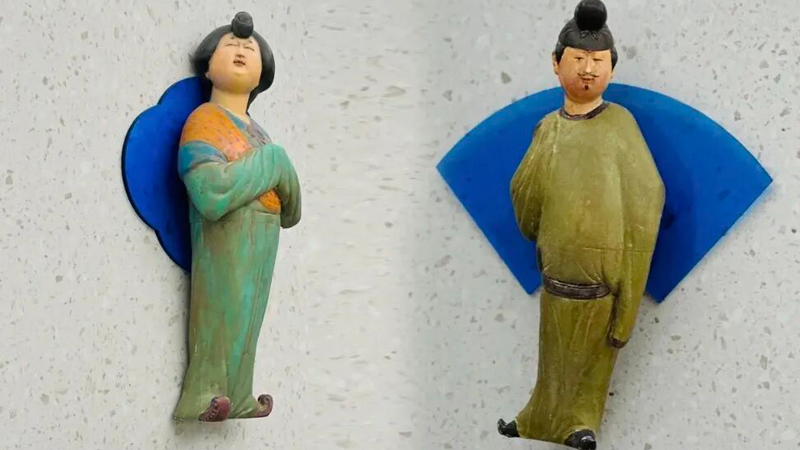
The Shanxi Archaeological Museum (陕西考古博物馆) takes this concept even further. Its restroom signs are directly inspired by artifacts unearthed from local soil. The female figure is modeled after a mural from the tomb of a Tang dynasty crown prince. She wears a graceful outfit—a narrow-sleeved gown and a long, flowing shawl. Her hairstyle is elaborate, pinned with a floral hairpiece. The male figure, dressed in a round-collar robe and a signature headcloth, embodies the scholarly and official look of the era. These are not generic silhouettes but carefully researched historical reconstructions.
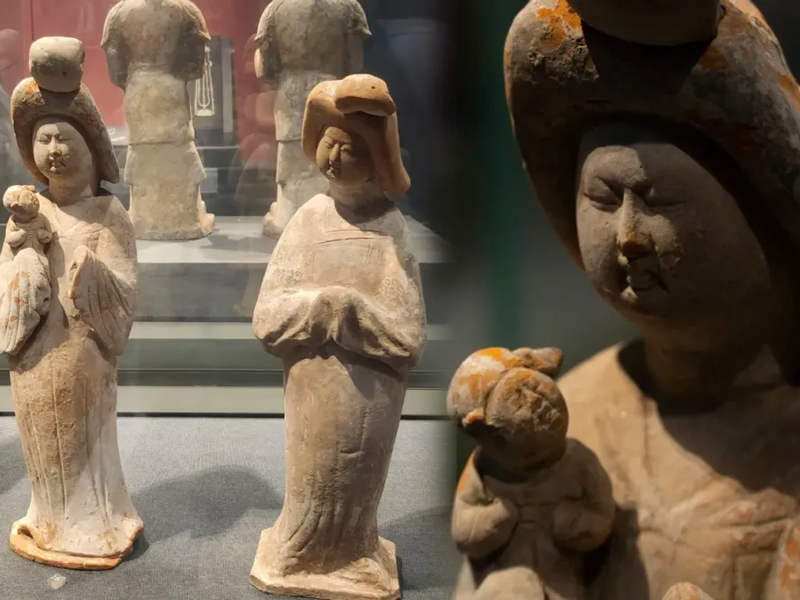
Another touching depiction found elsewhere is that of a mother and child. This design is believed to be based on a Tang pottery figurine. It shows a mother in a high-waisted dress, holding her young daughter. The child rests her head on her mother's shoulder in a gesture of affection. Such figurines were not common and often symbolized the deep cultural value placed on family and filial piety. Using this image for a restroom sign subtly communicates warmth and humanity.
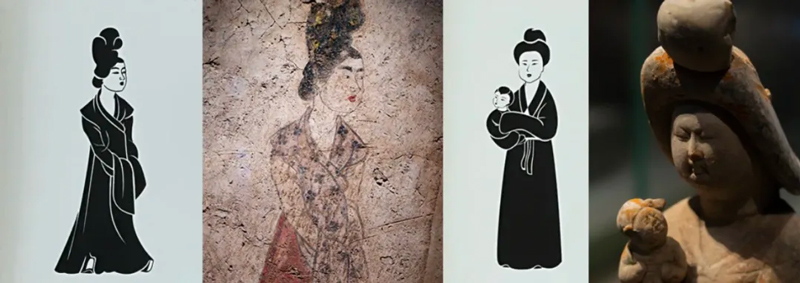
This trend demonstrates a conscious effort to move beyond simple functionality. By dressing the familiar symbols in historically accurate clothing, these institutions are doing more than just indicating a door. They are offering a fleeting glimpse into the social customs, fashion, and artistic sensibilities of one of China's most celebrated dynasties. It turns a necessary pause into a moment of quiet education and appreciation.
Nationwide Cultural Codes
The phenomenon is not confined to Xi'an. Across the country, museums and public spaces are adopting similar strategies, using local heritage as their inspiration. The Xinyang Museum (信阳博物馆) uses figures based on its own collection of cultural relics. Meanwhile, the Guangzhou Thirteen Hongs Museum (广州十三行博物馆) employs portraits of Qing dynasty court ladies and officials in their formal mandarin robes to designate the respective restrooms. This highlights the regional diversity of Chinese history.
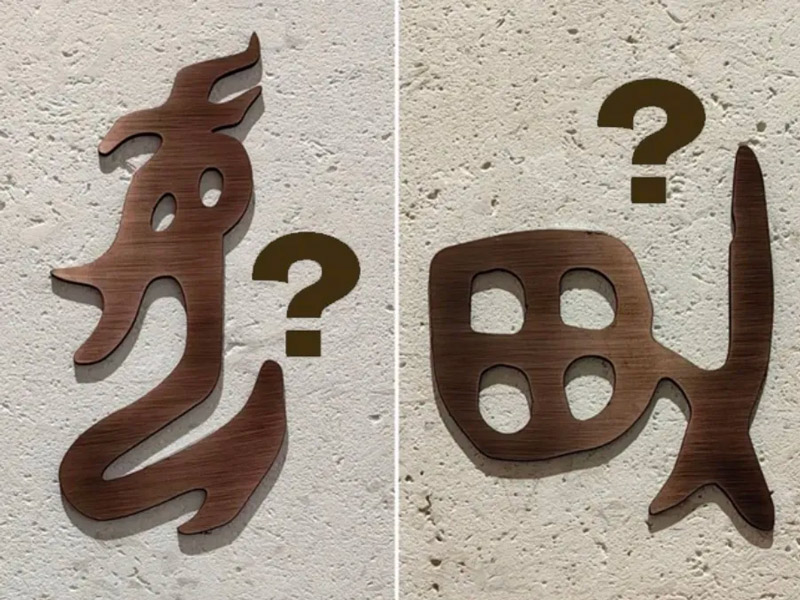
Some designs, however, present a more challenging puzzle. The Yinxu Museum (殷墟博物馆), a site renowned for its Oracle Bone Script, uses these ancient characters for its signs. For the uninitiated, distinguishing which character corresponds to which gender can be difficult. The answer is that the left character, representing "woman," is for the female restroom, and the right, for "man," is for the male. It is a clever, if cryptic, nod to the origins of Chinese writing.
In a similar vein, the Guizhou Museum utilizes the distinctive traditional costumes of local ethnic minority groups. While beautiful and culturally significant, these can sometimes be as ambiguous as the abstract symbols found in a temple, which use the solid line for male and the broken line for female, based on the Yijing (易经). These examples show a spectrum of approaches, from the visually clear to the intellectually demanding, all rooted in a deep well of cultural symbolism.
Clarity and Conversation
Public reaction to these creative signs is largely positive, though with a practical caveat. Many people applaud the initiative as a brilliant way to promote traditional culture in public life. It sparks curiosity and encourages people to look closer, transforming a functional sign into a conversation starter about history, art, and calligraphy. This method effectively deepens the public's connection to regional cultural identities in an accessible, unexpected way.
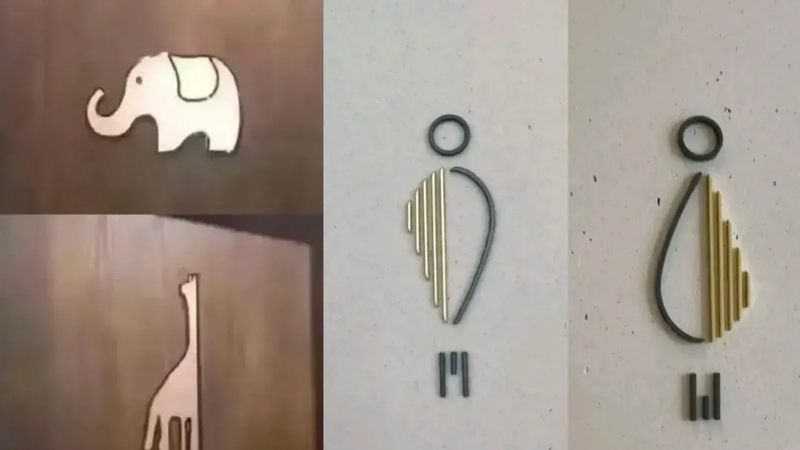
However, a common suggestion arises from this praise: the need for clarity. Visitors and netizens have pointed out that while the cultural designs are beautiful, adding clear text labels in both Chinese and English would be immensely helpful. This small addition would ensure that the signs are inclusive for all visitors, including children, international tourists, and anyone who might not be an expert in Tang fashion or ancient scripts. It would marry artistic innovation with practical necessity.
Ultimately, this trend challenges the international stereotype of restroom signage. It proves that cultural identity can be woven into the fabric of everyday life without sacrificing design or function. The key takeaway is that creativity and clarity can coexist. As more institutions embrace this idea, our shared public spaces have the potential to become more engaging, educational, and uniquely representative of the rich histories they aim to preserve.