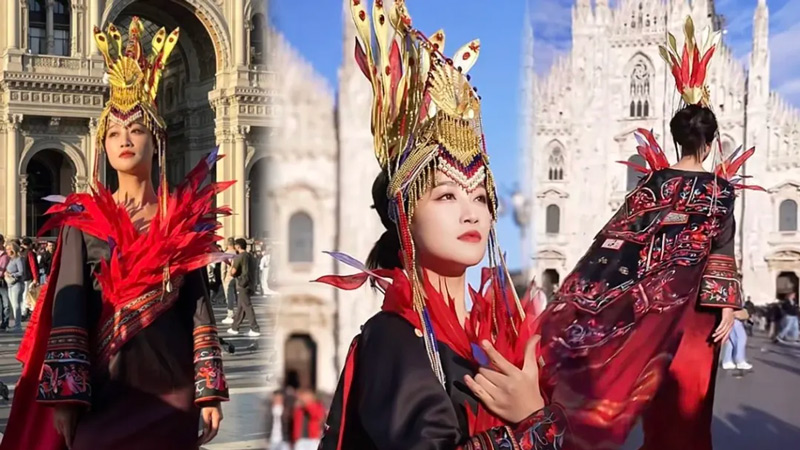
When actress Lan Yingying (蓝盈莹), widely recognized for her role as Huanbi (浣碧) in the television series Empresses in the Palace (甄嬛传), walked onto the runway at Milan Fashion Week, she did more than just model clothing. She carried an entire cultural narrative on her shoulders, quite literally. Her headpiece, an intricate and striking silver crown, immediately captured global attention, prompting both admiration and curiosity.
This was not a conventional fashion accessory but a modern interpretation of a traditional Shezu (畲族) ceremonial crown, deeply rooted in the belief that the She people are descendants of the phoenix. Her appearance became a powerful statement, moving Chinese cultural heritage from the pages of local chronicles like the Jingning County Records (景宁县志) to the flashbulbs of an international stage.
The Phoenix Crown
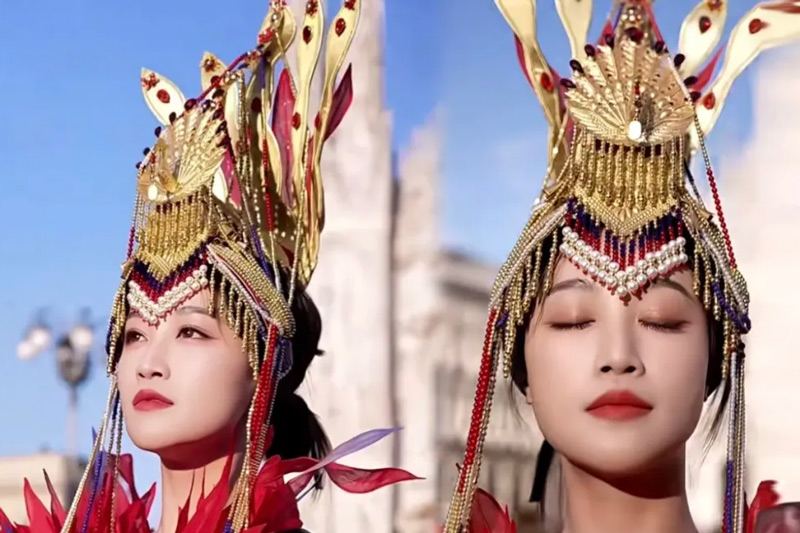
The centerpiece of the outfit was the magnificent Fengguan (凤冠), or Phoenix Crown. This is not merely an item of decoration but the soul of the traditional Fenghuang Zhuang (凤凰装), or Phoenix Attire. For women of the She ethnic group, this crown represents one of the most significant pieces of regalia they will ever wear, typically reserved for two pivotal moments in life: their wedding day and their final passing. Its design is a direct homage to the phoenix, a mythical bird central to She identity and mythology. The crown's structure, with its soaring silhouette, is intended to mirror the noble and resilient spirit of the bird, symbolizing that every woman who wears it should carry herself with pride and graceful strength.
Constructing a Phoenix Crown is a specialized craft. The base is often formed from Zhutuo (竹箨), the sheath of a bamboo shoot, which is then covered with dark cloth to form the body. The towering top is a complex framework of bamboo strips, shaped into a peak and draped in vibrant red fabric. This is then adorned with numerous thin silver plates, each meticulously engraved with auspicious patterns like the Bagua (八卦) or floral motifs. These silver pieces shimmer like the feathers of the phoenix. Further embellishments include dangling, butterfly-shaped silver ornaments and strings of porcelain beads that create a soft, melodic sound with every movement, adding an auditory dimension to its visual grandeur.
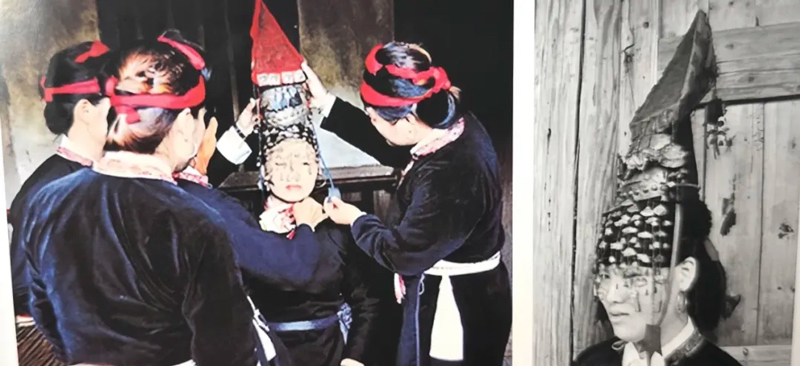
Affectionately known as the "Princess Crown," this headdress embodies a profound cultural ethos. It signifies that within the She community, every woman is regarded as a princess, worthy of honor and respect. Wearing it is a deeply symbolic act, connecting the individual to her ancestors, her community's myths, and her personal destiny. It is an expression of hope for a happy marriage and a blessed life, serving as a guardian for peace and good fortune. The crown is, therefore, far more than an object; it is a vessel of cultural values and aspirations.
Distinct Regional Styles
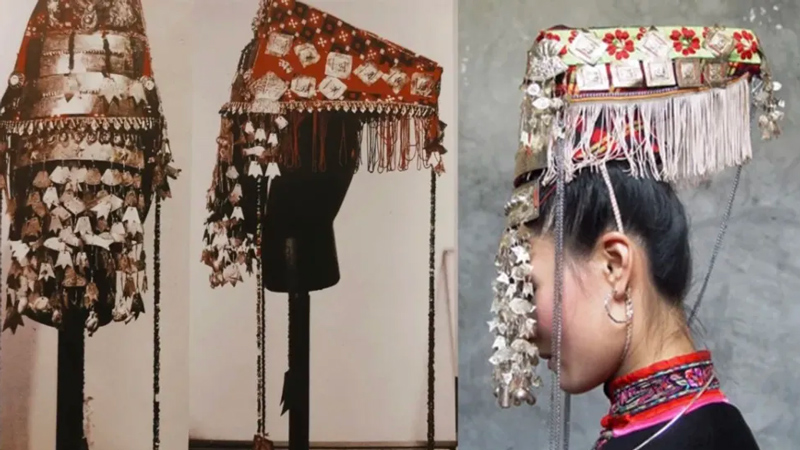
The Phoenix Crown is not a monolithic design; it has evolved into distinct regional styles, primarily the Xiapu (霞浦) style and the Jingning (景宁) style. The earliest known form of the crown was relatively simple, using red cords to symbolize the phoenix's head and embroidered ribbons tied at the back to represent its tail. This foundational design demonstrated a clear intent to emulate the form of the sacred bird, laying the groundwork for the more elaborate versions that followed.
The Xiapu-style crown, prevalent in the Fujian province, is renowned for its imposing and mysterious aura. Its frame, crafted from bamboo sheath and wrapped tightly in black cloth, creates a solemn base. The crown's peak is constructed from pine bark and bamboo strips into a triangular form, covered in red cloth, resulting in a sharp, pointed, and circular shape. The front is centered with four square silver plaques, from which hang six precise strings of porcelain beads, each ending with a phoenix-tail-shaped silver piece. The overall impression is that of a miniature, sacred mountain or a phoenix holding its head high, commanding reverence.
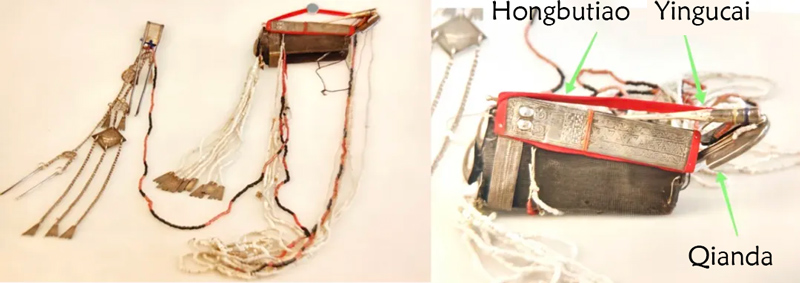
In contrast, the Jingning-style crown, documented in the Jingning County Records, embodies a more rustic and straightforward elegance. Its triangular frame is densely covered with silver sheets and accented with beads. A unique feature is the Qianda (钳搭), a comb-like ornament, set at a 45-degree angle to another element called the Yingucai (银骨彩). This specific angle is a masterstroke of design, ingeniously creating a sense of dynamic movement, as if the phoenix is caught mid-flight. While contemporary adaptations have introduced more ornate variations, the core silhouette—the proud, uplifted form of the phoenix—remains the unchanging heart of the design across all styles.
A Modern Cultural Bridge
Lan Yingying's decision to wear this specific cultural artifact on a global platform like Milan Fashion Week was a deliberate and impactful act. It served as a modern bridge, connecting the deep-seated traditions of the She ethnic group with the contemporary world of international fashion. She demonstrated that ethnic minority cultures in China possess a rich and vibrant aesthetic heritage that is every bit as diverse and sophisticated as that of the Han majority. This move challenged narrow perceptions of Chinese culture and showcased its multifaceted beauty.
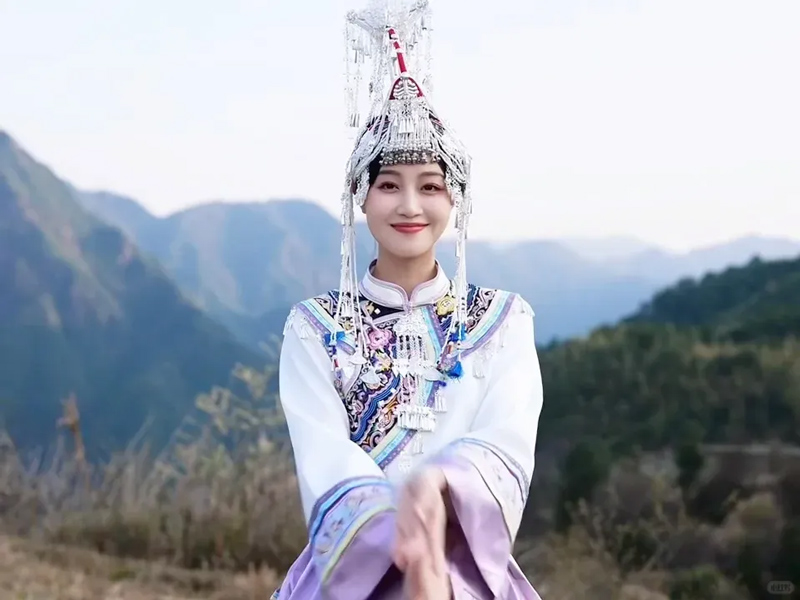
By integrating the Phoenix Crown into a high-fashion context, she performed a vital act of cultural preservation and innovation. She did not present it as a museum relic but as a living, breathing art form with relevance for today. This approach helps to ensure that traditional crafts are not forgotten but are instead seen with fresh eyes, appreciated for their artistry and symbolic power. It sparks curiosity and encourages a new generation to explore and value these intangible cultural treasures.
Ultimately, the sight of the Phoenix Crown in Milan was a powerful declaration of cultural confidence. It was a moment that celebrated the "princess" within every She woman and, by extension, the unique identity of the She people. It reminded both domestic and international audiences that cultural heritage is a dynamic force. When tradition meets innovation, it doesn't dilute the past; it amplifies its voice, allowing ancient legends to soar onto the world stage and inspiring a deep sense of pride in a shared, magnificent history.