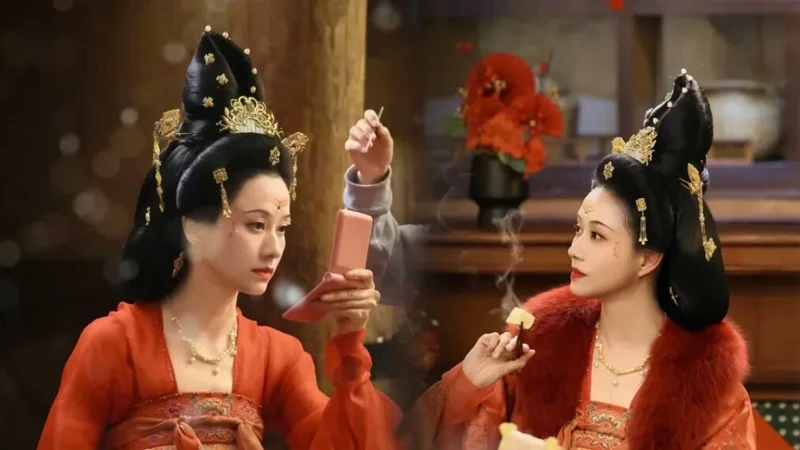
In the historical drama Yummy Yummy Yummy (宴遇永安), actress Ni Hongjie (倪虹洁) portrays a noble princess whose hairstyle has ignited widespread curiosity. Perched high on her head is a spiral-shaped bun that many viewers describe as resembling a conch shell. This distinctive look is not a product of creative fancy but a careful reconstruction of a real historical fashion from the Tang Dynasty. During this golden age, China was a crossroads of cultures, and its fashion scene reflected this vibrant exchange. The princess’s striking appearance serves as a gateway into an era where hairstyles were bold statements of identity and cultural fusion, challenging modern perceptions of ancient aesthetics and inviting us to explore the stories woven into every strand.
Uyghur Hair Origins
The conical hairstyle seen in the drama is known as the Huihu ji (回鹘髻), a term that points directly to its origins with the Uyghur people from China’s northwestern regions. During the early Tang period, sustained contact through trade and diplomacy allowed Uyghur customs to filter into central Chinese society. This hairstyle involved gathering hair into a tall, pointed bun that could be worn plain or lavishly decorated. Its dramatic silhouette broke from traditional Han styles, immediately marking the wearer as fashionable and worldly. Adopted primarily by women in urban centers, it symbolized the era’s openness to outside influences and a desire for innovative self-expression.
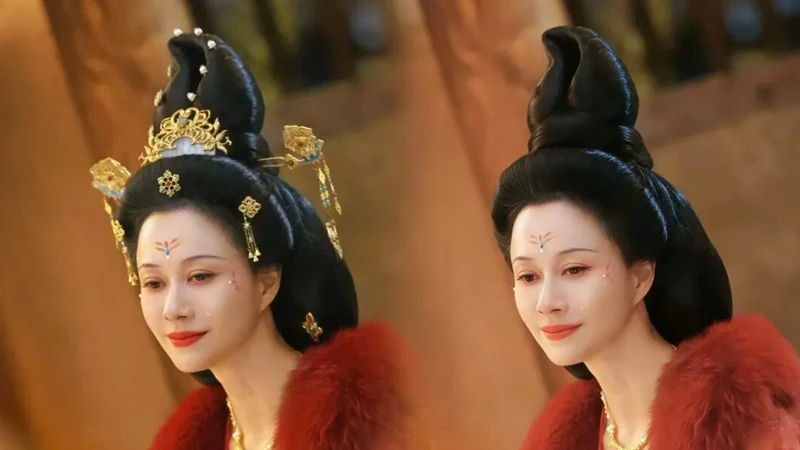
By the mid-Tang era, the Huihu ji had become a signature look among elite women, often accessorized with a peach-shaped golden crown or intricate jeweled pins. Its popularity is documented in period art, such as tomb murals and pottery figurines, which show noblewomen sporting the style at court gatherings and social events. The hairstyle’s structure required skill to create, sometimes using hidden supports to maintain its height and shape throughout the day. This commitment to fashion highlights the importance of personal appearance in Tang society, where looking one’s best was intertwined with social standing and cultural sophistication.
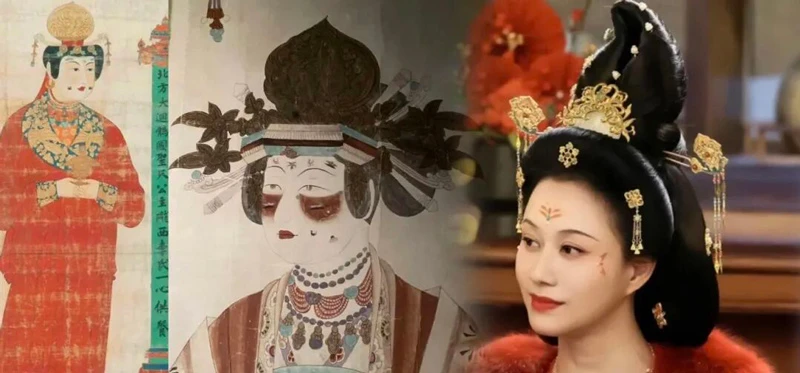
The Uyghur influence extended beyond hair to clothing, with women pairing the Huihu ji with form-fitting, narrow-sleeved robes that contrasted with the looser Han garments. This ensemble, celebrated in poetry for accentuating a slender figure, created a cohesive and exotic aesthetic. The look was so distinctive that it was immortalized in verses by Hua Rui Furen (花蕊夫人), who noted its appeal. This fashion synergy demonstrates how Tang style was not about isolated items but a holistic embrace of a new, hybrid identity that blended the best of different cultures.
Meaning and Adaptation
The peach-shaped crown frequently worn with the Huihu ji was rich with symbolic meaning. It was often linked to the Buddhist “golden peach,” a mythical fruit representing longevity and divine favor. Additionally, the crown’s form may have been inspired by the headdress of Nana, a goddess revered in Zoroastrian traditions followed by some Uyghur communities. This blending of spiritual symbols from different faiths into a single accessory shows how fashion in the Tang Dynasty served as a canvas for expressing complex beliefs and hopes, making everyday items carriers of deep cultural narratives.
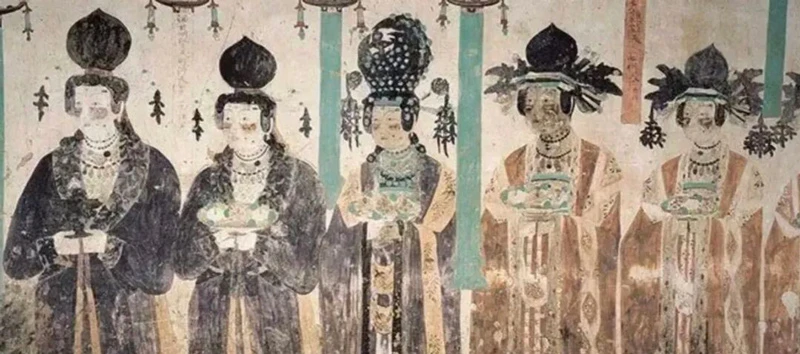
Artisans crafted these crowns using familiar Han motifs like cloud and phoenix patterns, which signified good fortune and imperial grace. This design choice helped the foreign-inspired crowns feel at home in Han society, making them more acceptable and desirable. In surviving artwork, these crowns appear consistently on figures from various backgrounds, indicating their role as a universal badge of high status. Women who wore them were not only adhering to a trend but also communicating their wealth, piety, and connection to a broader cultural world, where fashion was a language of power and belonging.
As the Tang Dynasty reached its peak, the Huihu ji evolved to include more Han elements, such as the addition of Huadian (花钿, forehead decorations) and Buyao (步摇, dangling hairpins). These embellishments made the hairstyle even more ornate and suitable for formal ceremonies. The integration of such details transformed the original Uyghur bun into a uniquely Tang creation, reflecting the dynasty’s ability to absorb and refine outside ideas. This evolution underscores a dynamic fashion culture where styles were constantly adapted to meet changing social tastes and ritual requirements, ensuring their relevance across generations.
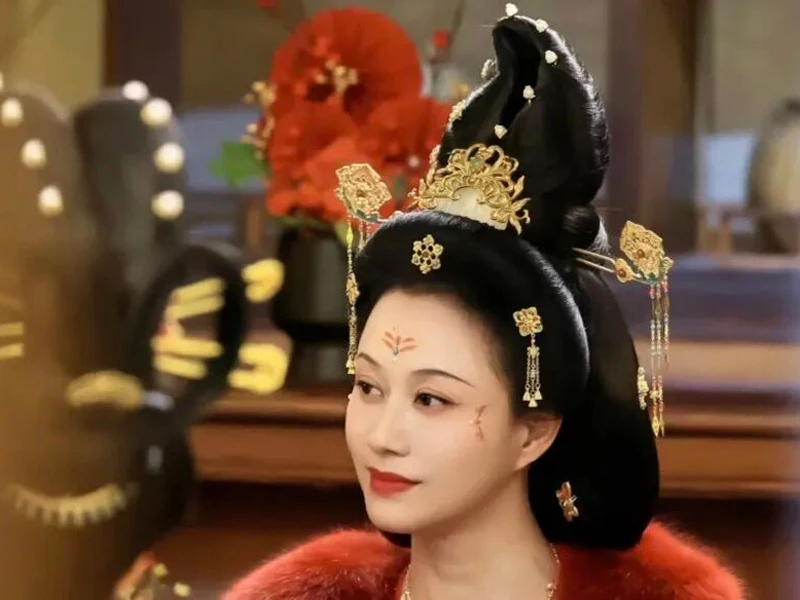
In Yummy Yummy Yummy, Ni Hongjie’s character brings this historical hairstyle to life for a modern audience, sparking discussions about its authenticity and visual impact. While some may see it as unusual, it faithfully represents the innovative spirit of the Tang era. This portrayal helps bridge centuries, allowing viewers to appreciate how ancient fashion choices were driven by the same desires for beauty and meaning that influence us today. The continued fascination with such styles reminds us that history is not just about dates and events but about the personal expressions that define human experience.