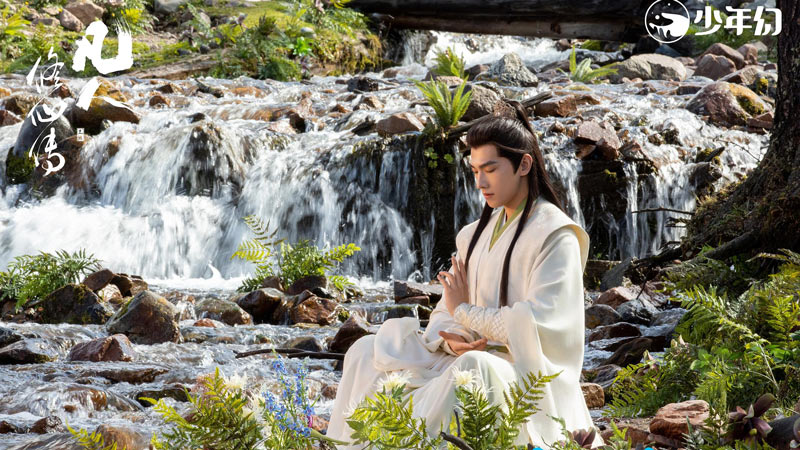
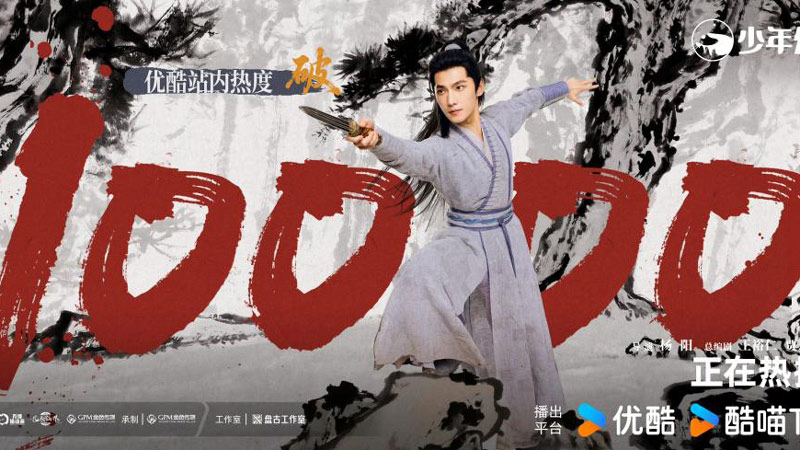
After a slow spell in the Chinese drama scene, things finally picked up a little with the arrival of The Immortal Ascension, a big-budget fantasy series adapted from the hugely popular web novel by Wang Yu. The drama is helmed by director Yang Yang and stars heartthrob Yang Yang in the lead role, with notable creative input from Wang Yuren, who directed the successful animated version of the same story. That crossover alone brought in a fair number of anime fans. Add to that the IP's long-standing reputation and a built-in fanbase, and it's no surprise that the show shot past 10,000 in Youku's internal popularity index right after launch.
Let's break down what the show's really delivering—beyond the heat—and look at its launch stats, what people are liking so far, and the top three points of criticism from viewers.
First, the Numbers: A Very Loud Debut
This one hit the ground running.
Before it even aired, Youku had logged over 5.28 million pre-release subscriptions. On launch day, the show pulled a heat index of 8,326—the highest day-one score for any Youku series in 2024 so far. By day three, it had officially broken the 10,000 mark.
The drama took the top spot across multiple in-app Youku charts: trending shows, general heat index, drama-specific lists—you name it. Off-platform, it was also charting high on aggregators like Maoyan, Douban's real-time trending list, and Yunhe's public opinion heat chart.
According to Yunhe data, its market share peaked at 11.6%, ranking #3 in their overall hot shows index. The main Douyin (TikTok China) tag, crossed 810 million views.
Maoyan Pro reported over 1,000 trending topics linked to the drama. That includes 88 Weibo hot search spots, 134 entries on entertainment discussion boards, 320 on the rising trends list, and 262 that made it to broader "breaking out" topics.
In other words, the IP's fanbase showed up. But how long it stays on top depends on how the story unfolds and, more importantly, how the adaptation handles its source material.
The original web novel has been around for more than a decade, with loyal readers spanning multiple age groups. The anime already brought in a new wave of younger fans. So the live-action version? It's facing judgment from all sides—novel readers, anime fans, and drama watchers who just came for Yang Yang. No pressure.
This kind of launch success is often built on a "big IP + big name" formula, which works well for kicking things off. But if the writing doesn't keep up, the hype will fall off fast—and audiences are already skeptical about how long this formula can keep delivering.
What's Working: 3 Things People Actually Like
So far, the praise seems to be sticking to three main areas:
Production Design and Filming Quality
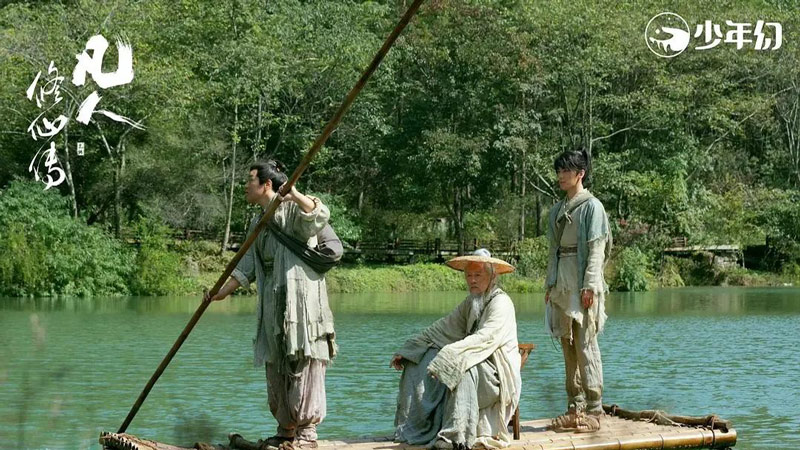
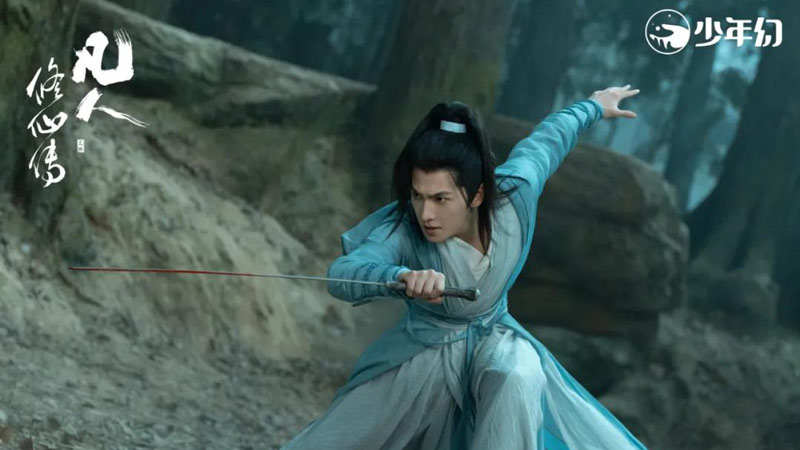
The costume, makeup, and props team clearly did their homework. Everything looks clean and detailed, and the switch from CGI-heavy scenes to real-location shoots adds a lot of texture.
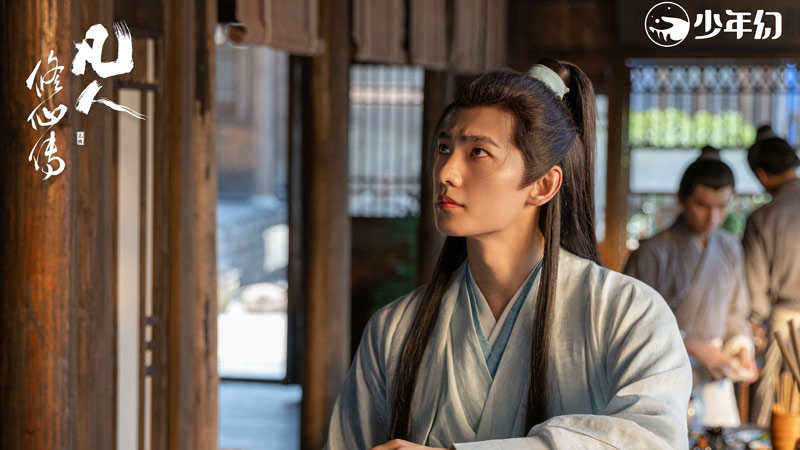
Yang Yang's costume game is strong. His look evolves believably from a clueless country bumpkin (early Han Li) to someone who feels like he just might make it as an immortal cultivator. It's not just cosplay—it actually tracks with the character's arc.
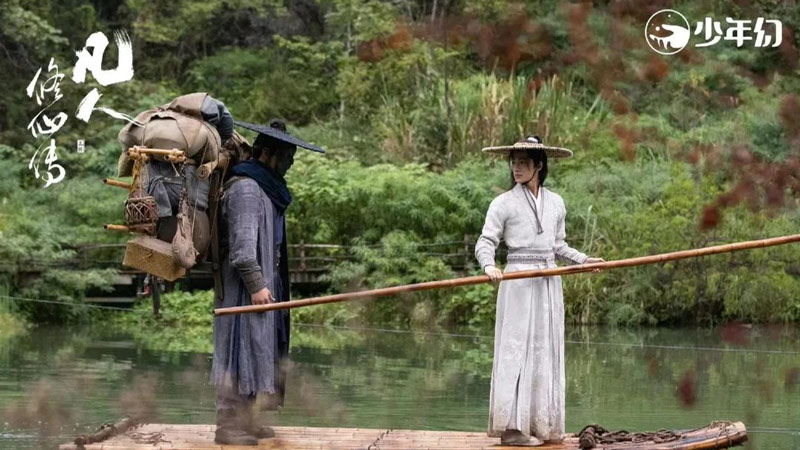
The crew traveled across several locations for real outdoor shoots, pushing that "wallpaper-worthy" visual feel. Right out the gate, the beast-hunting sequence that kicks things off looks like money well spent—CGI is sharp, action is fluid. And once the story gets rolling, each major arc seems to land in a whole new region.
One standout example: the "Valley of the Miracle Hand" is built into a hidden pool deep in the mountains. Later, the "Yellow Maple Valley" arc drops us into snowy forests in what looks like China's northern frontier. Director Yang Yang made a call here—if something could be shot on location, it was. Green screens were used as little as possible. That grounding effort gives the show a rare tactile feel for a fantasy drama.
It Sticks to Its Roots — Male-Oriented Fantasy, Unfiltered
One major reason The Immortal Ascension has resonated with fans is that it doesn't dilute the original tone to chase broader demographics. Unlike many adaptations that reframe male-centric IPs to cater to a female audience—adding romance, pushing CP (couple pairing) dynamics, etc.—this one plays it straight. No unnecessary sugar-coating. No love story shoehorned in just to stir up fan wars on social media. And that's exactly what a large part of its core audience wanted.
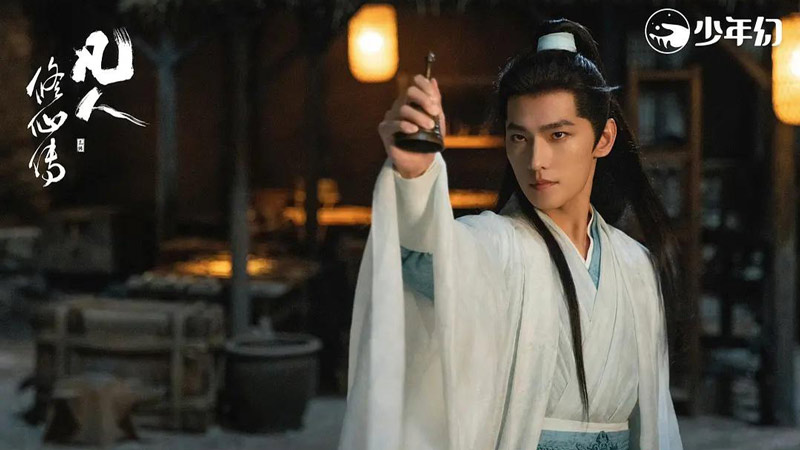
For longtime fans of the xianxia genre, this faithfulness is refreshing. It's not trying to be all things to all people—it knows its lane and stays in it.
A More Grounded Take on "Mortal Cultivation"
The show makes a solid effort to capture what fans call the "mortal style" cultivation journey. The idea here is: the hero doesn't have special bloodlines or divine prophecies backing him—just grit, luck, and a little cunning.
Han Li starts out as a poor village kid with no connections, no magical destiny, and just barely enough talent to scrape by. The drama highlights his street smarts and his signature "play it safe" survival strategy, often described by fans as the "I know all the heroic paths, but I'd rather stay alive" school of thought.
Actor Yang Yang fits surprisingly well here. He nails Han Li's early bumbling innocence, brings just enough ethereal grace to sell the "cultivator glow-up," and handles the contrast between outward politeness and internal snark with a neat blend of cold detachment and dry humor. His poker-face delivery, paired with the inner monologue voiceovers, actually works.
Now for the Controversy: What's Not Working
Of course, this adaptation isn't without backlash. And some of the criticism comes directly from the original novel's fans.
First issue: heavy cuts and streamlined storytelling.
To speed up the pacing and get viewers hooked early, the series skips or shortens a lot of setup. Important relationships get rushed through—Han Li's bond with Li Feiyu (played by Zhang Xiaocheng), for example, barely registers in the show, even though it's a key friendship in the book. And the scene where Han Li kills Doctor Mo (played by veteran Jin Shijie), a major early turning point in the novel, doesn't quite land with the weight it should. This leaves new viewers puzzled about character motivations, and longtime fans annoyed that key plot beats got glossed over.
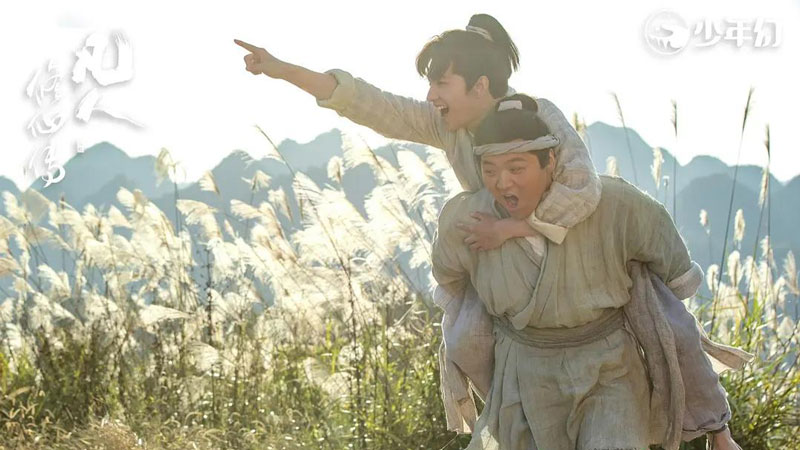
The end result is a show that swings between emotionally flat and randomly gripping. The inconsistency in tone and pacing has been one of the biggest complaints so far.
From "Mortal" to "Mortal but Make It Versailles"
By episode 3, some viewers had already coined a term for what they were seeing: "Versailles cultivation." (It's a meme in China meaning someone humble-brags so hard it loops around to just being bragging.)
Let's unpack that.
Han Li is supposed to be a dirt-poor nobody from the countryside. Along with his childhood buddy Zhang Tie, he gets rejected by the Seven Mysteries Sect ( an entry-level cultivation sect) and is taken in by Doctor Mo as a disciple. Han Li's life quickly becomes a loop of meditation, herbal soaks, and level-ups—helped along by a magical green bottle he stumbles across that basically turns him into a cheat code. Before long, he breaks through the sixth level of cultivation and manages to kill Doctor Mo, who tries to steal his body. Then, in classic overpowered protagonist fashion, he wipes out an entire rival sect and their cultivator backup with a casual flick of the wrist.
Meanwhile, Zhang Tie, who was born without a spiritual root (which means no cultivation), becomes Han Li's servant. Eventually, the poor guy gets turned into a mindless puppet by his own master. Yikes.
So yeah—when you put it like that, Han Li doesn't feel very "ordinary." He's handsome, his cultivation speed is insane, and he has a golden finger (外挂,i.e. cheat-level plot device). For a story that prides itself on being about a "normal guy's climb to immortality," Han Li looks suspiciously like someone who already won the game before it started.
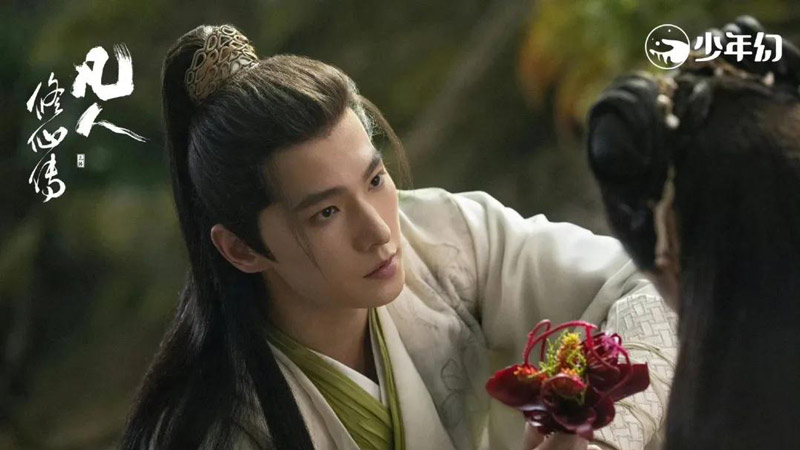
A lot of that "Versailles vibe" comes from Yang Yang himself. To his credit, he tones down the smugness and plays Han Li with restraint. But still—he's Yang Yang. He looks like a luxury brand model even when pretending to be a clueless village bumpkin. You can't fully shake the feeling that he's cosplaying hardship.
To be fair, his face is a blessing for the audience. The original Han Li is described as average-looking, and some fans joked that comedian Song Xiaobao might actually fit that physical description better. But let's be honest—no one really wants to see Song Xiaobao play Han Li.
Yang yang looks the part—but can he really sell "mortal cultivator"?
Here's the thing: Han Li, in the novel, is extremely calculating. He overthinks everything, and once he steps into the cultivation world, he grows colder and more detached by the day. Compared to Lin Dong, the hot-blooded underdog from Martial Universe, Han Li is the exact opposite—he's slow, strategic, and prefers staying under the radar.
In that sense, casting Yang Yang wasn't a bad idea. His looks work well for the more refined version of Han Li. But the challenge is this: playing someone who's emotionally reserved and constantly strategizing doesn't mean playing it flat.
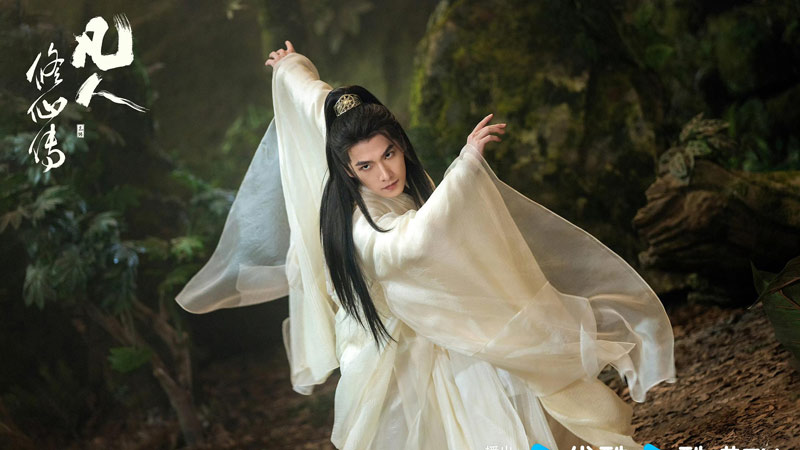
In the beginning, Han Li isn't yet "Old Demon Han"—he's just a teenager who's entered a brutal, predator-filled world. He should be nervous, tentative, maybe even a little naïve. But Yang Yang's performance stays almost eerily calm throughout. Whether he's facing life-or-death danger or stumbling onto a game-breaking cultivation tool, he reacts with the same glassy detachment. It's as if he already read the script and knows everything's going to be fine.
And that hurts the whole "mortal" vibe. The appeal of The Immortal Ascension lies in how hard Han Li has to work. If that struggle doesn't feel real, half the show's narrative weight disappears.
A Slow-Burn IP, Flattened into a Checklist Drama
The other half of the problem comes from a classic adaptation dilemma: staying true to the source vs. adapting to modern streaming tastes.
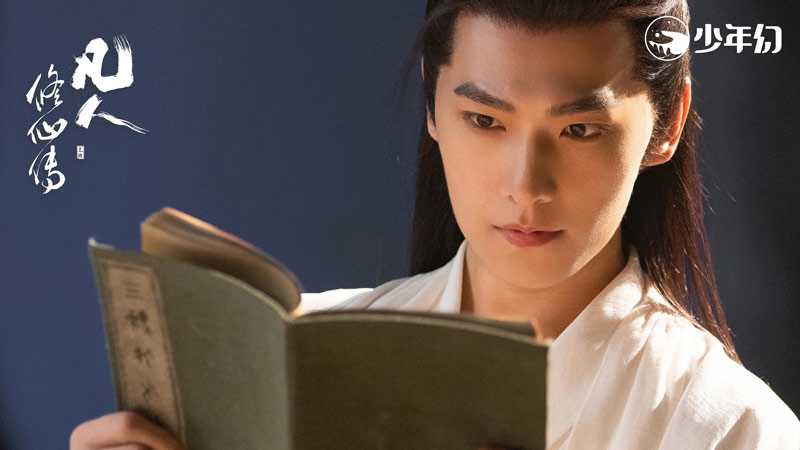
The original novel began serialization back in 2007. It stood out because Han Li wasn't a "chosen one." He had no impressive background, no rare talent—just a sharp mind, extreme caution, and relentless effort. Back then, most cultivation novels were still riding the wave of heaven-blessed protagonists. Even Zhang Xiaofan from Jade Dynasty, often pitched as "ordinary," turns out to be one of the most naturally gifted characters in the whole book.
So watching Fanjian (the novel's nickname among fans) unfold through Han Li's eyes was refreshing. He didn't start with a leg up—he clawed his way up, often at great personal cost. The world he navigated was harsh and grounded: success required resources, careful planning, and a lot of luck. For readers, Han Li's journey mirrored the brutal climb of ordinary people trying to change their fate. It was equal parts inspiring and cruel.
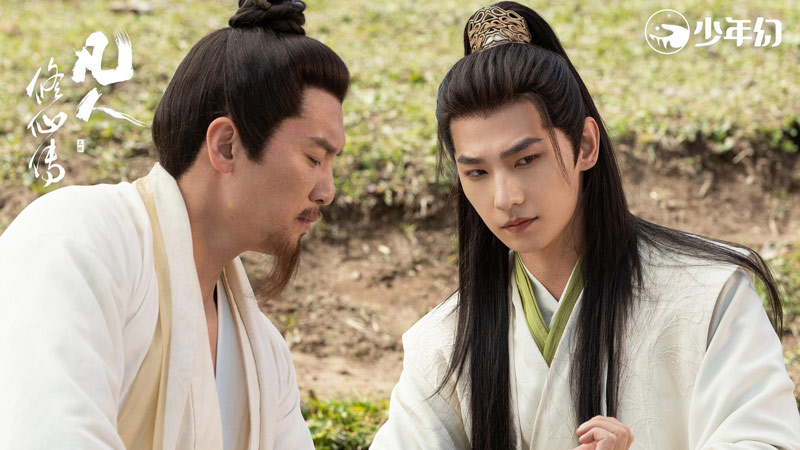
What Fanjian did was deconstruct the "cultivation fantasy" from the inside out. It gave us a protagonist with average aptitude navigating a very logical, systematized world. Every spell had a source, every pill recipe was explained, every power-up came at a cost.
In the author's own words: "The life of a cultivator is only real when you see it in the slow and the mundane. There should be a rhythm of fast and slow—that's the best."
But adapting this kind of story for screen? Not easy.
This tone is immediately clear in the drama's opening chapters, particularly in the storyline involving Doctor Mo. The doctor isn't some overpowered villain. In fact, he barely qualifies as a real cultivator. But his manipulative mindset, his habit of scheming and backstabbing, perfectly reflects the darker instincts of many high-level players in this world. That scene sets the moral compass of the series: here, survival trumps sentiment, and power is the only truth.
Han Li enters this world with a good heart. He's loyal to his friend Zhang Tie, grateful to Li Feiyu, and completely uninterested in romantic distractions. All he wants is to survive, and maybe live long enough to understand what "immortality" even means. But he quickly learns that kindness doesn't count for much—and that hesitation can get you killed.
Doctor Mo's final advice to Han Li—"If you can't win, run"—eventually becomes Han Li's lifelong creed. Fans even gave him a nickname: Han Paopao, literally "Han the Runner." It's not the kind of vibe you'd expect from a xianxia lead, and that's exactly what makes Fanjian different.
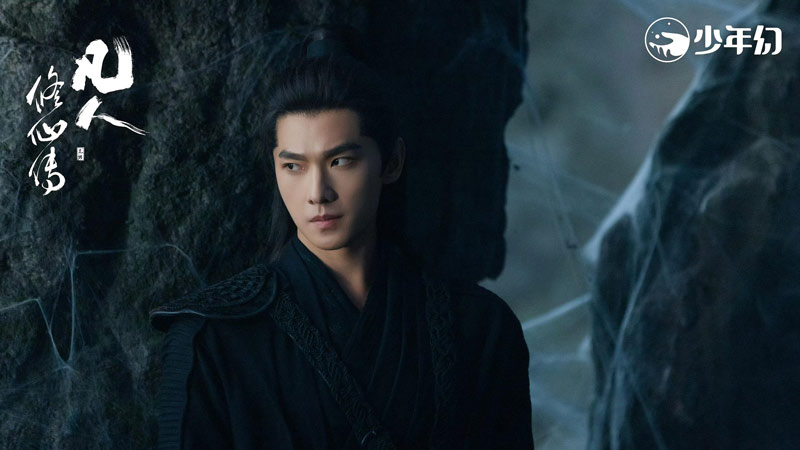
That's why the beginning of the drama matters so much. It needs to make the world of cultivation feel believable while also giving viewers something to emotionally latch onto.
To its credit, the first few episodes do show effort. The fights are slick, the real-location shoots offer visual depth—but the pacing? That's where things get shaky. Every character, from Han Li and Zhang Tie to Doctor Mo, and even the new faces like Madam Mo and her daughter, feels like they're sprinting toward a known destination. Every line of dialogue sounds like it's chasing a deadline.
You could call that "fast-paced." Or, more bluntly: it breaks immersion. It's hard to care about these people when it feels like they're all rushing through a highlight reel.
And that's the core problem. Adapting a slow-burn classic like Fanjian into a modern drama is one of the hardest things you can try. The novel's fanbase is massive—but they're also picky. They'll show up early to hype it up, but once they sense something's off, they're quick to bail. Meanwhile, newer audiences often don't care for the "old-school male power fantasy" stuff. A lot of them are here for Yang Yang's face—once the visuals wear off, if the story doesn't click, they're out too.
To casual viewers, the plot lacks emotional pull. It moves quickly, but still feels oddly flat—like a checklist. Those familiar cultivation beats—taking entrance exams, becoming a disciple, levelling up—have all aged poorly. There's a clear mismatch between the show's structure and modern viewing preferences.

It's obvious the production tried to strike a balance. They condensed about 100 chapters into the first three episodes to keep things moving—hoping to satisfy both die-hard fans and general audiences. But the end result feels like a novel outline on speed: too shallow for fans, and too rushed for newcomers.
Underdog's Counterattack: Core Gaps Unexplained
And despite the breakneck pace, it still comes across as oddly lifeless. The male lead keeps levelling up, killing, looting—on paper, it should be thrilling. But somehow it plays more like a cultivation docuseries than a drama. Even flatter than the already subdued original.
Part of this comes down to Yang Yang's performance—always calm, always composed. But more than that, it's the show's failure to capture the two key "satisfying beats" (爽点) of the novel:
- Underdog Revenge: Han Li constantly turns the tables on those above him.
- Hard-Earned Progress: His weak spiritual roots force him to work twice as hard to level up, which makes each breakthrough feel earned.
The problem? The show glosses over both. Han Li's reversals often rely on sneak attacks or lucky items. His training montages are basically silent meditation sessions. His hard work? Barely shown. His triumphs? Not earned—just assumed. The result? Viewers feel none of the tension or payoff.
Every new arc changes locations and adds new challenges, but the structure never really changes. It's rinse and repeat—just with different backdrops. That repetition wears thin, fast.
The cast of characters is huge, but almost no one leaves a lasting impression. They appear, drop off some plot points or magical items, then disappear. NPCs in a video game. No one builds a meaningful connection with Han Li.
Even the romance angle—such as it is—feels tacked on. There's an awkward "pick-a-bride" plotline where Han Li has to choose from Doctor Mo's daughters. Another time, he has a sudden fling in a forbidden area. These are textbook male-lead power fantasy beats—but they don't land, because there's zero chemistry. Even the bromance is weak: his closest friend literally gets turned into a zombie servant, and Han Li takes it in stride, immediately putting him to work as a luggage carrier.
You could argue that coldness is part of the world. In this universe, cultivators are all emotionally distant, laser-focused on their path. Han Li is basically a cultivation machine. But when everything is that flat—relationships, conflicts, emotions—it becomes a dry grind to watch.
Big IP, Big Star... Small Spark?
After a while, the "Big IP + Big Star" formula wears thin. What doesn't wear out? New content that actually feels fresh.
Fanjian once broke the mold. It was a subversion of the typical xianxia fantasy. But almost 20 years later, it has become its own kind of cliché. Now, if you want to win over modern audiences, you need constant iteration—stories that evolve with changing tastes.
This show doesn't do that. It plays it safe, clings to the structure of the novel without truly adapting it for the screen. So what we're left with is a technically well-made but emotionally distant xianxia drama. It looks good. It checks all the genre boxes. But it doesn't hit where it counts.