
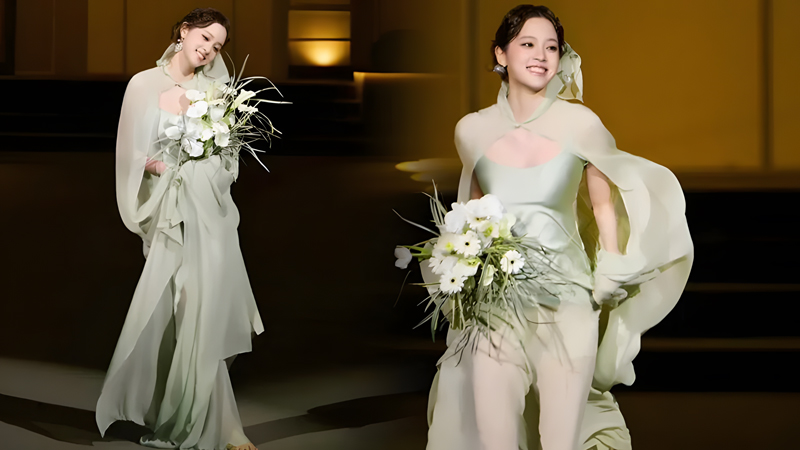
At a recent glamorous event, the young musician and actress Ouyang Nana (欧阳娜娜) made a striking departure from the sea of strapless gowns. She opted for an elegant ensemble featuring a cloak, a choice that was both seasonally appropriate and visually captivating. This look, celebrated by fans online, sparks a simple question. How did this ancient garment transition from pure practicality to a timeless fashion statement? The answer lies in a journey that spans centuries and continents, revealing a story of adaptation and enduring style.
Ancient Beginnings
The cloak's origin is rooted in universal human need. Across different civilizations, people developed simple, oversized garments to shield themselves from harsh weather. The earliest versions were essentially large pieces of material, sometimes with a tie, designed to be draped over the body. Their primary function was straightforward: to block rain and retain warmth. In ancient China, one of the earliest forms was the Suo Yi (蓑衣), a cloak woven from grass or straw.
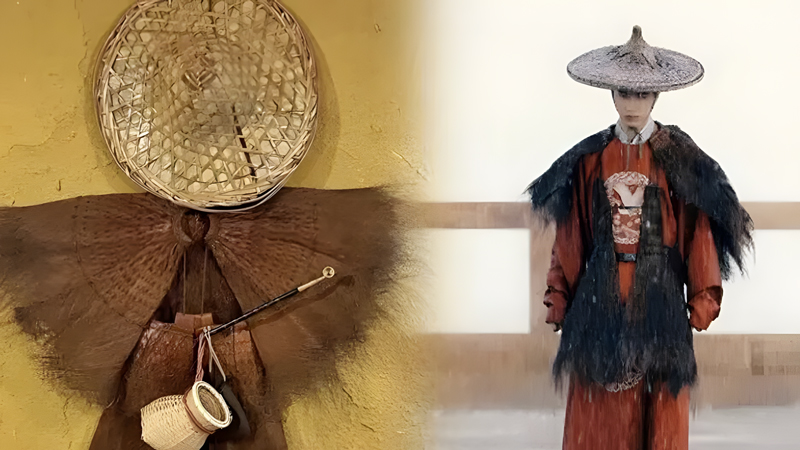
These early designs often separated the hood from the main garment. This separation was a practical consideration, allowing for versatile use. The core design principle was efficiency. For rainwear, the sloped shape allowed water to run off easily. For winter, a similar logic applied to snow, which could be shaken off without soaking the wearer. It was the functional ancestor of today's technical raincoats and winter parkas, built for survival rather than style.
As time progressed, the materials evolved beyond grass and straw. Societies began utilizing what was available and effective, including animal furs, thick fabrics, and oiled silks. A mural in the tomb of the Northern Qi official Xu Xianxiu (徐显秀) depicts figures wearing fur cloaks, indicating their use and status. The fundamental silhouette, however, remained largely unchanged—a testament to its effective and straightforward design.
East and West
In China, the cloak continued to develop with its own distinct characteristics. The separation of hood and cloak remained a common feature. The standalone hood, known as a Feng Mao (风帽) or Guanyin Hood (观音兜), could be worn with other garments for wind protection. This modular approach to outerwear highlighted a focus on adaptability for different daily needs and weather conditions.

Artistic records provide a clear picture of the cloak's place in historical fashion. The illustrations by Sun Wen (孙温) for the complete The Dream of Red Mansions (红楼梦) offer detailed depictions. The typical Chinese cloak was sleeveless, loose, and ankle-length. It fastened with a front closure and was worn draped around the shoulders. Because its shape resembled an upturned bell, it earned the nickname Yikou Zhong (一口钟), or "One Bell." This elegant, flowing form is faithfully reproduced in the beloved 1987 television adaptation of the classic novel.
Meanwhile, in the West, the cloak was following a parallel yet distinct path. The hooded cloak, or cappa, was a staple of medieval European dress for all classes. Its evolution is complex; some theories connect modern hooded cloaks to the habits of Roman Catholic monks. By the 18th century, it was a well-established garment in the Western wardrobe, worn by men and women for warmth and travel, particularly on horseback.
Modern Revival
The cloak's transition into a high-fashion item is deeply tied to its adoption by European aristocracy. Royal figures, most notably Britain's Queen Elizabeth II, frequently wore cloaks and capes, cementing their association with elegance and authority. This royal endorsement ensured the garment's place in the fashion world. Designers continually reinterpret it, sending versions ranging from dramatic full-length capes to chic, short boleros down the runway.
Beyond its Western fashion status, the cloak never fully lost its stylistic power in Chinese contexts. In The Dream of Red Mansions, cloaks are described in various colors and materials, indicating they were used as deliberate fashion pieces to complement an outfit and denote social standing. A figure in a white cloak against a snowy landscape was a classic poetic image of beauty and grace.
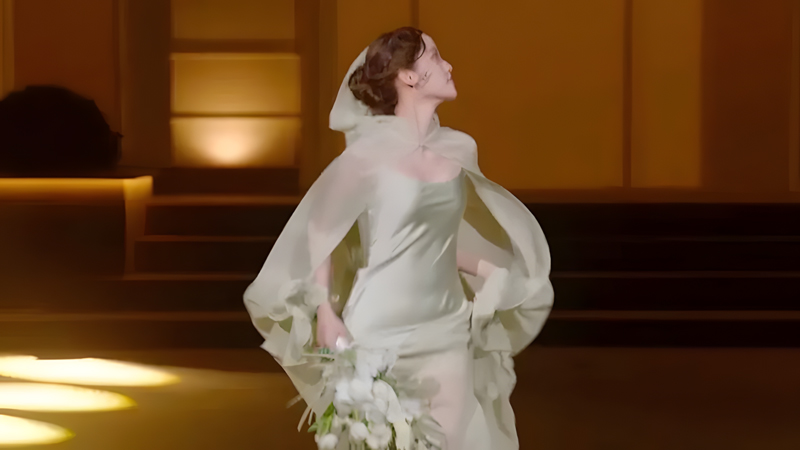
Ouyang Nana's recent appearance is not an isolated event but part of this cyclical revival. Her look masterfully combines the historical grandeur of the cloak with a modern, delicate gown. It demonstrates how contemporary fashion draws from deep sartorial wells, repurposing functional ancestors into symbols of style. The cloak has successfully completed its long journey from keeping peasants dry to making celebrities shine, proving that truly great design never goes out of style.
