In the heart of Zhejiang Province Museum, the "Blooming" exhibition presents a captivating array of evening bags that blend Eastern artistry with Western fashion. These pieces, dating from the 16th to the 20th centuries, showcase how Chinese motifs and craftsmanship were integrated into accessories for formal occasions. Unlike typical Western designs, these bags use silk, precious metals, and intricate techniques like Kesi (缂丝) and Luodian (螺钿) to convey cultural narratives. Each item serves as a portable canvas, reflecting societal values and artistic evolution during a period of global exchange. This collection not only highlights aesthetic beauty but also invites viewers to appreciate the deeper meanings woven into every stitch and pattern.
Silk Landscapes
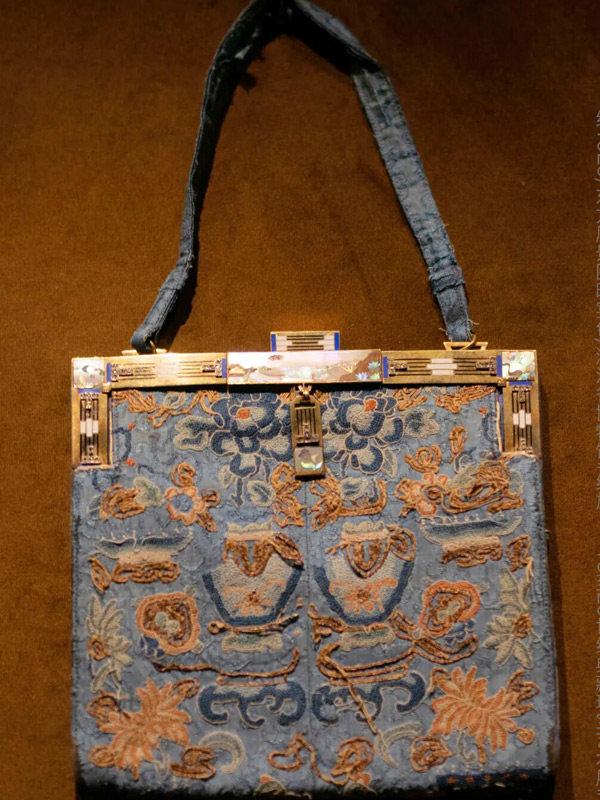
One standout piece from around 1920 is a light blue silk evening bag adorned with a detailed landscape scene. The primary design features symmetrical vase patterns, symbolizing peace and safety, flanked by peonies, lotuses, and chrysanthemums. These flowers are intertwined with scrolling grass motifs, all executed in the Kesi technique, which involves discontinuous weft threads to create a carved, three-dimensional effect. This method, often described as "an inch of Kesi equals an inch of gold," required immense skill and time, making each bag a unique masterpiece. The use of silk not only added luxury but also ensured the bag felt light and elegant for evening wear.
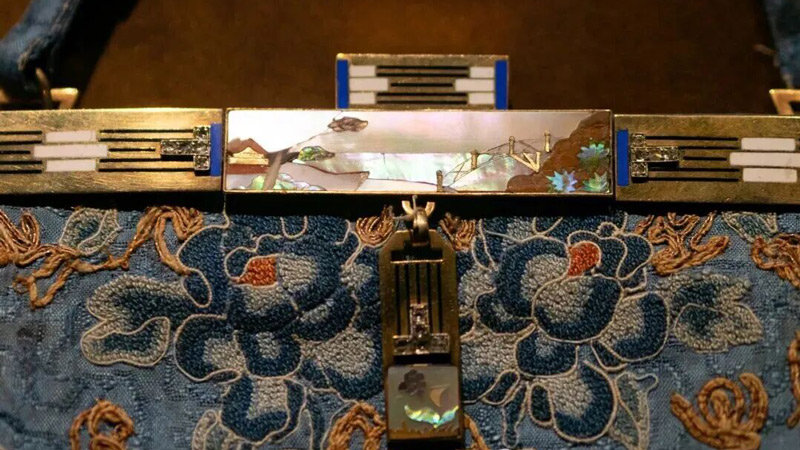
The bag's closure includes a square metal clasp with a small Luodian inlay, depicting a bridge and floral elements that have faded over time but still hint at their original charm. On either side of the clasp, stripes of square-cut diamonds add a touch of sparkle, contrasting with the soft silk background. The corners of the bag are reinforced with additional Luodian pieces, better preserved and showing leaf and blossom designs. This combination of materials—silk, gold, pearls, mother-of-pearl, and diamonds—demonstrates a harmonious blend of durability and delicacy, suited for both display and use.
Beyond its physical attributes, this bag tells a story of cultural exchange. In the early 20th century, as China opened to global influences, such items became symbols of status and sophistication. The landscape imagery evokes traditional Chinese painting, yet the form—a handheld evening bag—aligns with Western social customs. It represents a moment when artisans adapted ancient methods to modern tastes, creating objects that resonated across cultures. Today, it reminds us how fashion can bridge worlds, carrying histories in its folds.
Lotus Blossoms
Another exquisite example from the 1920s-1930s is a pouch-shaped evening bag covered in Baoxiang (宝相) patterns, derived from Buddhist lotus motifs that signify solemnity and purity. The design merges elements of peonies and chrysanthemums into a circular, jewel-like composition, commonly seen in Dunhuang (敦煌) murals from the Sui and Tang dynasties. Crafted from silk and accented with gold, enamel, diamonds, and jade, this bag embodies spiritual and aesthetic ideals. Its gathered top and rectangular clasp, decorated with diamond lines and black enamel flowers, highlight the attention to detail that defines luxury.
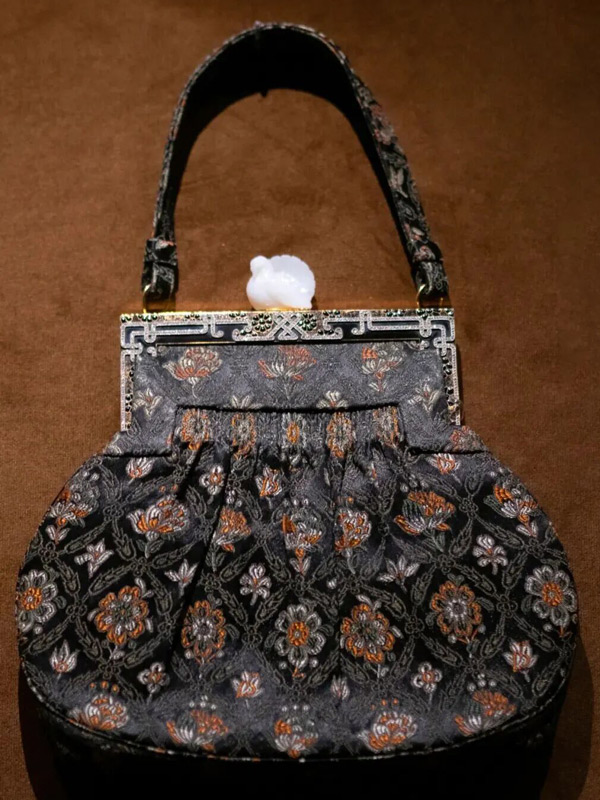
The clasp features a clever addition: a white jade carving of a bird, possibly a pigeon with spread tail feathers, identified by the fleshy lump above its beak. This element introduces a playful, natural touch to the otherwise formal design, symbolizing peace and longevity in Chinese culture. The bag's structure, reminiscent of traditional Chinese pouches used for carrying personal items, connects it to everyday life while elevating it for special occasions. The silk fabric, embroidered with continuous Baoxiang patterns, reinforces themes of eternity and harmony, making it more than just an accessory.
This piece reflects the broader cultural renaissance of the era, where Buddhist symbols were reinterpreted in fashionable contexts. As society evolved, these motifs retained their sacred meanings while adapting to new forms. The bag's blend of materials—from the soft silk to the hard jade—showcases a balance of yin and yang, central to Chinese philosophy. It invites viewers to consider how art can transform functional items into vessels of meaning, carrying forward traditions in innovative ways.
Gourd of Luck
A gourd-shaped evening bag from approximately 1920 captures the eye with its symbolic form, representing "double happiness" and prosperity in Chinese culture. Made from silk and embellished with gold, enamel, diamonds, and agate, it features a design of dragons weaving through flowers and butterflies. The dragon motifs, once reserved for imperial use, became more accessible after the fall of the Qing dynasty, allowing for creative expressions in personal items. Pink and purple peonies, intertwined with leaves and butterflies, add layers of meaning, as butterflies homophonically suggest accumulating blessings.
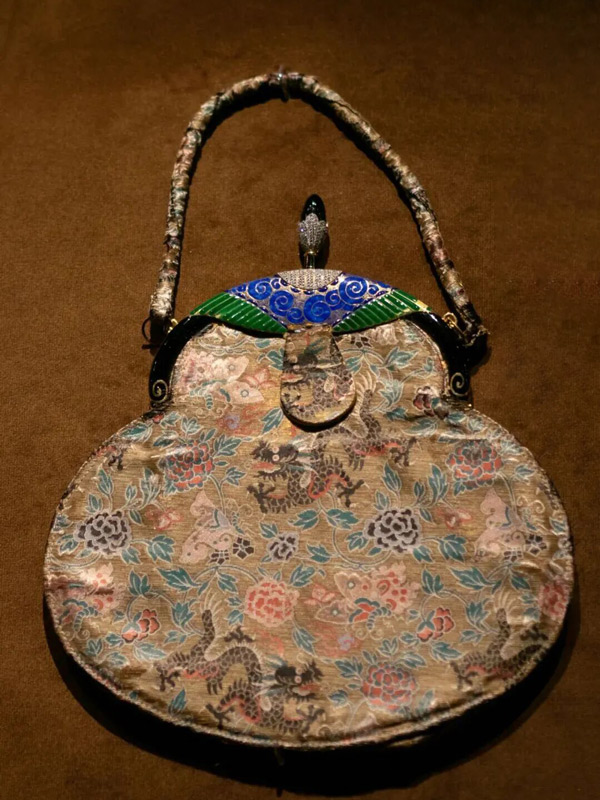
The bag's arc-shaped opening is particularly ornate, adorned with enamel in blue cloud patterns and green stripes that mimic the style of traditional Yunjian (云肩) shoulder decorations. At the center, a dense arrangement of diamonds forms a backdrop for a bud-shaped button, with diamond-set sepals and an agate bud. This intricate closure not only secures the bag but also serves as a focal point, illustrating the craftsmanship that turns practical elements into art. The use of agate, a stone believed to ward off evil, adds a protective dimension to the design.
This gourd bag exemplifies how Chinese artisans of the time infused everyday objects with profound symbolism. The combination of dragon, flower, and butterfly motifs creates a narrative of power, beauty, and fortune, appealing to both local and international audiences. In exhibitions like "Blooming", such pieces challenge viewers to see beyond surface beauty, uncovering the cultural dialogues embedded in fashion. They remind us that even small accessories can hold vast stories, connecting past and present through shared human experiences.