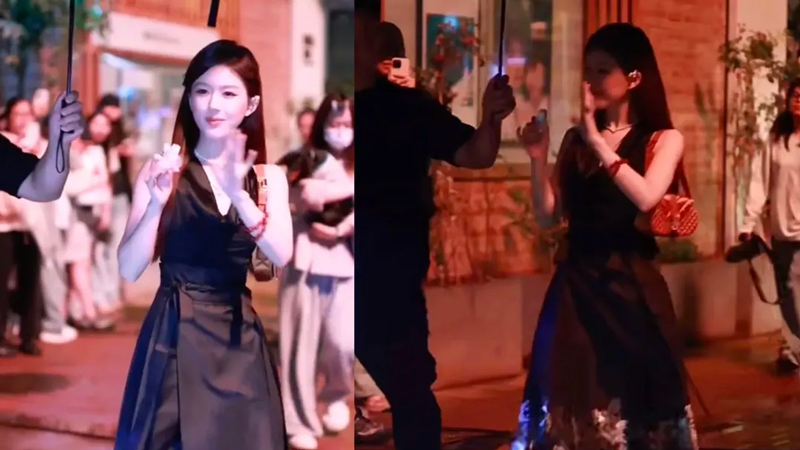
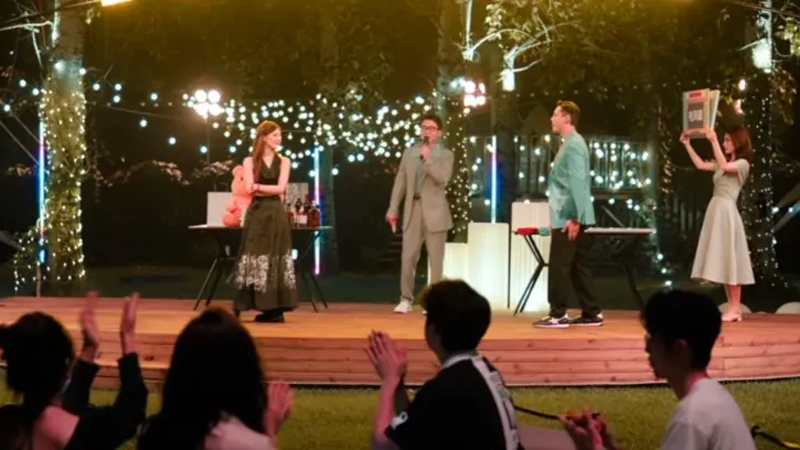
In the television drama Love's Freedom (许我耀眼), the character Xu Yan (许妍), portrayed by popular actress Zhao Lusi (赵露思), embarks on a challenging entrepreneurial venture: modernizing traditional Chinese clothing. Her struggle mirrors a real-world debate simmering across the country. As Hanfu and other ethnic styles gain visibility, a critical question emerges: what kind of innovation truly honors these garments while making them relevant for today? The series does not offer easy answers, but it successfully frames a vital conversation about cultural identity in a fast-moving world. It moves beyond simple nostalgia, probing how historical attire can find a genuine place in contemporary closets, not just in photo studios or ceremonial events.
The journey is far from straightforward. Love's Freedom illustrates the delicate balance required when tweaking centuries-old designs. Some purists argue that any alteration dilutes cultural authenticity, while others believe that without adaptation, these beautiful garments risk becoming mere costumes. Xu Yan's fictional endeavor highlights a practical reality: for clothing to be worn, it must be livable. It must accommodate the pace of modern life, from commuting on public transport to working in an office. The show suggests that the future of ethnic fashion lies not in perfect museum-quality replication, but in creating pieces that people actively choose to wear day after day.
Defining Modern Hanfu
The most significant hurdle is establishing a clear visual identity for modernized designs. When is a garment considered "Hanfu-inspired" rather than just another fashion item with Asian aesthetics? Key structural elements, such as the cross-collar closure known as Jiaoling Youren (交领右衽) and the wrapped skirt style, are strong candidates for preservation. These are fundamental identifiers. However, decorative techniques like intricate embroidery are more universal, often shared across different Chinese ethnic groups like the Miao (苗族) and Zhuang (壮族). Relying solely on these patterns can lead to a vague, generalized "Oriental" look that lacks specific cultural roots.
This ambiguity is often hidden under broad labels like "Guochao" (国潮) or "New Chinese Style." For a true modern Hanfu movement to flourish, designers must create pieces that are recognizably Han without being historical replicas. The goal is to develop a new design language where someone can look at a modern dress and confidently say, "That is a contemporary Han garment," in the same way one might identify a modern interpretation of a Korean Hanbok or a Japanese Kimono. This requires moving beyond simply making traditional clothes from lighter fabrics and towards a more profound re-imagining of form and function.
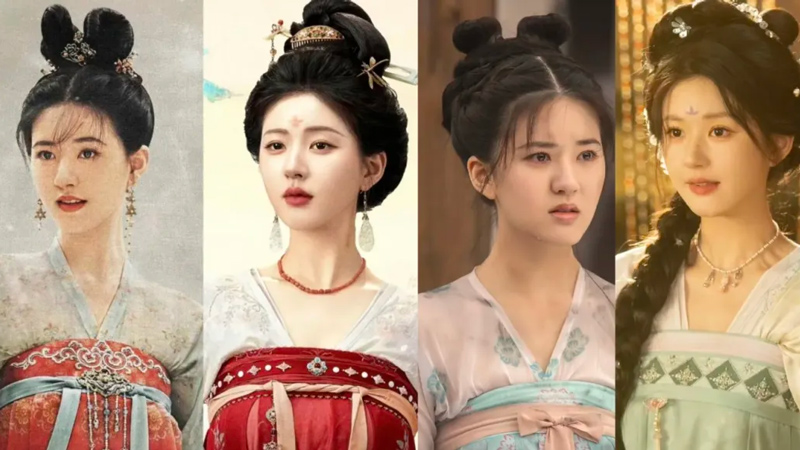
Celebrities have become inadvertent pioneers in this space. Public figures like Zhao Lusi, Chen Duling (陈都灵), and Zhou Ye (周也) have been spotted blending Hanfu elements with contemporary fashion. They might pair a modern blouse with a traditional Mamianqun (马面裙) pleated skirt, or incorporate a cross-collar top into a casual outfit. This "mix-and-match" approach is arguably the most accessible entry point for the public. It demystifies the clothing, showing how a single element can be integrated into a everyday wardrobe, making the style feel less daunting and more personally expressive.
A Roadmap Forward
China's situation is uniquely complex. With 56 officially recognized ethnic groups, each with its own rich sartorial history, there is no single roadmap for modernization. Unlike countries with a more monolithic traditional attire, China cannot simply look to another nation's playbook for guidance. The path for a modern Yi (彝族) costume, bursting with bold colors and silver jewelry, will be entirely different from that of an elegant, minimalist Han dress. This diversity is a strength, but it also means the work must be done piece by piece, culture by culture, with deep respect for each tradition's specific nuances.
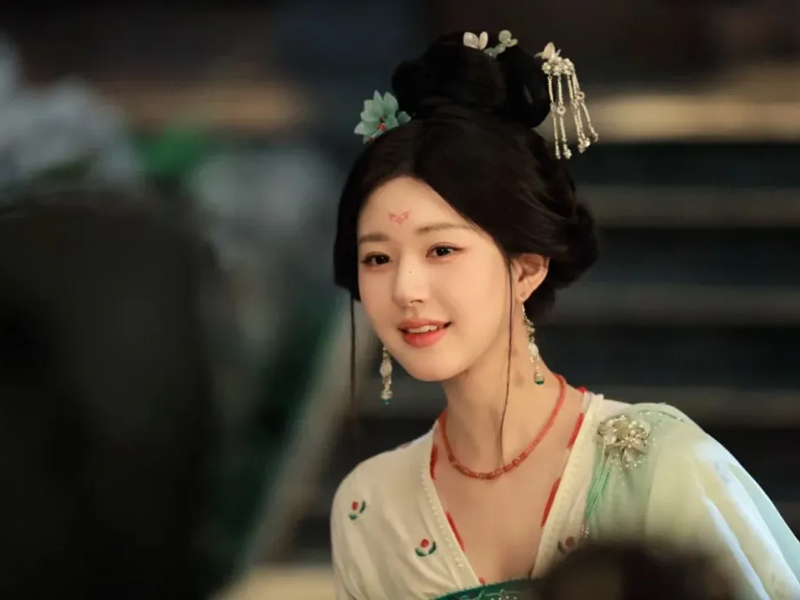
Grassroots movements and digital communities are driving much of this innovation. Online platforms are filled with young designers and enthusiasts experimenting with cuts, silhouettes, and fabrics. They are the ones actively testing what resonates with their generation. While their designs are not always commercially viable, they create a vibrant ecosystem of ideas. This bottom-up energy, combined with the top-down influence of media like Love's Freedom, creates a powerful synergy. It proves that the desire for culturally-grounded modern fashion is not a passing trend, but a sustained cultural shift.
The ultimate success will be measured by normalization. The day when seeing someone in a Hanfu-inspired dress on the subway warrants no special attention is the day the movement has truly triumphed. It will no longer be a statement piece for a photoshoot or a festival, but a simple matter of personal style. The journey for designers and entrepreneurs like the fictional Xu Yan is difficult, filled with aesthetic and commercial pitfalls. Yet, by focusing on wearability, establishing a clear modern identity, and embracing the nation's vast cultural diversity, traditional Chinese clothing can have a vibrant future, not just a beautiful past.