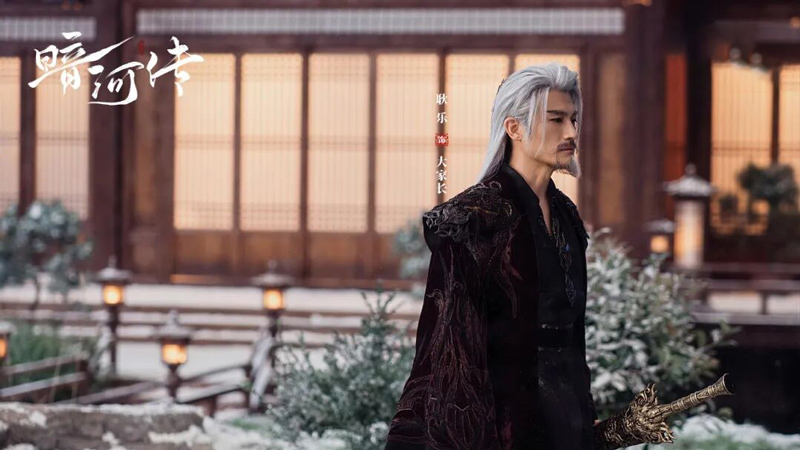
What happens when the most feared assassin in the land is the one trying to prevent a war? This is the central question gripping viewers of the new Wuxia series, Blood River (暗河传), which premiered its first five episodes on October 20th on the Youku platform. The show plunges audiences into the shadowy world of Anhe (暗河), a legendary and mysterious guild of killers. Based on the novel by Zhou Munan, this series exists within the same narrative universe as his previous hits, The Blood of Youth (少年歌行) and Dashing Youth (少年白马醉春风), sharing the same director and screenwriter. Unlike its more brightly lit predecessors, Blood River immediately establishes a darker, more morally complex tone. The story ignites when the guild's patriarch, returning from a duel, is mortally poisoned, creating a power vacuum that threatens to shatter the organization from within. At the heart of the ensuing storm are two master assassins, whose brotherhood is about to be tested by ambition and conflicting loyalties.
The Web of Loyalty
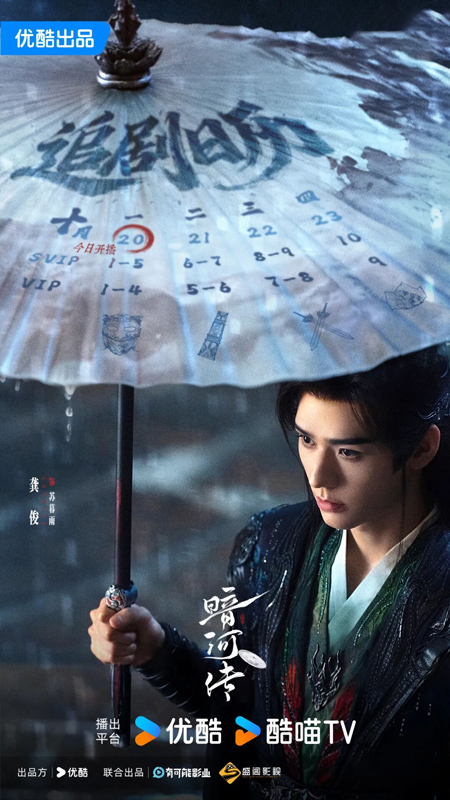
The Patriarch's survival hinges on finding the reclusive healer, Baihe Huai. He dispatches his most trusted operative, the ghostly Zhi San Gui (执伞鬼) or "Umbrella Ghost," Su Muyu (苏暮雨), played by Gong Jun. Su Muyu is the embodiment of lethal precision and stoic duty. In a parallel move, the ambitious Su Changhe (苏昌河), known as the "Funeral Director," also seeks the healer, hoping to control the situation. Through a clever ruse, the healer herself ends up accompanying Su Muyu, while Su Changhe is left behind. This initial gambit sets the stage for their conflict. Su Changhe sees the Patriarch's weakness as a once-in-a-generation opportunity to seize control, promising Su Muyu a shared rule. He has already set his plans in motion, arranging for delays and assassins to slow Su Muyu's progress and weaken the Patriarch's defenses.
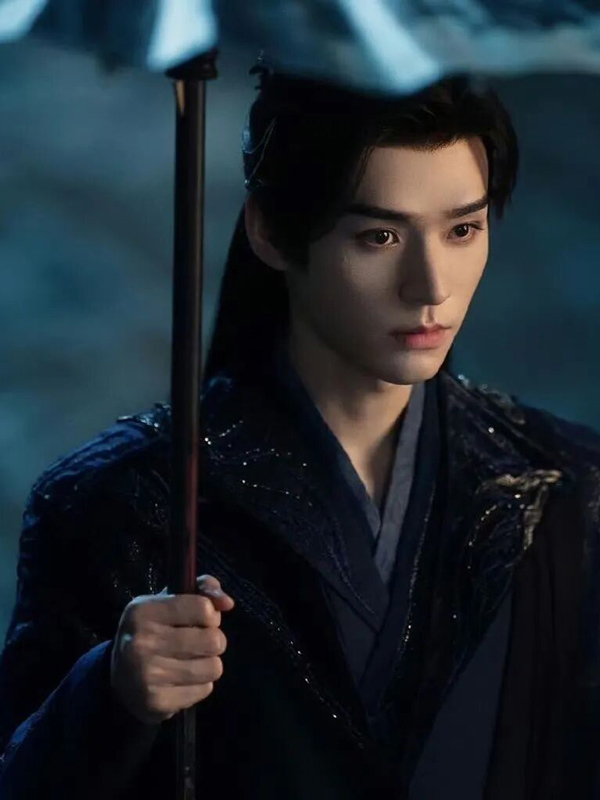
Su Muyu, however, remains unswayed. His loyalty is not just a matter of duty but of personal debt. He refuses to betray the man who saved him, setting him on a direct collision course with his former brother-in-arms. He escorts the Patriarch and the healer to the Zhu Chao (蛛巢), or "Spider Nest," a fortress believed to be impenetrable. It is here that Baihe Huai plans to use the Shenhun Dafa (神魂大法) soul-transfer technique to purge the deadly Xueluo Yizhimei (雪落一枝梅) poison. Yet, Su Changhe's schemes have ensured that the nest is far from safe. Assassins from the three ruling families of Anhe are already converging on the location, their blades aimed at the Patriarch, turning the supposed sanctuary into a deadly trap.
A Shadowy World
The visual language of Blood River is a character in itself. The producers have fully committed to a dark, atmospheric palette that mirrors the story's focus on conspiracy and moral ambiguity. While this stylistic choice sparked online discussions about the dimly lit scenes, it is a deliberate and effective artistic decision. It draws viewers into a realm where secrets are kept in shadows and allegiances are as murky as the lighting. This is not the sun-drenched world of righteous heroes; it is a gritty, dangerous underworld where every corner could hide a threat. The production design and special effects are lavish, creating a sense of scale and grandeur that feels both epic and intimately claustrophobic.
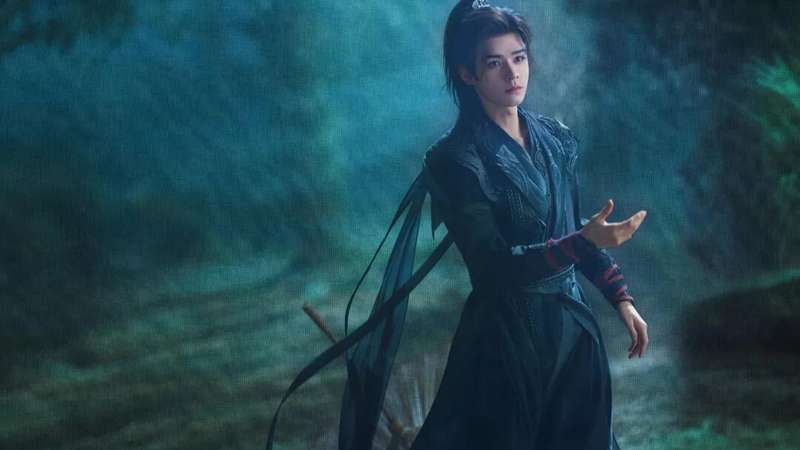
This aesthetic extends to the characterization. Gong Jun's performance as Su Muyu is a masterclass in restrained power. He conveys a deep internal conflict, a man bound by the rules of a dark world yet clinging to a personal code of honor. In contrast, Su Changhe, played by Chang Huasen (常华森), is all fluid motion and casual charm, his relaxed demeanor belying a sharp, calculating mind. Their contrasting energies define the central dynamic of the show. The narrative efficiently introduces a large cast of characters, each representing different factions within the guild, without ever feeling confusing. The plot maintains a swift, relentless pace, each scene tightening the tension and expanding the scope of the impending conflict.
First Impressions
The initial wave of audience reaction to Blood River has been sharply divided, reflecting its bold choices. Many early reviewers have lavished praise on the series, awarding it top marks for its distinctive dark aesthetic and breakneck pacing. They celebrate its departure from traditional Wuxia tropes, finding the focus on a killer guild to be a refreshing take on the genre. Gong Jun's performance is frequently highlighted as a major strength, with fans applauding his ability to embody a physically formidable and emotionally layered assassin. The complex, fraught brotherhood between him and Su Changhe is already a focal point for audience engagement.
Conversely, a segment of the viewership has been critical. The very same dark cinematography that some applaud is criticized by others for being overly murky, making action sequences difficult to follow and draining the scenery of detail. Some have also pointed to the lead actor's line delivery as a point of contention, feeling it breaks the immersion in key dramatic moments. These contrasting views underscore the challenge of creating a stylized genre piece. For every viewer drawn into its shadowy, high-stakes world, another finds the style a barrier to connection. Ultimately, the show makes no attempt to cater to all tastes, firmly establishing its own unique identity from the very first episode.