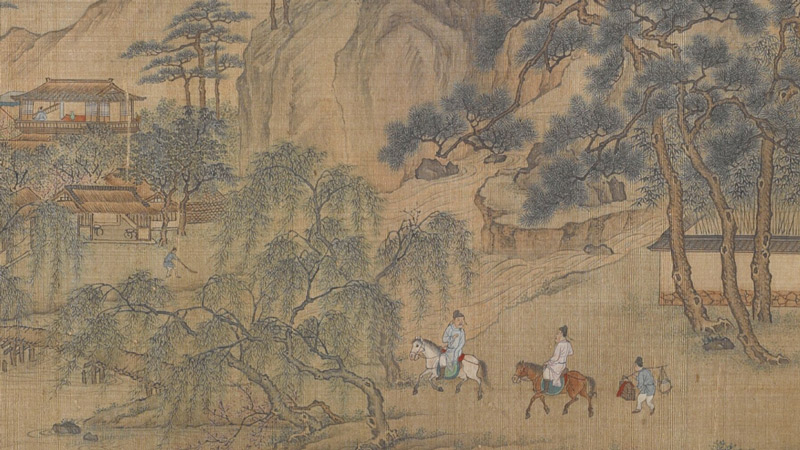
What did an official's day off look like two thousand years ago? For us, weekends mean freedom from emails and deadlines, a chance to recharge. In ancient China, the concept of a rest day was both practical and sacred, a vital pause in the rhythm of life mandated by the state. Long before the forty-hour work week, dynasties like the Han recognized that even the most diligent bees in the imperial hive needed time away from collecting honey.
Their days off, however, were not just for idleness; they were for purification, for personal chores, and for the quiet pursuits that made the other days bearable—sometimes these pursuits were boisterous. From the strict bathing schedules of the Han to the vibrant festivals of the Tang and the generous holidays of the Song, the ancient weekend was a fascinating institution that reveals how people have always sought balance between duty and leisure.
The Han Day of Soap
During the Western Han Dynasty, the state took a direct interest in its officials' hygiene. The law, known as the Han Code (汉律), decreed that government workers were entitled to one day off every five days, a system called Xiumu (休沐). The term literally means "rest and wash," and its primary purpose was to allow the bureaucratic class a dedicated day for bathing, grooming, and changing into clean clothes. This was not a mere suggestion but a rigorously enforced policy for two centuries, ensuring that the empire's administrators presented a clean and dignified appearance.
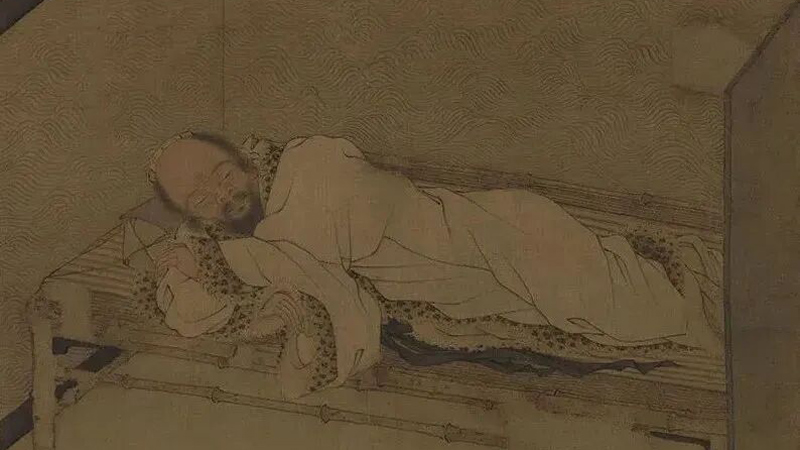
Beyond these regular breaks, other days demanded rest for spiritual reasons. People believed that on the day of Furi (伏日), ghosts roamed the earth. Consequently, everyone would stay indoors, "not doing any other business," as was the custom. The Dongzhi (冬至) or winter solstice was another state-sanctioned holiday, a time when the cosmic energies of Yin (阴) and Yang (阳) shifted. Officials would cease all administrative work, and people were encouraged to rest quietly at home to harmonize with this celestial transition.
How an individual spent this precious free time varied greatly. For some, like the Eastern Han official Shang Ziping (尚子平), a day off was an opportunity for a side hustle. Finding his government salary insufficient, he would go into the mountains to gather firewood, which he then sold to supplement his income. On the other end of the spectrum, an official named Zhang Fu (张扶) was such a workaholic that he famously refused to take his Xiumu, choosing instead to remain in his office to handle paperwork.
Tang Ten-Day Break
The Tang Dynasty, a golden age of Chinese culture, reformed the rest day system. The five-day cycle was replaced by a ten-day cycle, known as Xunxiu (旬休). This meant officials worked for nine days and rested on the tenth. Each of the three ten-day periods in a month had its rest day, called Shanghuan (上浣), Zhonghuan (中浣), and Xiahuan (下浣). While this meant fewer routine days off, the calendar was packed with vibrant festival holidays that brought the entire society, from nobles to commoners, out to play.
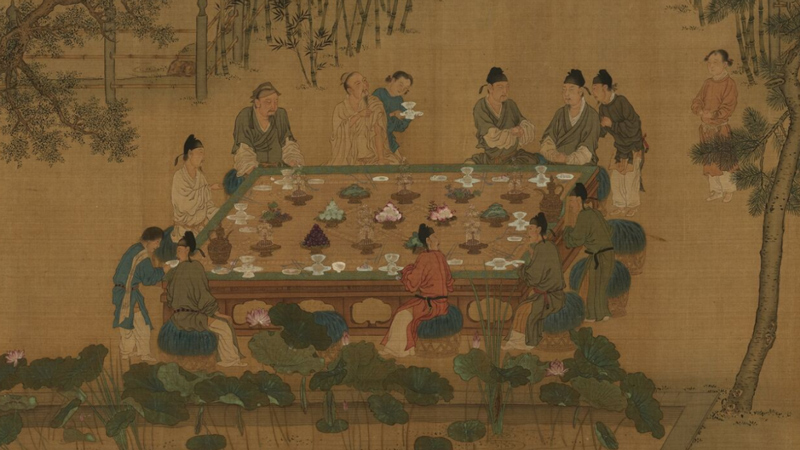
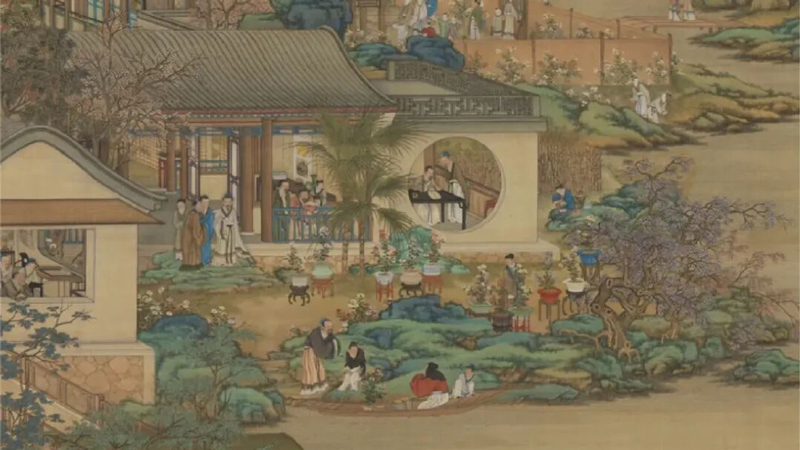
The social life of a Tang scholar-official was often centered around elegant gatherings. They would host banquets where the arts of poetry, music, and wine were celebrated in equal measure.
The poet Bai Juyi (白居易) captured the intimate charm of such an evening in his poem Asking Liu the Nineteenth (问刘十九): "The evening sky threatens snow, Could I invite you for a cup of wine?" (“晚来天欲雪,能饮一杯无?”)
Beyond the walls of the banquet hall, people embraced the outdoors, climbing hills during the Chongyang Festival (重阳节) or taking leisurely boat trips on summer lakes.
For the average resident of the magnificent capital, Chang'an, a day off meant a trip to the bustling West Market and East Market. These were not merely commercial hubs but grand entertainment districts. One could find Hu (胡) merchants from Central Asia, watch astonishing street acrobatics, and sample delicacies from countless food stalls. The high point of the year was the Lantern Festival, when the nightly curfew was lifted, the streets were illuminated with countless lights, and the city celebrated through the night.
Song Leisure Culture
If any dynasty mastered the art of the holiday, it was the Song Dynasty. It retained the Xunxiu system, guaranteeing officials at least 36 days off per year, not including a generous list of additional festival holidays. This created a thriving culture of leisure and consumption. On a day off, the streets of the capital, Bianliang (汴梁), were filled with a festive energy, as described in the memoir Dream Pool Essays (梦粱录): "Festivals follow one after another, each with its own delights."
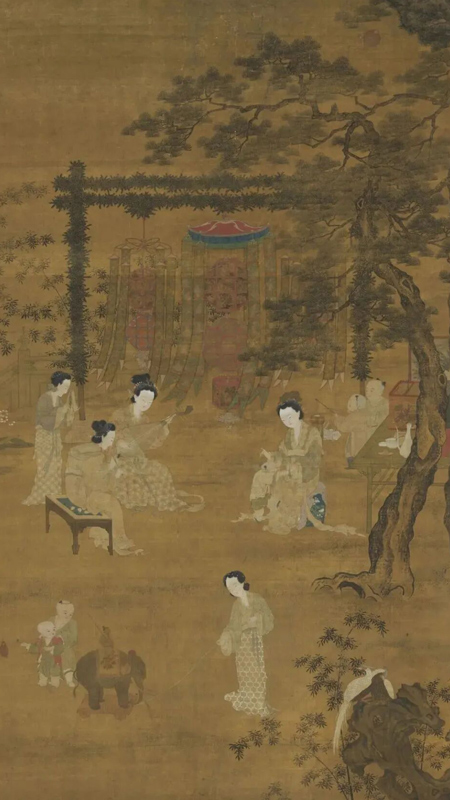
The cityscape transformed during these holidays. During the Qingming Festival, the city gates would be jammed with carriages and horses as families streamed out to sweep the graves of their ancestors and enjoy the spring air. The scene was one of organized chaos and vibrant life. People would flock to parks and scenic spots, laying out picnics on the grass under blossoming trees, sharing food and drink in a cheerful, communal atmosphere.
Professional entertainers, singers, and dancers would fill the gardens and pavilions, adding to the merriment. As dusk settled, the revelers would begin their return journey, their spirits high and their hearts full. The sky itself seemed to be painted with the colors of their satisfaction. Whether in the Han, Tang, or Song era, the human desire to reclaim time for oneself remains a constant thread through history. The rest day was, and always has been, a blank canvas for the human spirit.