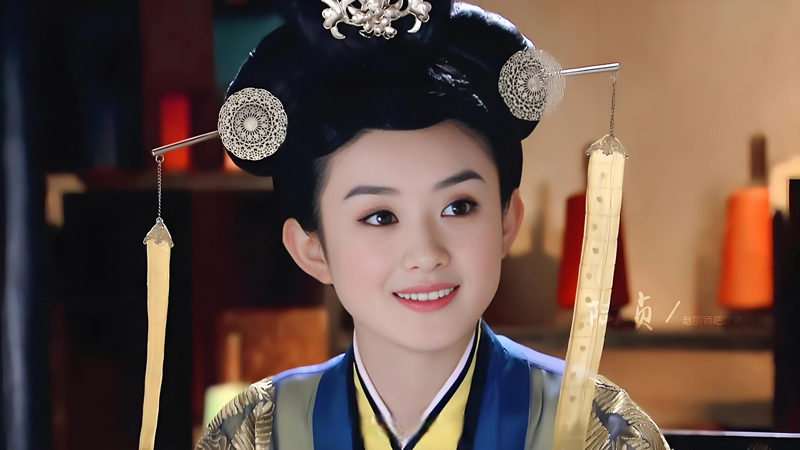
Have you ever watched a Chinese historical drama and been captivated by the elegant hair accessories, particularly those long hairpins with flowing ribbons? In shows like The Legend of Lu Zhen (陆贞传奇), starring Zhao Liying (赵丽颖), characters often sport intricate updos adorned with what appears to be a slender hairpin paired with two delicate cloth strips. This distinctive look has sparked curiosity among fans, leaving many to wonder about its name and origins.
While it evokes a sense of ancient charm, this style is largely a modern interpretation seen in television and animation, blending aesthetic appeal with creative liberty. Unlike traditional pieces rooted in strict cultural protocols, these accessories prioritize visual drama over historical accuracy. Their popularity highlights a broader trend where contemporary media reimagines the past, making ancient fashion accessible to global audiences. This article delves into the background of this iconic hairstyle, tracing its possible inspirations from East Asian traditions and examining how it has evolved on screen.
Korean Court Origins
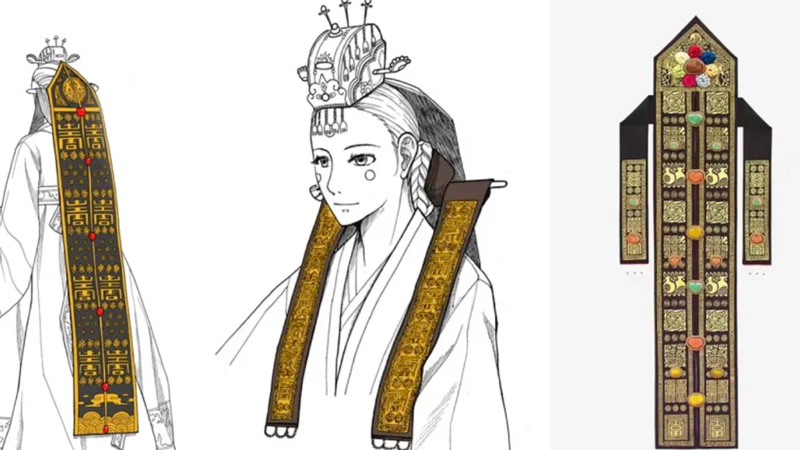
The hair accessory resembling a long hairpin with ribbons may draw inspiration from a Korean noble piece known as the Tutule Tangzhi (图涂乐唐只). Worn by aristocratic women during the Joseon Dynasty, this ornament was reserved for significant ceremonies like weddings or coming-of-age rituals. It symbolized high social status, as commoners were prohibited from using it. Typically, the Tutule Tangzhi consisted of a front and back section, with the latter, which is called the "Great Tangzhi", being more elaborate. Crafted from silk, it often featured gold leaf patterns or intricate embroidery, measuring about 20 centimeters wide and 110 centimeters long. The design included a folded, beak-like center with triangular tops and twin hanging ribbons, sometimes secured with jade plates for added grandeur.
Originally, the Tutule Tangzhi came in solemn colors like black or red, with red denoting higher rank. Embellishments included five-colored threads and precious stones, reflecting auspicious symbols. However, modern versions have diverged, incorporating pastel shades and simpler forms for aesthetic appeal. In historical contexts, this accessory was part of a full ceremonial outfit, such as the Gwanee robe, emphasizing its role in upholding aristocratic identity. Its structured elegance contrasts with the more fluid adaptations seen in dramas, where the focus is on movement and visual flair. By understanding its roots, we see how television stylists have simplified and repurposed the design for broader appeal.
In Korean culture, the Tutule Tangzhi was not merely decorative but a marker of life milestones. Its usage adhered to strict protocols, ensuring it was worn only by eligible women in court settings. The craftsmanship involved skilled artisans who specialized in textile arts, preserving techniques passed down through generations. Today, while authentic pieces are rare, they inspire costumes in period films and cultural festivals. This transition from ritual object to cinematic prop demonstrates how traditional elements can be adapted while losing some of their original significance.
Chinese Influences
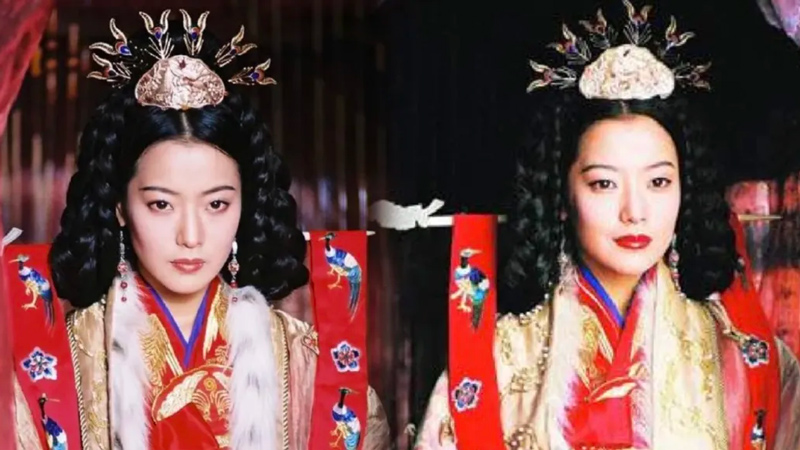
Beyond Korean origins, this hairstyle might also echo ancient Chinese head ornaments, such as the Hong (纮), a ceremonial cord used with crowns. In imperial China, the Hong served as a reminder of balance and propriety, often described in texts like those by scholar Zheng Xuan. It was part of formal attire for nobility, with colors indicating rank—red for the emperor, blue for lords, and black for officials. Unlike the standalone hairpins in dramas, the Hong was inseparable from its crown, emphasizing its ritual function. This contrast underscores how modern depictions prioritize aesthetics over historical fidelity, transforming rigid symbols into versatile fashion statements.
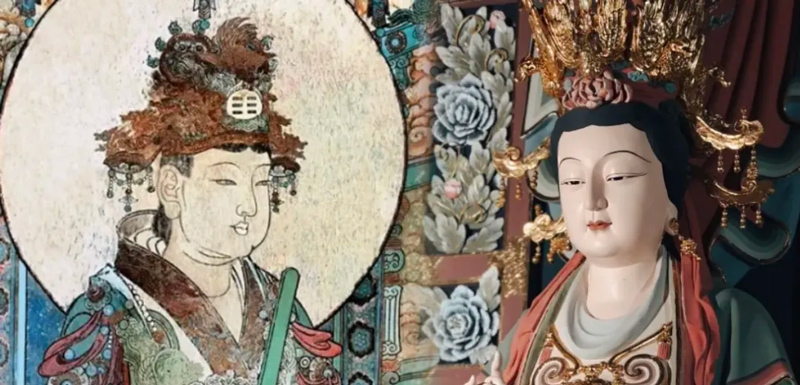
Another Chinese parallel is the Bobing (博鬓), an ornate side ornament seen in Taoist art, adorning deities and immortals. Featuring pendants like pearls or gems, it shared the vertical flow of the ribboned style but was more lavish. In murals, goddesses depicted with Bobing exuded divinity, whereas contemporary versions lean toward simplicity. This shift reflects a "cosplay" approach, where designers blend elements for fantasy appeal, as seen in Xianxia dramas. Such adaptations, while beautiful, often strip away the deeper cultural meanings, reducing accessories to visual motifs.
In modern media, this hybrid style appears in shows like The Myth (神话), where characters wear reinterpreted Korean or Chinese pieces in fictional settings. For example, a princess might don a red Zhaiyi (翟衣) robe with a ribboned hairpin, creating an anachronistic but striking look. This trend extends to video games and animations, where artists freely mix traditions to craft unique "Eastern" aesthetics. While purists may lament the loss of authenticity, these innovations keep historical fashion alive for new generations. They invite viewers to appreciate the past through a creative lens, sparking discussions about cultural exchange and identity.