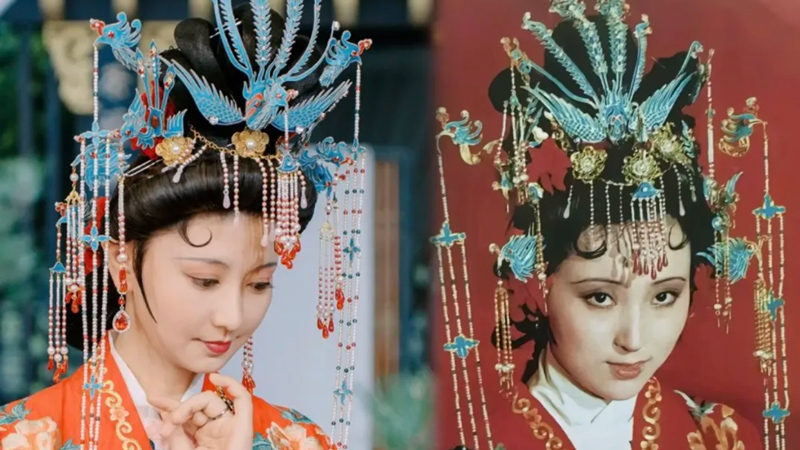
When actress Lan Xi (斓曦), celebrated for her role as Shen Meizhuang (沈眉庄) in the television series, recently shared images of herself dressed as Lin Daiyu (林黛玉) from the classic 1987 adaptation of The Dream of Red Mansions (红楼梦), she ignited a fervent discussion among fans. Paying homage to the iconic wedding look of the character made famous by Chen Xiaoxu (陈晓旭), Lan Xi expressed that portraying the ethereal Lin Daiyu was a long-held personal ambition.
Yet, while many admired her dedication, a significant number of viewers voiced a different opinion: her dignified aura might be a better fit for another character from the epic tale, the tragic You Erjie (尤二姐). This debate does more than just compare actresses; it opens a fascinating window into the intricate world of traditional Chinese costume and its powerful role in shaping a character's identity on screen.
The Beizi's Timeless Grace
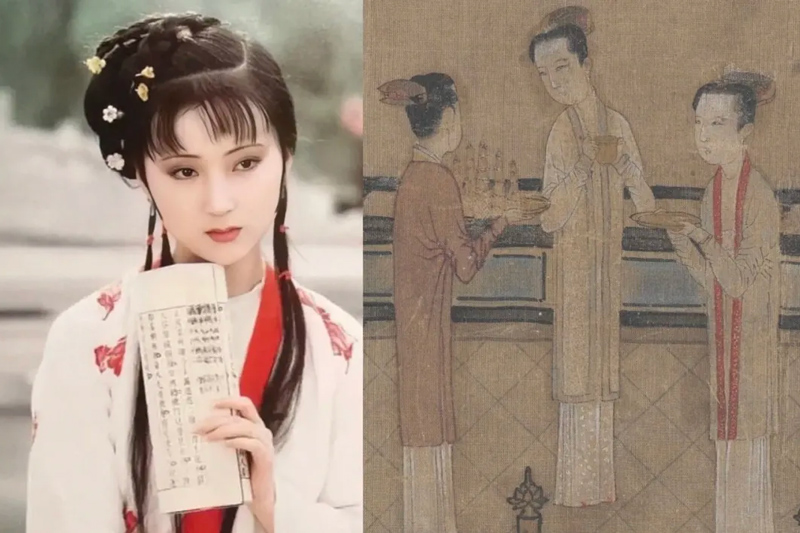
The most striking element of Lan Xi's portrayal is the Beizi (褙子), a long, elegant outer garment that defines Lin Daiyu's visual identity in the 1987 series. This particular style of robe, which gained prominence during the Song and Ming dynasties, is characterized by its straight collar, front opening, and long, narrow sleeves. What makes it distinct are the side slits that run high up the garment, allowing glimpses of the inner layers of skirts with every movement, creating an effect that is both modest and subtly alluring. The Beizi is a masterpiece of understated elegance, often crafted from solid-colored fabrics with delicate, subtle patterns.
The popularity of the Beizi was deeply intertwined with the philosophical currents of its time, particularly the influence of Neo-Confucianism. This school of thought emphasized restraint, order, and a neat, composed appearance, values that were directly reflected in clothing. The long, flowing lines of the Beizi offered a more covered-up silhouette compared to the fashions of the preceding Tang dynasty, promoting an aesthetic of layered refinement. Over centuries, its length evolved, starting relatively short and eventually extending, during the Southern Song dynasty, to a dramatic length that could sweep the floor.
Another defining feature of the Beizi is its use of trim, known as Yuanbian (缘边). The edges of the collar, front opening, sleeves, and hem could be adorned with decorative borders. This trim was not merely functional; it was a canvas for personal expression. Artisans employed intricate techniques like embroidery, gold appliqué, and painting to decorate these borders with motifs of flowers, birds, and fish. A wearer could choose a fully trimmed Beizi or one with trim only on the collar, making each garment a unique reflection of individual taste and status.
Ming Dynasty Refinements
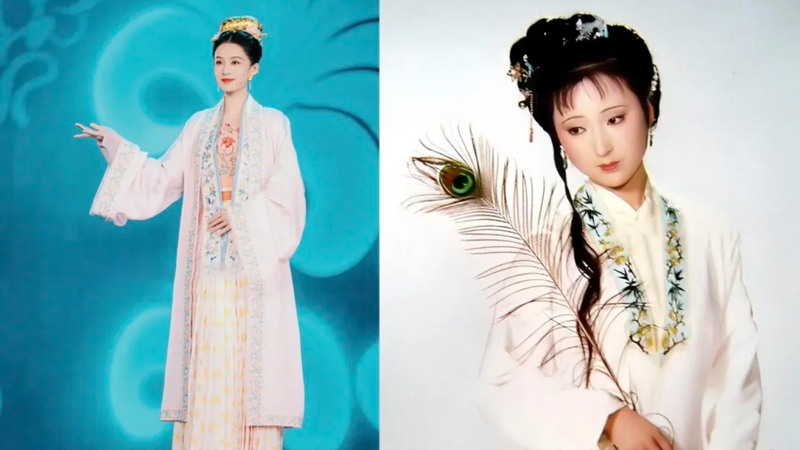
As the Beizi transitioned into the Ming dynasty, its form saw further innovation. A notable variant emerged: the Pifeng (披风), a version with noticeably wider sleeves. Historical records from the Ming period sometimes use the terms Beizi and Pifeng interchangeably, suggesting a period where both narrow and wide-sleeved styles coexisted. This reflects the dynamic nature of fashion, even within the framework of traditional attire.
One key distinction that scholars note is in the collar design. From the Song dynasty until the mid-Ming, the collar of a Beizi typically ran continuously down to the hem. Later, in the mid to late Ming period, a half-collar style became fashionable. The Pifeng was a unisex garment. For men, it was worn over a Zhiduo (直裰) or Daopao (道袍), while women had a variety of options for layering underneath, often choosing crossed-collar or round-necked robes.
The late Ming scholar Zhu Zhiyu (朱之瑜) provided a detailed description of the Pifeng in his writings, noting its front-opening design secured with jade buttons or small ties, and its general lack of decorative borders. By the end of the Ming era, it was common to wear the Pifeng over standing-collar garments, presenting a formal and dignified "full-dress" appearance. The costume design in the 1987 The Dream of Red Mansions, while rooted in Ming styles, cleverly incorporates decorative elements from the subsequent Qing dynasty, creating a hybrid aesthetic that serves the dramatic needs of the story.
A Casting Conundrum
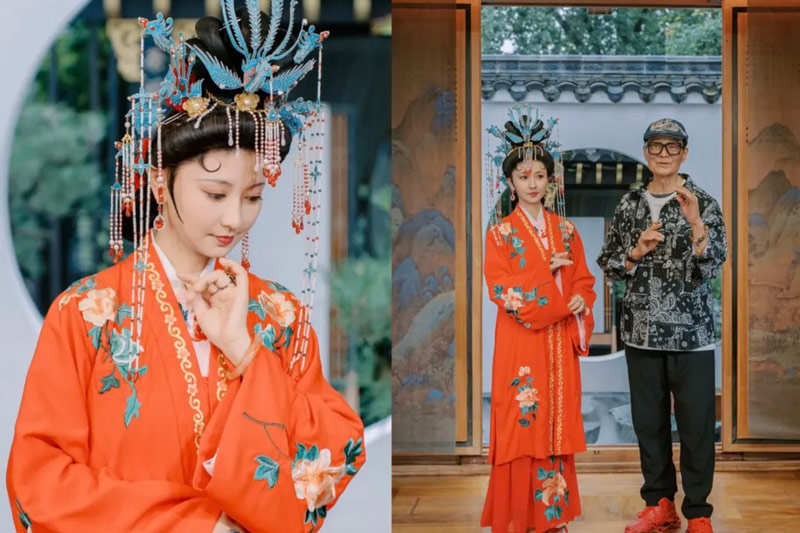
This brings the discussion back to Lan Xi's recent homage. Her recreation of Chen Xiaoxu's Lin Daiyu is meticulous, from the phoenix hairpins to the specific style of the Beizi. However, the passionate reaction from the audience highlights how deeply connected costume and character are in the viewers' minds. Lin Daiyu is remembered as frail, poetic, and possessing a delicate, almost otherworldly beauty. Her clothing, often in soft, pale hues, reinforces this perception of a graceful, melancholic spirit.
This is where the debate about You Erjie arises. You Erjie is another female character from The Dream of Red Mansions, but her story arc is one of tragic downfall. She is often perceived as possessing a softer, more voluptuous, and ultimately more vulnerable beauty compared to Lin Daiyu's sharp intellect and ethereal nature. Fans suggesting that Lan Xi's dignified and gentle demeanor aligns more closely with You Erjie are essentially reading the language of the costumes and the actress's own screen presence.
Ultimately, the conversation sparked by a single photo demonstrates the enduring power of The Dream of Red Mansions in the Chinese cultural imagination. It is not merely about which actress looks the part, but about how traditional garments like the Beizi carry centuries of aesthetic and cultural meaning. They are not just costumes; they are narrative tools that communicate a character's spirit, social standing, and inner world, proving that in classic storytelling, what a character wears is often as eloquent as what they say.