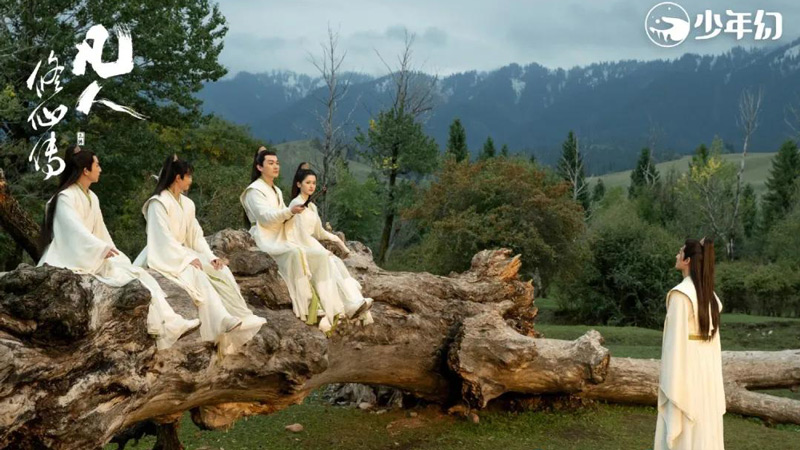
The shoot was about to start. Everyone on set was waiting, but director Yang Yang (杨阳) just couldn't figure out how to stage the scene.
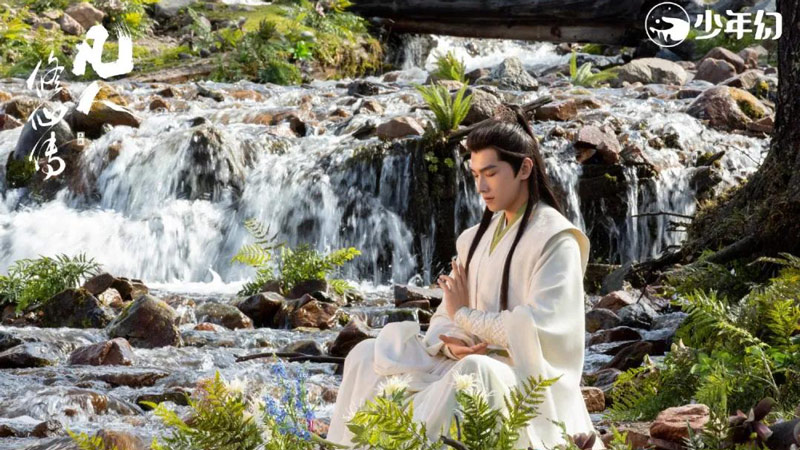
"My brain just wouldn't click." She stared at the dense block of text in the script, thoughts all tangled up. In The Immortal Ascension (凡人修仙传), cultivation usually means meditating, training, and leveling up. But how do you show Han Li's progress in cultivation through visuals? How do you film something as abstract as a "breakthrough"? "I thought so hard my head hurt," she admitted. And this wasn't a one-time problem—it was basically a daily struggle throughout production.
And that was just one of many challenges. Whenever Yang Yang felt mentally exhausted, she would put down the script and sit in meditation herself, just like Han Li. If that didn't calm her down, she'd pick up something completely unrelated to filmmaking. "Sometimes I'd play the Xuankong Drum (a kind of handpan instrument)." Stepping away from the shoot oddly helped—ideas would suddenly spark the moment she let go.
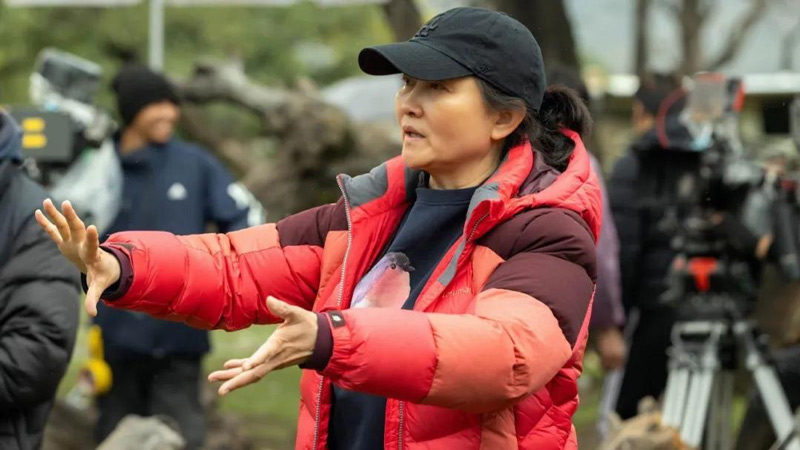
Yang Yang described her whole preparation and filming process as "working like a migrant laborer, hauling bricks every day." She went with her crew to Xinjiang, shooting at altitudes of 3,000 meters, braving long nights and harsh conditions. But in those vast open landscapes, she said, she truly found the feeling of Han Li's cultivation journey.
No matter how tough the environment was, Yang Yang had a daily ritual: she'd greet every crew member on set each morning, explain how that day's scenes would be shot, and make sure everyone knew the plan. At the end of the day—no matter how late—she would always say: "We're wrapped for today. Thank you, everyone."
When the show launched, it broke 10,000 popularity points in just 51.5 hours. Hearing the news, Yang Yang was both thrilled and a little baffled: "We haven't even used our biggest moves yet."
Taking on the Challenge: A Story with a Singular Focus
Yang Yang is naturally curious—something producer Wang Yuren didn't expect at first. Back when they worked together on Ever Night (将夜), Wang told her that The Immortal Ascension was a project she shouldn't miss. But he wasn't sure if Yang Yang would actually be interested in a cultivation novel like this.
Turns out, as soon as Yang Yang read a few chapters, she told him, "This is amazing. I want to direct it."
"I felt it was a once-in-a-lifetime challenge in my career," she explained. What caught her eye wasn't the "immortal cultivation" theme, but something rarely seen in Chinese TV drama—a story that begins with just one character, in one setting, unfolding over a long period of time. "That's both incredibly challenging and also very risky." For her, the director's perspective came first, even before the fantasy elements.
When it comes to character dynamics, Yang Yang was especially fired up by the shifting bond between Doctor Mo (Mo Dafu) and Han Li. "The life-or-death battle between master and disciple, and how the disciple grows from a boy into a true fighter—that's the kind of arc worth digging into." For her, the challenge and the appeal lay in turning what could easily feel like a one-man show into a story with weight.
Yang Yang was very clear-eyed about the "mountain" standing in her way. She still remembers the days of wrestling with the material, impatient to find her solution.
Locations: Finding the "Immortal Realm" in Xinjiang

"We scouted so many places, but nothing felt quite right. Then I suddenly thought of Libo (in Guizhou province), where we shot Ever Night." But when the team arrived, they discovered the old site had already been developed into a tourist attraction. So they pushed deeper in and stumbled upon a quiet, hidden spot. "Everything you see on screen—the buildings, even the houses on water—we built them there." Standing before the finished set, Yang Yang finally believed that the story of three disciples dwindling to two, and then to one, could truly be made cinematic.
During the construction of those water houses, the art director suggested: what if they cut a hole in the floor for fishing? Yang Yang was thrilled. That little idea gave her the perfect visual for Han Li's breakthrough of the fourth level of the Changchun Gong. On the page, it was just a line—"Han Li's five senses sharpened." On screen, it became a fish leaping from the water, the inner breakthrough mirrored in the outside world.
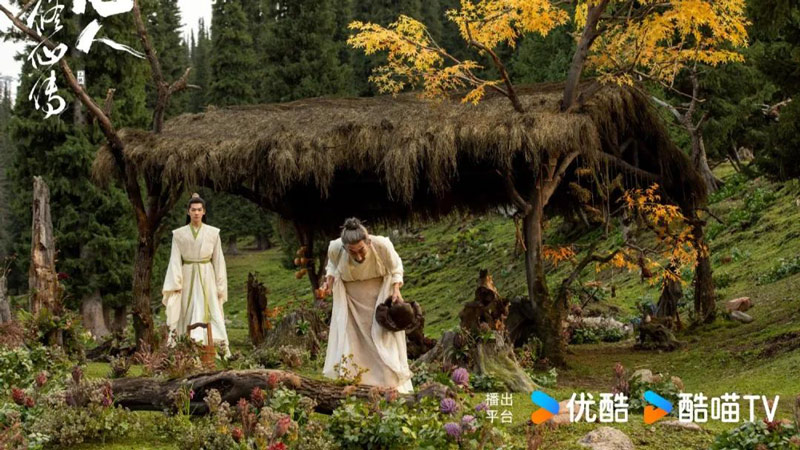
Cultivation felt distant from Yang Yang at first. To bridge that gap, she read through piles of books and even interviewed real Daoist practitioners. Through those conversations, she began to grasp what cultivators sought—"shedding worldly attachments, tuning one's heart to the rhythm of nature, reaching harmony between man and heaven" (天人合一). With that understanding in mind, when she returned to the sect stories in The Immortal Ascension—whether it was Yue Sect or Huang Feng Valley—she saw them differently: "I realized it's about simplicity at its core, about returning to something pure."
She also traveled to several famous Daoist mountains. But most of them had long been turned into tourist spots, crowded with vendors and noise. It was impossible to sense the solitude and detachment of ancient cultivators retreating into the mountains. So finally she decided: "Let's go to Xinjiang."
Once there, the vastness hit them all. That emptiness, that endless horizon, was overwhelming. Sometimes, while location scouting, Yang Yang would just sit alone by a stream, dazing out. "Why couldn't this be Hundred Herb Garden?" she thought. She imagined droplets splashing onto spirit herbs, ripples flashing across the water's surface, all so calm and effortless. "I even wanted to camp there overnight. But that wasn't allowed—wild animals could show up." Still, in her heart, she felt she had found the place closest to an immortal realm
Long Conversations with Actors—Nothing Too Small
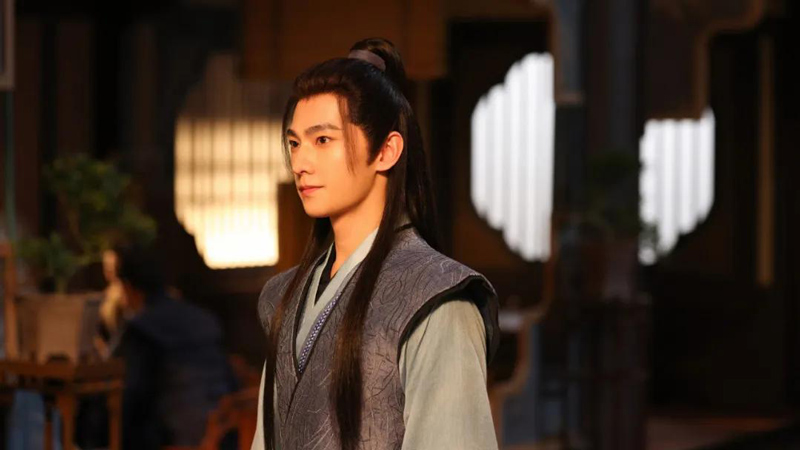
Every shooting day, before the cameras rolled, Yang Yang would spend a long time talking with the actors. "I think this is one of the director's most important jobs," she said. She tried her best to help them find the right state for each scene.
For example: when Han Li first arrives at Doctor Mo's place, his cautiousness stands in stark contrast to Zhang Tie's recklessness. Or later, when Han Li returns home and sees his younger sister getting married—he sits at the table, looking at the leftovers. His reaction isn't disgust at wasted food. Instead, it's the quiet relief of knowing his family can finally eat their fill, to the point of having food left over. So when he takes one of the leftover pancakes and rolls it around a scallion, that simple gesture says everything about what he's feeling.
"Only when you explain all this to the actor can he truly feel what you feel. That's when everything flows naturally." These exchanges weren't just daily on set. Even during pre-production, at costume fittings or before filming began, Yang Yang had long talks with Yang Yang (the actor—same name as the director). Their longest session lasted an entire afternoon, going through the script page by page.
The deeper they talked, the more the director realized how committed the actor was to both the series and to the role of Han Li. "That's what I value most. No matter how famous or popular an actor is, what matters to me is whether he genuinely cares about the character, whether he's putting in 200%." She shared all her thoughts with him too—why Han Li should look a certain way, which costumes to keep or cut, what each design meant. "Almost every tiny detail was discussed."
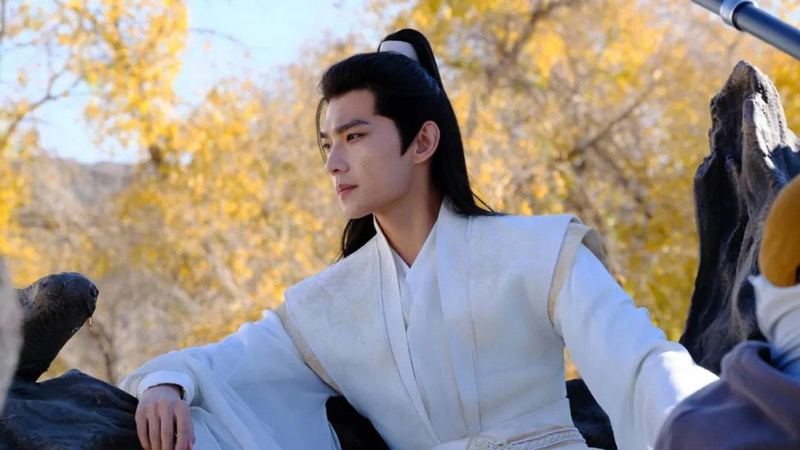
What surprised her was how responsive Yang Yang (the actor) was. "No matter how specific I got, he always had feedback. It showed he'd already invested a lot of effort, reading the script multiple times." After so many conversations, the director felt confident: "It's kind of fun that we share the same name. I really think he can carry Han Li."
Adaptation: Giving the Heroine More Dimension
While staying faithful to the pacing of the novel, Yang Yang decided to introduce the female lead Nangong Wan during the "Tainan Gathering" arc, and to let her first real interaction with Han Li happen when they face the Mo Jiao beast together in the Scarlet Forbidden Grounds. That's a big departure from the usual way female leads are written in TV dramas.
She also tweaked how one of the key scenes plays out. In the novel, after they defeat the Mo Jiao, Han Li cuts the beast open and accidentally breaks the aphrodisiac sac. Nangong Wan, drugged and unconscious, becomes a passive victim of the scene. But in the drama, that dynamic shifts. Nangong Wan is no longer the one being knocked out—instead, she carries herself with the confidence and composure of someone in a position of power. "To her, Han Li is just a kid. The treasure inside the Mo Jiao is like a red envelope an elder casually hands to a junior. She's relaxed, in control—and it's only in that ease that she slips up."
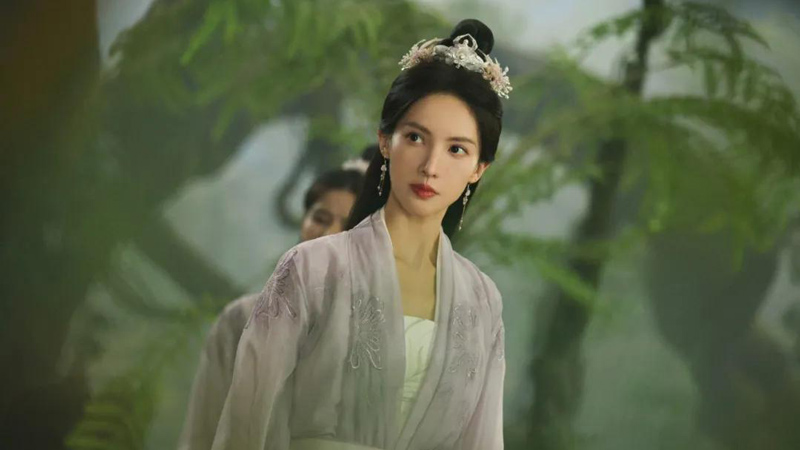
That small change—who leaves their name—also reshapes Nangong Wan's character. In the novel, she tells Han Li her name after he asks. In the drama, it's reversed: Han Li introduces himself, but Nangong Wan doesn't respond. To make that choice feel natural, Yang Yang had already built in a layer of worldbuilding—in the cultivation world, low-level cultivators hold high-level ones in awe. That way, it also sets the stage for later, when Nangong Wan feels conflicted because Han Li doesn't actually know who she is.
Understanding the Character: Han Li Has to Stay Mortal
For Yang Yang, Han Li's journey into cultivation begins with something very simple: a desire to survive. Producer and chief writer Wang Yuren fully agreed with this take.
Wang isn't just the producer of The Immortal Ascension—he also wrote the screenplay and directed the anime version. As Yang Yang put it, "He's been wrestling with this novel for so many years that I can't even count. He's the foundation of my confidence in adapting it." In her words, Wang gave her immense support in keeping the adaptation true to the heart of the story.
Sometimes Yang Yang would get stuck on a line of dialogue or a scene she felt like cutting, and she would turn to Wang. "He always gave me precise judgments," she said. "That was the guarantee that I wouldn't go off track." But there was one arc they debated for a long time—Jiayuan City.
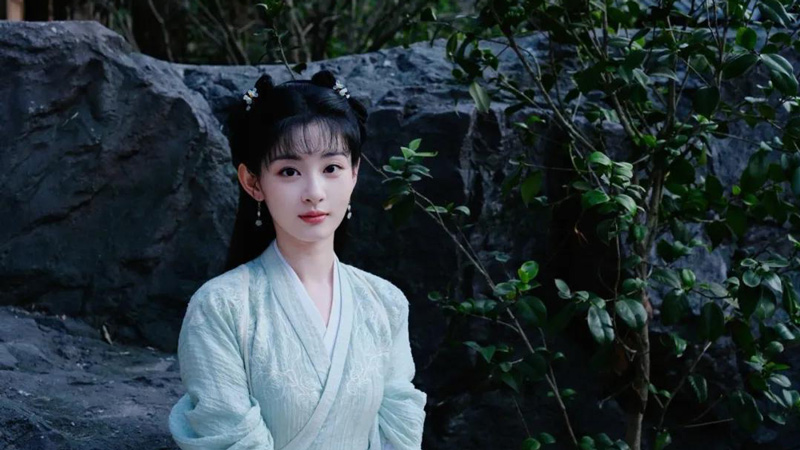
Jiayuan City marks Han Li's last stop before fully entering the cultivation path. In the anime, it's barely touched on, leaving only the character of Mo Caihuan. Yang Yang felt this part should be expanded: "Before leaving the mortal world, Han Li should get a taste of women's lives—of a group of women desperately in need of protection. It's a test of his Dao heart, to see if he can resist worldly temptations." For Han Li, Mo Caihuan becomes a flicker of light from the mortal realm, a spark that keeps glowing in him.
Ten years later, when they meet again at the Yan Fortress, Han Li looks unchanged, but Caihuan has grown up. She tells him that everyone from that noisy household in Jiayuan City has perished. Han Li's grief is written all over his face. "I want to make sure every stage of Han Li's regrets is felt," Yang Yang explained. "Just like ordinary people, he also has missed chances and desires that went unfulfilled."
To her, every character who influences Han Li in the novel must remain in the adaptation. "Each of them leaves a unique mark on him," she said. Whether their impact is positive or negative, whether their screen time is long or short, they matter. Even someone like Mo Caihuan, who only appears sporadically, wasn't cut or merged away.
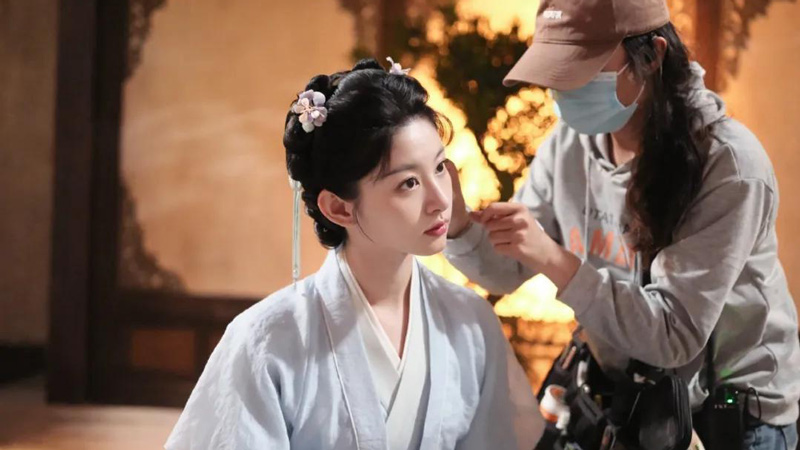
Instead, what was adjusted early on was Han Li's own display of talent. His personal abilities were deliberately toned down at the beginning. But that very "weakening" makes his later rise all the more powerful.
In the novel, Han Li's talent is shown early. When he enters the Seven Mysteries Sect, he leads Zhang Tie and a group of otherwise mediocre candidates through the trial, proving himself the standout among ordinary people—a glimpse of his extraordinary side. But in the drama, the story skips directly to when he has already become Doctor Mo's apprentice.
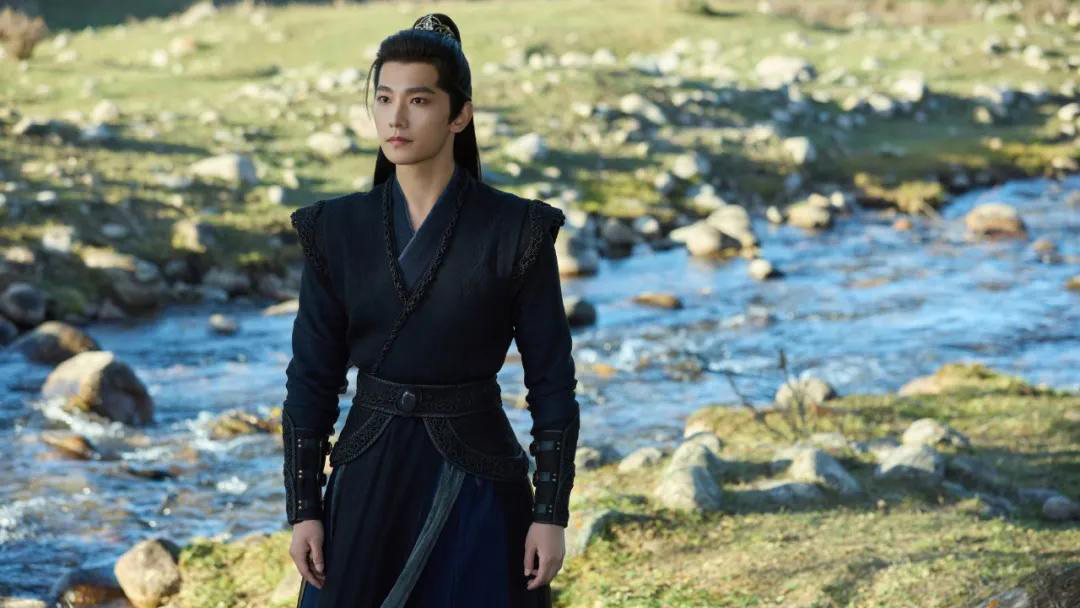
"The mountain-climbing scene has its highlights, but it's still some distance away from Doctor Mo's first appearance," Yang Yang explained. On the one hand, the change was for pacing. On the other, it was to reduce anything at the beginning that made Han Li seem unlike a "mortal." "It's best if, at the start, he's just a down-to-earth boy, satisfied with a simple pancake wrapped around a green onion." To convey this, Yang Yang began Han Li's story in a reed field.
From passing the exam to enter the Seven Mysteries Sect, to becoming Doctor Mo's disciple, to finally fighting his master to the death—it's then that he realizes people can lose their lives, even if they've done nothing to provoke it.
"Han Li's purpose in cultivation comes from an ordinary mindset: survive first, then live better. The traditional Chinese ideal of 'cultivating oneself, managing the family, governing the state, bringing peace to the world' is reflected here." The hardships he faces—being isolated and discriminated against for his background or talent, and then deciding to fight back by becoming stronger—are struggles ordinary people might share. "Han Li's true highlight moments, in fact, only come later in the story."
At the beginning, Han Li has to remain a mortal—that's the only way for the audience to connect his world with theirs.
On Set: Directing with Flexibility, Like a Sports Meet
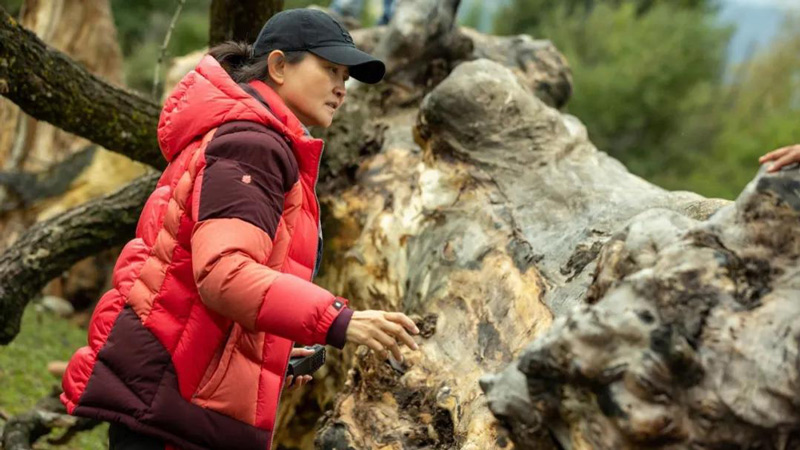
The rules of the cultivation world—breakthroughs, sect traditions, magic tools, spells—are endlessly complex. Before filming large-scale sequences, Yang Yang's nerves would be taut. Sometimes even the night before shooting, she still had no idea how to stage it. "In the end, it was often when I walked onto the set that everything clicked, and I suddenly knew how to shoot. Then it all fell into place."
The big "spiritual root testing" scene was exactly like that. When she arrived, she saw the vast open space. All the sects, the characters, the magic techniques seemed to have their own souls, just waiting for her to orchestrate them. "That scene felt like I was running a sports meet right there on set."
Grabbing the Spirit Orbs, testing spiritual roots, choosing a sect, exiting the stage—all of this had to be coordinated with drumbeats marking each stage. Actors had to be in position, movement paths carefully designed. A grand event of the cultivation world unfolded right there on set. Along the way, cultivators from different backgrounds already displayed clear differences in status—a gap that persisted all the way into Huangfeng Valley.
"A lot of the thinking and filming process requires careful analysis and imagination. Slowly, it becomes interesting." Although it may look complex and chaotic at first, once everything is organized on set, it becomes remarkably simple. In TV and film, pacing is crucial. Reading a novel allows the imagination to fill in time, but on screen, it has to be felt directly—through the combination of visuals, sound, and montage music that makes the passage of years tangible to the audience.
Yang Yang's Martial Arts Performance
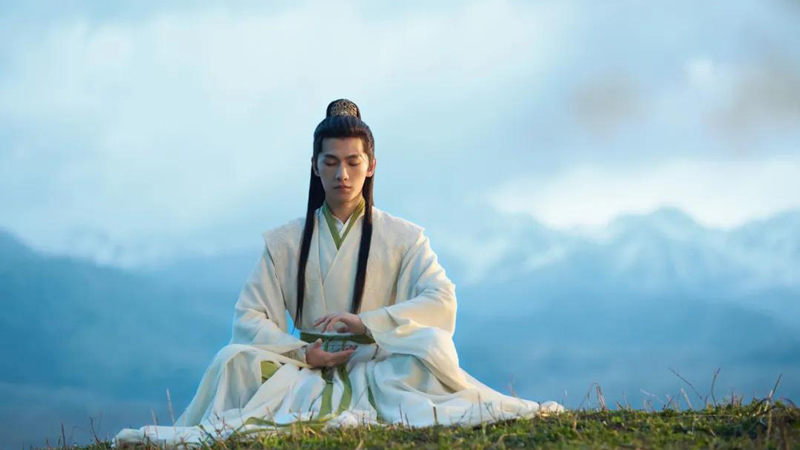
When Han Li breaks through from the Qi Refining stage to the Foundation Establishment stage, this kind of milestone needs a visual expression. "I needed Yang Yang to perform it authentically, to go from sitting in meditation to rolling on the ground." Yang Yang's physical performance earned high praise from the director: "I knew he had the body control—the way it looks on screen is beautiful."
Actors like Yang Yang, Jin Chen, and Zhao Xiaotang brought dance training into the fight choreography, giving the action scenes more possibilities. "Our fight scenes borrow elements from Chinese dance and classical dance. We don't just want the audience to see intensity—we want them to see beauty in the moment. The fights are infused with the elegance of dance." But beauty doesn't mean empty flourishes; it has to carry meaning.
The action in The Immortal Ascension required heavy wirework. Yang Yang jokingly called the wires "hula hoops." Some sequences took days to film. "The body-possession scene alone, Yang Yang filmed for five to seven days," she said—though in the final cut, it may last only a few minutes.
"The opening of the series has to be flashy but not too long. The Hunting the Star Sea sequence took seven days of Yang Yang spinning around with the wires every day," Yang Yang explained. The drama contains over 20,000 VFX shots, and after filming wrapped, the visual effects alone took more than 500 days to complete.
With such massive effort put into The Immortal Ascension, Yang Yang's philosophy is simple: "Whether it's male-oriented or female-oriented, I want to tell a story about people." Viewing Han Li's growth from a human perspective, she said, "Whether it's Ning Que, Han Li, or Zhao Pan'er, what I focus on is the character, the era they live in, and the themes and context—not whether the story is male or female-centered."