
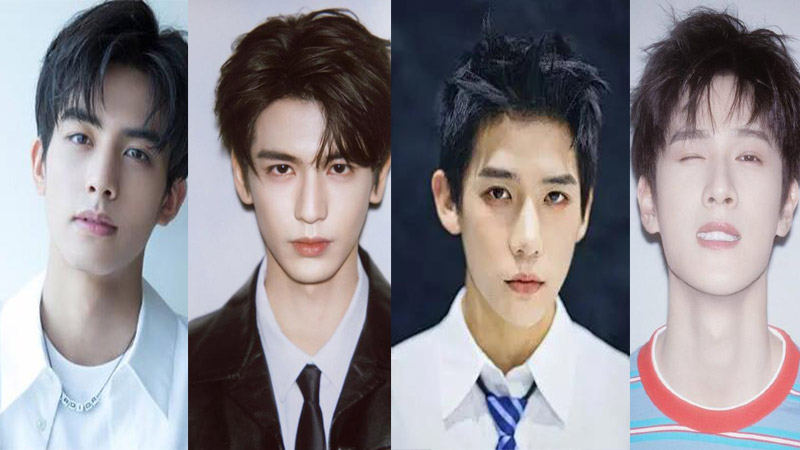
There was a time when Bai Jingting (白敬亭), Wu Lei (吴磊), Jackson Yee (易烊千玺), and Liu Haoran (刘昊然) were widely recognized as the "Big Four Crushes" (四大墙头). Even people who weren’t active fans enjoyed openly expressing their affection for them on social media. It was a kind of casual admiration—lightweight, emotionally rewarding, but never disruptive to daily life.
Today, these four are no longer waiting around for their "crush fans" to come back. For them, the "crush" label has already become outdated. Instead, a younger generation of actors is stepping up: Zhang Linghe (张凌赫), Song Weilong (宋威龙), Li Yunrui (李昀瑞), and Wang Anyu (王安宇) are now the most frequently mentioned names for the "New Big Four Crushes."
With this shift, doubts naturally arise. Who has the authority to decide which stars count as a "crush"? Who is doing the judging, who is bundling them together, and who might be at risk of dropping out at any moment?
Whether the "new Big Four" can truly hold onto this lightweight yet demanding title remains uncertain.
Who Defines and Judges a "Crush Star"?
The word "crush" in this context (墙头, literally wall top) originated in anime fandom. It was first used to describe characters who weren’t your ultimate favorite but still had the power to make you feel excited. Compared to the deep, long-term devotion to a "bias" (本命, literally the love of my life), a "crush" represents a more manageable emotional investment: I like him, but not too much; I’m willing to support him, but I don’t have to give my whole heart to it.
For celebrities, being called a "crush" usually requires meeting a few key conditions:
They must have strong general appeal and be well-liked by the public.
Their professional ability can’t be weak; they need qualities that genuinely earn admiration.
Most importantly, they must maintain a clean image with no scandals. Otherwise, when a "crush fan" casually says "I like him," being mocked for having poor taste would be embarrassing.
In other words, a "crush star" is essentially about "emotional value + social credibility." The original "Big Four Crushes" won over casual fans precisely by meeting these standards.
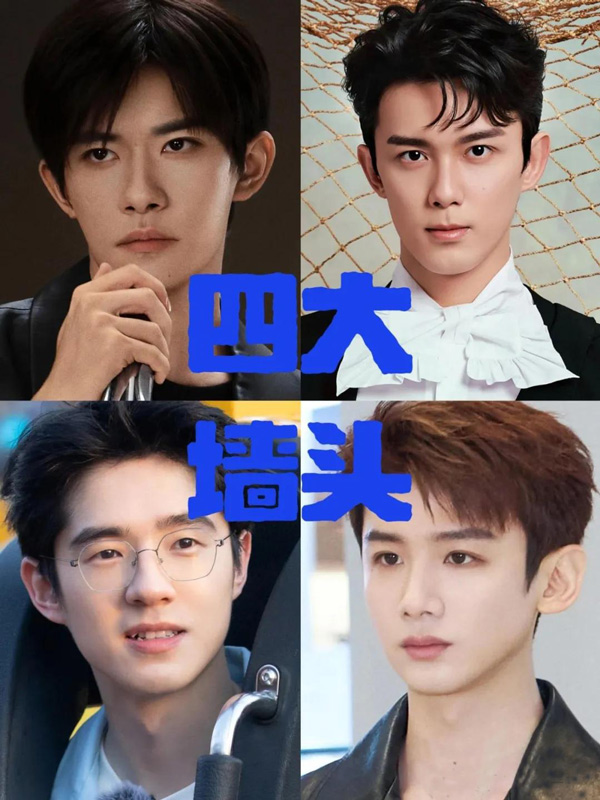
At that time, Wu Lei stood out as a child actor whose career development was open and visible, with a fan base spanning multiple age groups. Bai Jingting gained attention for his performances in Back in Time (匆匆那年) and Rush to the Dead Summer (夏至未至), later reinforcing his smart image on the variety show Who’s the Murderer. Liu Haoran received recognition from top directors right after debut, with his youthful, unspoiled charm leaving a strong impression online. Jackson Yee, meanwhile, started out as one of the first-generation "idol trainees" in China and already had the devoted support of many "mom fans" (older female supporters who treated him like their own child).
Now, the "new Big Four Crushes"—Zhang Linghe, Song Weilong, Li Yunrui, and Wang Anyu—happen to fit the same requirements. They don’t need to be the absolute hottest stars, but they do need to be the kind of actors no one finds unpleasant.
Why Zhang Linghe, Song Weilong, Li Yunrui, and Wang Anyu?
Zhang Linghe’s biggest advantage lies in "good looks + low controversy." His role as Changheng in Love Between Fairy and Devil (苍兰诀) first opened the door for him in the fantasy-romance market. Later appearances in Story of Kunning Palace (宁安如梦) and The Double (度华年) proved that while his acting may not be outstanding, it is consistently solid. What matters more is that Zhang Linghe’s clean features and tall frame make him a safe bet in terms of appearance. The most common comment you’ll see online is simply: "He’s really handsome." He’s the type of actor you can openly admire without anyone accusing you of having questionable taste.
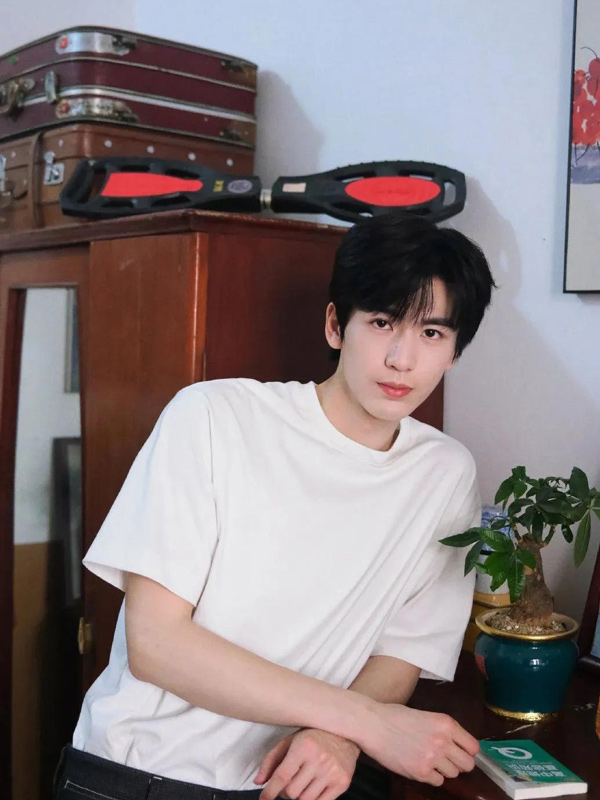
Similarly, Song Weilong represents another "face-card powerhouse." Early on, his performance as the younger male lead in Find Yourself (下一站是幸福) caught attention, and his role in Go Ahead (以家人之名) cemented recognition beyond the core drama fanbase. While the quality of his later projects has been uneven, his looks have never wavered, and he has managed to maintain a "low exposure + steady output" rhythm. This is why casual viewers still count him as a reliable "crush" star.
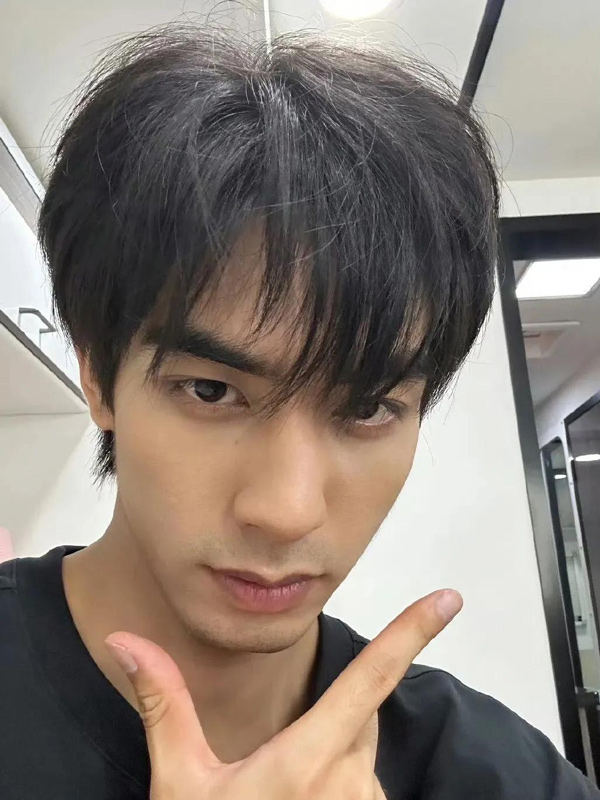
Li Yunrui’s rise is more of a "dark horse" story. He debuted in Produce Camp 2019 but spent years without a clear identity. It wasn’t until last year’s breakout drama Blossom (九重紫) that he truly entered the mainstream spotlight, gaining a strong CP fanbase nicknamed "Hun Qian Meng Yun" (魂牵梦昀, based on his pairing in the show). Perhaps because of his gentle looks and temperament, public opinion has been unusually forgiving toward him. He’s one of the rare breakout male actors who has avoided the usual wave of online backlash that often follows sudden popularity.
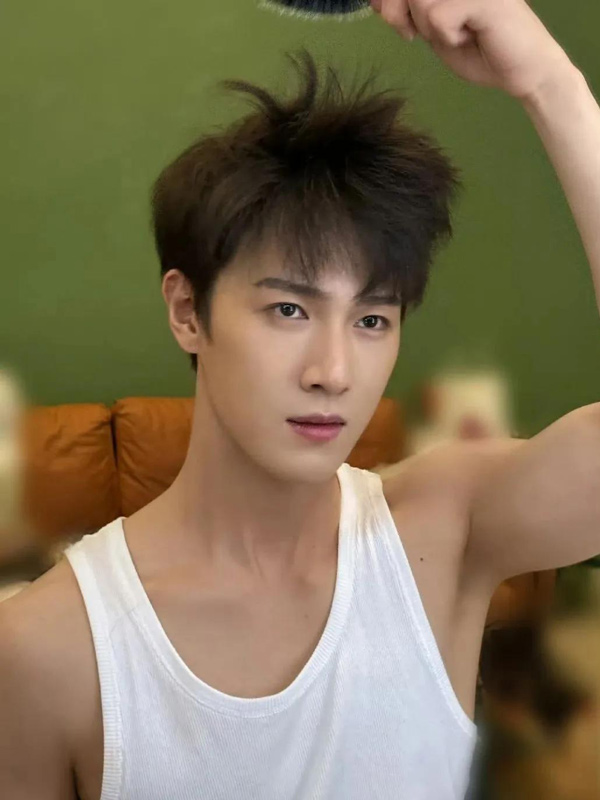
Wang Anyu, meanwhile, is the textbook case of "the actor becoming more famous than his role." After the drama Romance In The Alley (小巷人家) aired, he quickly became known as "Jiang Xin’s son" and "Yan Ni’s son-in-law" (referring to his characters’ family ties). Recently, he’s also been a frequent face on major stages, hosting events like the Douyin Movie Night and the Magnolia Awards. His national recognition has been rising rapidly. In variety shows such as Divas Hit the Road: Silk Road Season and Adventure Life 2, his "Brother Lao Wang" persona—friendly, down-to-earth—has also been steadily taking shape.

Together, these four each bring something different: Zhang Linghe and Song Weilong represent "high looks + low risk," giving audiences aesthetic security. Li Yunrui offers the "low-key persona + breakout role" element of surprise. Wang Anyu thrives on "neighbor-boy vulnerability + variety show sustainability." Combined, these traits create the ideal template of what netizens today call a "crush star."
In an era where fandom culture has grown increasingly extreme, having a "crush" has become a form of self-protection for viewers. Casual affection—liking many stars without over-investing—has slowly turned into its own kind of preference.
Is the "Crush" Label Just a Hollow Tag?
When the original "Big Four Crushes" label first appeared, some people dismissed it as nothing more than "unpopular actors being forcibly tied together". Yet over time, the reality proved otherwise: even if it started as a manufactured bundle, it carried undeniable practical effects.
For quite a long stretch, those four names became the aesthetic benchmark for a particular generation of viewers. Simply mentioning, "Back then, my crush was so-and-so," was enough to spark instant shared understanding. That collective recognition is precisely the most interesting part of why the "Big Four Crushes" label still matters.
If an actor already has the level of loyalty that comes with being a "bias", then he doesn’t need the vague label of a "crush." The problem is that gaining true "bias fans" is extremely difficult. Without a highly distinctive persona or a string of consistent hit projects, most mid-tier actors can only hover at the level of casual likability. That’s why the "crush" label ends up being their strongest shield outside the strict economics of fandom.
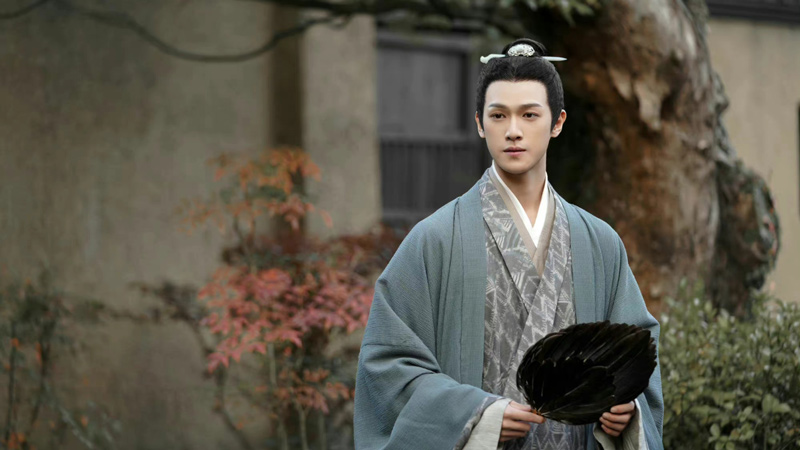
Take Li Yunrui as an example. After being included in the "new Big Four Crushes," he found a comfortable middle ground between fandom circles and casual audiences. People neither piled on criticism about the success or failure of his shows, nor mocked him with the classic "the drama is popular but the actor isn’t." Instead, netizens were willing to accept him gently under the "crush" label. In other words, being called a "crush" created a low-pressure but high-visibility space for him to thrive.
Wang Anyu’s case is even more illustrative. In the past, his career was hampered by a lack of clear style and no obvious signature role. But once he was named one of the "new Big Four Crushes" this year, the narrative around him suddenly sharpened. On-screen, his roles held up; in variety shows, his personality gained fans. Piece by piece, this built a persona model of someone "down-to-earth, with an unexpected charm," allowing Wang Anyu to slowly start winning both fandom and casual audiences.
However, the trajectory of the original "Big Four Crushes" also shows that even if the bundle itself succeeds, it doesn’t guarantee all members will climb to the top. Among Bai Jingting, Wu Lei, Jackson Yee, and Liu Haoran, only Jackson Yee truly made the leap from "crush" to "traffic star" and then successfully transformed into a film actor recognized for his skills. The other three, despite enjoying quality drama resources and good reputations, never became the kind of top-tier names capable of drawing massive fan traffic.
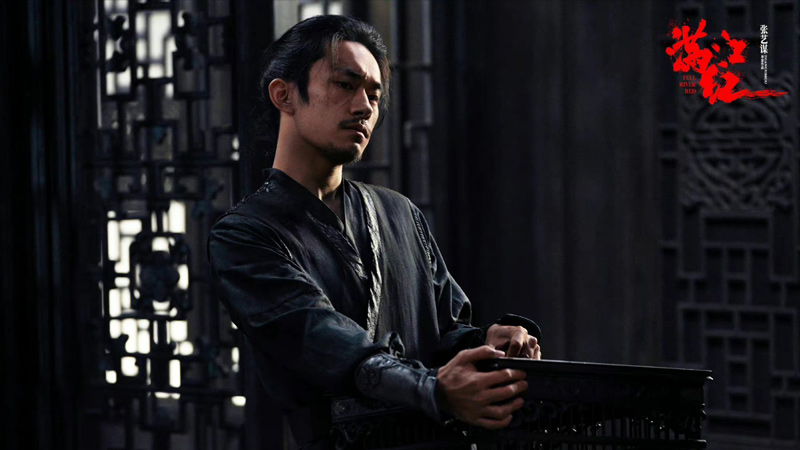
This demonstrates that the "crush" role often functions as a ceiling. It’s stable and safe, but hard to break beyond. Without personal breakthroughs or the right projects, an actor can get stuck in a bottleneck of "looking popular, but unable to rise further." That same trend is visible in the current "new Big Four."
Zhang Linghe, for example, after playing the immortal Changheng in Love Between Fairy and Devil, was widely expected—based on leaked set videos—to be on the fast track to stardom. For a time he was seen as the ultimate "about-to-explode" figure. Yet he never hit that traffic-star peak, instead staying comfortably in the "crush" zone: steady heat, but no major breakout.
The same goes for Song Weilong. After gaining massive casual recognition through Go Ahead and Find Yourself, he didn’t convert that momentum into lasting top-tier traffic. Instead, he kept circling within the lane of the "gentle handsome guy." Wang Anyu, too, was once listed among the "about-to-explode" actors—especially when filming Chasing The Light (左肩有你), many viewers predicted he was on the verge of a breakthrough. Yet with the drama shelved and never aired, that big explosion never came.
Their current situation actually reveals how the terms "crush" and "about-to-explode" (待爆, about to become extremely popular) are gradually merging into a new kind of entertainment vocabulary. Audiences willing to fully commit to a "bias" are becoming fewer, while more people have shifted toward what can be called "stock market-style stanning": instead of long-term loyalty, it’s about spreading bets widely and seeing who rises. Put another way, when viewers label someone as a "crush," it often carries the projection of hoping that actor might blow up in the future.
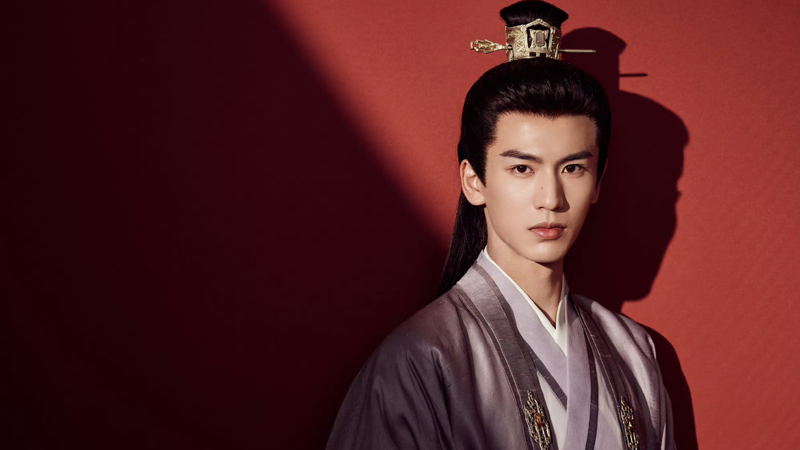
In today’s environment—where capital and platforms need a steady pipeline of "quality male actors"—the bundling of the "new Big Four Crushes" is more a defensive strategy than an aggressive one. For the actors themselves, the real challenge is figuring out how to push beyond the "crush" identity: building fan loyalty, gaining more leverage in projects, and ultimately escaping what might otherwise be a repeating cycle of "crush but not breakout."
If not, the label risks becoming nothing more than an empty title—something neither exciting to keep nor easy to discard.
Ren Jialun, Hu Yitian, Xu Kai — Falling Out of the "Crush" Lineup?
Since the "new Big Four Crushes" is a concept accelerated by traffic and backed by capital, it naturally comes with high risk of "falling out." If an actor gets caught in negative publicity, loses momentum in producing notable work, or simply gets overshadowed by rising newcomers, their "crush" status can dissolve quickly. In fact, fans themselves may feel embarrassed to still say, "my crush is him."
Looking back, this isn’t rare. In 2022, the widely recognized "new Big Four Crushes" were Ren Jialun (任嘉伦), Hu Yitian (胡一天), Song Weilong, and Xu Kai (许凯). At the time, all four checked the boxes: popular dramas, strong discussions online, good looks, minimal scandals. But just two years later, in the current list, only Song Weilong remains—while the other three have already "dropped out."

Hu Yitian’s decline is the most striking. Once beloved for roles in youth romances like A Love So Beautiful (致我们单纯的小美好) and Unrequited Love (暗恋橘生淮南), he built a reputation for his fresh style and likable characters. Yet in the past two years, Hu Yitian has been almost completely inactive. The hashtag "Hu Yitian hasn’t joined a set in 673 days" even trended on Weibo yesterday, and he joked himself about being "retired."
Ren Jialun has run into a similar problem. Dramas he headlined, such as Love of Nirvana (流水昭昭), underperformed, while The Demon Hunter's Romance (无忧渡) had some buzz but limited heat, averaging around only 20 million views per episode.
This shows that "falling out" is not just an individual issue but a collective risk for the whole "crush" category. The newest batch of "Big Four Crushes" may be holding their ground for now, but the competition is fierce. Especially in the first half of 2025, several other male actors have broken through in similar drama genres, positioning themselves as direct substitutes—and creating new centers of public attention.
Wang Xingyue, Ao Ruipeng, Tian Xuning — Possible "Substitute Crushes"?
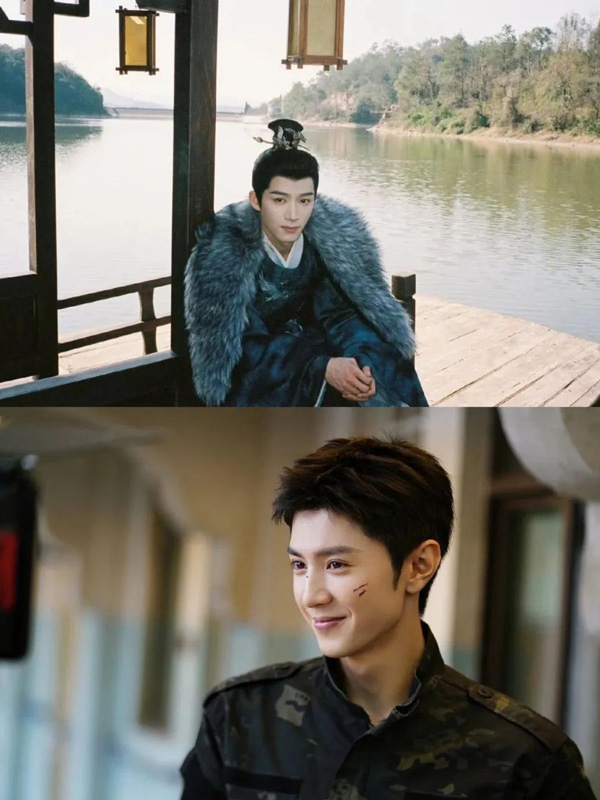
Looking at the core data, Wang Xingyue (王星越) has been rapidly gaining fans after the huge success of The Double (墨雨云间). CP edits of his pairings on Bilibili have repeatedly surpassed a million views, and his role as Zhang Zhe in Story of Kunning Palace further strengthened his persona. However, because his "about-to-explode" phase has been too short and he has shown a strong "solo" attitude after the drama aired, he lacks the support of CP fans. For this reason, he hasn’t yet been included by netizens in the "new Big Four Crushes."
Chen Zheyuan (陈哲远), who gained popularity among younger audiences through Hidden Love (偷偷藏不住), has also seen his overseas following rise sharply. Yet he still lacks a true nationwide mega-hit; otherwise, he would also be a strong contender for the "Big Four Crushes."
Ao Ruipeng (敖瑞鹏), by contrast, became a sudden "crush" for many fans almost overnight after his performance as "Yi Wansan" in The Seven Relics of ill Omen (七根心简). Still, his general popularity and numbers remain somewhat behind other male actors of his cohort. Meanwhile, Zhang Kangle and Tian Xuning—thanks to roles in genre-specific dramas—have already built solid fan bases and could enter the "main table" at any moment.

Among them, Tian Xuning (田栩宁) ’s rise is particularly noteworthy. In the past seven days alone, he gained over 2 million new followers across platforms. A single ten-minute post on REDnote surpassed 100,000 likes almost instantly. Some netizens analyzed his Weibo comment section and found that many of his new fans are also fans of Zhang Linghe, Zhang Kangle, Yi Yangqianxi, and Wang Xingyue. This suggests he is currently being observed and "tested" as a potential new "crush successor." He could either disrupt the current "crush" structure or push all "crush substitutes" into an even harsher round of competition.
It must be admitted that today’s "new Big Four Crushes" are more like fast-consumption cultural products. They still provide audiences with emotional value, but they no longer carry the stable, lasting aura that the earlier "Big Four Crushes" once did.
For Zhang Linghe, Song Weilong, Li Yunrui, and Wang Anyu, if they cannot seize the current buzz around the "crush" conversation to transform casual public affection into stable fan loyalty, then the so-called "crush" might only be a temporary rest stop for viewers.
In an era where dramas pile up and "breakout roles" fade quickly, the "crush" label may still serve as a critical window for actors to step into the spotlight, but it is no longer secure. The real key is whether these newcomers can find their footing in the fiercely competitive, constantly shifting hierarchy—only then can they extend their life cycle and advance into true core actors.
