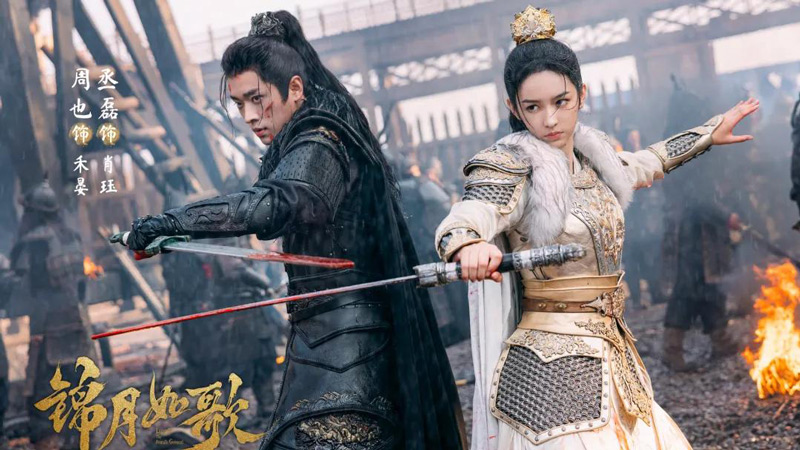
Every summer, costume dramas built around female protagonists dominate the screen. This year, Tencent Video's Legend of The Female General (锦月如歌) has stepped into that spotlight.
The series is adapted from The Reborn Female General, a hit novel by Qian shan Cha ke. As one of the leading authors in online literature, Qian shan Cha ke is particularly well known for her "rebirth" series, and this novel stands as one of its representative works. From the moment the drama adaptation was announced, the buzz around Legend of The Female General never really stopped.
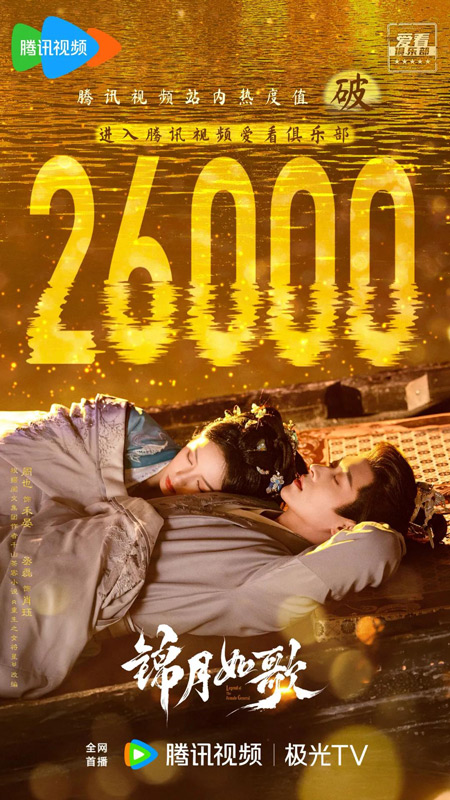
Its broadcast performance has been impressive. Since its premiere on August 6, the show quickly gained momentum. Within just four days, it crossed an internal popularity index of 26,000 on Tencent Video, earning a place in the "Most Watched" club. It also topped national TV ratings across three monitoring platforms—CSM, Huan, and Kuyun—for two consecutive days.
As of this writing, it continues to hold the No.1 spot on Maoyan's real-time popularity chart, as well as Douban's television ranking.
On social platforms, discussions have spread quickly. Viewers are sharing clips of punchy dialogue from a female perspective, the heroine's revenge moments, and the male lead Cheng Lei's performance—often compared to the addictive, melodramatic style of Jinjiang (a major Chinese web fiction site).
Phrases like "strong female lead," "revenge," and "shuang wen" (爽文, a storytelling style designed to be cathartic and fast-paced) are nothing new to the genre. But in a landscape where audiences are becoming more selective, why has Legend of The Female General managed to stand out? After watching it through, I'd say the answer lies in the way it takes one clear step forward in three aspects: women-centered storytelling, emotional dynamics, and narrative core.
That step feels both timely—responding to the market—and necessary—because without it, the genre risks creative stagnation.
A Blood-and-Steel Tale That Belongs to a Woman
The idea of a "female general" is the show's most striking hook.
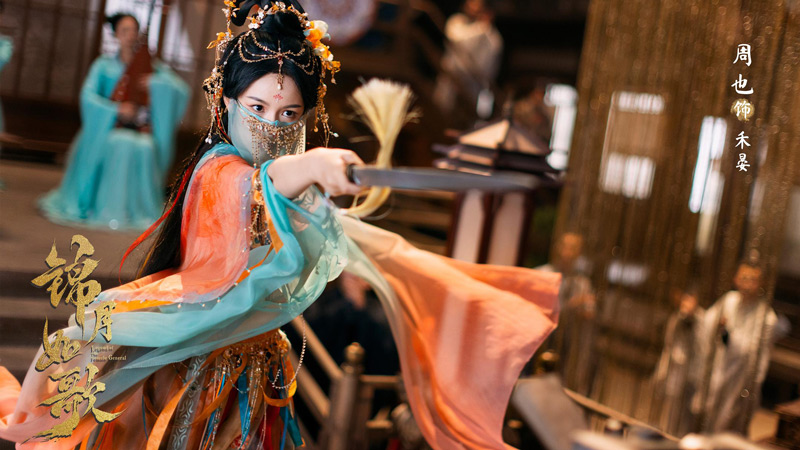
From the moment the adaptation was announced, casting speculation was fierce. Even before the premiere, actress Zhou Ye's "young general" look was widely shared online, showing just how crucial the heroine's image was to the show's success.
The story begins with a girl robbed of her name.
He Yan (played by Zhou Ye), the eldest daughter of the He family, is forced to take on the identity of her family's legitimate son, He Rufei, in order to protect their noble status. As He Rufei, she builds an extraordinary military record and is celebrated as General Feihong.
But when she returns home in glory, her father and brother conspire against her. Her identity is erased, and her achievements are stolen. Stripped of everything, she reinvents herself under the name He Yan and reenters the army—not for family honor this time, but to reclaim her life, her name, and her power.
From the very beginning, the heroine is given a clear mission: to reclaim her identity as a general.
If "He Rufei" symbolizes the idea that a woman could only achieve military success by borrowing a false male identity, and "He Yan" reflects her unrealistic faith in her family, then "He Yan" marks the true starting point of her selfhood.
This narrative line brings three notable changes to the series: it opens up a fresh storytelling space, reshapes the dynamics between characters, and injects a new texture into the drama.
In terms of story space, He Yan's main battlefield is literally the barracks and the frontlines—far removed from the palace intrigues or domestic rivalries that typically dominate female-centered costume dramas. Her growth is directly tied into a larger national storyline, highlighting the value of women as central figures in grand historical narratives.
In terms of character interaction, when He Yan joins the Xiao family army as a new recruit, her first bonds are forged with fellow soldiers. She must survive the internal competition of the barracks, earning respect through both strategy and combat skills, and only then gaining real influence. This shows that she can exist outside of relationships defined by romance or desire.
For viewers, this means there's no constant anxiety that the heroine will fall into "love-brain" clichés. Instead, the focus stays firmly on her personal growth.
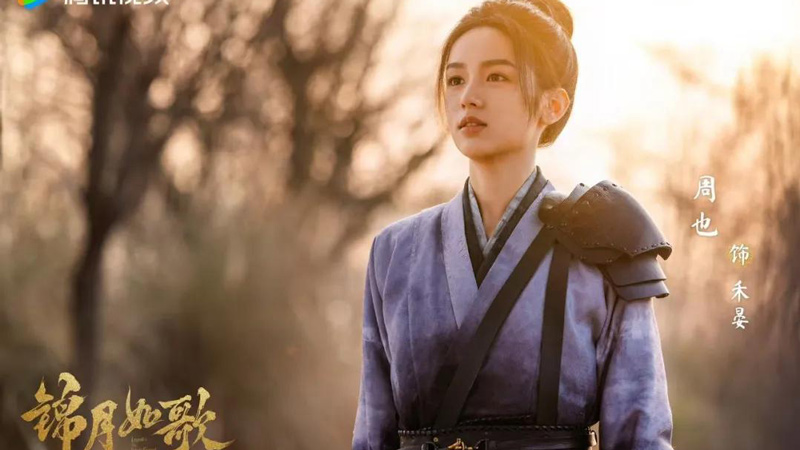
Liberating women from cloistered inner chambers and letting them grow freely in a wider arena—that is the "step forward" Legend of The Female General takes in female-centered storytelling.
This choice gives the entire drama a sense of fire and catharsis. It's not only the battlefield spectacle or the fast-paced revenge-driven plot that delivers this feeling, but also the way the show frames the heroine's journey as something almost biographical—her struggle for self-realization.
Take episode nine as an example, where He Yan exacts her first revenge. From luring Ding Yi (played by Gao Mingchen) into a temple, to the tightly shot sequences of hand-to-hand combat, and finally to killing her enemy with her own hands—the entire process is executed by He Yan alone.
The scene is structured as a gradual build-up of revenge: the trap highlights her intelligence, the fight demonstrates her strength, and the final act of killing captures the raw outpouring of her emotions.
Traditionally, when female-centered stories are discussed, words like "redemption" or "healing" are common. "Hot-blooded," on the other hand, is rarely used.
The reason is simple: conventional writing often confines women to emotional dilemmas. The breakthrough of Legend of The Female General is that it presents, unapologetically, a hot-blooded story that belongs to a woman.
It shows that female characters can not only possess the same combat power as men, but can also write their own legends within the sweep of a larger historical narrative—through their own will, choices, and independent identity.
A Partnership of Equals
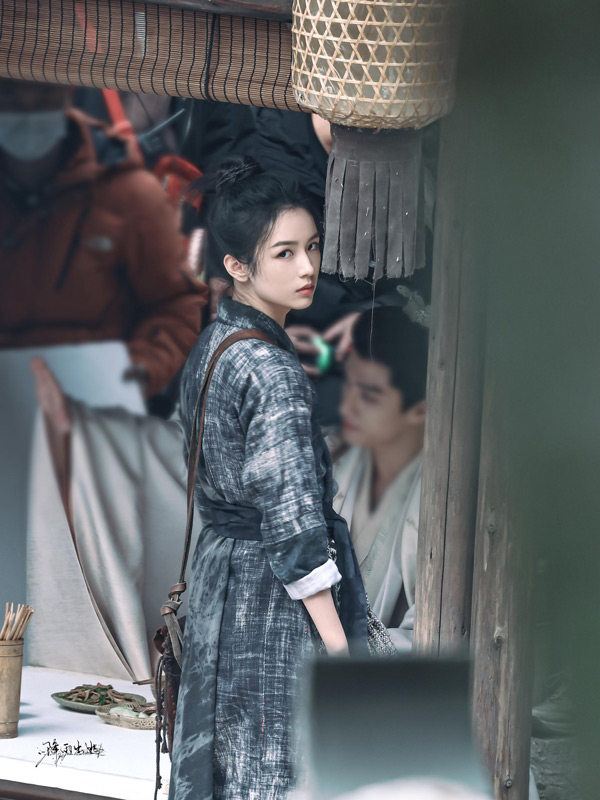
From "obedient wife" tropes to plots centered on female suffering, female-oriented costume dramas in recent years have often run into backlash. Much of this stems from formulaic, outdated approaches to romance that no longer align with shifting audience expectations.
Questions keep coming up: does the "chasing-the-wife-after-divorce" arc romanticize bullying and emotional abuse under the guise of love? Do "Mary Sue" fantasies normalize women's lack of agency? These new critiques not only offer fresh viewing perspectives but also challenge creators to rethink how they build relationships on screen.
Legend of The Female General takes a step forward by reconstructing traditional romance storytelling with a more modern sensibility.
First, equality in ability. When He Yan was still living under the name He Rufei, she and Xiao Jue (played by Cheng Lei) were already evenly matched as generals—she as the celebrated Feihong General, and he as the Fengyun General. This "dual strength" setup establishes a foundation of parity for their later relationship.
Second, equality in mutual need. The series doesn't shy away from showing how He Yan benefits from Xiao Jue's support. When she first enters the army, she makes it clear: "I will use your strength to rise."
But Xiao Jue also needs her. As he searches for the truth and seeks to clear his father's name, he relies on He Yan's intelligence and strategic insight.
Even though there's a power gap at this stage, their interactions are never one-sided acts of generosity from him. Instead, He Yan actively fights for her own place. For viewers, this avoids the sense of hierarchy and instead highlights an equality rooted in complementary strengths.
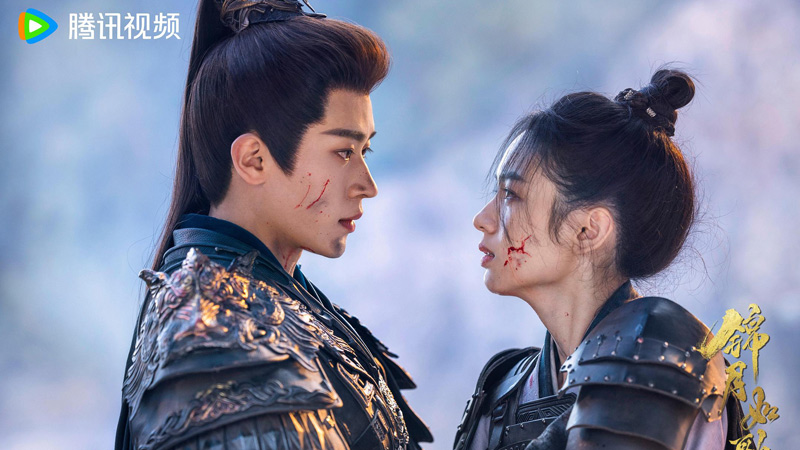
Finally, a shared alliance built on values.
The show has carefully layered in details showing how the two resonate on a deeper level. When others criticize Xiao Jue for being too harsh in training, He Yan—herself a former general—understands the necessity behind his methods. When faced with the case of the murdered woman in the temple, Chu Zhao (played by Zhang Kangle) chooses to ignore it, but He Yan and Xiao Jue independently make the same decision: to pursue justice for the victim.
On the battlefield, they fight side by side, entrusting their lives to each other. Off the battlefield, they share the same goal: to protect the land and safeguard the people. This foundation of shared belief allows their bond to grow without ever reducing her to a "love-brain" stereotype.
Recognition based on ability, progression rooted in mutual reliance, and resonance through shared values—this kind of relationship, where two people lift each other up, clearly fits better with today's audience expectations. More importantly, it points toward a creative path for female-centered costume dramas that blends modern awareness with a sense of higher purpose.
Breaking Out of the "Hierarchy" Trap
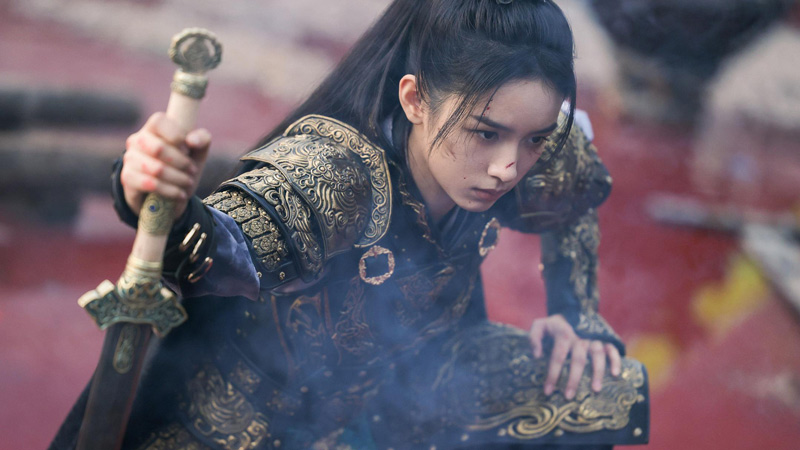
It's no secret—both inside and outside the industry—that female-oriented costume dramas are in urgent need of reinvention.
For years, this genre has been both a goldmine and a creative quagmire. Since the boom of IP adaptations took off around 2015, costume dramas centered on women have become one of Chinese television's most commercially reliable formats. They've launched careers, spawned merchandise, and commanded massive viewer loyalty.
But this very success has led to intense competition and, increasingly, creative fatigue. The formulas that once felt fresh—the time-traveling heroines, the palace schemers, the reborn avengers—are now struggling to hold the attention of an audience whose expectations are evolving faster than many screenwriters can adapt.
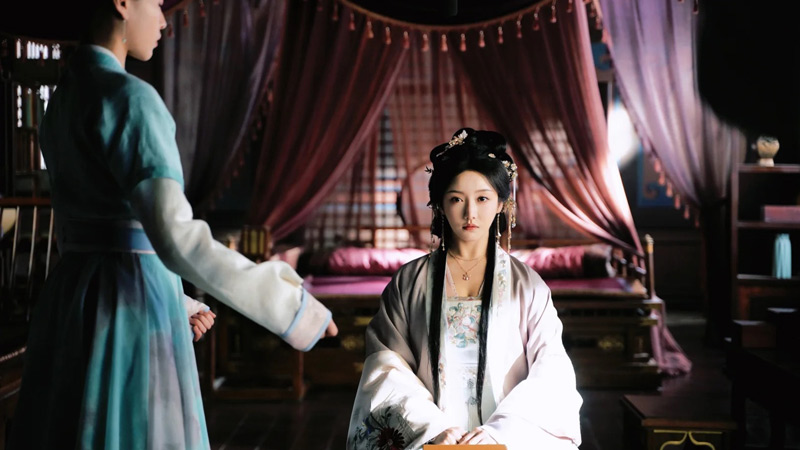
After nearly a decade of high output, the genre has clearly hit a bottleneck. Producers have long relied on tropes that guarantee short-term engagement: lavish costumes, love triangles, and cathartic payback moments. But viewers, especially younger ones, are now looking for more. They want substance, nuance, and female characters who are not just strong but also human.
This shift isn't just about taste—it's a reflection of broader social conversations about gender equality and narrative representation. As a result, female-centric costume dramas can no longer survive on recycled clichés. They need to rebuild their core narratives around values that resonate with contemporary life: agency, community, and authenticity.
Many producers believed that "innovation" simply meant swapping out surface-level elements—turning a palace maid into a female general, or a romantic lead into a cold-hearted strategist. These well-intentioned experiments unfortunately gave rise to an unintended cultural phenomenon: a "hierarchy of expression" (鄙视链) among audiences and critics. Shows that emphasized physical strength, military prowess, or political ambition were deemed "superior" or "more progressive," while those focusing on romance, emotional conflict, or domestic struggles were often dismissed as "regressive" or "frivolous." A drama about a woman leading an army was automatically considered more empowering than one about a woman navigating complex relationships—even if the latter was executed with greater psychological depth and narrative craftsmanship.
This artificial hierarchy overlooked a fundamental truth: the quality of a story should not depend on its thematic ranking but on how thoughtfully it is told. A show can feature the strongest female general ever written, but if her journey lacks emotional truth or narrative coherence, it will still feel hollow. Conversely, a intimate story set within inner chambers can be profoundly empowering if it honestly portrays women's lived experiences and challenges.
This is where Legend of The Female General meaningfully breaks from the pack. Rather than buying into the hierarchy, it deliberately subverts it. The protagonist, He Yan, is indeed a brilliant military leader—a woman who thrives on the battlefield and earns respect through combat and strategy. But the show never frames her as "above" other women because of it.
In a telling scene, when the refined and empathetic Chu Zhao confesses his feelings for her, she doesn't respond with superiority or dismissiveness. Instead, she speaks of the shared constraints that women face—no matter their background or social role. She acknowledges that before she became "General He Yan," she was trapped in the same gendered expectations as every other woman of her time. She understands that struggle intimately, and it humbles her.
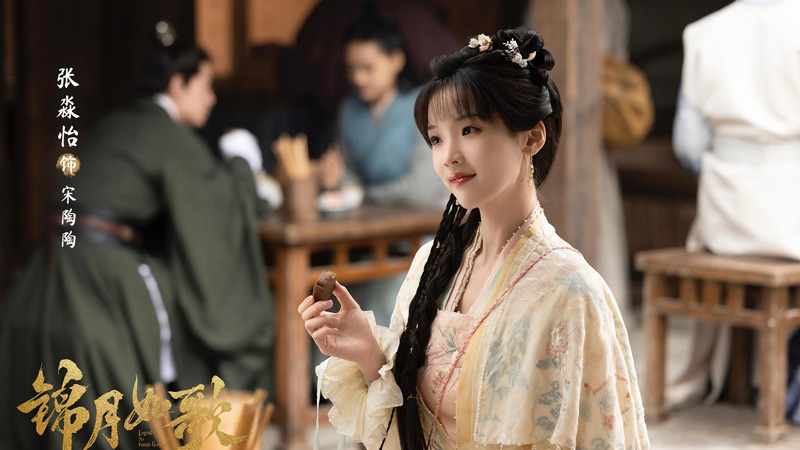
This awareness allows the series to expand its narrative lens beyond a single exceptional woman. Through subplots and supporting characters, Legend of The Female General paints a collective portrait of women's lives in a patriarchal society. Song Taotao's fight against an arranged marriage isn't treated as a minor sidebar—it's given emotional weight and narrative space.
Likewise, the tragic stories of the unnamed women buried beneath the "Chengfeng" platform serve as a silent but powerful reminder that for every celebrated heroine, there are countless others whose suffering went unrecorded. By tying together these arcs, the show argues that women's stories are multifaceted, and that no one experience should be elevated at the expense of another.
This approach is part of a broader movement within Chinese historical dramas. Recent series like Blossom (九重紫), with its innovative narrative pacing, and The Glory (雁回时), which focuses on awakening in adversity, are also challenging genre conventions. Together, they signal a shift toward more inclusive and sophisticated storytelling. Tencent Video, in particular, appears to be championing this new direction—curating a lineup of productions that value thematic ambition as much as commercial appeal.
What makes Legend of The Female General stand out is its commitment to bridging divides: between strength and vulnerability, between individual triumph and collective struggle, and between classic Wuxia elements and contemporary character depth. It doesn't reject romance altogether, but rather reimagines it as partnership rather than possession. It doesn't dismiss the value of emotional storytelling in favor of action—it merges them. In doing so, the series doesn't just avoid the hierarchy trap—it proposes a new framework for the genre, one where different modes of storytelling can coexist and enrich each other.
For an industry at a crossroads, Legend of The Female General offers a sustainable way forward. It proves that audiences are ready for female characters who are both fierce and compassionate, ambitious and empathetic, exceptional and relatable. By widening the lens of what "empowerment" can look like, it doesn't just entertain—it opens the door for a new generation of stories that honor the full spectrum of women's experiences. And that may be its most revolutionary act yet.