

Ling Cage Season 2 is finally here.
Back when Season 1 first aired, it made a strong impression with its high production value and detailed worldbuilding. It even picked up some heavyweight awards. No surprise then that fans have been waiting—some would say suffering—for the second season to drop.
That wait? Five years long.
Yes, some online comments still mock it with terms like "techno-cultivation" (科技修仙)—a tongue-in-cheek way of saying it mixes high-tech settings with the spiritual journey style usually found in xianxia fantasy. But jokes aside, the numbers speak for themselves: over 100 million views and counting.

I still remember binging Season 1 back in 2019, and from then to now—through the special episodes and that sneak-peek prequel—we were handed so many carefully planted clues. They were exciting, clever, and, for me at least, unforgettable.
One line in particular jumped out at me this season:
"Is the body a prison for the soul?"
And that was the moment I paused. Could Chinese philosophy be the key to breaking the Western mold that's dominated post-apocalyptic storytelling for decades?
Think about it. In the global market, apocalyptic stories have always been a go-to for exploring human nature and survival. Western narratives usually take the lone-hero route—like 2012, where one guy saves the world—or lean heavily into survival instincts, like The Walking Dead. The core formula? Individualism, tech worship, and black-and-white morality.
Anime from Japan offers its own spin on the genre. From Neon Genesis Evangelion to DARLING in the FRANXX, post-apocalyptic worlds there come with an added layer of cultural symbolism and abstract metaphors—still heavily stylized, but different from the Hollywood flavor. And even today, this genre keeps thriving. Bilibili, for instance, is currently airing One Day Hotel (某日后酒店), yet another new take on humanity's endgame.

So, in this ever-expanding landscape of end-of-the-world stories, what exactly sets Ling Cage apart? Has it managed to carve out a new model for apocalypse narratives? And maybe more importantly—can it live up to five years of anticipation?
 A Chinese Take on the Apocalypse
 A Chinese Take on the Apocalypse
Let's be real. When someone says "post-apocalyptic world," what comes to mind?
Probably something like this: desert wastelands buried in sandstorms, half-collapsed skyscrapers in New York swallowed by vines, shopping malls wrapped in barbed wire. The earth is cracked like a broken map, rusting cars form makeshift forts, and survivors scramble for canned food and gasoline. This is the visual shorthand we've seen over and over: resource scarcity, individual struggle, and a world built on the assumption that civilization has snapped in two.
But Ling Cage does something different—it brings a uniquely Chinese lens to the apocalypse. Especially in Season 2, the new setting "Dragonbone Village" (龙骨村) makes this shift even more visible. The landscape, the values, and the characters feel less like copy-pastes of Hollywood tropes and more like something grown from Chinese roots.
What makes it stand out most is how it breaks away from the usual black-and-white worldview. Take Mark, for example. He was once transformed into a "Havoc Beast" after having a spinal implant forced into his body. (In Chinese, this process is linked to the spine being viewed as a crucial energy point, almost like a life channel.) But by Season 2, he regains his human consciousness—and gets a new name: the "eco-hybrid" (生态嵌合体).
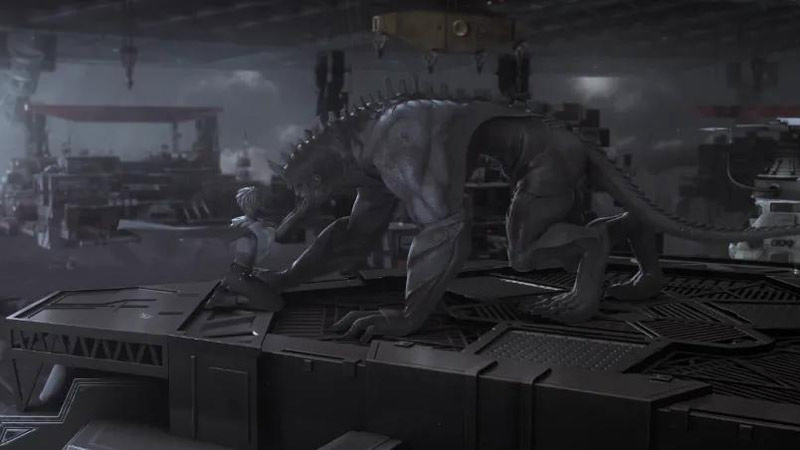
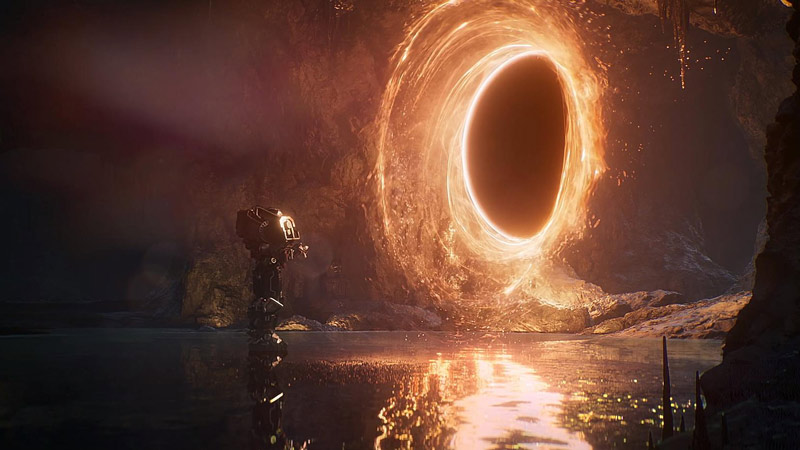
The term might sound sci-fi, but there's a real philosophical weight behind it. In this world, being an "eco-hybrid" means he's part human, part monster, and adapted to survive in extreme ecological zones. One of these places is the "Vortex Channel" (腥漩通道)—a chaotic, highly toxic rift that normal humans can't enter. That name might sound mysterious, but think of it like a post-apocalyptic black hole, full of energy but also certain death.
And here's where the story shifts: in Dragonbone Village, led by the researcher-warrior Bai Yue Kui, people have been studying this ecological crisis for years. They discover that in order to fix the ecosystem, someone must enter this deadly zone. Only someone like Mark—who is no longer fully human—can go.
So now, Mark carries the burden of humanity's future. His transformation, once feared and hated, now offers a potential way forward. And this marks a total break from the old survivalist ideology of the "Lighthouse Civilization" (灯塔文明)—a group that isolated themselves, convinced they were the last hope of human purity. For years, they believed that to survive meant to cut off everything and everyone else. But with Mark's arc, we see the first signs of change. Prejudice starts to crack. Hope sneaks in.
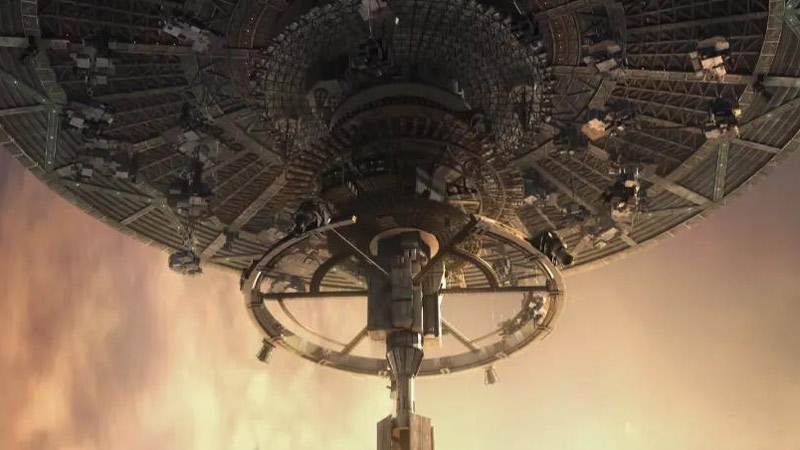
Another key difference lies in how Dragonbone Village chooses to live—with the land, not just on it. While the Lighthouse runs on strict gene screening and emotional regulation, suppressing individuality in the name of collective survival, Dragonbone Village takes a different path. Under the rules of the "Mana Ecosystem," this place exists in a cycle of "decay and rebirth," turning survival into a process of coexisting with nature rather than conquering it.
For example, they use a layered agricultural system—something like a compact, vertical farming model that supports self-sufficiency while maintaining a deep connection to the earth. It's a little like a post-apocalyptic Peach Blossom Spring (a well-known Chinese utopian tale), tucked away beneath snow-covered mountains. Through this thriving and organic world, Ling Cage challenges the tired formula that "ruins = apocalypse." It shows, instead, a Chinese perspective: that love for the land doesn't die when the world ends—it adapts, persists, and flourishes.
And then there's the show's approach to the soul.
In Dragonbone Village, emotional power isn't weakness—it's the key to unlocking human potential. "Willing force" (愿力), "primordial turbulence" (源质湍流), "awakening latent power"—these are more than just fancy sci-fi terms. They suggest that human evolution isn't just biological; it's spiritual. Emotions are treated as a driving force for inner growth, and characters are often shown "meditating" or "regulating their breath" (调息打坐)—a clear nod to traditional Chinese cultivation practices.
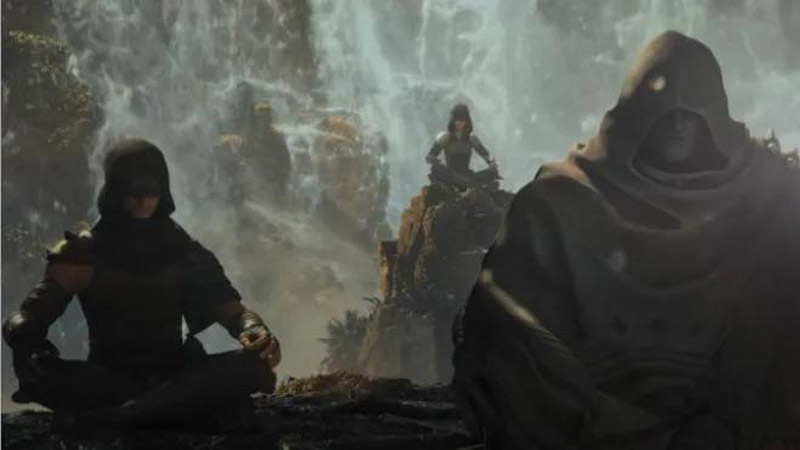
Instead of relying on the randomness of genetic mutation, like most Western sci-fi tends to do, Ling Cage builds a system where growth can be studied, repeated, and even passed down. It turns personal development into a learnable process. In doing so, it moves away from the Western obsession with the "chosen one" trope and reimagines a world where power is something anyone can access—through training, not destiny.
Of course, not everyone's buying it. Online, some viewers joke that Ling Cage proves "the end of science is cultivation". They worry that if the show keeps leveling up its characters with these god-mode abilities, the plot might spiral out of control.
But honestly? From where I stand, "cultivation" is one of the most iconic features of Chinese superpower storytelling. What Ling Cage is doing isn't breaking the logic of sci-fi—it's reshaping it. This isn't some mystical cop-out. It's cultural confidence.
The idea of "cultivation" doesn't have to clash with technology. Here, it expands it. Tech isn't just cold machinery—it becomes part of the spiritual journey. And cultivation isn't just mystical fluff—it's a way of expressing ecological intelligence, grounded in centuries of Chinese thought.
So when Ling Cage gives us that breathtaking visual in Season 2—a camera pushing past the metal dome of the Lighthouse and revealing green farmlands growing beneath the snow-covered mountains—it's not just about scale. It's about philosophy. It's showing us a different way of imagining life after collapse, one that doesn't rely on steel and fire, but on adaptability, community, and quiet resilience.
As the first major post-apocalyptic anime from China, Ling Cage does more than fill a genre gap. It reinvents the game. By blending high-concept tech with the Eastern idea of cultivation, the show creates something that feels brand new: a kind of "Chinese fantasy cyberpunk". That aesthetic—bold, hybrid, and deeply rooted in cultural DNA—might just be the future direction Chinese animation has been looking for.
On the Rise—or Losing Steam?
By the time Episode 3 of Ling Cage Season 2 aired, the show had already racked up 110 million views and a sky-high 9.8 rating on Bilibili. But despite those numbers, reactions to the first two episodes were sharply divided.
After Season 1 ended, the creators kept the world alive through a series of follow-ups—like the animated Season 2 Preview Arc and the spinoff comic Ling Cage: The Story of Yue Kui (灵笼・月魁传). These were meant to fill in important lore: Bai Yue Kui's backstory, the origin of the Mana ecosystem, and other gaps in the worldbuilding. In theory, that sounds great. But in practice, this kind of cross-media storytelling—jumping between animation and manga—resulted in fragmented information. For new viewers, or even long-time fans who aren't into reading comics, it created a barrier to fully understanding the story.
And that's where things got messy.

The biggest flashpoint was the introduction of the cultivation-style system in Season 2. Mark starts practicing regulating breath and sitting meditation, while Dragonbone Village fights the Mana infection using something called "emotional willpower". This led some viewers to accuse the show of "tech apocalypse turning into xianxia," a kind of sci-fi mutating into fantasy tropes. They worried this shift would break the show's internal logic. After all, Ling Cage had originally built its reputation on a solid foundation of hard science fiction. Would all that effort end up buried under a pile of pseudo-mystical power-ups?
At the heart of this controversy is one of Ling Cage's boldest creative swings: merging Eastern spiritual philosophy with Western-style post-apocalyptic science fiction. It's a move that directly challenges what most viewers expect from doomsday stories, and raises a deeper question: Can this "Chinese-style post-apocalyptic aesthetic" truly hold up under pressure?
It's not a new challenge in animation. The more expansive the worldbuilding, the more elements you introduce—and the longer the timeline stretches—the harder it becomes to keep everything coherent. Naruto is a prime example: early on, ninja power was determined by hand seals, chakra control, and tactical smarts. But later, everything pivoted to bloodlines and genetics, with overpowered resurrection techniques like "Impure World Reincarnation" (秽土转生) causing massive power inflation and narrative bloat.
Ling Cage runs a similar risk. Thankfully, Episode 3 shows signs that the team is aware of this—and actively reining things in.
The story starts to settle. Some of the bigger, fuzzier concepts begin to make more sense. More importantly, the episode tears away Dragonbone Village's "halo of strength." Turns out, the villagers aren't surviving just on inner will or superpowers—they rely on a signal-masking tower to avoid detection by the Havoc Beasts. Real combat capability? Still limited to a handful of "Awakeners" (觉行者). And when one of them, Xia Dou, dies in battle, it hits hard. Even Bai Yue Kui, previously near-invincible, is now shown facing the limits of her body—her cells are breaking down, and her life is at risk.
These kinds of moments bring the story back to earth. The stakes start to feel real again.
There's also been improvement in how background information is integrated—particularly through the "Transition Logs", which help fill in narrative gaps. For instance, the log entry on Ulan Maiduo reveals detailed insights into both the strengths and weaknesses of her skillset. It even documents changes in her genetic structure after her potential was awakened. These additions show that Ling Cage's fusion of Eastern philosophy and post-apocalyptic sci-fi isn't about tossing scientific logic aside. On the contrary—it uses traditional wisdom to stretch the boundaries of what science fiction can be.
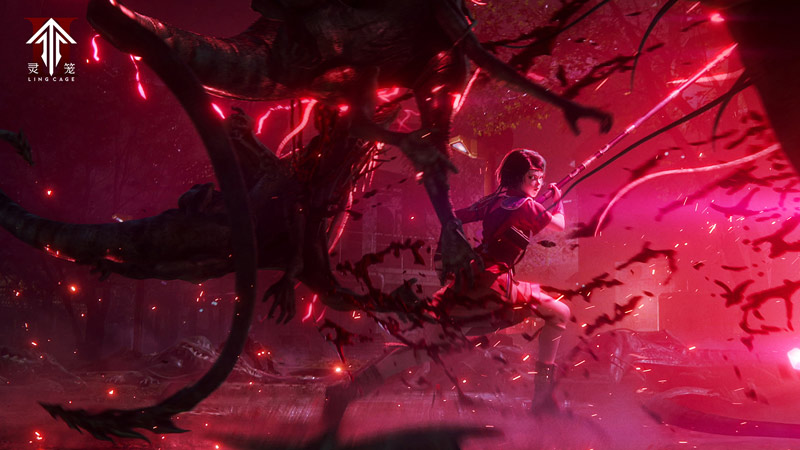
That's why, in my view, it's a little premature to say Ling Cage is "all style, no substance" just based on the first two episodes. Take Episode 3, for example. The action sequence alone proves the production team knows what it's doing. Ulan Maiduo's nearly two-minute spear fight scene received widespread praise from fans. Her moves draw from traditional Chinese martial arts—like intercepting, seizing, and thrusting—while layered with electric pulse effects that give the battle a high-voltage edge. That triple takedown? Instant classic. It's a perfect example of how Ling Cage combines cold weapons, advanced tech, and Chinese kung fu to create a fighting style that's both visually powerful and culturally distinct.
All of this suggests one thing: the Ling Cage team has ambition. Real ambition.
Production-wise, this is about as close to industrial-grade quality as Chinese animation gets right now. And it's not just surface polish. The team even hosted early screenings for real scientists—yes, actual researchers and scholars in related fields—inviting them to watch the show and offer feedback. That kind of effort shows just how seriously they're taking scientific accuracy.
Still, the road ahead won't be easy. The story still has to navigate some tricky terrain—like how humanity can unite under a "dual-civilization" framework, or whether the show's evolving power system can stay logically consistent without spiraling out of control.
While browsing Douban (a major Chinese user-review platform), I came across a comment I really agree with: "A show that gains national fame will also attract national criticism." And that's exactly what's happening with Ling Cage Season 2.
The divided reactions are less a failure and more a sign of growth—Ling Cage is pushing Chinese animation into new territory, and with that comes friction. When most Western apocalyptic stories stick to the formula of "guns, ruins, lone heroes," Ling Cage throws in rice terraces battling pollution, or emotional willpower breaking biological boundaries. It's trying to sketch out an apocalypse that belongs to Chinese imagination—not imported, but homegrown.

Of course, innovation never comes easy. But judging from the 110 million views and a 9.8 rating, core fans seem willing to give this experiment time. Whether Ling Cage can avoid the curse of peaking early will depend on whether it can keep the logic of its "cultivation system" and "civilization conflict" worldbuilding airtight in the episodes to come.
As of now, Ling Cage stands alone in Chinese animation as the only real attempt at a post-apocalyptic wasteland story. So maybe the smarter move is to hold our judgment—wait and see how the next few episodes land—before we say for sure: is Ling Cage a case of peaking early, or just getting started?