
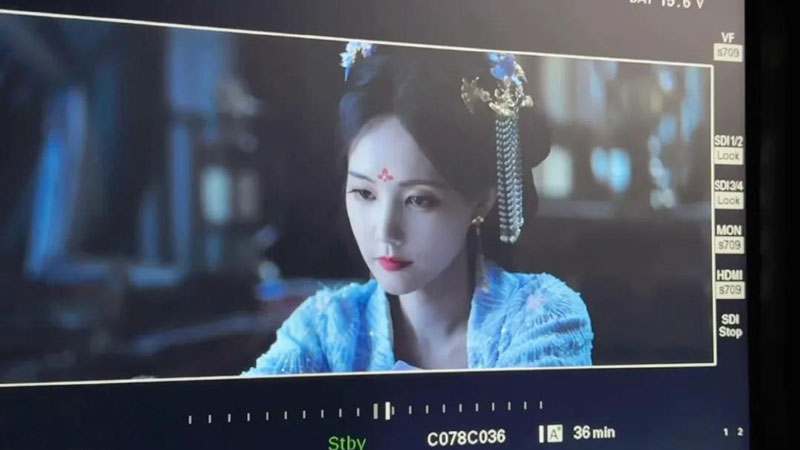
It was 1:30 in the morning. Slightly tipsy from fatigue, Li Yitong still faced the camera with energy and a smile, wrapping up her final interview of the day — her 18th consecutive working hour during a packed publicity schedule.
Even after such a long day, she didn't slack off in front of the camera. She tried her best to bring something new to every single interview, even when the questions were basically the same. She would shift the focus in her answers, trying to offer a different angle each time. On top of that, she instructed her team to buy late-night snacks for all the reporters present — and not just any random food. She only ordered things she had personally tried and liked, then shared them with everyone.
To be able to manage things down to such small details, to make sure everyone is looked after, and still give her all — that's Li Yitong. And this, honestly, is just her default mode.
Actress Ling Meishi, who is signed under the same agency as Li Yitong, has often been "taken care of behind the scenes"by her. Once, while filming in Hengdian, during a startup banquet for a new project, a completely unfamiliar actor — someone Ling Meishi had never interacted with and never thought would talk to her — suddenly came over and said: "You're Meishi, right? Yitong-jie (a respectful term for 'older sister') told me about you. She asked me to look after you."
And this wasn't a one-time thing. But the curious part? Li Yitong never brought it up with Ling Meishi herself.
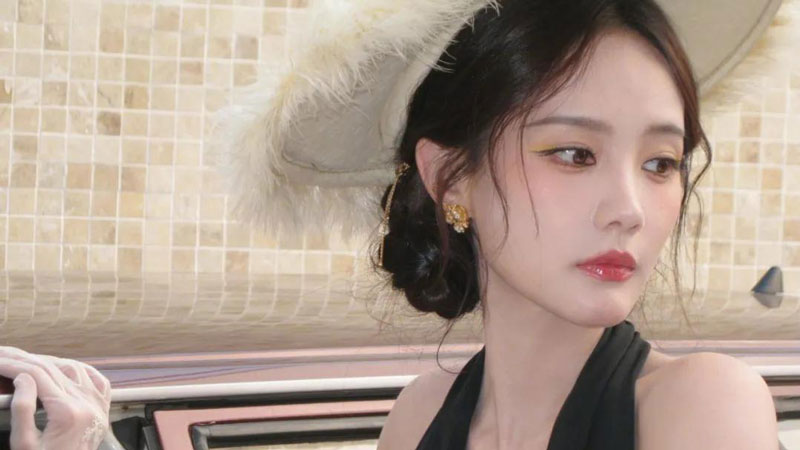
 Why Is It Always Li Yitong?
 Why Is It Always Li Yitong?
When Ling called her to thank her, Li Yitong just replied, "Oh, that's nothing. You don't need to call me just for that."And then casually added some practical tips — like what certain directors are like, what kinds of details they care about. She didn't make a big deal of it.
But it didn't stop there. The next morning, when filming started, a crew member came up to Ling Meishi and said: "Yitong gave us a call this morning. She told us to look after you."
During the shoot for A Dream Within A Dream (书卷一梦), Ling Meishi joined the production later than others. She didn't know anyone on set. On the day she arrived, Li Yitong only had one scene scheduled — and she was supposed to rush off afterward for a makeup fitting, with zero rest time in between. But after filming, she still waited on set, just so she could personally walk Ling over to the director and say:
"Director, this is my junior from the same company. Please keep an eye out for her."
Right before she left, she also went out of her way to greet all the cast and crew, and even took a moment to calm Ling Meishi's nerves — telling her not to feel too anxious on set.
Looking after her junior colleagues wasn't something Li Yitong was obligated to do. No one would have faulted her if she hadn't. But she still wanted to help — wanted to pave the way for others in whatever way she could. And even when people tried to thank her, she'd just awkwardly lower her head and say she didn't do much.
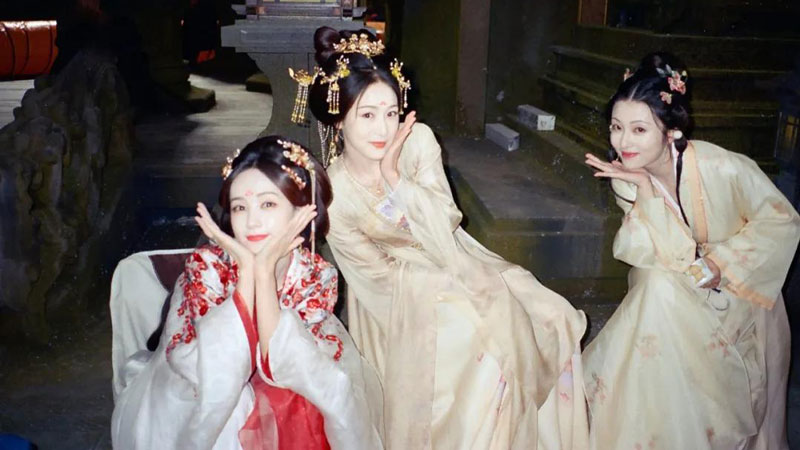
When Li Yitong herself was still a rookie, she was also fumbling her way forward.
"She doesn't drink, doesn't go out much, and she's not exactly quick at picking up social cues,"said Zhang Wei, the producer of Bloody Romance (媚者无疆). During filming, she hardly socialized — it was either working or preparing for the next day's shoot.
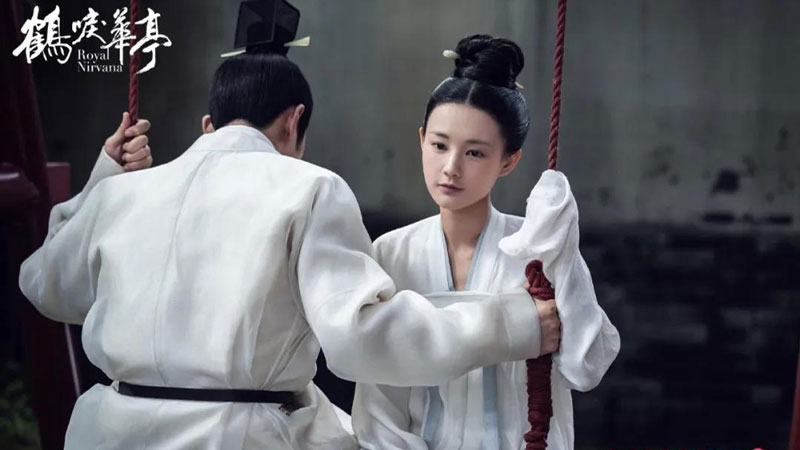
Director Yang Wenjun confirmed that impression too. To this day, when he thinks of Li Yitong, the first image that pops into his mind is from the Royal Nirvana (鹤唳华亭) set: she had just finished an emotional crying scene, tears still wet, snot running, and she turned to him and said,
"Director, director — can I try that again?"
When she was filming Bloody Romance, producer Zhang Wei noticed something very specific about Li Yitong: her sheer toughness.
"It wasn't just about professionalism,"Zhang said. "It was that she could endure hardship — and more than that, she didn't even see it as hardship."
It was one of the few times Zhang felt a rare sense of security coming from an actor — the feeling that the performance and production were safe in their hands. Li Yitong became one of the actors she definitely wanted to work with again.
For a long stretch of time, though, Li Yitong faced constant questioning online.
"Why is she the female lead?"
"Why is it her again?"
To put it more bluntly, some people were asking: "She's not even that popular. Why do I keep seeing her?"
The answers to these questions can actually be found in the way directors, producers, and co-stars talk about her.
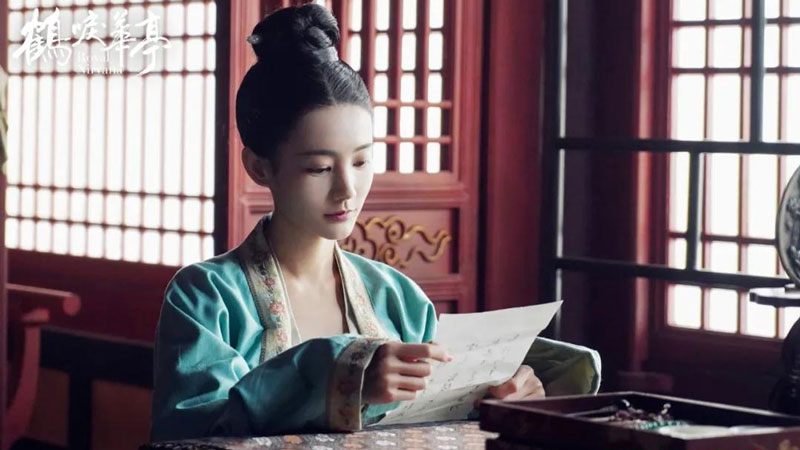
Take Royal Nirvana (鹤唳华亭), for example. It was a 7-month shoot, and during that entire time, Li Yitong only went out for dinner with the crew once — and that was for the cinematographer's birthday.
"Other than filming, she didn't really take time off. Every day she spent at least three hours memorizing those tongue-twisting Classical Chinese lines."(Note: The script contained a lot of 文言文, i.e., formal ancient-style Chinese.)
Director Yang Wenjun, too, felt totally at ease with her on set — especially when it came to lines.
"She never messed up the phrasing. Her emphasis was always exactly where it needed to be."
It's because of that kind of dedication that Li Yitong never wavered in the face of online doubts. She never questioned herself. Instead, she asked: "Why can't it be me?"
Now, in her ninth year in the industry, she finally has the courage to say it out loud: "No matter what labels they stick on me, I'm the only one who can define who I am."
Prejudice — or fixed impressions — has a way of making human connection narrower and narrower. For a few years, Li Yitong didn't feel the need to explain anything to anyone. As long as she got to act, that was enough.
But now, she wants to take it one step further — to become the one who actively breaks through those fixed ideas.
The First Step Is to See Yourself Clearly
 The First Step Is to See Yourself Clearly
A Dream Within A Dream wasn't just another role — it was something Li Yitong actively chose. And this choice wasn't one-sided. It went both ways.
She's always believed that scripts choose people. It sounds a little superstitious, sure — but she feels that intuition very strongly.
"People are always telling you what kind of role you're suitable for, or not suitable for. If you listen to all of that, you'd never be able to act again. For me, I trust that moment when I'm watching a playback on the monitor — and I ask myself, 'Am I this character?' That's the only thing that matters."
That's how she feels about Song Yimeng (宋一梦), her character in the drama.
More than once, she's felt like she is Song Yimeng.
Recently, Li Yitong shared an old audition clip on Weibo. In the video, she's testing for the role of Song Xiaoyu — a cheeky, comedic character.
The vibe was playful, exaggerated, even a little silly.
She's filmed tons of these kinds of test videos — especially back when she first started out — but most of them just disappeared into the void. She's forgotten nearly all of them.
"It's like my brain just auto-erased that stuff,"she said with a laugh. "Even I don't remember anymore."
Not long ago, she was chatting with her mom, and only then — with her mom's reminder — did she suddenly recall something kind of wild: She once auditioned for Zhang Yimou's Under the Hawthorn Tree (山楂树之恋).
At the time, she was still a student at Beijing Dance Academy — not even signed to an agency yet.
"Maybe the director's team was doing a big casting sweep through all the top schools in Beijing. I think I was the only one from our class who got picked to go meet Director Zhang."
"Do you like acting, young lady?"Zhang Yimou asked her.
"It's okay… but I haven't really tried it much,"she answered.

That first audition? She doesn't even remember what scene she read. The only thing she remembers from that day is the room full of staff, her own nerves, and those two lines of conversation with Zhang Yimou.
At the time, she had no idea what she was doing — and no real concept of what acting even was.
Later on, when Li Yitong made the real decision to become an actress, she went through the same kind of confusion and helplessness as Song Xiaoyu — the character who gets pulled into a fictional script and becomes Song Yimeng. In the story, Song experiences failure, success, and then starts all over again. For the audience, that early wedding scene is mostly just a narrative setup to explain how the "inside-the-script"mechanism works. But to Li Yitong, "That scene is actually about Song Yimeng's refusal to give up. It's her courage."
"Aren't we all trying to succeed — one failure at a time?" Song Yimeng didn't surrender. And neither did Li Yitong.
When audiences hear gossip first — about her "resources"or her "connections"— instead of getting to know her as a person, and then immediately reject any work she's in, Li Yitong knows: Maybe it's time she became a little rebellious too.
These days, her approach to choosing roles has changed. It's no longer just about the story, or the character, or who's directing.
"In today's environment, I feel like I can't just focus on acting well and call it a day,"she said. "I have to think about whether this role fits current audience preferences. Whether I have enough visibility to help the platform or producers hit a certain benchmark or level of success."
So, when it comes to genres or scripts she once might've ruled out completely, she no longer gives a hard no. Instead, she asks: Can this project help me make up for something I lack — like recognition, exposure, name value?
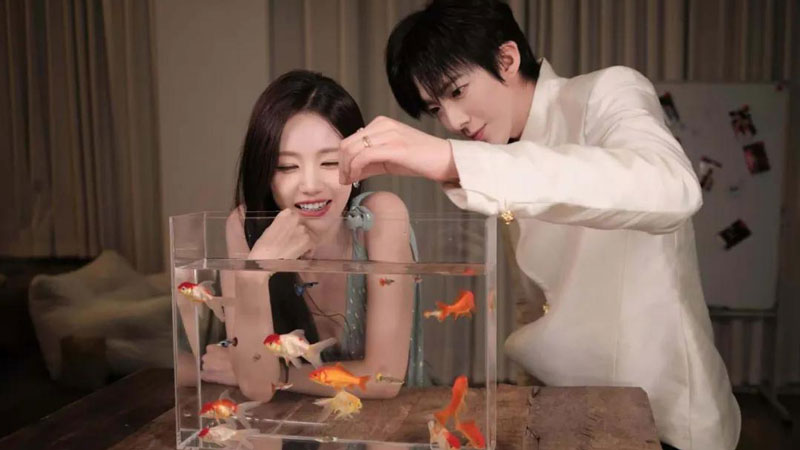
"If this project can act like a stepping stone — help me climb one more rung, give me access to better, more refined roles down the road — then why shouldn't I take it?"
"On the staircase of life, there will always be people looking down at you, and people looking up. Looking up makes you feel small; looking down makes you feel self-satisfied. But it's learning to look at yourself eye to eye — that's what really matters."
Her change isn't a surrender. It's just a shift in perspective — a way to stop locking herself inside mental corners. "There are too many limitations, too many chains placed on us by the real world. But once you peel that layer off, it gets a lot lighter."
Breaking the Protective Shell, Herself
 Breaking the Protective Shell, Herself
Li Yitong doesn't want the audience who loves her to know her only through her roles. And she doesn't want to be forever boxed in as "the melancholy-looking actress who shines only when paired with a character."
"There's a part of me that is Song Yimeng,"she said. After A Dream Within A Dream aired, she started getting messages from friends — even classmates she hadn't heard from in years.
"They all said to me, 'Watching this felt like seeing the you from back in school.'"
Li Yitong paused at that. Then she realized: Right — I was like Song Yimeng once. Playful. Quick-witted. A little offbeat.
"People feel the most free when they're not being themselves." In work, in life, even when interacting with family or close friends, it's hard not to put on a mask — to hide behind some form of self-protection. "But once you peel that away, the world opens up,"she said.

Just like Song Xiaoyu, who falls into the world of the script and completely rips off her outer shell to become Song Yimeng — Li Yitong has done the same.
So when she met this role, she felt something rare: The chance to play a character who reflected a part of her that had been buried — a version of herself that she hadn't seen in a long time. A self not defined by labels or expectations, but by something real.
For a long time, Li Yitong didn't dare show her real self to the public. "I was afraid the audience would constantly flip between seeing me and seeing the character,"she said. "So I actually preferred to hide behind the roles — to use them as a protective layer."
But now, things are different. "I don't have to deliberately put on a bubbly, cute personality just to prove I have it,"she said. "Sure, I can be that way, but I also have moments when I feel low. I just want to show myself as I am — naturally."
She no longer boxes herself in. When faced with difficult questions, she doesn't dodge them or try to split the difference anymore. "If you keep suppressing how you think and feel, then one day when you look back, won't you regret that you held back something important when you were young?"
Once that thought clicked for her, the world opened up. Suddenly it felt more vivid. More expansive. She's no longer obsessed with ripping off labels. She doesn't even care about the nicknames, the hate tags, the shade.
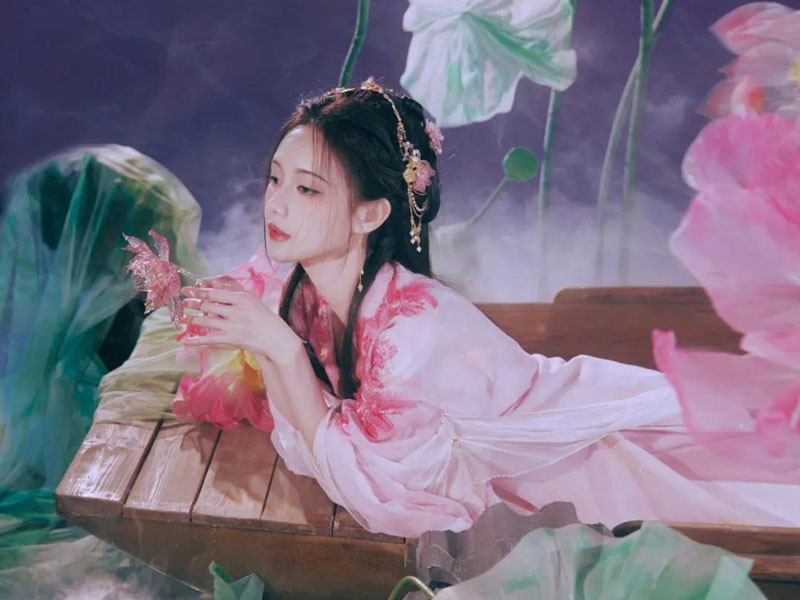
"If I believe a label accurately reflects who I am, then that's enough. That's me making peace with myself,"she said. "But if the whole world agrees on something and I'm the only one who doesn't, then nothing they say will matter. As long as I still have my own voice, that's enough."
The topic of "traffic"(a term used in China to describe fan base size, public attention, and commercial value — not to be confused with social media clicks alone) has always surrounded her.
In the past, this word felt dangerous to her. Unstable. It was the kind of thing her team would delete from interviews or carefully coach her on how to answer.
That's because "traffic,"back then, was often equated with being bad at acting — or having nothing meaningful to offer.
But now? She's starting to see that these two things don't have to contradict each other.
"If someone can act well and has traffic, isn't that even better?"she said, plainly.
"In today's environment, the industry needs both. If I keep stubbornly saying I don't care about traffic and just want to act for the sake of art — that's also kind of a contradiction."
Put simply: "Traffic comes with its own kind of spotlight,"she said.
In the past, before the industry was driven by data, before massive traffic stats became the norm, producers and platforms didn't weigh these things as heavily.
But now? "Traffic represents a kind of security,"she explained.
For platforms and production companies, it's a safety net. And for actors — it's the same.
"Traffic helps you get access to better scripts. It gives you more say in who you work with. It increases your value on the commercial side,"she said.
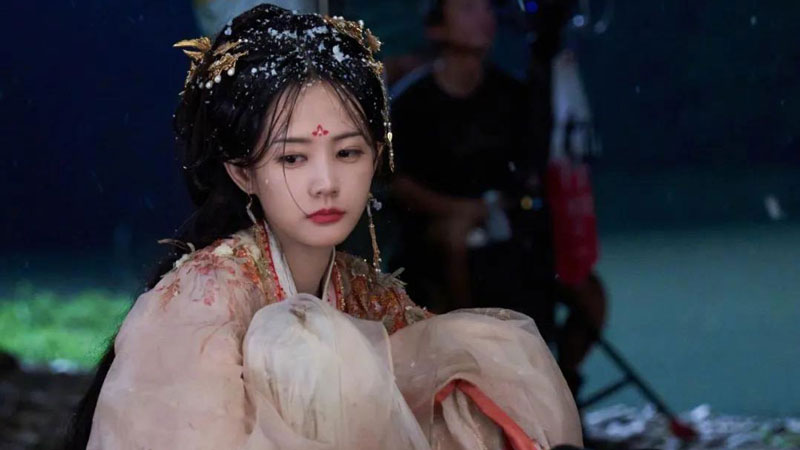
But no matter how things shift, she's never forgotten this core belief: "My foundation is still my acting. That's where I always return."
She wants a long road ahead in this profession — and for that, she's willing to walk on two legs: acting and traffic.
Whichever one falls short, she finds a way to catch up.
In recent years, she's started choosing projects she wouldn't have even considered before.
"That doesn't feel like a compromise to me,"she said. "I'm at peace with it. And I'm sure I can do it well."
Lately, she's been watching The Story of Minglan (知否知否应是绿肥红瘦) — a hit historical drama — and she's totally hooked.
"I'd really love to shoot a palace intrigue or household drama someday. Digging into human nature is actually quite fascinating."
In the past, Li Yitong was afraid of making mistakes — afraid that if she slipped up, it would affect how people saw her.
But now? She doesn't care so much about what people think. And because of that, she's less afraid of failing.
Bit by bit, Li Yitong is getting closer to the kind of freedom she's always dreamed of.