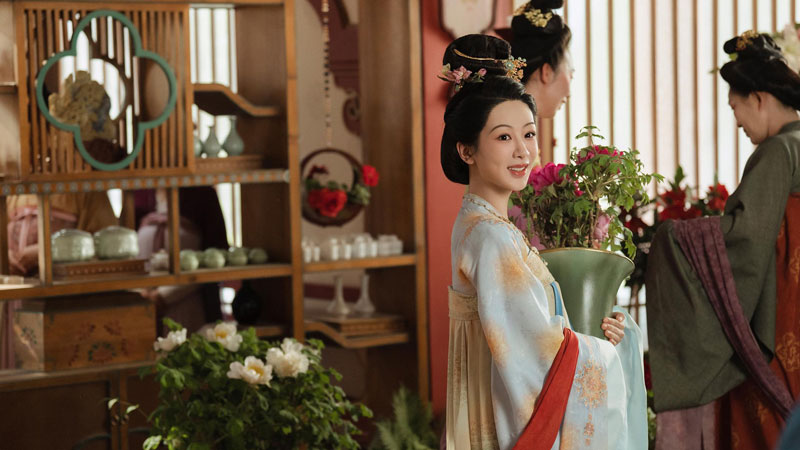
Every summer marks a fierce battleground for the Chinese TV industry. And one quiet rule has become increasingly clear in recent years: if you're going to launch a big historical costume drama, summer is your moment.
Since the "xianxia/costume drama restriction order" (a policy aimed at limiting the number of historical and fantasy dramas on air introduced in 2019) was put in place, period dramas have noticeably declined on mainstream channels. Among them, love-centric historical shows have seen a particularly bumpy ride. To stay relevant, creators have been experimenting—pushing for quicker pacing, short-form storytelling, and even adding game-like elements. But the results? Mixed, at best. These tweaks might create short-term hype, but they don't offer a long-term solution.
Now that long-format dramas are shrinking across the board, the industry's looking for a win—something high-quality and widely appealing enough to restore confidence. And top-tier costume dramas are under even more pressure: they not only have to look good but also find new ways of storytelling, inject real cultural depth, and raise the production bar to win back their audiences.
Enter The Glorious Blossoms, which aired in late June, produced by Huace Media.
It's the follow-up to the popular series Flourished Peony (国色芳华), and continues that show's grounded approach to period drama—what the creators call "Grounded Costume Drama (落地古装)," meaning costume dramas that feel believable, lived-in, and historically rooted rather than overly romanticized. From the first frame, The Glorious Blossoms leans into Tang Dynasty aesthetics with meticulous care, creating a world so visually rich it's practically a moving scroll painting.
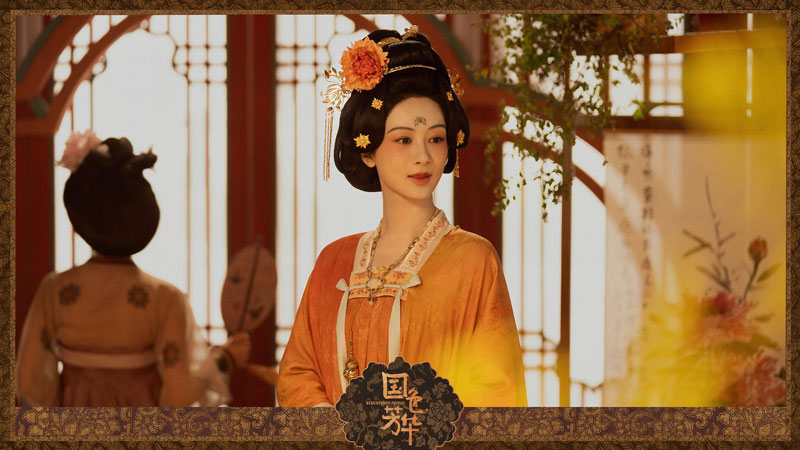
Story-wise, we pick up after the events of the first series. The female lead, He Weifang (played by Yang Zi), has reclaimed ownership of her family estate, Fangyuan. With this, her personal journey takes a new turn. The narrative also shifts its scope—where the last series focused on her rise in the business world, this one zooms out, gradually connecting her fate with broader themes of family, society, and the nation.
Given today's challenging market for long-form dramas, The Glorious Blossoms feels like a bit of a breakthrough. It doesn't just carry over the goodwill of the original—it also expands the boundaries of what this genre can look like.
 Production Values Redefine Period Drama Craftsmanship
 Production Values Redefine Period Drama Craftsmanship
Just last month, at the 30th Magnolia Awards, Flourished Peony won Best Art Direction, a nod to its bold and immersive visual design. That recognition wasn't a fluke—it reflected how high the bar was set in terms of look and feel.
The Glorious Blossoms picks up right where its predecessor left off, drawing from the same creative DNA. The show is deeply rooted in Tang Dynasty aesthetics but doesn't just imitate the past—it reshapes it through careful art direction and sound design, creating a visual language of its own.
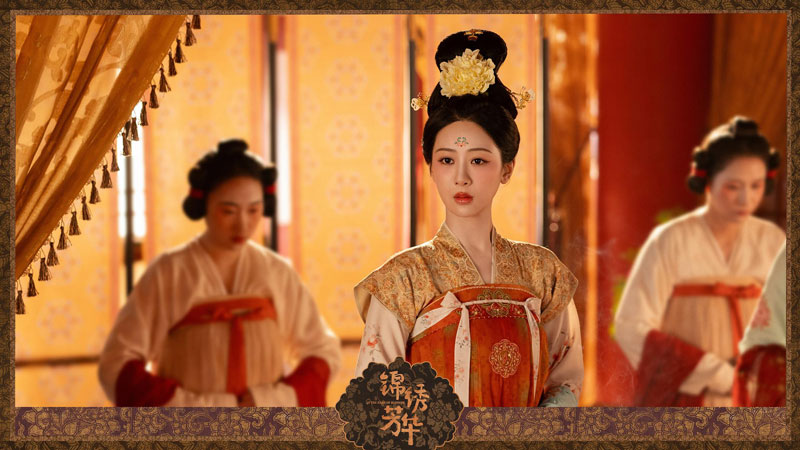
Cultural detail is a huge part of this. Costumes and makeup designs are backed by serious research: many references come from real historical artifacts and murals. For example, the show re-creates rituals like que shan li (却扇礼, a Tang wedding custom where the bride lifts a fan to reveal her face) and que shan zhe mian (雀扇遮面, a fan used to conceal one's face in formal settings). You'll also see authentic garments like qi xiong ru qun (齐胸襦裙, a high-waisted skirt worn with a short top) and intricately crafted armor—all made using traditional techniques from China's intangible cultural heritage list. The color palettes are deliberate, the embroidery painstaking, and the result is a revival of Tang Dynasty beauty that doesn't feel stiff or overly textbook.
The dance performances in The Glorious Blossoms draw heavily from the music and dance traditions of the Tang Dynasty. Ancient styles like dou kong zhu (抖空竹, a form of performance using spinning bamboo toys), sword dance, and the famous Ni Shang Yu Yi Wu (霓裳羽衣舞, "Dance of the Rainbow Skirt and Feathered Robes") all appear on screen. These performances aren't just historically accurate—they're thoughtfully choreographed with elements drawn from China's intangible cultural heritage. The result is a refined blend: the grace of classical form mixed with the visual expressiveness that modern audiences expect.
What's especially impressive is that these cultural elements aren't treated as mere background decoration. They're meaningfully integrated into the story. Each scene holds up to closer inspection, encouraging viewers to read between the lines. Traditional culture here isn't just for show—it's actively used to advance the plot and enrich the themes.
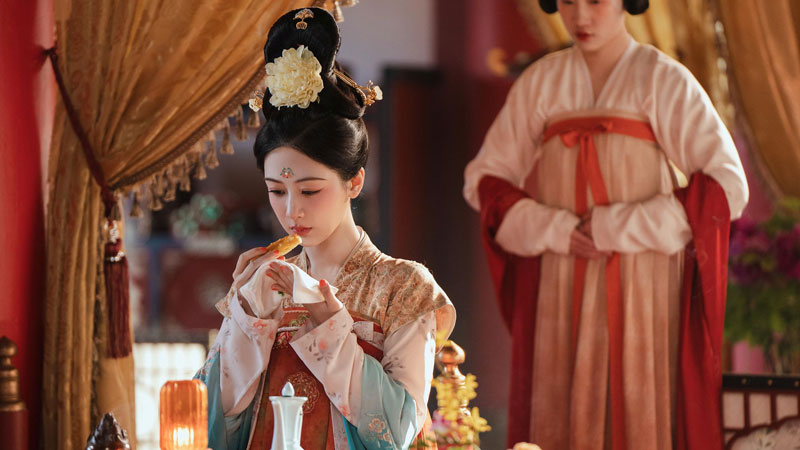
Take, for example, the pivotal scene where Li Youzhen (played by Zhang Yaqin) is sentenced to a brutal punishment by caning.
Before the punishment begins, there's a long tracking shot showing her entering a room and silently studying two murals on the wall. These murals are actual reproductions from the south wall of Cave 285 at the Mogao Caves in Dunhuang—a site known for its Buddhist art. The paintings depict the story of "Five Hundred Robbers Becoming Enlightened," which teaches the idea of redemption through renunciation, often summed up as "lay down your sword, become a Buddha" (放下屠刀,立地成佛).
The man who delivers her punishment, Shengren (played by Qu Zheming), chooses this specific room for a reason—he's not just carrying out a sentence, but subtly offering her a moral warning.
Later, when He Weifang talks with Li Youzhen after the punishment, the background music is a Pipa (Chinese lute) instrumental version of Yuzhang Xing: Bitter Fate (豫章行·苦相篇), a poem by Fu Xuan, a writer from the Wei-Jin period. The original text laments the tragic life of an abandoned woman, and it's often seen as a rare voice of compassion for women in ancient Chinese literature.
Fans of Flourished Peony may recognize this tune—it was used during the suicide scene of Qin Shengyi (played by Shao Yun). Reintroducing it here draws a parallel between that earlier tragedy and the emotional moment now unfolding between He Weifang and Li Youzhen. The music expresses sorrow not just for one individual but for women in general—two women here, both victims of the era's constraints, caught in a relationship far more complex than it first appears.
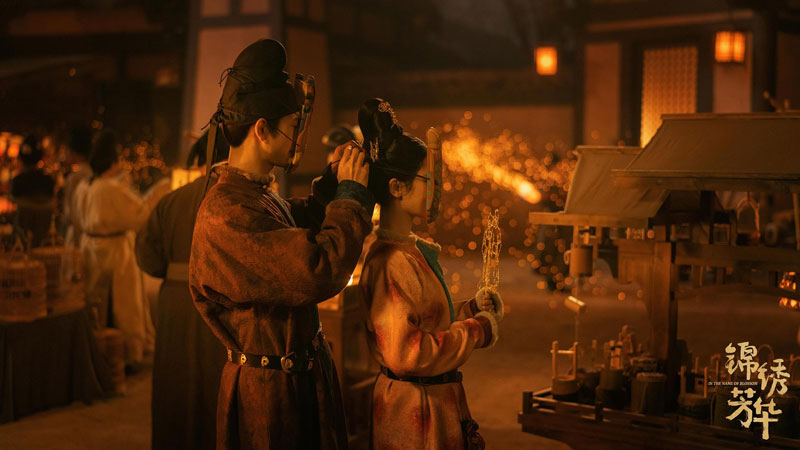
By weaving traditional culture directly into the plot, the creators manage to capture the elegance of Tang Dynasty aesthetics while giving contemporary audiences a layered and emotionally resonant experience.
From Commerce to Compassion — He Weifang's Inner Journey
 From Commerce to Compassion — He Weifang's Inner Journey
In Flourished Peony, He Weifang's arc was pretty straightforward. Her goal? To survive, to overcome external resistance, and to succeed as a businesswoman.
But in The Glorious Blossoms, now that she's at the top of the peony trade, her challenges shift inward. The questions she faces are no longer about making money—but about why and for whom she does it.
When Jiang Changyang (played by Li Xian) is framed and imprisoned, Weifang's silver is casually knocked to the ground by a prison guard. Meanwhile, Xuexi (Xu Lingyue) walks through unbothered, flashing a token of privilege. Earlier still, Weifang's late mother had once hoped her peonies could help people during an outbreak—but instead, her painstaking work was hoarded and monopolized by the elites.
In the traditional Chinese hierarchy of "scholar, farmer, artisan, merchant" (士农工商), merchants always ranked lowest. No matter how hard Weifang works, or how well she plays the system, she remains at the mercy of those in power. Any recognition she gains is temporary—a tool for the upper class, never an equal.
This realization shakes her to the core.
If, in the past, her determination was driven by survival, now she's forced to re-examine everything: What is the true value of her trade? Who is she really doing this for? Beyond her own self-worth, can her work influence the broader world around her?
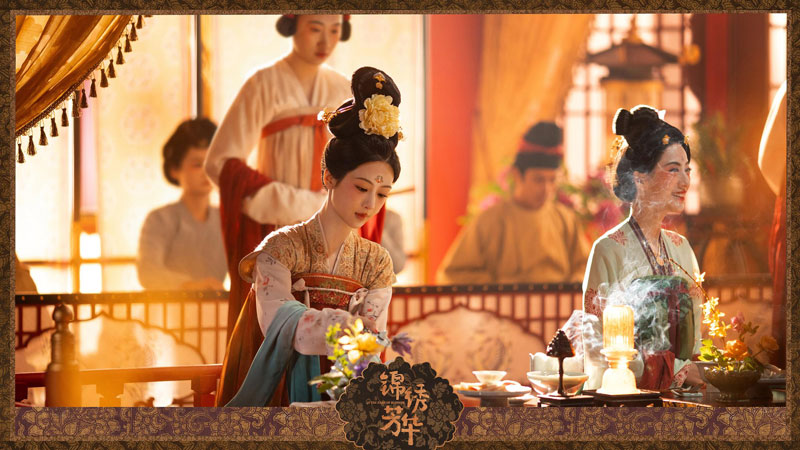
This brings us to the central question He Weifang must confront—as the emotional core of The Glorious Blossoms: it's not enough for her to carry on her mother's legacy. She has to go further. She has to find her own path.
It's during her journey to Sheng County that this turning point arrives. Leaving behind the silk and incense of her flower house and the glittering illusion of Chang'an, she finally sees the hardships of ordinary people up close. More importantly, she steps up to help—not just with words, but with real action. Only then does her belief system begin to rebuild itself.
This experience becomes a key shift in her worldview. She realizes how merchants are bullied by officials, only to find that lower-ranking officials are bullied by those above them. In the end, it all comes down to the individual—what you believe, and how you act. "Peonies," she says, "once used as poison, can now be the cure." The phrase "guose fanghua" (国色芳华), which literally refers to the unmatched beauty of the national flower (a poetic nickname for the peony), takes on new meaning here. It's no longer just about beauty—it's about compassion, responsibility, and standing up for the powerless.
From Flourished Peony to The Glorious Blossoms, He Weifang's growth arc is strikingly clear. She starts by breaking through external obstacles. Then, she faces inner doubt. She shifts from chasing commercial success to asking deeper questions about her purpose. In the end, her transformation is complete: from someone just trying to survive to someone trying to uplift others. From "taking care of herself" to "taking care of the world."
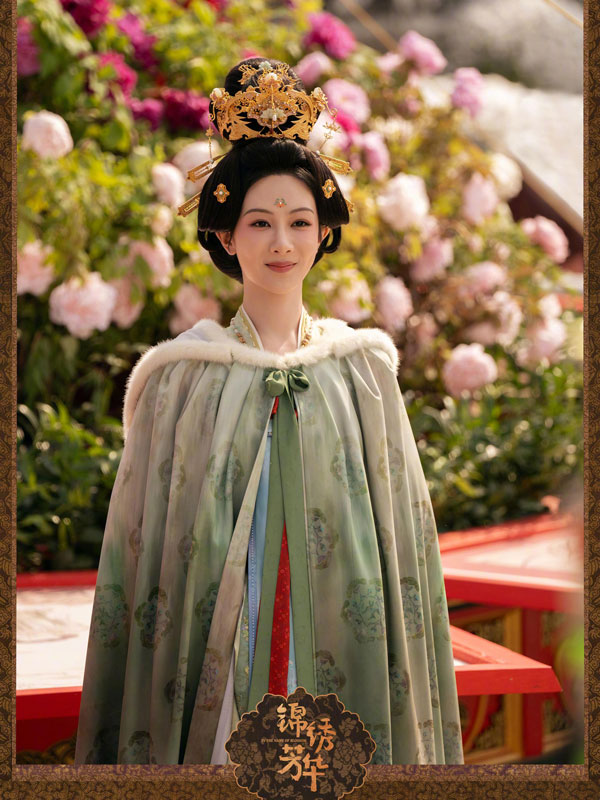
The portrait of women, which had already begun to take shape in the first series, deepens here with a new layer—class.
Take Lianzhou (played by Bao Chenxi). She was born the daughter of a merchant and is incredibly skilled at embroidery. But due to her social standing, she's never allowed to wear the very dresses she makes. After her family's fall from grace, she's brought into the residence of Prince Ning—not as family, but as a pawn. First, she's married off to Jiang Changyang; then, like a gift, passed on to Pei Zhong.
He Weifang once gave Lianzhou a chance to choose her own path. But Lianzhou, long conditioned to rely on power, couldn't break out of that mindset. In the end, she's killed by Pei Zhong in a domestic abuse incident—just another casualty in the power game. Her tragedy wasn't just about gender—it was the result of intersecting forces: class, patriarchy, and the era itself.
Then there's Xuexi, a general's daughter. Even with her privileged background, she struggles when faced with the demands of those above her. Torn between family loyalty and personal love, she's forced to make impossible choices. And even Li Youzhen—the so-called villainess of the story—ends up in a loveless political marriage, utterly powerless in her new husband's influential family.
These women's fates are tightly woven together, painting a clear picture of what survival looked like under the feudal system. Some resist. Some give in. Some fall apart. But each of them shows a different face of how women—across class lines—were boxed in by power structures.
Lianzhou's tragic ending, Xuexi's moral struggle, Li Youzhen's obsession, and He Weifang's awakening—they don't just contrast with one another. Together, they form a broader reflection on the lives of women trapped in a patriarchal, hierarchical society.
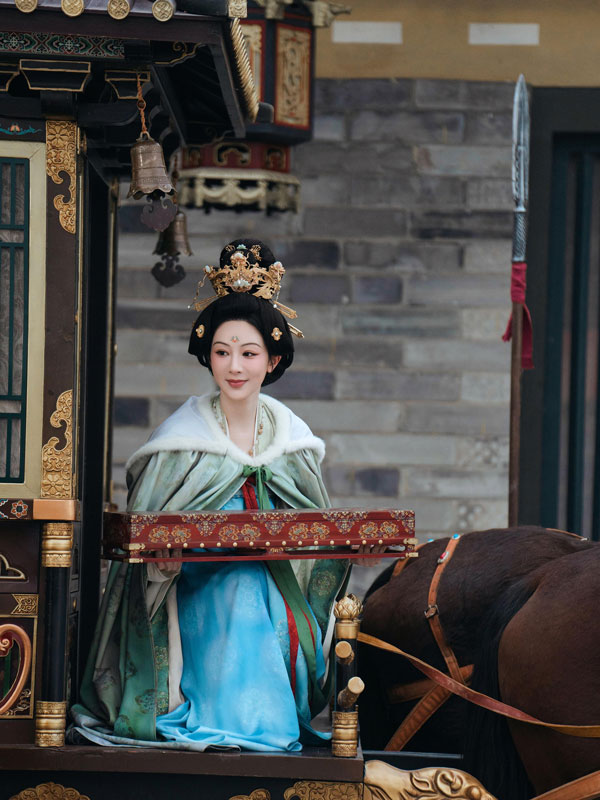
The drama's female characters have struck a nerve online. In a social media campaign led by China Women's News, under the hashtag #SheSeesTheBlossomsInHer (锦绣芳华她见芳华), viewers poured out their feelings for He Weifang, Lianzhou, Xuexi, and others. People were moved by their journeys—not just their triumphs or their tragedies, but the strength they showed in continuing to grow, even while trapped by the times they lived in.
Character Dynamics: A Chinese Aesthetic of Love
 Character Dynamics: A Chinese Aesthetic of Love
When director Ding Ziguan talked about his vision for "grounded costume dramas", he mentioned two guiding principles: historical authenticity and artistic imagination. That same creative approach runs through the emotional arc between He Weifang and Jiang Changyang.
"Marriage first, love later" isn't exactly new in Chinese romance dramas. But what sets The Glorious Blossoms apart is how it roots this familiar setup in the cultural and historical logic of the Tang Dynasty—instead of dressing up modern rom-com tropes in period clothing.
Here, historical authenticity means this: once He Weifang and Jiang Changyang get married, the show doesn't rush their chemistry or force sugary scenes just to feed the audience "couple content." Their relationship evolves slowly and believably, shaped by the social norms of their time. What begins as a strategic marriage gradually deepens through real, shared experience.
He Weifang's independence and optimism leave a mark on Jiang Changyang, while his dedication to justice and national duty, in turn, shapes her own ambitions. When crisis after crisis hits—Fangyuan burning to the ground, Jiang Changyang imprisoned, his family investigated—neither of them plays the savior. Instead, they rely on each other. They grow together. Each one lifts the other up.
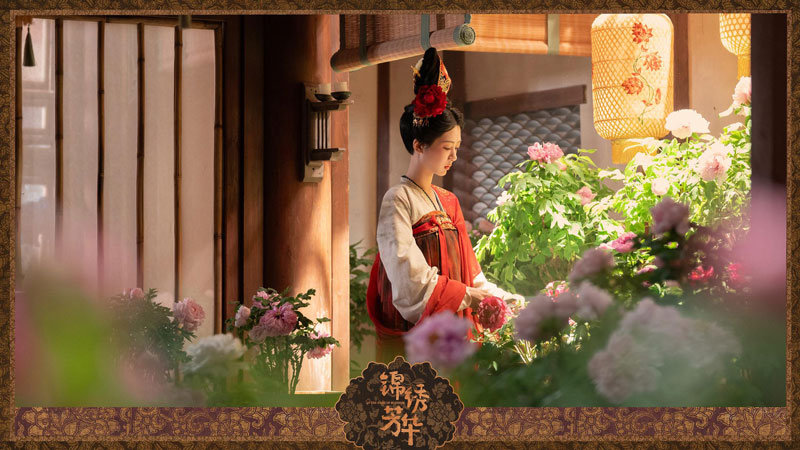
Their relationship shifts from a partnership of mutual interest, to a friendship based on understanding, and finally, to a bond of genuine affection. It's a natural emotional progression—not driven by cliché, but by character and circumstance.
By the end, they're not just emotionally connected—they also align in values and purpose. What started as a marriage of convenience transforms into a shared mission. This is more than romance; it's a meeting of minds.
Their love story—fang ming yuan yang (芳名远扬), which literally means "may the name of our love spread far and wide"—is steeped in classical Chinese ideals of romance. It carries the elegance of restraint, the weight of commitment, and the poetry of devotion through hardship. It's not loud or flashy, but it runs deep.
This is where the show's "artistic imagination" comes into play: it honors the emotional intensity of traditional love stories, but reframes it with a modern sense of emotional ethics. It's not just about falling in love—it's about growing as people, together.
In all, The Glorious Blossoms charts a new course for period romance dramas. It doesn't chase fast-paced trends or bite-sized storytelling formats. Instead, it takes its time. It builds a world with care, continues the rich aesthetics and cultural grounding of its predecessor, and anchors it all in He Weifang's personal evolution and the layered lives of its female characters.
In doing so, the show offers a compelling example of what well-made period drama can be. It speaks to the growing demand from viewers for substance—not just spectacle—and reflects a broader shift in Chinese TV production: back to content that actually means something.
And in a summer season where expectations keep rising, The Glorious Blossoms stands out. It's a thoughtful, beautifully crafted series—worth not just watching, but talking about.