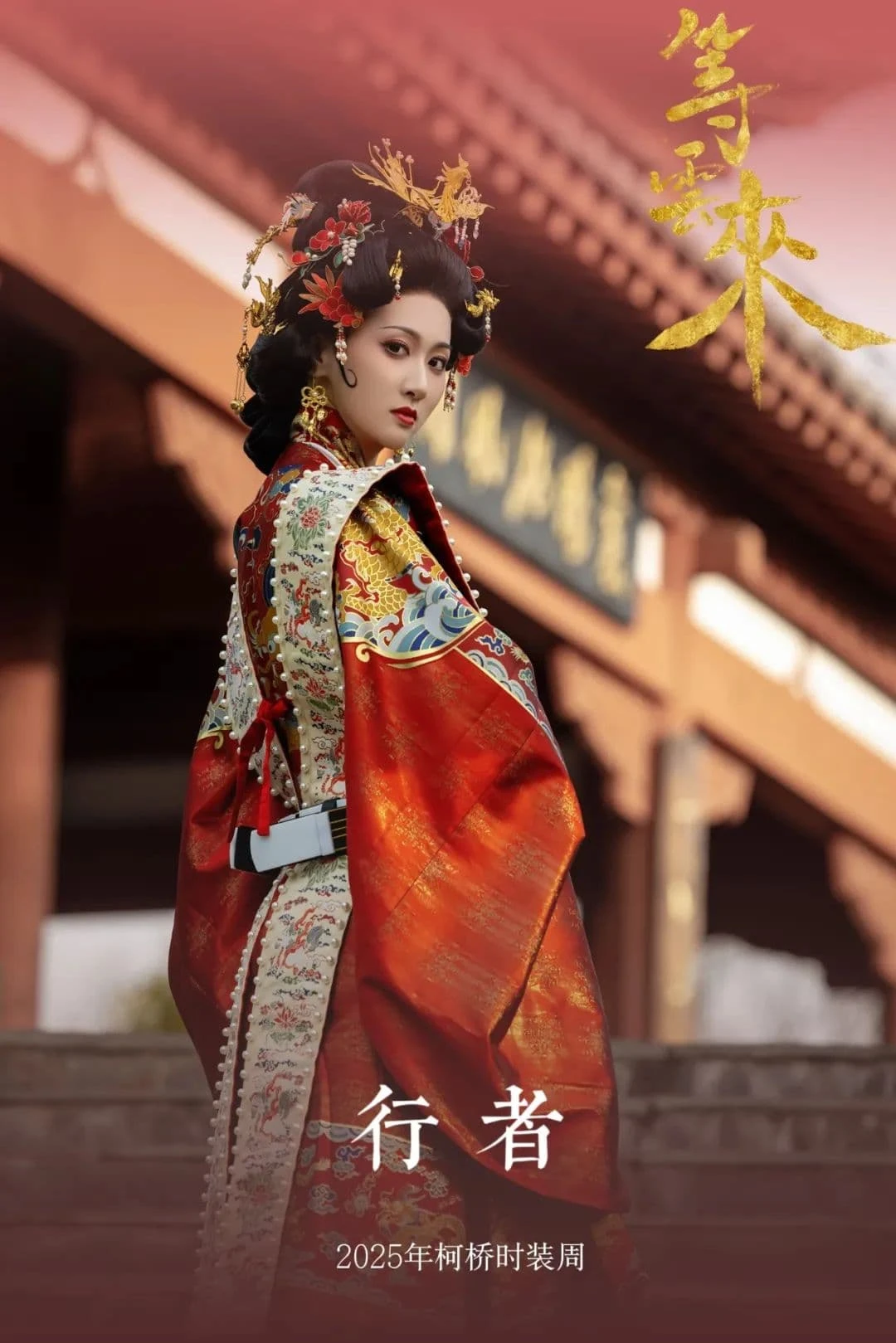
Xitang’s Hanfu Culture Week returns for a fourteenth edition on October 31, 2026, in the water town of Jiashan County, Jiaxing, Zhejiang. Xinhua Daily’s Jiaxing edition reported the date on October 3. What began in 2013 as a gathering of Hanfu enthusiasts is now the anchor of a town economy: a scenic core of just over one square kilometre that took more than 12 million visitors in 2024, holds over a hundred Hanfu shops, and runs close to a hundred heritage events a year. The useful question is not what happens during the festival week, but what fourteen editions have built around it.

What the Xitang Hanfu Culture Week Is
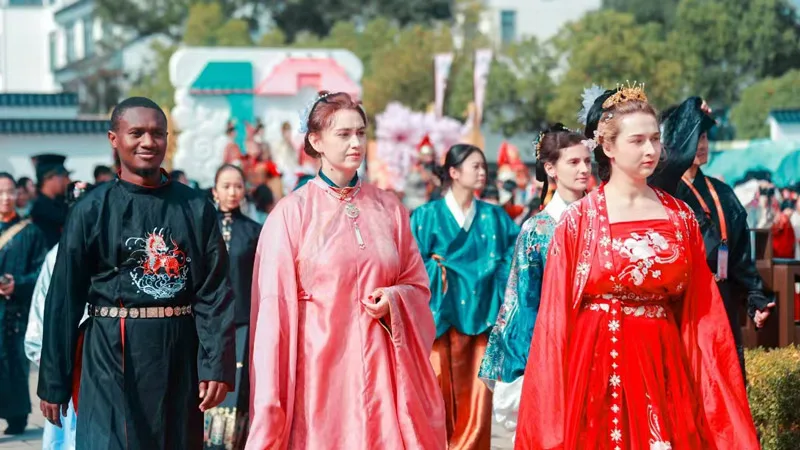
The Xitang Hanfu Culture Week is an annual Hanfu festival held in Xitang Ancient Town in Jiaxing, Zhejiang, and it normally runs from late October into early November. It was initiated in 2013 by the lyricist Vincent Fang, who had no family link to the town; he came to know it through a music work filmed on its canals and later moved his studio into the old lanes. The programme has held to a settled set of parts: a Dynasty Carnival in which wearers parade in dynasty order, a waterborne version of the same parade, Hanfu wedding presentations, a Hanfu development forum, and a set of flash-mob performances. The fourteenth edition opens on October 31, 2026.
In 2025 the thirteenth edition ran nine days from November 1 to 9 under the theme “Time Scroll, Cultural Rebirth”, the longest run to that point, and added a Chinese-style Hanfu music festival split into a folk set and a rock set. The station’s own files carry the earlier ground: the 2025 Xitang Twelve Floral Deities festival, which shows how the town now markets themed sub-events inside the main week, and the August 2026 Xitang promotion in Shenzhen, where the town took Hanfu wedding robes and Hanfu tour routes to a trade audience.

Fourteen Editions, One Set of Rituals
Small festivals drift. This one fixed its parts early and then enlarged them, and each marked edition added a structural element rather than one more attraction. The record, as reported by the town and by the press around each edition, is short enough to read in full.
| Edition | Year | What changed |
|---|---|---|
| 1st | 2013 | Initiated by Vincent Fang as an enthusiast-scale gathering in the old town |
| 11th | 2023 | A Hanfu culture committee of the Chinese Costume Culture Research Association was unveiled; Fang launched a cross-strait young music talent incubation plan; cumulative related industry revenue was put at more than 300 million yuan |
| 12th | 2024 | Hanfu-related shops inside the town passed one hundred |
| 13th | 2025 | Nine days, the longest run to date, plus the first Chinese-style Hanfu music festival |
| 14th | 2026 | Opens October 31 |
Two shifts are harder to see in an activity list. The first is standardisation. At the eighth edition the organisers released two group standards, Hanfu Classification and Hanfu, the first time the festival put a written vocabulary in front of its participants; the practical effect, as the town describes it, was that visitors stopped mixing dynasties and wearing a Song crown over Ming dress.
The second shift is who gets to take part. The seventh and eighth editions still carried a clubby feel, and by the ninth and tenth the carnival formations were open to ordinary enthusiasts, so that a costume researcher, a visitor drawn mainly by the look of the clothes and a family out for the day could all walk in the same parade. The station has the edition dispatches: the seventh and eighth weeks, and the ninth and tenth, which show the turn from a members’ meeting to an open programme.
Why the Festival Fits This Town
Xitang’s core scenic area measures 1.01 square kilometres and preserves roughly 250,000 square metres of Ming and Qing buildings. The figure that matters more is the one usually left out of festival write-ups: 2,600-odd households and more than 6,000 residents still live inside it. The woman washing vegetables at the step and the man fanning himself in a doorway are residents, not cast members. Twenty-seven stone bridges rejoin the houses that the canals cut apart, and 122 lanes make it easy for a stranger to get lost and easy for someone who has lived there all her life to walk home with her eyes shut.
Along the water runs more than 1,300 metres of covered arcade. Locals call it the rain-and-mist corridor, and the name is literal: you can walk its length in a downpour without wet shoes, and it shades the length of the street in summer. The town’s account of how it was built says a merchant near the water put up a canopy for travellers caught in bad weather, neighbours added a section each, and a hundred households ended with one shared roof over the whole street. That shared eaves is the reason a Hanfu fair sits here rather than in a tidier film set: business and daily life still share one stone-paved lane, and young people in formal dress walk past laundry and coal stoves on the same afternoon. Staged scenery cannot reproduce that mixture, and it is the part of the venue that a festival cannot buy.
The Town’s Hanfu Ledger
In 2024 Xitang’s scenic area received more than 12 million visitors and generated tourism revenue above 2 billion yuan. The wider Xitang township recorded a gross domestic product of 10.15 billion yuan, with nearly 500,000 overseas visitors among the arrivals. Spread across the year, that is more than thirty thousand people a day walking under the same arcade.
Hanfu’s share of that trade shows up in the shop count. By 2024 the town had more than a hundred Hanfu-related businesses, and they are not one trade but several: costume rental, hair and make-up styling, and follow-shoot photography in which a client is trailed through the lanes for an afternoon. In peak season, guesthouse bookings in the town are commonly keyed to Hanfu, because the photograph comes first and the meal and the overnight stay follow it. Close to a hundred heritage events run in the town each year on top of the festival, among them the Huguo Suiliangwang riverside rite, which draws more than twenty thousand people along the canal, and a craft trail that strings Pankou knotting, woodblock printing, steamed pork and a local pork-knuckle dish into one route.
Tourism is only one leg. Xitang is also the country’s best-known button town: the first button workshop opened in 1914, the trade grew out of shells taken from local river mussels and ground down on pedal-driven belts, and the town now produces more than 100 billion buttons a year at roughly 6 to 7 billion yuan of output, over half the global market, with more than 20,000 workers. Counted across the world’s population, that is at least eighteen buttons per person. A reader who wants to see the second economy has a museum for it on Sixianci Lane. The festival sits on top of both legs at once, and the town that can put on fourteen editions of a costume week is a town with an industrial payroll behind it.
What Fourteen Years Still Has to Settle
Popularity brought the complaints that come with it. Visitors have objected that much of what is sold under the arcade is wholesale stock from elsewhere and looks like every other ancient town, and that after dark the bar street carries across the water into the windows of riverside homes. The town’s response has been to curate rather than to build: keep more of the old brands and craft workshops, let the interchangeable souvenir shops turn over, and hold the riverside bars to a lower volume and a closing hour. That line between a lived-in town and a shopping street is one Xitang has drawn for itself, and it is the constraint the festival has to keep working inside.
Read as a sample rather than an event, the fourteen years answer a question other ancient towns are currently asking. Xitang converted a single burst of attention into shops, guesthouses, workshops and a year-round events calendar, and it did so without emptying the town of residents or rebuilding it as a set. The reports of the last few editions show the mechanism clearly: merchant-led competitions, themed sub-weeks, a music festival and a student shuttle bus, each one aimed at lengthening the stay rather than enlarging the crowd. For towns looking for a way out of look-alike tourism, that ledger is more useful than the parade is.
Frequently Asked Questions About the Xitang Hanfu Culture Week
- When is the 2026 Xitang Hanfu Culture Week? The fourteenth edition opens on October 31, 2026, in Xitang Ancient Town, Jiashan County, Jiaxing, Zhejiang. The event normally runs from late October into early November; the 2025 edition ran nine days from November 1 to 9.
- Who started it? The lyricist Vincent Fang initiated the first edition in 2013. He came to Xitang through a music work filmed there and later opened a studio in the town. The festival is held at the same venue every year.
- What happens during the week? A Dynasty Carnival parade, a waterborne dynasty parade, Hanfu wedding presentations, a Hanfu development forum, flash-mob performances, Hanfu product launches, a Chinese-style market, and in recent years a Hanfu music festival with folk and rock sets.
- Do you need to own Hanfu to take part? No. The town has more than a hundred Hanfu-related shops covering rental, styling and photography, so visitors can hire an outfit and a photographer in the lanes on the day.
- Is the town itself worth visiting outside the festival week? Yes, and that is the point of the last fourteen years. The old town keeps 2,600-odd households and more than 6,000 residents, more than 1,300 metres of covered riverside arcade, 27 stone bridges and 122 lanes, and it runs close to a hundred heritage events a year, including the Huguo Suiliangwang riverside rite.
- How big has the festival become? The 2025 edition ran nine days; organisers reported more than 40 activities and over 100,000 participants by the eleventh edition, against fewer than 10,000 participants across about ten activities at the first, and cumulative related industry revenue above 300 million yuan.
Figures in this piece come from the town’s own published accounts and from Chinese press reporting around the editions, including Xinhua Daily’s Jiaxing edition report of October 3, 2026 on the fourteenth edition date, the town’s quarterly magazine, and prefecture-level reporting carried by the Qiangjiang Evening News in the first week of October 2026. The station’s edition-by-edition dispatches are linked in the sections above.