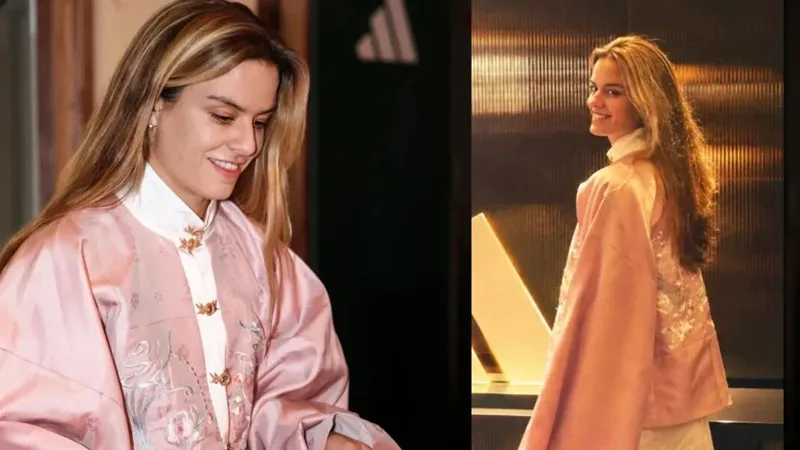
When Greek tennis star Maria Sakkari shared photos of herself wearing Hanfu, few fans expected the reaction. Known for power serves and fierce court energy, she usually appears in sportswear or sleek European evening looks. This time, she wore a Ming Dynasty style outfit: a standing-collar, front-buttoned jacket with a horse-face skirt. No dramatic filters, no exaggerated fusion styling. The images spread quickly across overseas social platforms. Commenters asked about the fabric, the shape, and the history. For many outside China, it was their first close look at traditional Chinese dress worn by a well-known athlete. The moment felt fresh because it did not try too hard. It simply let the clothes speak. That quiet confidence made people stop scrolling and look again.
A Surprising Turn
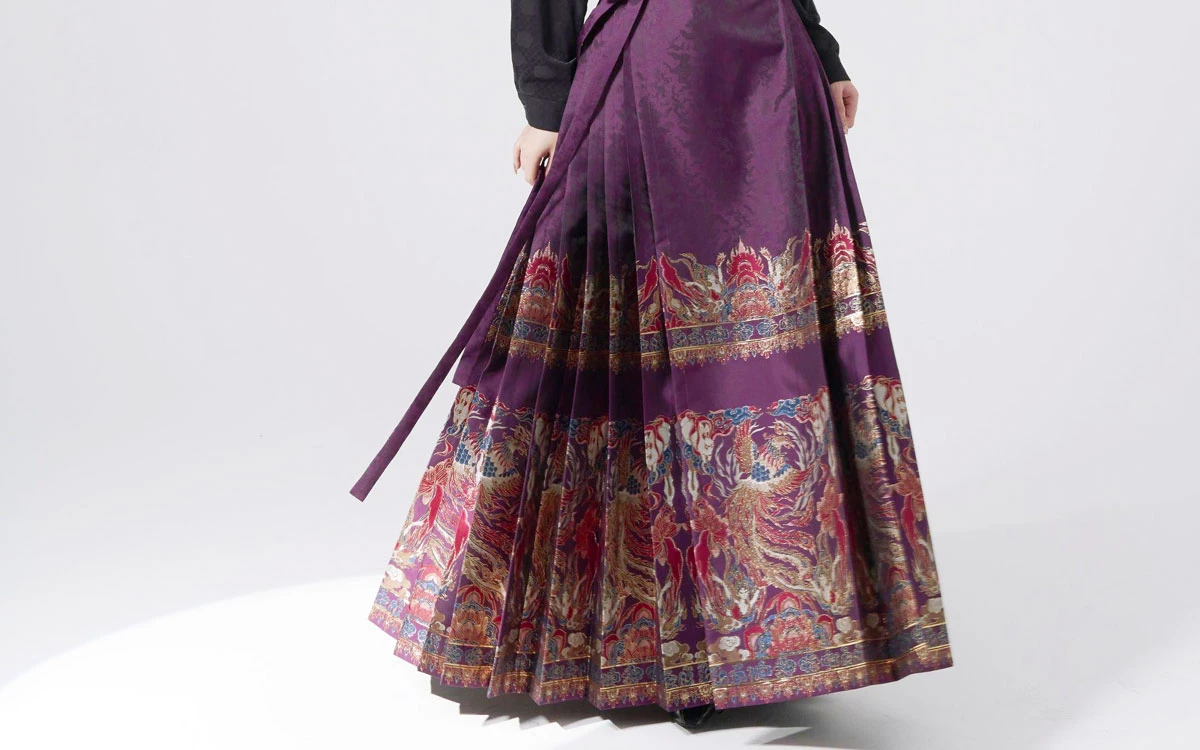
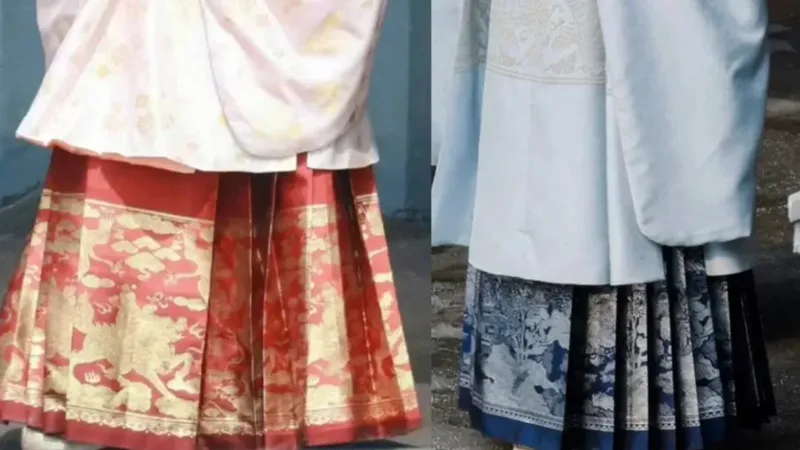
The top used a classic Ming cut: a standing collar, front opening, and neat lines. This style became common in the middle and late Ming period. Instead of heavy embroidery, Sakkari chose clean tailoring. The jacket works for daily wear and formal photos alike. The lower half was a gold-woven horizontal-panel horse-face skirt. Its front and back panels overlap, while side pleats fall in even folds. Those details matter. They show a traditional handmade pattern rather than a costume-shop copy. The skirt has become one of the most recognizable Hanfu pieces abroad, partly because its structure is easy to see in photos. Here, the gold patterns catch light without looking loud. The outfit respects old rules while still feeling wearable, calm, and direct.
Loose fabric changed her usual silhouette. As an athlete, Sakkari has visible strength; the Hanfu did not hide that, but softened it. Lotus-root pink added warmth, making her look calmer than on court. Her hair stayed simple, almost everyday. That choice helped the look feel real. It was not a stage costume or a fantasy character. It was a modern woman wearing old clothing with care. Fans noticed the difference. Some praised her respect for shape. Others liked that she did not remake the outfit into a Western dress. The contrast between her tennis image and this gentle pose gave the photos their power. Sometimes a new side appears when a person steps out of familiar style and lets another tradition set the tone.
The cut carries practical wisdom. A loose, structured fit welcomes many body types. It does not rely on tight seams to create elegance. Instead, posture and movement give the garment life. Western formal wear often stresses shape through pressure and tailoring. Hanfu can suggest grace through space. That difference may be why the images traveled so far. Viewers saw dignity without stiffness. They saw tradition without a museum label. Sakkari did not need to explain every detail. The clothing itself offered a lesson in balance: roomy but ordered, old but alive. For a sports star used to speed, this slower visual rhythm became a surprising strength.
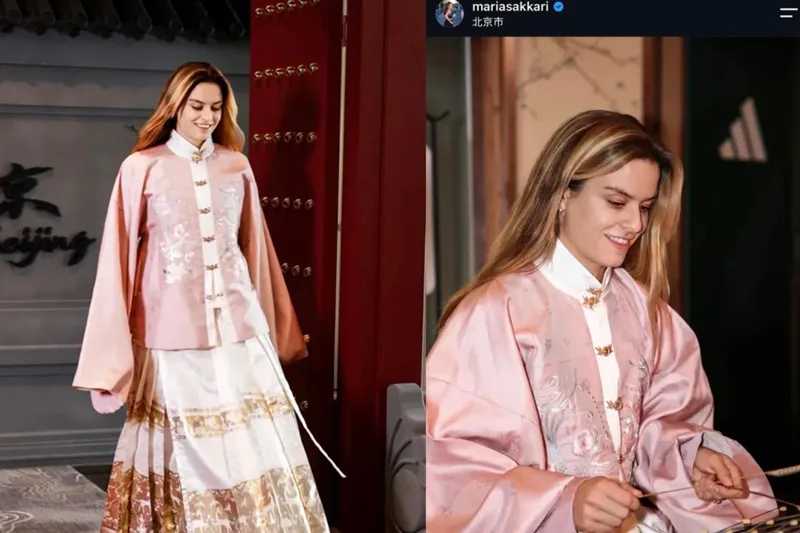
Her usual style leans toward simple, high-end European fashion. This look moved in another direction. It did not ask for a new trend or a loud statement. It asked for attention to cut, cloth, and proportion. The jacket’s straight lines and the skirt’s measured pleats created a frame that felt both foreign and familiar. Foreign, because many viewers had never worn such clothing. Familiar, because good design speaks clearly. Sakkari’s choice also showed that tradition can be tried without claiming ownership. Respect is enough to begin a conversation. That may be why the post felt sincere rather than staged. She was not performing another culture; she was enjoying a garment and letting its history stay visible.
Quiet Cultural Power
Hanfu has moved beyond a small fan circle. It now appears in classrooms, street photos, weddings, and international posts. Chinese enthusiasts keep the craft alive, while overseas artists and nobles sometimes try it too. Sakkari’s share stood out because it felt personal. She did not announce a cultural campaign. She did not turn the outfit into a stunt. She wore it, posed, and let viewers respond. That approach often works better than loud promotion. Curiosity grows when people feel they are discovering something, not being lectured. The comment sections filled with questions about dynasty, skirt panels, and fabric. A tennis player became an accidental guide to a tradition she clearly enjoys.
Across borders, taste can connect people before language does. A well-cut jacket, a balanced skirt, a soft color—these things need no translation. The photos did not claim that one culture is better. They simply showed beauty in a form many had never tried. That is a gentler kind of cultural exchange. It invites rather than demands. It answers questions instead of giving orders. Sakkari’s look also challenged the idea that traditional dress belongs only to heritage events. It can live in a modern feed, beside tennis trophies and travel shots. When old clothing enters daily life, it stops being distant. It becomes something a new audience can imagine wearing.
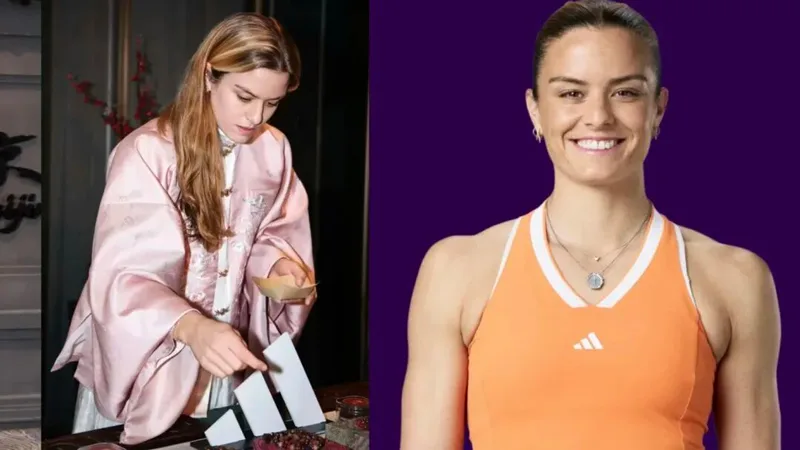
This viral moment is not only about one athlete. It shows how images can carry tradition without heavy slogans. A skirt’s pleats, a collar’s line, a calm color—all become small bridges. The response also reminds us that audiences are tired of shallow fusion. They notice when a wearer respects the source. Sakkari did that, and the result felt warm, not performative. Her post may not change the fashion industry overnight. Still, it adds one clear example: Chinese dress can travel far when it is worn with knowledge and ease. What do you think of her Hanfu moment? Did it make you see the style differently?