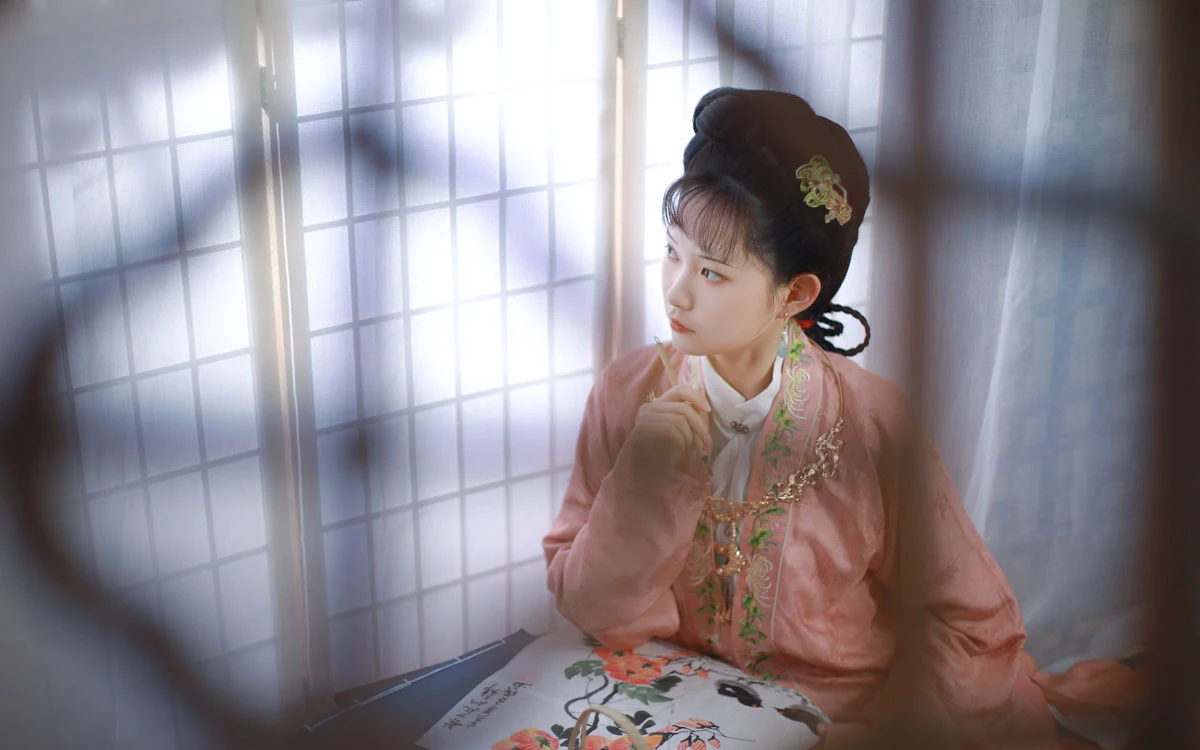
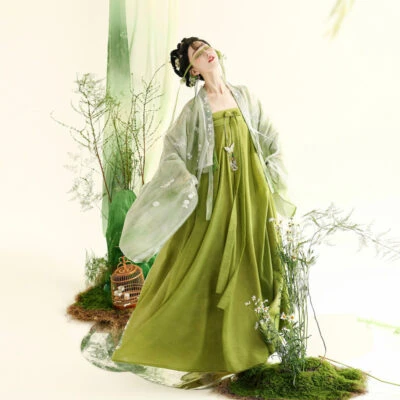
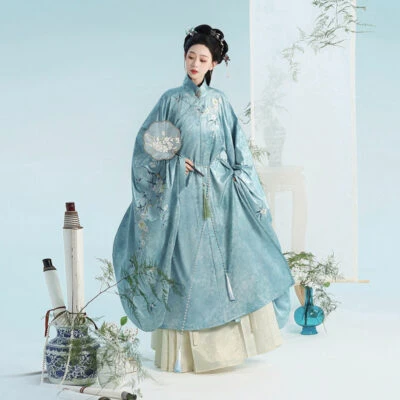
Four years ago Yang Fengxian was selling hand-made fans and hairpins out of a community in Weizhuang, on Shizhi Street in Fangcheng County, and the orders were thin. Today her workshop in Nanyang, Henan, turns over roughly 300,000 yuan a month in silk velvet flowers, peaks at 500,000 in busy seasons, and keeps more than 20 women in steady work. On October 9 she was on camera as usual, holding up a new design and reading the incoming orders off a second screen.
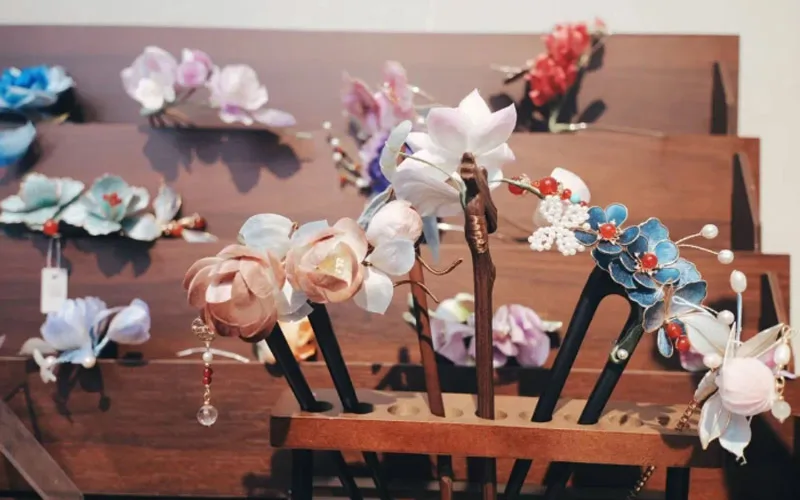
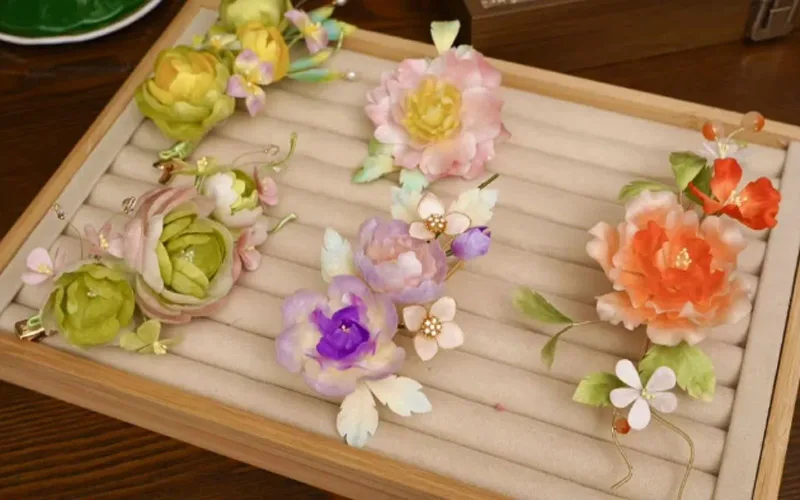
Ronghua is a flower built from degummed silk thread twisted around copper wire. The name sounds like the phrase for prosperity, which is why it turns up at weddings and New Year, and the craft traces to the Tang. Nanjing and Beijing both hold heritage listings for it. In a county-level community it has become a small manufacturing business with a live-stream sales floor.
How a Video Changed the Workshop’s Product
Yang is in her early thirties and came to this through Hanfu, not through a family trade. She worked her way through the accessory repertoire one item at a time, fans first, then hairpins, and none of it sold well. In 2023 a short video of a velvet-flower hairpin stopped her, and she decided to teach herself the technique with no teacher and no workshop. The process list explains why that is difficult: silk degumming, dyeing, splitting the thread into pile, drawing the silk core, ironing the pile, trimming the tips, transferring and finally gluing the petals. Get one step wrong and the whole flower distorts.
She has described the middle of that learning curve without romance. “I wanted to give up more than once,” she said. “But the more carefully you work it, the better it comes out, and then you cannot walk away.” She rewatched the videos, worked slowly, and eventually reached a standard good enough to sell. A simple piece now takes a day to produce 100 or more; a complex one takes 60 to 70. Everything is still made by hand, which sets the ceiling on volume and the floor on price.
The craft was never the bottleneck. Distribution was. Velvet flowers appeal to a narrow group, costumers and Hanfu wearers mostly, and a county market cannot absorb even a few dozen pieces. In July 2023 she opened a live-stream room under the shop name Jinzan Ge on Douyin, focused on original designs, and found the audience initially close to zero.
What moved it was borrowing other people’s audiences. She approached established creators in the historical-style field and asked them to wear her work. Most requests went unanswered; she kept sending better samples and clearer terms until some replied, and the traffic followed. Two sessions a day, four years of them, built a following that now reaches Xinjiang and Tibet. Her catalogue has passed 1,000 designs and turns over fast, because the customers she has are loyal but few, and repeat buying depends on novelty.
Mothers Who Became Makers
More than 20 women from the surrounding neighbourhoods who had no fixed job and were caring for children at home. They learned the trade on site. Zhao Pan has worked there close to three years and now earns over 3,000 yuan a month. “Earning with my own hands makes me proud,” she said. The work divides along difficulty: the simple steps can be batched by newer hands, the intricate ones go to the experienced, and that split is what makes daily output possible at this scale.
Yang’s own day runs from teaching in the workshop through several hours of streaming to design work after midnight. She wants a larger floor, jobs for disabled workers, and an exhibition and experience centre, none of which exist yet. The economics rest on something less visible than craft: Hanfu styling has moved velvet flowers from festival wear to everyday accessory, which lowered the unit price, raised how often they are worn, and made a county workshop viable.