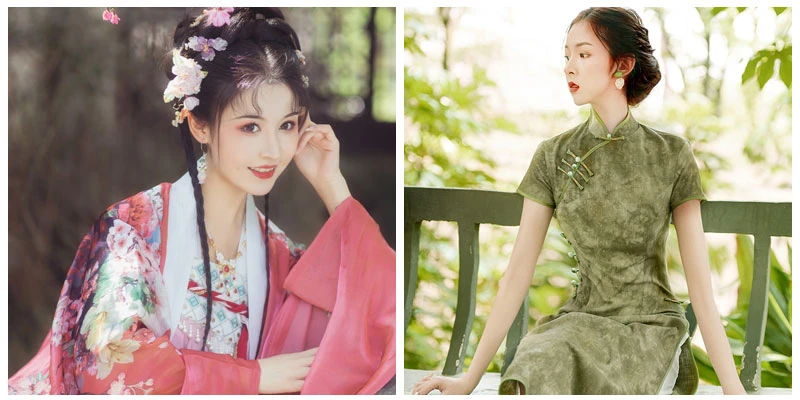
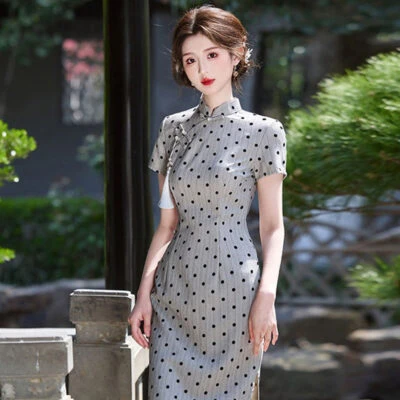
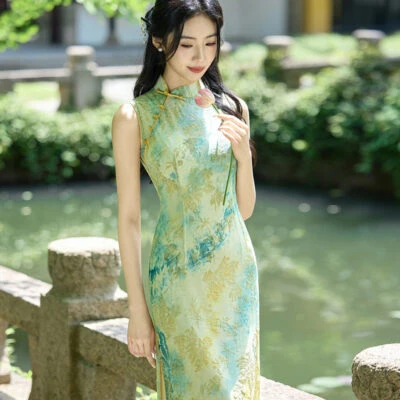
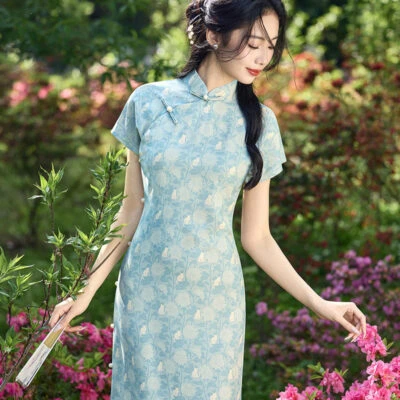
A narrow strip of cloth, folded and coiled into a knob on one side of a garment opening and a loop on the other, closes the front of a Chinese jacket. The Chinese name for that fastener is Pankou. On an English-language product page, the same element can appear as “fireman clasp”. The distance between those two names is what this page is about: not how the fastener is built, but who decides what it is called, and what follows from the decision.
Three desks name the element at once. Trade suppliers name it in specification sheets, a standards body names it inside a national product standard, and a retailer names it in the words a shopper reads. Each desk produces its own vocabulary, and the vocabulary travels much further than the object does.
What a Pankou Is and What Its Parts Are Called
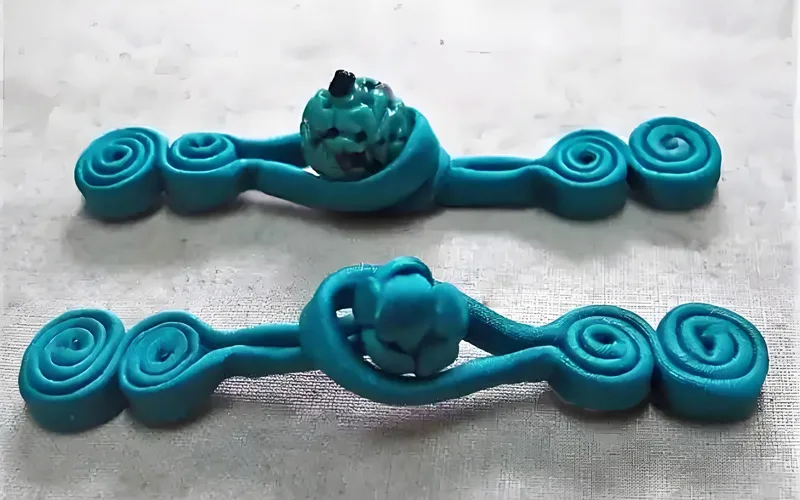
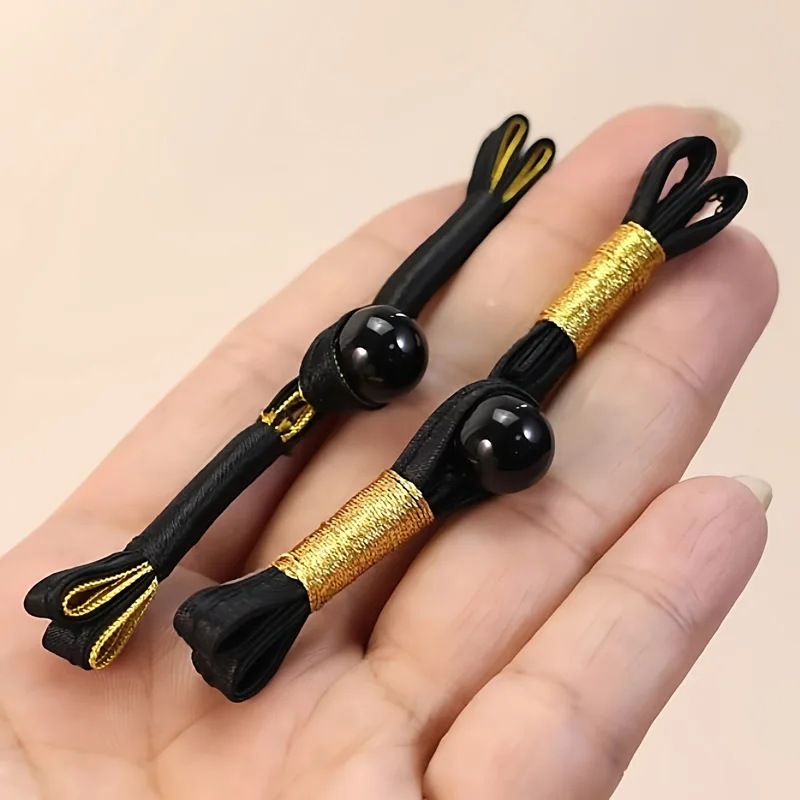
A Pankou is a fastening made entirely of cloth. A bias strip of fabric, or a satin cord, is sewn into a narrow tube and then coiled into a knob on one side of the opening and a loop on the other. No metal, bone or plastic core is used, so the closure bends with the garment, presses flat under a hand and stays the colour of the fabric. Chinese workshops have separate names for each piece of it, and those names are older than any English one.
| Part | What it is | Where it sits |
|---|---|---|
| Pankou | The complete cloth fastening | Along the front edge or the collar of a qipao, jacket or coat |
| Pan niu | The coiled knob on one side | Passes through the loop to close the opening |
| Niu pan | The loop that receives the knob | Sewn to the opposite edge |
| Loop flower | The coiled tails worked into a shape | Either side of the pair, turned into petals, butterflies or characters |
| Buttonhole | A hole cut and bound in the fabric itself | The same position, but a different construction, and not a Pankou |
Deng Xiangpeng, a vice-dean at the Beijing Institute of Fashion Technology’s school of fashion communication, set out that naming system in a People’s Daily essay on 6 September 2026. He divided the fastener into the coiled knob, the loop and the loop flower, then traced the object’s own line: early clothing closed with cords, and the knots that held it were read as bonds and pledges, an idea that resurfaced later in wedding customs; Tang-dynasty garments still closed mainly with ties, with cloth buttons appearing sporadically on armour and on close-fitting everyday wear; through the Song and Yuan the matched knob-and-loop pair settled into a plain bar shape.
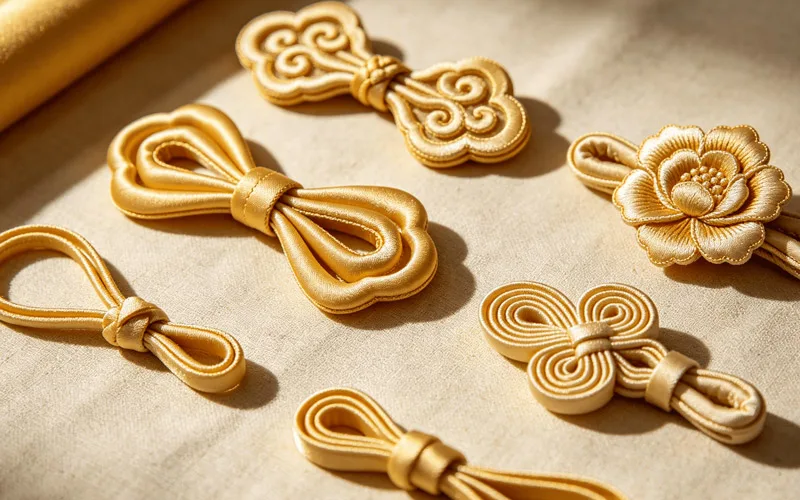
Under the Ming and Qing, flower buttons became a repertory of pipa, butterfly, plum, Ruyi and longevity-character shapes, and he read meanings into them: the straight bar as an upright bearing, the round pipa button as a well-stocked household, the butterfly as long life and a happy marriage. A fine button could take hours, sometimes days, through folding, pressing, coiling, winding and stitching. The full making sequence and the craft lineage behind those shapes are held on this site in the guide to the cheongsam button and in a closer study of Pankou buttons.
Why English Calls It a Frog Button
English did not take the word from Chinese clothing. A frog, in tailoring English, is any ornamental loop-and-button fastening, and frogging is the braided work that carries it; the form is best known from European hussar uniforms of the 17th to 19th centuries. Cloth buttons carried on a braid look close enough to the Chinese pair that English gave them the same name. Whether European frogging descends from the Chinese button has never been shown.
A side effect follows from the borrowed name. When the element is described only as a frog button, the reader loses the workshop vocabulary and the shape names that carry the meanings above. We covered one round of that argument earlier in 2026, when a sportswear brand’s frog-button collection drew a backlash for using the closure as a decorative accent while leaving the shapes unnamed. The objection there concerned the missing names, not the use of a Chinese closure by a European maker.
The Words China’s Own Standards Use
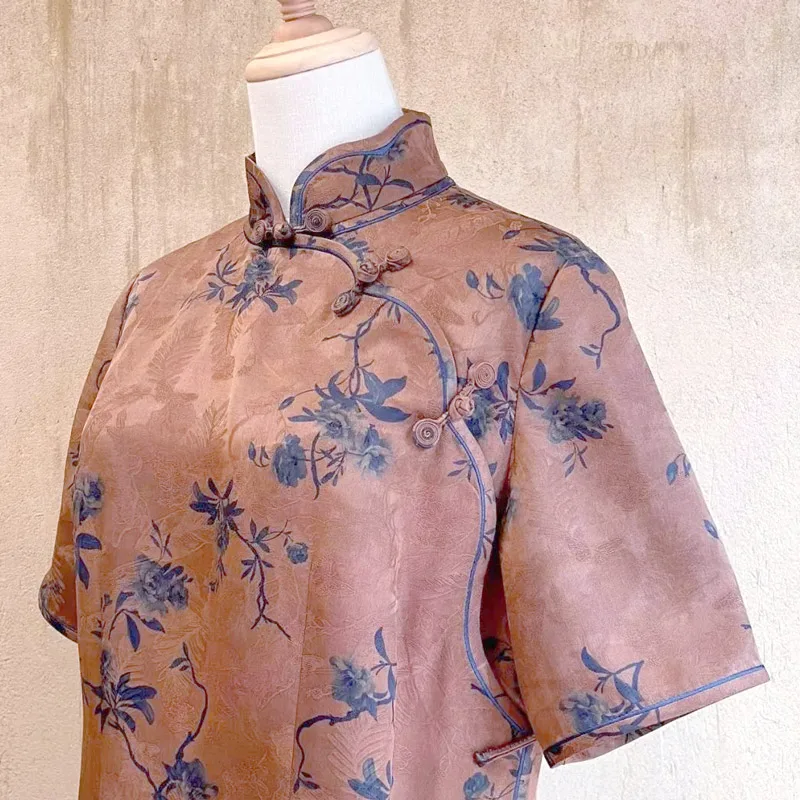
Where a product is standardised, the name stops being a matter of taste. China’s 2024 national standard for wushu taiji uniforms writes the element into its terminology and classification clauses rather than into marketing text. A taiji uniform for practice, performance or display is defined in the standard as a top made of a Chinese standing collar, an overall straight-tube sleeve and Pankou, worn with lantern trousers. The companion competition rules revised by the Chinese Wushu Association in 2024 likewise require competitors to wear the designated uniform and shoes. Once a term reaches that level, it has a name, an owner and a classification slot.
That standard did not arrive in an empty field. Jiaozuo Daily reported on 12 October 2026 that the taiji uniform has its own lineage. In Chenjiagou, the village treated as taiji’s birthplace, practitioners trained in coarse homespun jackets and trousers and tucked the long hem into the belt, the move the boxing manuals call Lan Zhayi. Through the late Qing and the republican years the training dress settled into a front-fastening jacket with single-bar cloth buttons and loose lantern trousers, though it never spread widely.
Chen Xiujun, who runs a martial-arts equipment company on Taihang Middle Road in Jiaozuo, told the paper that he has sold and made taiji clothing for 23 years, with a network covering dozens of cities. The earliest output, he said, was a front-buttoned practice jacket with a tightened cuff, unchanged between summer and winter except for the weight of the fabric, and the last ten years brought at least several hundred styles from his company alone. In September 2026 the sport’s associations issued a joint initiative setting out six directions for reforming taiji dress, among them a shared standard for segmented product lines covering competition, stage performance, master-apprentice ceremonies, daily training and urban casual wear.
A parallel history belongs to the standing collar, and this site holds both sides of it in a guide to the Mandarin collar and in how the Tang round-collar robe carried the collar abroad. The term the standard fixes and the term a shop window uses are not the same term, which is the whole difficulty.
How the Tang Suit Got Its Name
Borrowed names are not new in this wardrobe. Guo Songmin, writing on 5 October 2026, traced the Tang suit back to the Qing dynasty’s front-fastening magua, the riding coat that Eight Banners soldiers wore over a long robe because it freed the arms and made mounting easier. In the middle and late Qing it left the barracks and became mainstream ceremonial outerwear. In the republican period, Shanghai tailors stripped away the heavy trimming, simplified the cut, improved the fabric and kept the standing collar, the centre-front opening and the hand-sewn cloth buttons.
In 1929 the Nationalist government designated the long gown and the magua as formal national dress. At that point magua was the official term, while “Tang suit” was an overseas Chinese umbrella phrase that borrowed the Tang dynasty’s name for Chinese dress in general and corresponded to no dynasty’s cut. The decisive moment came at the 2001 APEC meeting in Shanghai, where designers built a modernised ceremonial jacket on the front-fastening magua, using contemporary three-dimensional cutting while keeping the cloth buttons and the standing collar. More than 40 proposals were on the table, and the name chosen for the finished garment was the overseas term already in circulation, picked because it was available and easy to explain abroad. The designer later said that “modern Chinese clothing” would have been more exact, and that the press had settled on Tang suit as shorthand.
How that borrowed name travelled commercially is recorded here in a guide to the Tang suit and in the case of a Tangzhuang label that took the form abroad.
When a Retailer Renames It a Fireman Clasp
A retailer’s own product page gives the clearest current example. Zara listed a short jacket as the FIREMAN CLASP DENIM JACKET. The description reads: unwashed cotton denim, a short cut with a firm handle that softens with wear, lapels, cuff buttons, patch pockets, pleats at the front, contrast stitching and a button placket, 100 per cent cotton. The garment closes with a cloth knob-and-loop fastening of the kind the trade names Pankou. The page does not say so.
“Fireman clasp” is not a neutral filler word. It belongs to the decorative loops and cords found on European hussar uniforms between the 17th and 19th centuries, the same tradition that gave English the word frog. Applied to a cloth button, it places the jacket in a European military line and leaves the Chinese one unnamed. What the fastener actually is, and how a qipao closes, is set out in a plain account of the qipao’s Pankou.
Three naming decisions, then, with three different owners:
| Decision | Who named it | Name that resulted |
|---|---|---|
| The closure and its parts | Chinese workshops, recorded by a design scholar in People’s Daily on 6 Sept 2026 | Pankou, with pan niu, niu pan and the loop flower |
| The component inside a product standard | China’s 2024 national standard for wushu taiji uniforms | Chinese standing collar, straight-tube sleeve, Pankou |
| The jacket on a shop page | A retailer’s product team | Fireman clasp denim jacket |
None of the three is a mistranslation. The first two are naming by the trade and by the state; the third is naming by a market that needed a word shoppers already understood. What the third does, though, is make the garment legible as European military detail and illegible as a Chinese closure, and the wording carries no route back to the workshops. Names are how a tradition is carried forward: a reader who never meets the word Pankou has no reason to look for the craft behind it, and a buyer who meets “fireman clasp” is told where the shop believes the idea came from.
- What is a Pankou? It is a Chinese cloth fastening made from a folded strip or cord, coiled into a knob on one side of an opening and a loop on the other. It is used on qipao, Tang-style jackets and traditional outerwear.
- Why is it called a frog button in English? Because ornamental loop-and-button fastenings on 17th to 19th century European hussar uniforms were already called frogs. The Chinese pair looks close enough to share the name; a descent from the Chinese button has never been demonstrated.
- Is a Pankou the same as a buttonhole? No. A buttonhole is cut and bound in the fabric itself, while a Pankou is a separate cloth loop set on the edge so that it stands out and takes the knob.
- Does any Chinese standard name the Pankou? Yes. The 2024 national standard for wushu taiji uniforms lists a Chinese standing collar, an overall straight-tube sleeve and Pankou among the elements that define the garment.
- What are the parts of a Pankou called? The coiled knob is pan niu, the receiving loop is niu pan, and the coiled tails worked into a decorative shape are the loop flower.