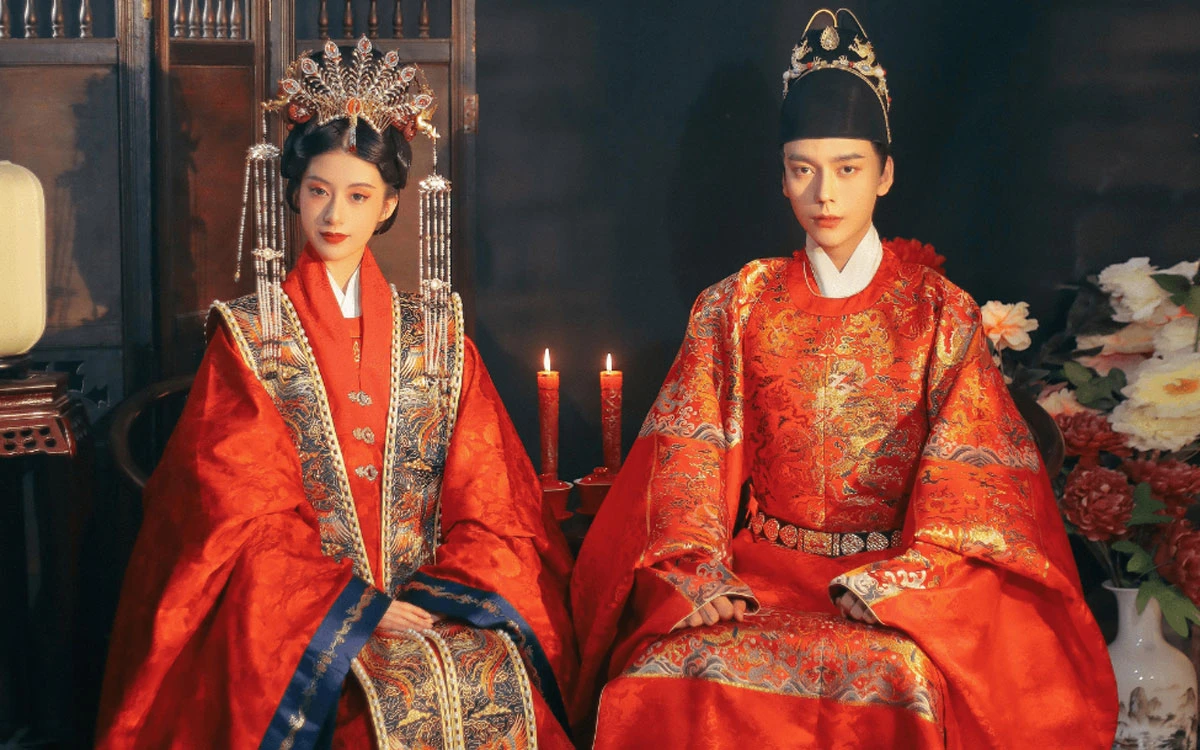
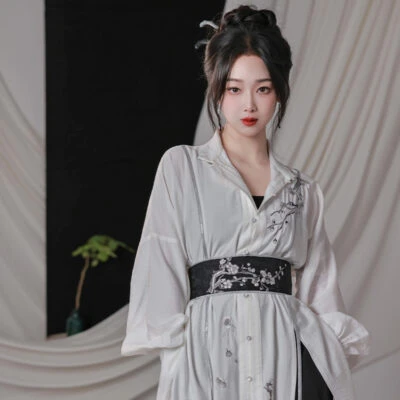
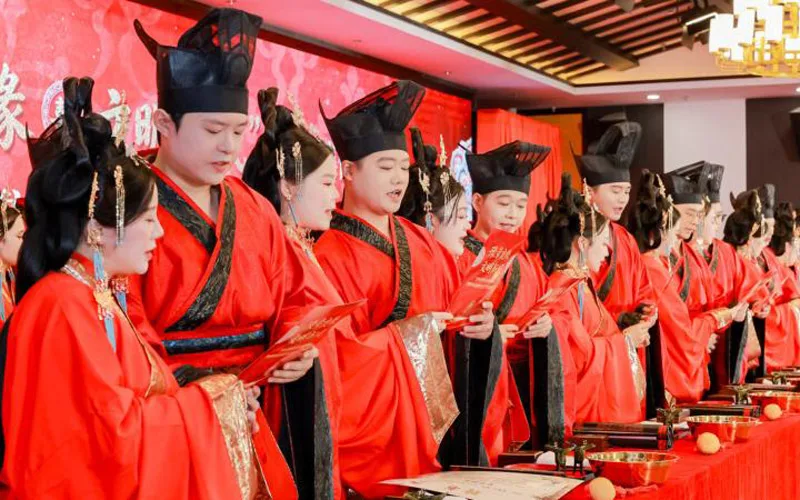
At 10:06 on 15 October, drum and wind music started in Anyi Ancient Village in Anyi County, under Nanchang, and 30 couples walked up onto the platform side by side. The event was the 2026 Nanchang collective wedding, organised by the city’s publicity department, civil affairs bureau and women’s federation, and paired with a touring programme of folk performances on changing wedding customs. The couples wore adapted Hanfu and took their vows in Han rites rather than in gowns and suits.
Weddings like this are usually judged on atmosphere. This one is more interesting for what it removed.
Three Rites Kept, the Rest Cut
The ceremony kept three steps and dropped everything else. First came the washing rite: each partner cleaned their hands with water, a gesture for a clear mind and a clean intent. Then the shared meal, one plate of pastries and a pair of nuptial cups on a single table, the couple feeding each other and drinking together, the shared food standing for shared fortune and the cup for a shared crossing.
Bows came last. All 30 couples bowed to heaven and earth, then to the soil of Yuzhang and to their parents, then to each other, facing and inclining in turn. They closed by reciting a short oath written for the occasion, opening with the old name of the city and ending on a promise of a hundred years together.
Cutting the programme down is the design decision worth noting. A collective wedding is easy to make loud and hard to make weighty, and the three steps that survived happen to preserve the ethical sequence intact: purification, shared substance, sworn word. The ritual frame is still there. The production burden is not.
What the Couples Signed Up For
Hu Jianfeng, a delegate of the third national civilised family selection, served as the couple’s witness and spoke on mutual respect, on caring for elders and on keeping a household’s habits. Three earlier delegates, Xiao Lifen, Ling Jihe and others from the first two rounds of the same selection, handed over commemorative gifts that included a jade disc and an honorary-villager certificate. The Anyi Ancient Village scenic area added its own offer: free entry for the couples and their children for life.
Huang Hong, speaking for the newlyweds, said the point was to answer a public call rather than to save money. “We signed up because of the push for simpler weddings,” she said. “Compared with overspending and comparing with each other, a simple and solemn ceremony means more. What matters is not how lavish the day is but that the life afterwards is solid.”
The couples were recruited publicly and volunteered; ahead of the event, the Anyi county publicity department issued an open letter against high bride prices, covering five areas from simple ceremonies and restrained banquets to family education and officials setting an example.
Village Rules Behind the Ceremony
What makes the format repeatable in Nanchang is not the stage but the machinery underneath it. Across the city, 1,153 administrative villages have revised their village covenants, and 2,137 red-and-white councils operate on a standing basis to handle weddings and funerals. Volunteer teams attached to those councils visit households that overspend, pairing persuasion with deductions from a points system. Covenants set the rules, councils run the day, visiting teams handle refusals.
Touring performances followed the ceremony and drew on the same material. A song-and-dance number reworked a real story of a Nanchang couple returning from Canada and collecting the bride on a red tram. A short play adapted a village rule from Zhanggong Town in Jinxian County, where the party branch fixed a ceiling and guests brought two yuan to a banquet. A nationally listed work song from Tangnan was re-scored with new lyrics, and a dance closed the programme, with quiz rounds between acts.
For anyone watching Chinese wedding dress, the useful lesson is not that Hanfu looked good on a village platform. It is that adapted Hanfu carries a ready-made ritual vocabulary. There is a documented washing step, a vessel for the shared cup, named recipients for each bow. Nothing has to be invented; it only has to be performed correctly, and a collective ceremony of 30 couples is a demanding test of whether a format can be performed correctly at scale.