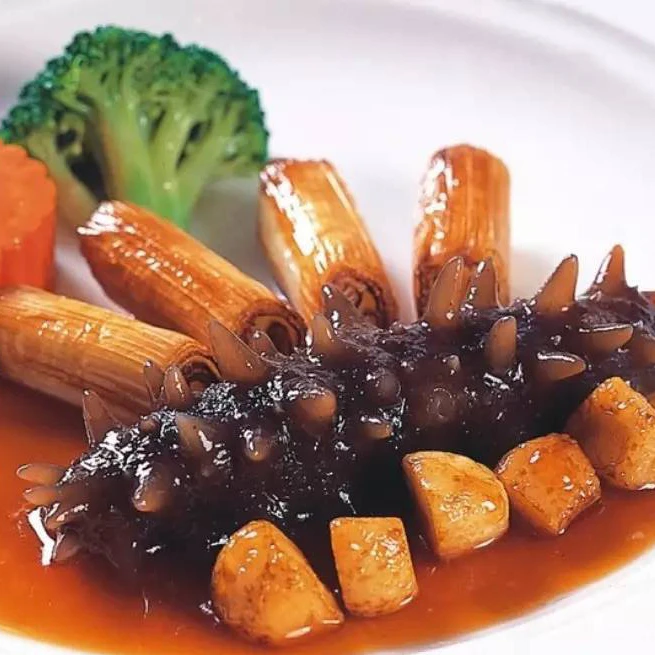
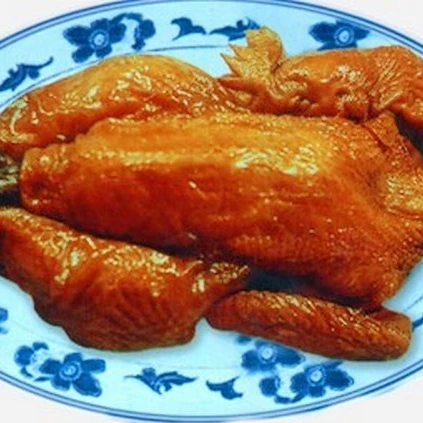
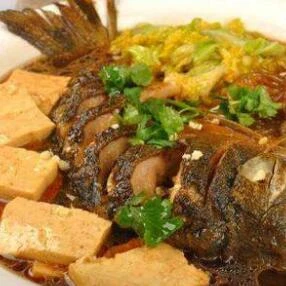
Tangshan Hongyan Restaurant published a group standard for the making of its ten classic dishes on October 9, the day the kitchen marked eighty-nine years since it opened. The document carries the number T/HHCA 0001-2026 and, according to the Hebei Restaurant and Catering Industry Association, fills a gap that had stood for decades: the classic dishes of eastern Hebei’s coastal cuisine had never been written down as one production standard.
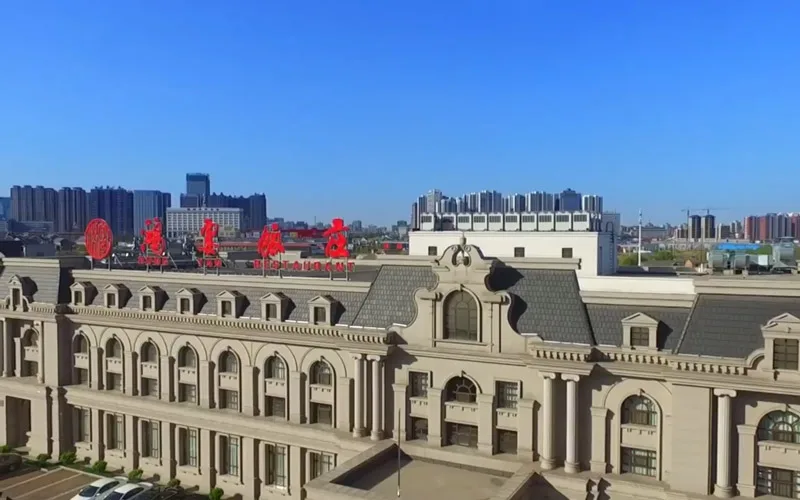
One Standard for Ten Classic Dishes
Ten classic dishes fall under it: braised pork knuckle, tile-cut fish in sauce, white jade chicken breast, quick-fried pork kidney, prawn slices cut in the orchid style, braised squid, pan-fried tomato, braised turtle skirt, winter bamboo shoots braised in the southern manner, and sesame fried fruit. Each is a slow dish built on technique rather than on expensive ingredients, and several have been on the menu for close to ninety years.
The restaurant behind them was founded in 1937. It holds China Time-honoured Brand status from the Ministry of Commerce, a provincial intangible heritage listing, and a national platinum five-diamond restaurant rating. Across five generations of cooks the kitchen has built a system of more than thirty categories and over six hundred dishes, of which more than seventy have taken gold medals at national, provincial and municipal cooking competitions, and more than forty have been named Chinese famous dishes, Chinese famous snacks or Hebei famous dishes and pastries. Twenty-three are on the “Hebei cuisine, Chongli menu”.
What the Standard Fixes
Writing a recipe down is not the same as writing a standard down, and the document goes further than a list of ingredients. It sets out how the raw materials are chosen, the ratios between them, the knife work, the control of heat, the sequence of operations and the critical points in the process, and it defines the colour, shape, taste and aroma the finished plate has to reach.
Its purpose is to convert a craft that moved by word of mouth into something that can be copied, taught, tested and handed on. Lü Yihua, party secretary of the Hebei Restaurant and Catering Industry Association, said that traditional cooking has mostly passed from master to apprentice orally, with no unified written standard, so the quality of a dish has depended on whoever was standing at the stove. That makes technique unstable and output uneven, he said, and it leaves both the craft and the training of new cooks exposed. With the association guiding the project, Hongyan led the drafting alongside provincial and municipal associations and industry experts through several months of sorting material, discussion, revision and public comment, before technical review and platform publication cleared it for the whole industry.
Where the Kitchen Goes Next
Zhang Yulan, the chairwoman of Tangshan Hongyan Restaurant, put it that the release is a starting point rather than a finish line. “The publication of the group standard is not the end but a new beginning for an old brand’s inheritance,” she said.
She added that the kitchen intends to use the standard as the basis for quality control and for the systematic training of the next generation of cooks, and to widen its exchanges with the rest of the trade, working toward a Hebei cuisine that is standardised, branded and run as an industry rather than as a collection of individual kitchens.
The launch was hosted by the Hebei Restaurant and Catering Industry Association and undertaken by Hongyan, with Tangshan’s restaurant and catering association and its cooking association as co-organisers. Officials from the Hebei Department of Commerce, the provincial association, the Tangshan commerce bureau and the Tangshan culture, radio, television and tourism bureau attended and spoke, and catering associations and companies from across the province sent representatives.