Article
Search results:
-
Ne Zha in Guangzhou Museums
As one of Chinese mythology's most iconic figures, Ne Zha—the fearless boy deity wielding a Fire-tipped Spear and Cosmic Ring—has transcended centuries through folklore, literature, and modern media. Beyond today's cinematic adaptations, Guangzhou's museums safeguard a treasure trove of artifacts that reveal how this cultural icon captivated imaginations long before the age of blockbusters. From ancient porcelain to architectural masterpieces, Ne Zha's legacy intertwines with Guangzhou's history as a hub of art, trade, and storytelling. Let's explore his enduring presence across the city's collections. Ne Zha Sails Overseas During the 18th and 19th centuries, Guangzhou's bustling port fueled a golden age of ceramic exports. Among these treasures, a Qing Dynasty Fencai (粉彩) "Investiture of the Gods" (封神演义) vase at the Guangzhou Museum stands out. Painted with vivid scenes from the Ming-era epic, the vase immortalizes Ne Zha's battle against the Dragon King—a tale later popularized by modern films. This artifact underscores how Guangzhou's artisans transformed literary classics into globally traded art. Export porcelain of this era often featured narratives from Romance of the Three Kingdoms or Journey to the West, but Ne Zha's inclusion highlights his timeless resonance. Centuries before animation studios reimagined him, his legend traveled to Europe and… -
8 Perfect Gift Choices for Chinese Culture Lovers
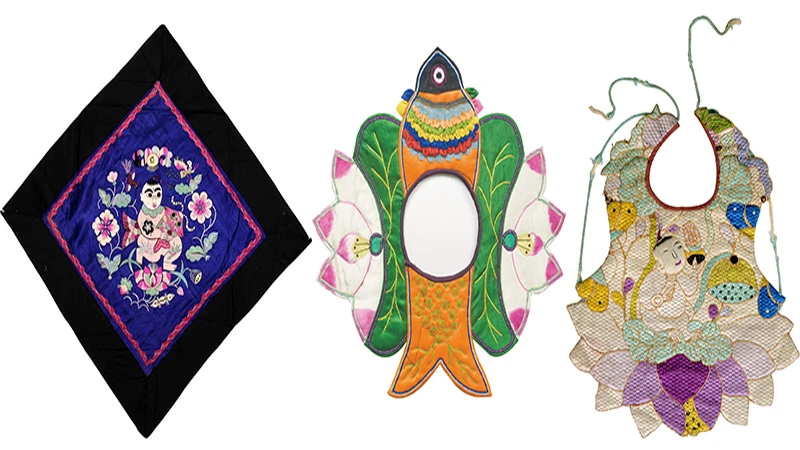
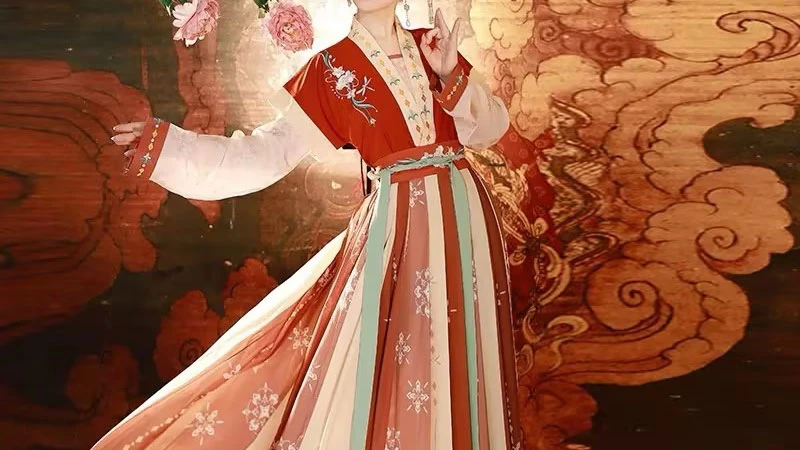
Do you have Chinese friends or friends who like traditional Chinese culture? When they need gifts for birthdays or special holidays, do you worry about what gifts to give to make them considerate? As we all know, traditional Chinese culture is extensive and profound. The influence of Chinese culture is also deepening around the world. Various traditional skills deeply attract everyone's attention. You don't have to work hard to find his preferences, these gift options are very suitable for her/him! Gifts for clothing matching 1. Hanfu or cheongsam: For friends who take a great interest in ancient Chinese clothes, choosing an exquisite Hanfu or cheongsam is not only a unique gift but also access to understanding Chinese culture. And the clothing of different dynasties is even more dazzling and unique whether it’s in the Tang Dynasty or Song Dynasty. 2. Custom Patches: Custom patches with ancient elements are also a wonderful choice. For friends or fans who love Chinese culture deeply, choosing exquisite embroidered patches as gifts can not only be a special gift for most festivals but also a good way for Chinese culture lovers to decorate beautiful clothes. Customized embroidered patches are of various styles and types, suitable… -
The Evolution of the Wei Shang in Chinese Fashion
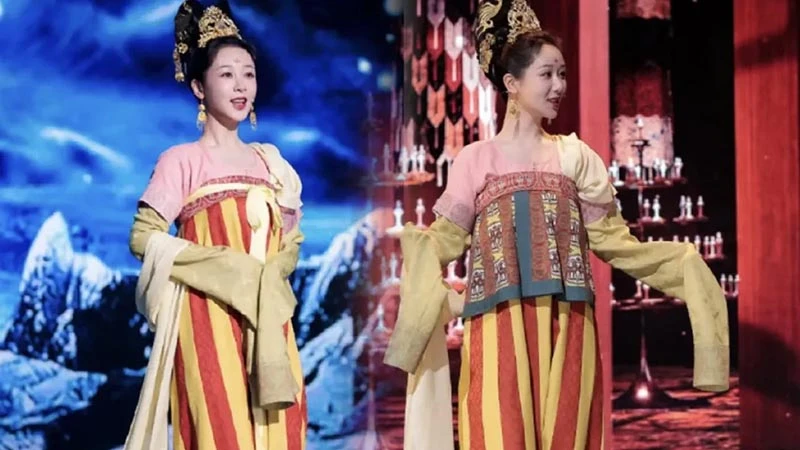
In the recently aired historical drama Flourished Peony (国色芳华), eagle-eyed viewers noticed something peculiar about Dong Jie’s (董洁) character, Feng Xiaoyi (冯小姨): she wore a curious piece of fabric draped across her chest, resembling what modern audiences might jokingly call a “butt curtain.” This accessory, however, is far from a mere costume quirk—it’s a revival of the Wei Shang (围裳), a centuries-old fashion staple from the Tang Dynasty (618–907 CE). What Is a Wei Shang? The Wei Shang, often referred to as a “waist skirt” or yao qun (腰裙), is a versatile garment that wraps around the waist or hips. Historically, it served both decorative and functional purposes. According to The Dictionary of Ancient Chinese Clothing, the Wei Shang was a short skirt worn around the waist, while scholars like Ruan Li (阮立) from Shanghai University describe it as a wide band tied at the hips, often secured with decorative knots or beads. In simpler terms, the Wei Shang is a layered piece of fabric that adds depth and structure to an outfit. Its design can range from a single piece of cloth to multiple panels stitched together, often pleated or embroidered for added flair. From Waist to Chest: A… -

The Multifaceted Role of Round Fans in Chinese History
When we think of round fans, or tuanshan (团扇), images of graceful women in flowing robes often come to mind. Yet, the origins of this iconic accessory tell a different story—one where men, not women, were the primary users. From its inception as a tool of etiquette to its evolution into a symbol of feminine beauty, the round fan’s journey through Chinese history is as rich and layered as the silk it was often made from. A Man’s World: The Early Days of Round Fans Contrary to popular belief, round fans were not always associated with women. During the Han Dynasty (206 BCE–220 CE), these fans emerged as a practical accessory for men, particularly among scholars and aristocrats. Known as gongshan (宫扇) or “palace fans,” they were initially used to shield one’s face—a gesture of modesty or social avoidance. Historical records, such as the Book of Han (《汉书》), describe how officials used fans to avoid awkward encounters, a practice humorously akin to modern-day “social distancing.” By the Tang Dynasty (618–907 CE), round fans had become a staple of courtly life. Their designs evolved from simple bamboo frames to intricate works of art, often adorned with calligraphy, paintings, or delicate embroidery.… -
The 1500-Year-Old Striped Skirts That Rival Modern Fashion
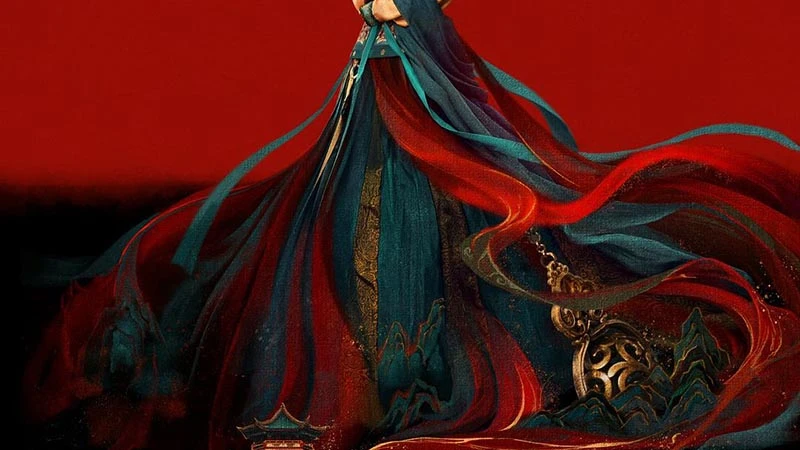
In the bustling streets of modern cities, striped skirts have become a staple of contemporary wardrobes. But what if we told you this trend was mastered—and arguably perfected—over 1,500 years ago in China? Recent archaeological discoveries and historical dramas like Kill My Sins (掌心) have reignited fascination with ancient Chinese striped skirts, revealing a sophisticated fashion legacy that continues to inspire today. The Striped Skirt Revolution: A 7th-Century Innovation Contrary to popular belief, striped skirts were not born on Parisian runways or New York streets. The earliest examples emerged during China’s Han Dynasty (206 BCE–220 CE) and evolved into a cultural phenomenon by the Tang Dynasty (618–907 CE). These were no ordinary garments: Engineering Elegance: Unlike modern printed fabrics, Tang-era striped skirts (poqun, 破裙) were painstakingly assembled from narrow, hand-dyed fabric strips—sometimes as many as 90 panels stitched together. Optical Illusions: Ancient tailors strategically used vertical stripes and color contrasts (like black-white or red-blue) to create slimming silhouettes, predating modern "bodycon" aesthetics by over a millennium. Functional Fashion: Excavated artifacts from tombs like Bi Jiatan Huahai (毕家滩花海墓) reveal skirts with pleats and adjustable waistbands, blending artistry with practicality. How Tang Women Wore Stripes The Tang Dynasty’s striped skirt craze reached… -

How Hanfu’s Bold Color Can Transform Your Wardrobe
As spring breathes life into nature, fashion enthusiasts seek fresh ways to mirror the season’s vibrancy. While pastels and florals dominate Western spring collections, a centuries-old Chinese tradition offers an audacious alternative: Hanfu, the traditional attire of the Han Chinese. With its fearless embrace of color, Hanfu challenges modern fashion’s rigid rules—proving that spring’s exuberance can be captured not through restraint, but through joyful abundance. Part 1: Hanfu’s Chromatic Rebellion In recent years, my journey into Hanfu evolved from buying curated sets to DIY creations. What stunned me most was its radical approach to color. Combinations deemed “clashing” in modern fashion—think pink paired with chartreuse or deep green against magenta—somehow harmonize effortlessly in Hanfu. Even seemingly discordant hues like lavender and tangerine or sky blue and neon orange coalesce into striking ensembles. These designs defy the “three-color rule” (a Western styling mantra) not through chaos but through calculated artistry. The secret lies in Hanfu’s structural DNA: loose, planar cuts allow hues to flow freely across uninterrupted fabric planes, while layered skirts and billowing sleeves create a kinetic harmony that feels both ancient and avant-garde. Part 2: Why Modern Fashion Fears Color—And Hanfu Doesn’t The “three-color rule” exists for practicality: modern… -
The Role of Hanfu in Chinese Literature and Classical Texts
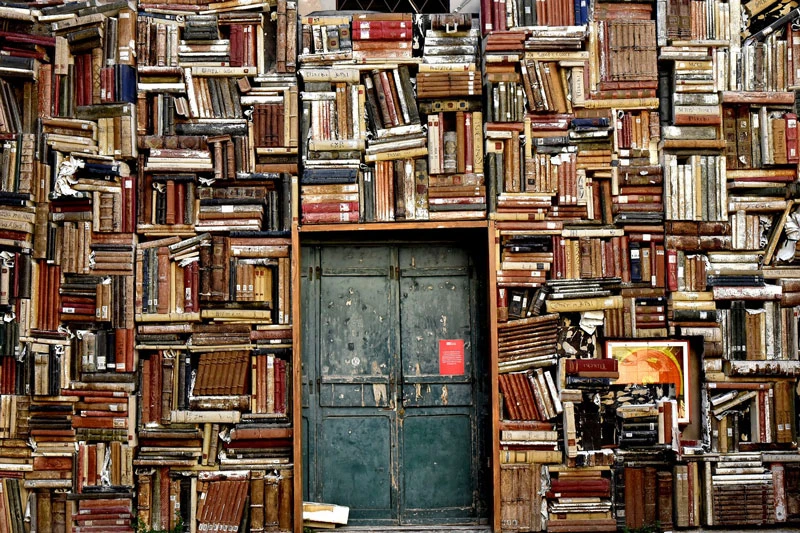
Hanfu, the traditional attire of the Han Chinese, is more than just a piece of clothing—it is a symbol of culture, identity, and history. Throughout Chinese history, literature and classical texts have played a crucial role in shaping and preserving the significance of Hanfu. From ancient poetry to Confucian philosophy, Hanfu is often depicted as a marker of virtue, status, and national pride. But how exactly has Hanfu influenced Chinese literature, and what role does it play in classical texts? Let’s dive into the intricate relationship between Hanfu and Chinese literary traditions. The Symbolism of Hanfu in Classical Chinese Literature Hanfu is not just a form of dress—it is a representation of Confucian ideals, social order, and aesthetics. In classical Chinese literature, Hanfu is often used as a symbol to convey deeper meanings about a character’s identity, social status, and moral values. Hanfu as a Reflection of Status and Virtue In many ancient Chinese texts, clothing is an essential marker of a person’s role in society. The “Book of Rites” (礼记), one of the Confucian classics, describes in detail the appropriate attire for different social classes and occasions. Hanfu was more than fashion—it was a reflection of an individual's virtue… -
How did the Hanfu change per dynasties?
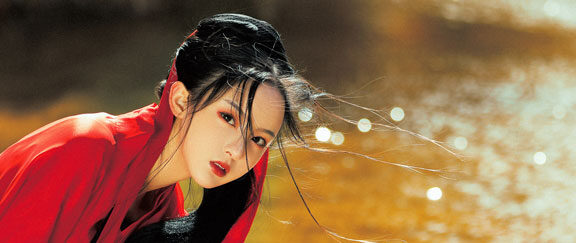
The Hanfu worn in different dynasties, though similar, ranged in its own characteristics based on the dynasty. The article I am writing will hopefully help you understand the similarities and differences between clothing and hanfu throughout the timeline of dynasties. I will also show you how it has changed compared to modern hanfu. Xia (Hsia) Dynasty ca. 2100-1600 BCE Shang Dynasty ca. 1600-1050 BCE Zhou (Chou, pronounced "Joe") Dynasty 3.1 Western Zhou (ca. 1046-771 BCE) 3.2 Eastern Zhou (ca. 771-256 BCE) Spring and Autumn Period (770-ca 475 BCE) Confucius (ca. 551-479 BCE) Warring States Period (ca. 475-221 BCE) 221-206 BCE Qin (Ch'in, pronounced "chin") Dynasty/ Capital: Chang'an, present-day Xian Qin Shihuangdi dies, 210 BCE 206 BCE-220 CE Han Dynasty Western/Former Han (206 BCE-9 CE) Capital: Chang'an (present-day Xian) Confucianism officially established as basis for Chinese state by Han Wudi (r. 141-86 BCE) Eastern/Later Han (25-220 CE) Capital: Luoyang 220-589 CE Six Dynasties Period Three Kingdoms (220-265 CE) Jin Dynasty (265-420 CE) Period of the Northern and Southern Dynasties (386-589 CE) Period of disunity and instability following the fall of the Han; Buddhism introduced to China Cao Wei, Shu Han, Dong Wu 581-618 CE Sui (pronounced "sway") Dynasty Capital: Chang'an (present-day Xian)… -
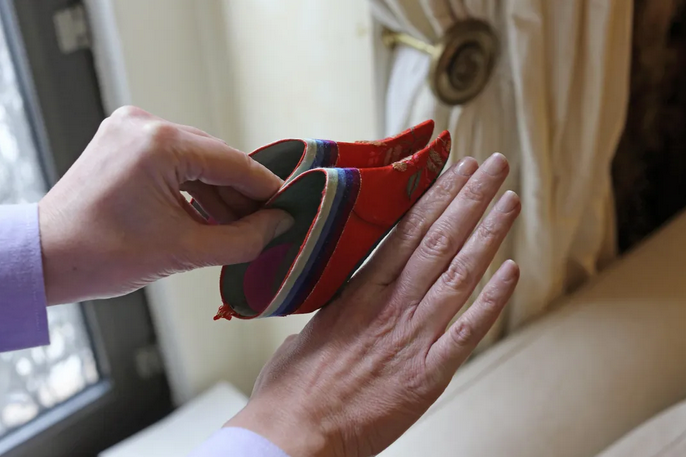
Footbinding - The High Price of Beauty
Foot binding (simplified Chinese: 缠足; traditional Chinese: 纏足) was the Chinese custom of breaking and tightly binding the feet of young girls to change their shape and size for aesthetic purposes. Feet altered by footbinding were known as lotus feet and the shoes made for them were known as lotus shoes. It has been estimated that by the 19th century 40–50% of all Chinese women may have had bound feet, rising to almost 100% among upper-class Han Chinese women. The lotus flower, a symbolically significant flower across Eastern countries and religions, is associated with beauty, enlightenment and rebirth. Every morning the lotus flower emerges elegant and pure from muddy waters. In Buddhism, the white lotus flower is symbolic of Bodhi, or, being awakened. Thus the lotus is also a symbol of desire and fertility. History: Footbinding was an extremely painful and debilitating cultural practice, existing in China from the 10th century until the establishment of the People’s Republic of China in 1949. First practice was documented in the Southern T'ang Dynasty (937-956 AD), although some poetry from the Han Dynasty (206 BC-AD 220) suggests that small feet were culturally preferred before documentation of the custom. The exact origin of… -
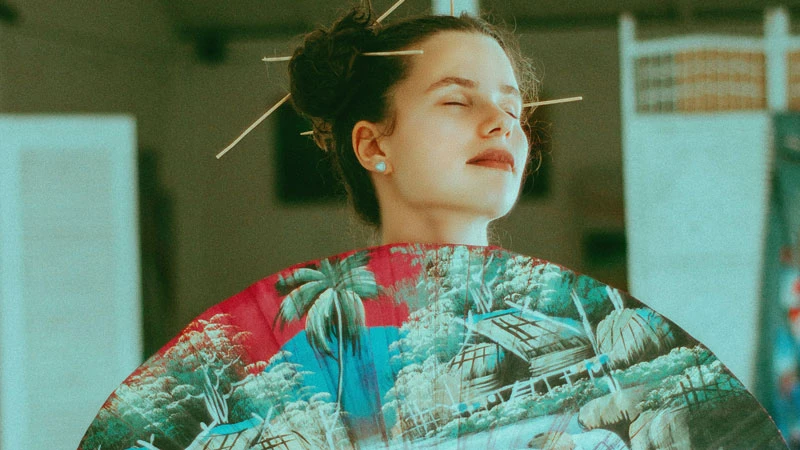
From Tradition to Trend: Evolution of Chinese Fashion
Fashion is a reflection of history, culture, and identity, evolving alongside society. Chinese fashion, in particular, has undergone a remarkable transformation, shifting from traditional attire to modern, globally influenced styles. This evolution is deeply connected to social changes, economic growth, and cultural exchanges with the world. Understanding how Chinese fashion has changed over time provides valuable insights for students interested in history, art, and design. For centuries, China’s clothing styles were shaped by dynastic rules, Confucian values, and regional influences. The Hanfu, Tang suit, and Qipao symbolize different eras, each with unique materials, patterns, and meanings. These garments carried social significance, often indicating class, status, and occupation. However, as China opened its doors to modernization and globalization, traditional clothing slowly gave way to contemporary designs influenced by Western trends. Today, fashion in China blends tradition with innovation, creating styles that appeal to both young students and professionals. The rise of street fashion, sustainable clothing, and high-end Chinese designers has positioned China as a fashion powerhouse. Many students now explore this transformation in college, studying fashion history, design, and business as part of their assignments. This shift not only reflects aesthetic changes but also highlights the deeper impact of culture on… -
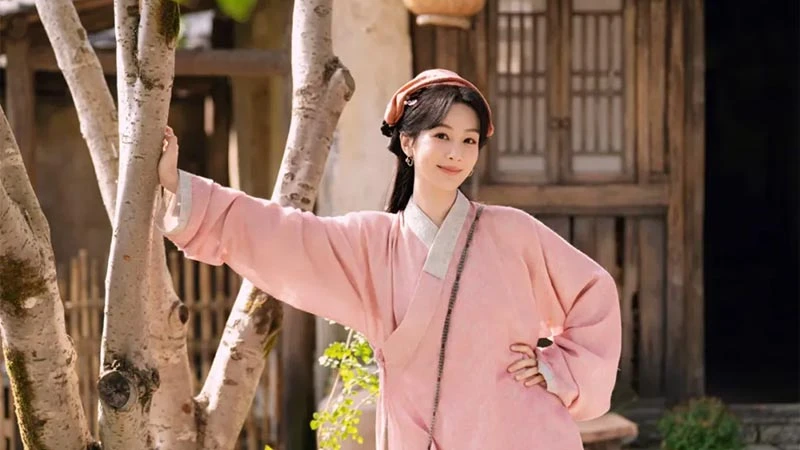
Yang Zi Stuns in Ming Dynasty-Inspired Hanfu
Chinese actress Yang Zi (杨紫), known for her versatile roles in television dramas, has once again captured the public’s attention—this time, not for her acting, but for her impeccable fashion sense. Recently, the star shared photos of herself dressed in Hanfu, traditional Chinese clothing, to celebrate the Lantern Festival. The images, which quickly went viral, showcased Yang Zi in two stunning Ming Dynasty-inspired outfits, sparking discussions about the modern revival of Hanfu and its place in everyday fashion. A Nod to Ming Dynasty Elegance Yang Zi’s Hanfu choices are rooted in the Ming Dynasty (1368–1644), a period known for its rich cultural heritage and distinctive fashion. The two outfits she wore are variations of aoqun (袄裙), a traditional style consisting of a top (ao) and a skirt (qun). The first ensemble features a soft pink ao with a crossed collar, paired with a gray pleated skirt. The second look is a refreshing green ao with a front-opening design, layered over a subtle red undergarment, creating a harmonious yet striking color contrast. What makes Yang Zi’s outfits stand out is their accessibility. Unlike the elaborate Hanfu often seen in historical dramas, her choices are tailored for modern wear. The muted tones—pink,… -
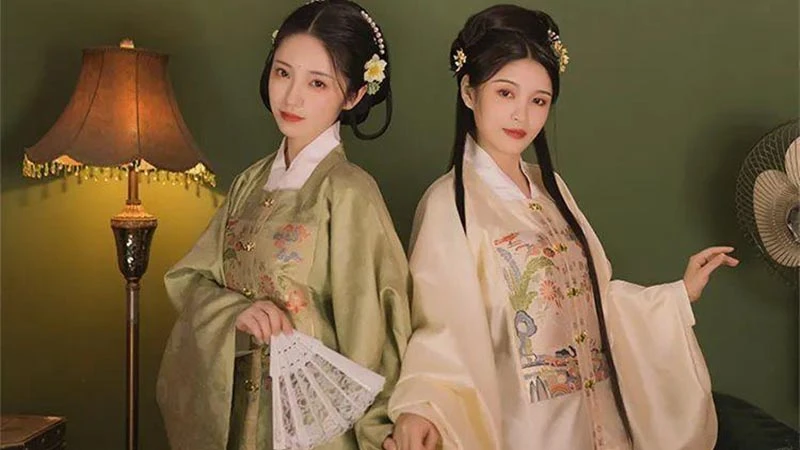
Xi'an's Hanfu: Youth Embrace Ancient Chinese Cultural Aesthetics
The vibrant city of Xi'an, historically known as the cradle of Chinese civilization, has witnessed a cultural renaissance of sorts. In recent years, the streets and landmarks of this ancient city have become a living museum of traditional Chinese fashion—particularly Hanfu, the traditional clothing that dates back to the Han Dynasty. What was once considered an artifact of history has now made a bold return to the streets, worn by young people in daily life and by tourists looking to engage with Chinese heritage in a deeply immersive way. This resurgence has sparked interest worldwide, making Xi'an one of China's leading cultural hubs. In this article, we delve into the multifaceted role of Hanfu in Xi'an, its relationship to cultural confidence, and the broader implications for China's cultural identity today. Xi'an, known as the ancient capital for over 13 dynasties, is a city where history and modernity collide. For thousands of years, the city has been a center of political, cultural, and economic power in China. The Han and Tang dynasties, in particular, left an indelible mark on the city’s legacy, contributing to an atmosphere filled with ancient cultural relics and awe-inspiring architectural wonders. With the rise of Hanfu,… -
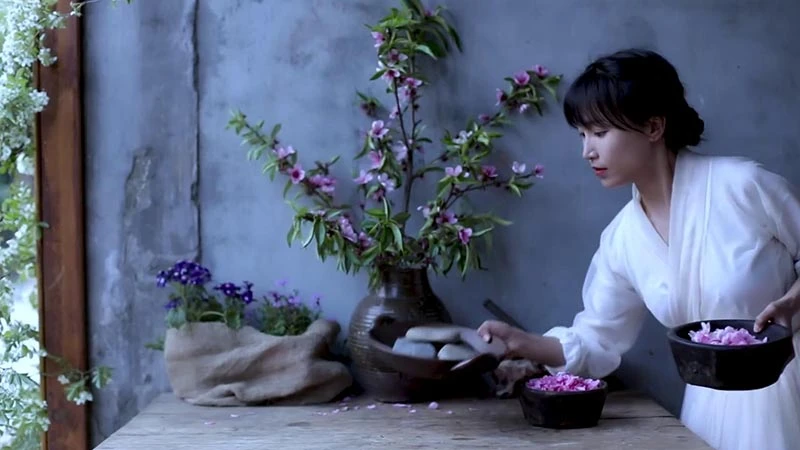
Li Ziqi Wears Hu Bugui’s Viral Hanfu
A Fortuitous Spotlight When Henan TV released its Chinese New Year Gala teaser on January 15th, a particular moment sparked excitement across social media. Internet sensation Li Ziqi (李子柒) appeared in a dazzling red modified Hanfu, holding a lion lantern, exuding an ethereal beauty. Astute fans soon connected her stunning outfit to a popular design sold on an e-commerce platform—a creation by Hu Bugui (胡不归), a rising star in Hanfu design. Hu, both the shop owner and designer, hadn’t anticipated this moment of fame. “It was a complete surprise,” she admitted in an interview. “We never collaborated with Li Ziqi, but seeing her wear my design felt surreal.” Within hours, her store was inundated with inquiries, with buyers scrambling to own what was now dubbed the "Li Ziqi Hanfu." The Story Behind the Design The Hanfu in question, a three-piece modified Ming-style ensemble named Yu Nian (余年), has been one of Hu’s bestsellers. Priced at around 1,400 RMB, it features a red jacket inspired by palace walls, a high-necked blouse, and a horse-face skirt embroidered with golden characters reading “岁岁长安皆有所盼” (Hopes for everlasting peace and prosperity). Hu designed it three years ago with the theme of New Year festivities in… -
Hanfu Blogger Shares Cultural Exchange Journey
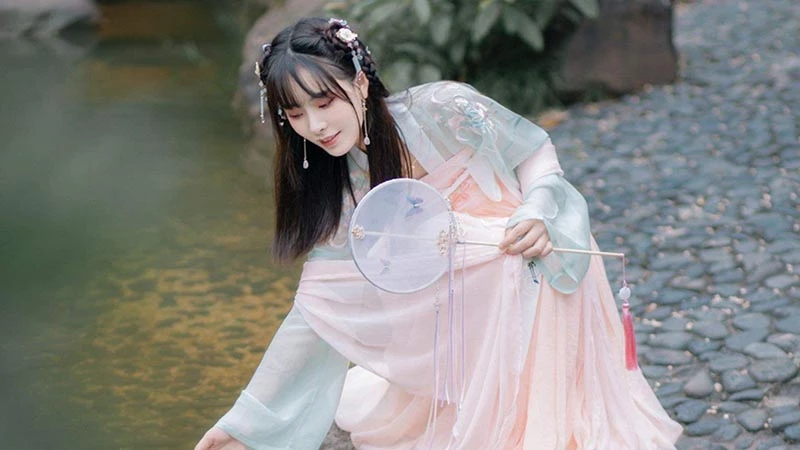
In recent years, the ancient beauty of Hanfu, the traditional attire of China, has transcended its niche roots to become a global sensation. With hashtags like “Sharing the Beauty of Hanfu with the World” trending across social media, Hanfu has emerged as a symbol of cultural pride and a bridge between history and modernity. This revival is fueled by passionate advocates, like influencer Zhou Sisi (周思思) better known as “Si Miao (思喵) hose journey into the world of Hanfu exemplifies the blend of history, art, and personal expression fueling this movement. Zhou Sisi, a renowned Hanfu blogger with over 400,000 followers across platforms, recalls her first brush with Hanfu as a fascination with its aesthetic appeal. However, her interest deepened as she delved into the history behind these garments. “When I first started wearing Hanfu, I only admired its beauty,” Zhou explained. “But as I explored its historical roots, I became captivated by the eras it represented.” Zhou’s preferred styles include Tang and Ming dynasty recreations, each offering unique insights into the people and culture of those periods. For instance, Tang dynasty Hanfu, with its flowing and inclusive designs, reflects the openness and grandeur of one of China's most cosmopolitan… -
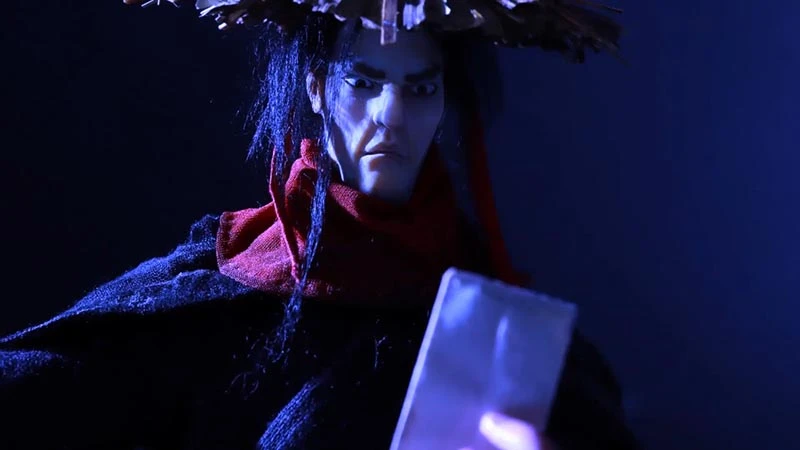
Lantern Blade: A Dark Fantasy Revival of Stop-Motion Anime
For a generation raised on the sleek aesthetics of 2D hand-drawn and 3D CGI animation, stop-motion might seem like an antiquated relic of the past. Unlike its counterparts, stop-motion is built on tangible artistry: puppets, clay figures, and mixed materials manipulated frame by painstaking frame. The result? A distinctive, textured realism unmatched by digital techniques. In China, the legacy of stop-motion animation once flourished with studios like Shanghai Animation Film Studio producing classics such as Magic Brush Ma Liang (神笔马良) and The Story of Avanti (阿凡提的故事). However, since the rise of CGI in the 1980s, stop-motion animation has become a niche art form globally, celebrated only by enthusiasts or explored in experimental shorts. Breaking this lull, Tencent Video’s Lantern Blade (灯笼刀) reintroduces audiences to the magic of stop-motion animation, this time through a gritty, action-packed lens. Adapting the cult-favorite comic of the same name, Lantern Blade blends martial arts, cosmic horror, and Western-esque atmospheres into a striking 67-minute trilogy. A Blade that Glows in the Dark Lantern Blade opens in a shadowy, mythical world steeped in Lovecraftian lore. The story revolves around an enigmatic warrior named Lantern Blade, whose titular weapon, a lantern-clad sword, glows in the presence of undead… -

Feng Luo Jiang Hu: A Love Beyond Worlds
Chapter One: When Fiction Becomes Reality Imagine waking up one day and finding yourself trapped in a world you created—a world of danger, deception, and romance. That’s the fate of Meng Xiaotang (孟小棠), a popular web novelist, who accidentally gets pulled into the pages of her own martial arts story. Played by Ke Ying, Meng Xiaotang’s adventure begins when a demanding editor rejects her countless revisions for the male lead of her latest novel. Frustrated, she deletes the character “Ye Wuchen (叶无尘),” the story’s chivalrous hero. This simple act, however, triggers an unexpected twist: Meng is sucked into her book’s universe, becoming the infamous villainess, Feng Nanxi (凤南汐). Feng Nanxi is no ordinary antagonist; she’s a femme fatale wielding the unparalleled yet elusive “Cloud Absorption Technique.” Unfortunately for Meng, she cannot summon its power. Worse still, her character is hunted by everyone in the martial arts world. As the clock ticks and danger looms, she must navigate her fictional universe in search of a way back home. Chapter Two: Villains, Heroes, and Intrigue In a bid to strengthen her odds, Feng Nanxi embarks on a peculiar mission—choosing a “male companion” from a lineup of eligible candidates. By sheer accident, she… -

A Special Photo Event for Elders
In the heart of Changning, an endearing event brought together the elderly residents of Dongbang Residential Area and volunteers from the Bank of Communications Changning Branch for a unique experience. The "Flourishing Flowers" themed photo session offered a chance to relive fond memories and create new ones, as 50 elderly residents posed for elegant portraits in traditional Chinese attire. The event, which captured moments of joy and nostalgia, brought much-needed warmth and happiness to the lives of the elderly, highlighting the importance of community, memory, and love. A Day of Glamour and Laughter The Dongbang community center transformed into a glamorous photo studio for the day, as volunteers and participants created a festive atmosphere with vibrant lanterns and colorful streamers. The air was filled with the cheerful buzz of conversations and the hum of preparations, with volunteers working hard to ensure that the elderly residents felt pampered and appreciated. Some elderly residents wore their cherished qipaos and tangzhuang (唐装, traditional Chinese attire), while others relied on the kindness of neighbors who lent them their clothes and accessories for the occasion. One of the most touching moments came when 76-year-old Mr. Chen and his 69-year-old wife posed for a “wedding photo”… -
Breathing New Life into Wei-Jin Hanfu
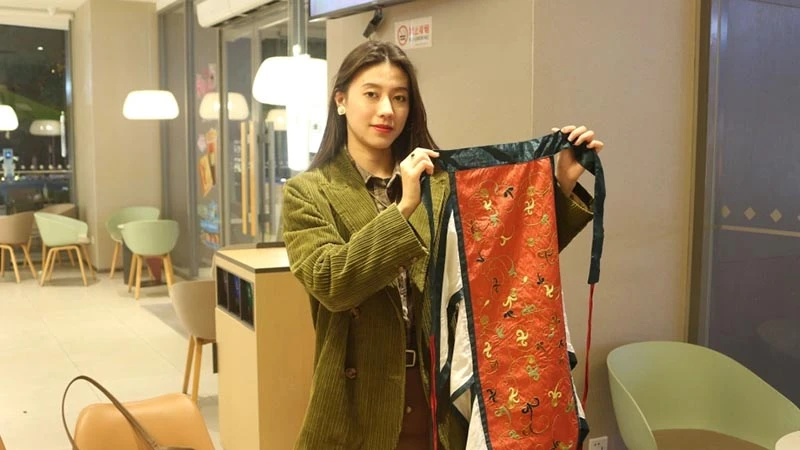
In a world increasingly captivated by modern fashion, a young designer at Wuhan Textile University is proving that ancient styles can be just as enchanting. Li Yanjun (李艳君), a graduate student with a passion for traditional Chinese culture, has recreated the flowing garments of the Wei-Jin period, inspired by the legendary Luo Shen Fu painting (洛神赋图) by Gu Kaizhi (顾恺之). Her meticulous work, showcased in a serene photoshoot at the Qingchuan Pavilion (晴川阁), has garnered widespread acclaim, with her video on Bilibili amassing over 14,000 views. A Vision of Wei-Jin Hanfu Li's recreation draws directly from the Luo Shen Fu painting, a celebrated Eastern Jin masterpiece illustrating the romantic tale of Cao Zhi and the goddess Luo Shen. The attire, known as the "zaju chuishou" (杂裾垂髾) ensemble, includes a flowing daxiushan (大袖衫, large-sleeved robe), a banbi (半臂, short-sleeved garment), a biji (蔽膝, knee cover), and a ruqun (襦裙, skirt). Li spent 40 hours intricately embroidering a crimson biji with starry cloud patterns, a design chosen to reflect the ethereal nature of the goddess. “The biji is more than just an accessory,” Li explained. “Its triangular drape was key to the elegance and symbolism of Wei-Jin attire, marking status and adding… -
Dong Mingzhu's Hanfu Experience in Cao County
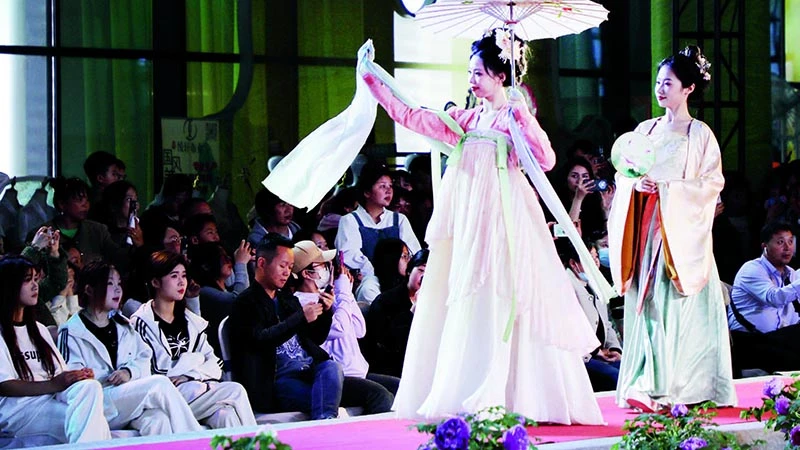
It was an ordinary day in the historic streets of Luoyang when Dong Mingzhu (董明珠), a celebrated Chinese business leader, donned her first Hanfu—a pale blue Ming-style ensemble that caught the eyes of onlookers. Just eight days later, she returned, this time wearing a regal Tang dynasty outfit that matched her commanding presence. Accompanied by her friends, each draped in their chosen styles, Dong’s adventures became a viral moment for Hanfu lovers across China. While Dong’s choice in Hanfu showcased her unique personality, the quiet star of her story was an unassuming county in Shandong—Cao County (曹县). The Hanfu she wore, like many others seen in ancient-style photoshoots or festivals, originated from this lesser-known corner of China. The Small Town with Big Hanfu Dreams Located in southeastern Shandong, Cao County has undergone a cultural and economic metamorphosis. On the surface, it remains humble—far from the bustling touristy image one might expect. But venture fifteen kilometers to Daji Township, and you step into a thriving hub of creativity and entrepreneurship, where small shops handle everything from fabric cutting to digital printing and logistics. Once famous for its mass production of performance costumes, Cao County has emerged as a center of affordable… -

The Beauty of Fengcheng River Scenic Area
Nestled in the heart of Taizhou (泰州), Jiangsu, the Fengcheng River (凤城河) Scenic Area offers a unique blend of historical charm and natural beauty. As a nationally recognized 4A-level tourist destination, this scenic area draws visitors from all over the world with its captivating landscape and cultural richness. With its riverside setting, the Fengcheng River is not just a backdrop but an integral part of the region's identity, seamlessly connecting the past and the present. If you want to understand the essence of a city truly, there's no better place to begin than here, where time itself seems to flow through the water, telling stories of centuries gone by. The Fengcheng River area is defined by its relationship with water, offering a picturesque glimpse into the traditional Jiangnan water town. In this landscape, the famous "Wanghai Tower (望海楼)", an architectural landmark often called "the first tower of Jianghuai (江淮第一楼)," stands as the cultural centerpiece. Its elegant design and historical significance reflect Taizhou's deep cultural roots. As you explore this scenic area, you'll encounter a harmonious blend of natural beauty and human heritage that makes this location an unforgettable experience. Wanghai Tower and the Peach Garden Wanghai Tower, with its origins…