How did Louis Vuitton’s Monogram find its roots in ancient China? The controversy is not just about lawsuits over tote bags; it is about who owns the visual language of human civilization. When a French fashion house claims ownership over a four-petal flower, a checkerboard, or an interlocking circle, they are not just protecting a logo—they are stepping into a cultural heritage that predates their brand by over a thousand years. This isn’t a story about counterfeits; it is a story about origins, appropriation, and the uncomfortable question of whether a global giant can trademark a universal idea.
The Eastern DNA of Western Luxury
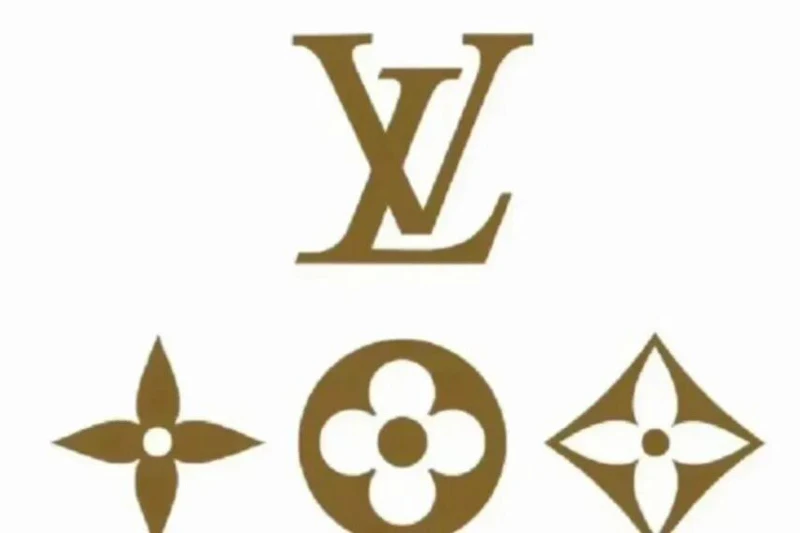
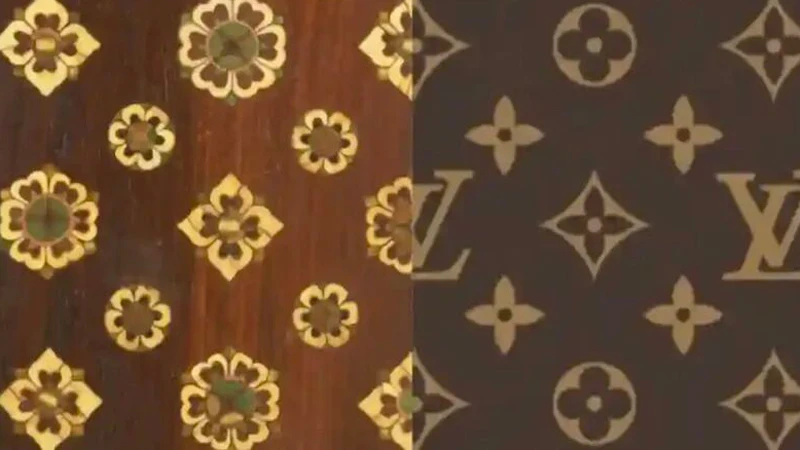
The core of the dispute lies in the Louis Vuitton Monogram, designed by Georges Vuitton in 1896. The company’s own archives admit the design was inspired by Japanese family crests, which were all the rage in 19th-century Europe. But tracing the lineage further back reveals a clear path: these crests were derivatives of the Tang Dynasty’s Shidi pattern (柿蒂纹) and Baoxiang flower (宝相花), brought to Japan by envoys.
The Shosoin Repository in Nara holds a five-stringed Pipa (琵琶) gifted by Emperor Xuanzong (玄宗) to Emperor Shomu, its body covered in a four-lobed floral motif that is structurally identical to the LV flower. That artifact is over 1,300 years old. Long before Georges put his initials on it, the pattern was a staple of Chinese silk, as evidenced by the Tang poet Bai Juyi’s verse praising “Shidi-patterned brocade.” It was a symbol of stability and completeness, a folk art classic, not a French invention.
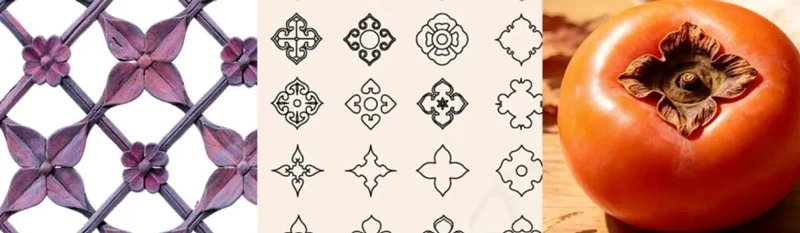
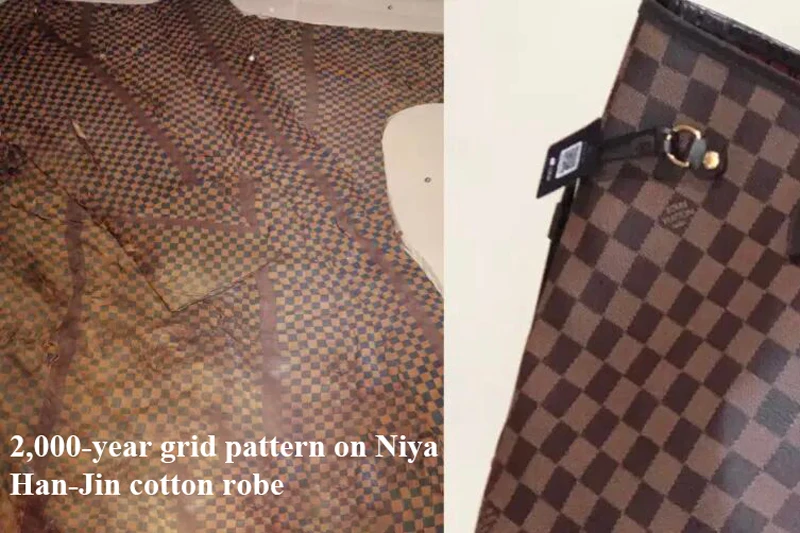
Beyond the flower, the checkerboard pattern—famous as the Damier canvas—has an even older history in China. While modern eyes see minimalist Western design, archaeological finds tell a different story. A cotton robe from the Han-Jin period, unearthed at the Niya ruins, features a perfectly regular grid pattern, proving its use in textiles over two millennia ago. This pattern, derived from the interlocking threads of nets and the geometry of early pottery, symbolizes order and morality in Confucian aesthetics.
LV simply simplified it into black and white squares. Similarly, the interlocking circle pattern, often used in LV packaging, is a direct descendant of the ancient coin motif. The design mimics the round outer edge and square inner hole of the Warring States period coins, embodying the philosophy of a round sky and square earth. These are not novel creations; they are standardized geometric templates refined over centuries.
Universal Visuals or Trademarked Assets?
Here is the crucial distinction: LV owns the specific combination of its initials, the flower, and the diamond shape as a composite mark. That is legal. What they do not own, though they often act like they do, is the right to the individual components. The four-petal flower is a primal shape found in Neolithic pottery, in Greek amphorae, and in Mesopotamian carvings. The checkerboard appears wherever humans weave or tile. These are not singular inventions but the basic grammar of human visual expression, developed independently across cultures. The human instinct for symmetry and geometry is universal. To claim ownership over a four-lobed flower is akin to claiming ownership over the circle or the straight line.
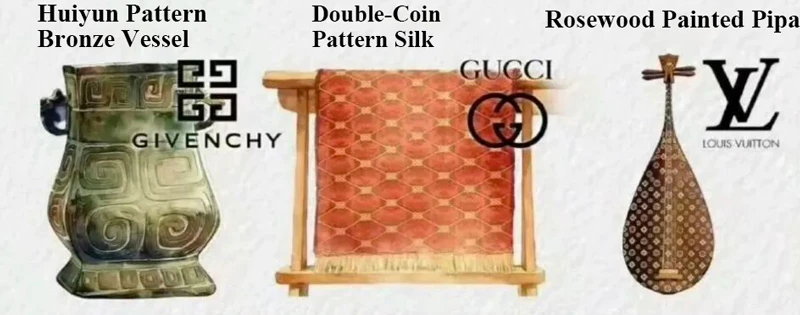
The problem arises when a brand blurs this boundary. By aggressively pursuing legal action against any commercial use of these fundamental shapes—even when used in traditional contexts—LV seeks to privatize a public domain. They are using their vast resources to enforce a monopoly on motifs that were public property long before the company existed. This is not about protecting creativity; it is about capitalizing on a historical loophole. The legal system protects the brand’s specific combination, but the brand’s enforcement strategy often oversteps, frightening small businesses and local artisans who have used these patterns for generations without thinking of “ownership.” It transforms a shared cultural inheritance into a corporate asset.
The Cost of Cultural Dispossession and the Way Forward
This situation serves as a powerful wake-up call, especially for China. With thousands of years of decorative arts, it possesses an immense library of designs. Yet, it faces a paradox: the culture is rich, but the legal rights are poor. Because these patterns are considered “common knowledge,” they lack systematic digital archives and legal validation. While Chinese artisans created, overseas companies registered. This has created a scenario of cultural dispossession: “We originate, they register, and we are restricted.” It is not just a loss of market share; it is a loss of narrative control over one’s own aesthetic heritage. The ancient aesthetics become a marketing tool for others, while the originators are left to defend themselves against accusations of “copying.”
Breaking this cycle requires a multi-layered strategy. Nationally, the establishment of a public digital database for traditional motifs is essential. This database would serve as legal evidence of “prior art,” proving that these designs existed in the public domain for centuries. This would provide a legal bulwark against trademark claims, establishing clear definitions of “generic public pattern” versus “brand-specific innovation.” On an industry level, a commercial library with clear usage guidelines would empower domestic brands to innovate without fear of litigation. It allows them to modernize classic aesthetics—adapting the Baoxiang flower for contemporary design or reinterpreting the coin pattern for modern jewelry—while keeping the profits and the cultural narrative within the community.
Individual creators and small businesses must also become more legally savvy. They should actively use these traditional elements, creating new derivative works that build on the ancient foundation. When faced with aggressive legal threats, they should not be intimidated but should respond, using the historical evidence to challenge the legitimacy of the claims.
The goal is not to reject Western brands but to establish a balanced playing field. Culture is not a private museum piece; it is a living river. Louis Vuitton can navigate this river, but it cannot build a dam and claim the entire waterway. The future of fashion lies in true cultural exchange, not in corporate monopolies. We must protect the source of the water, ensuring that the ancient aesthetics of China thrive, not as a borrowed backdrop, but as a vibrant force in the global market.