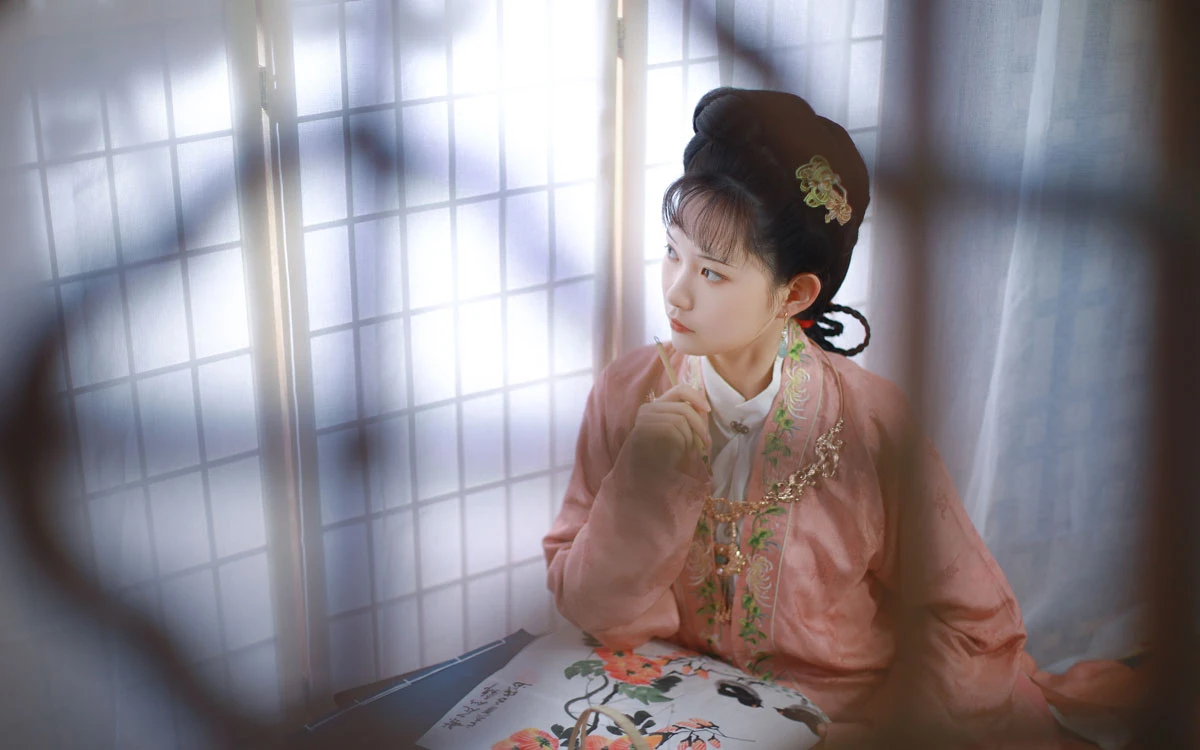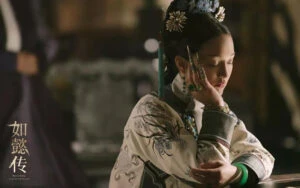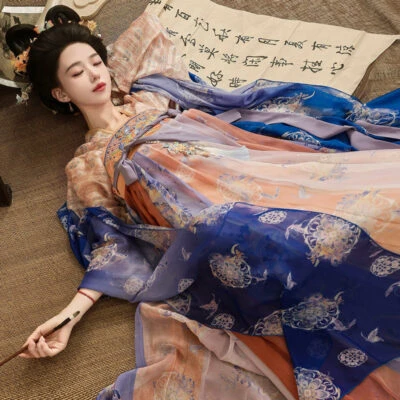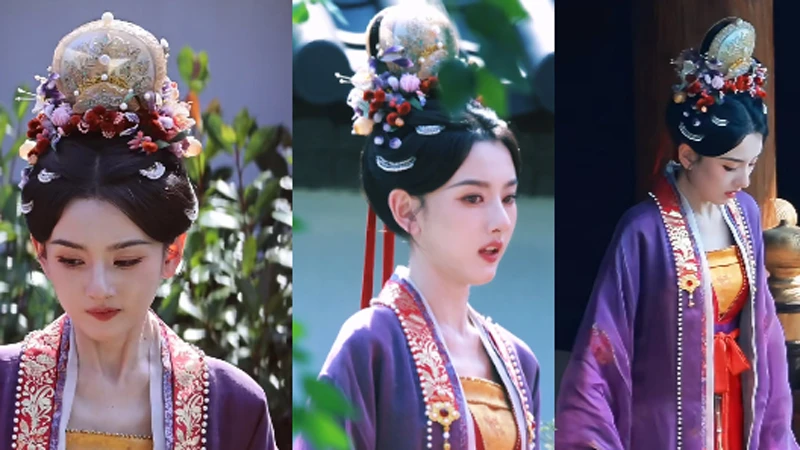
The first time you see it, it stops you mid-scroll. There is Song Zuer (宋祖儿), dressed in the elegant robes of the Song Dynasty (宋朝), but perched on her head is what looks like an oversized, ornate seashell. The images from the set of her new period drama immediately sparked confusion among fans. It looks alien, almost whimsical, and completely out of step with the delicate pearls and golden ornaments we usually see in historical epics.
The question on everyone’s mind is simple: is this a modern designer’s wild fantasy, or does this peculiar shape actually have a footnote in history? To call it bizarre is an understatement, but as we dig into the archives of Chinese fashion, we find that the “seashell” is not an error; it is a meticulous recreation of a forgotten trend that was, in its time, the epitome of elegance.
The Origin of the Tuan Guan (团冠)
To understand the shell, we must first toss out our expectations of ancient jewelry. We often imagine towering, gravity-defying crowns from the Tang Dynasty, where women piled their hair high and the headdress extended upwards like a blooming flower. However, the Song Dynasty, which followed, had a completely different aesthetic. It favored horizontality and restraint. As women’s hairstyles flattened out, moving from towering peaks to wider, fuller buns, the headdress had to adapt. This is where the Tuan Guan was born, literally translating to “round crown.”
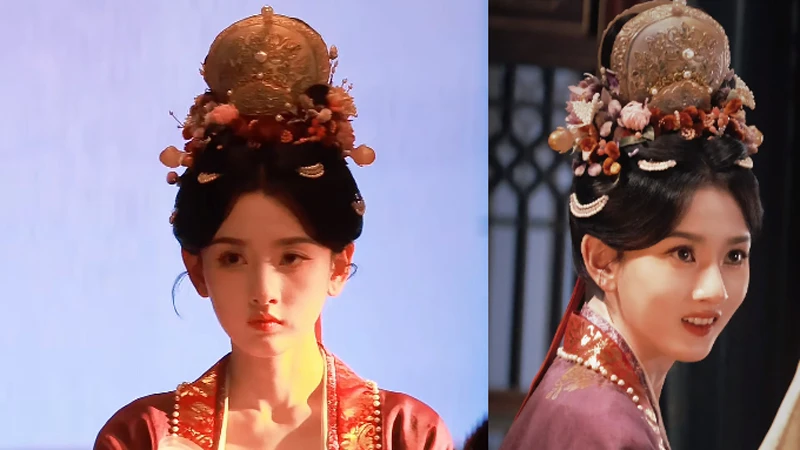
Unlike the vertical spikes of the Tang, the Tuan Guan was a flat, semi-circular or oval shape that unfurled horizontally. It didn’t pierce the sky; it hugged the head. It wrapped around the top of the bun like a clam shell, securing itself with a hairpin that pierced through the front and back. The image of Song Zuer in the drama Si Gong Ling (司宫令) is almost a perfect mirror of this. It isn’t a crown so much as an elegant cover, a low-profile halo that signified status without the need for vertiginous height.
This design wasn’t just about fashion; it was about functionality. Women in the Song court were often busy—managing households, overseeing rituals, or, in the case of Song Zuer’s character, running the imperial kitchen. A massive, unstable headdress is a liability. The Tuan Guan was secure. It clipped onto the hair and stayed put, allowing movement. It represents a moment in history where practicality and elegance were able to coexist beautifully.
From Luxury to Restriction
The journey of the Tuan Guan from a simple accessory to a symbol of excess is a tale of obsession. In the early years of the Northern Song, the nobility got a little carried away. Women started enlarging their headdresses to absurd proportions, sometimes extending several inches past their shoulders. These “long crowns” were gaudy displays of wealth. In response, the imperial court—feeling the pinch of extravagance—issued strict sumptuary laws. They clamped down on size and material, effectively killing the trend of the “bigger is better” crown.
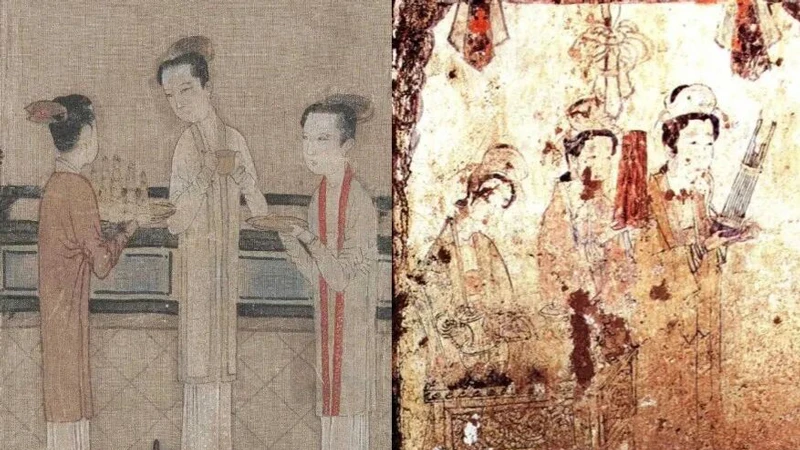
This is where the “shell” came into its own. It became the perfect compromise: the “low-key luxury” alternative. It was sophisticated without being offensive to the sumptuary laws. The material, however, is where the hierarchy was truly revealed. For the elite, the framework was crafted from deer antler, fish-bone (specifically from the fish’s occipital bone, a prized gem material known as Yuzhen Gu (鱼枕骨), or gilded silver. They embedded it with pearls, colorful stones, and delicate silk flowers. For the common woman, it was a simple bamboo frame wrapped in plain gauze.
This adaptability is why it survived so long in the cultural memory. It wasn’t just a court phenomenon; it was a streetwear staple. Tomb murals and paintings, such as those found in the Yao Tai Bu Yue Tu (瑶台步月图), frequently depict women sporting this specific crown. It was a symbol of the times, a shape that defined a century.
The End of the Lineage and Its Return
But as all things in fashion do, the Tuan Guan eventually faded. After the Yuan Dynasty, while the ruling Mongols preferred the tall, beak-shaped Gugu Guan (姑姑冠), the common Han Chinese women still clung to the round crown for a time. However, by the Ming Dynasty, tastes shifted drastically. The Ming aesthetic favored volume—a “heads full of jewels” look. The crisp, minimalist line of the Song Dynasty felt outdated, too restrained for the opulent tastes of the new era.
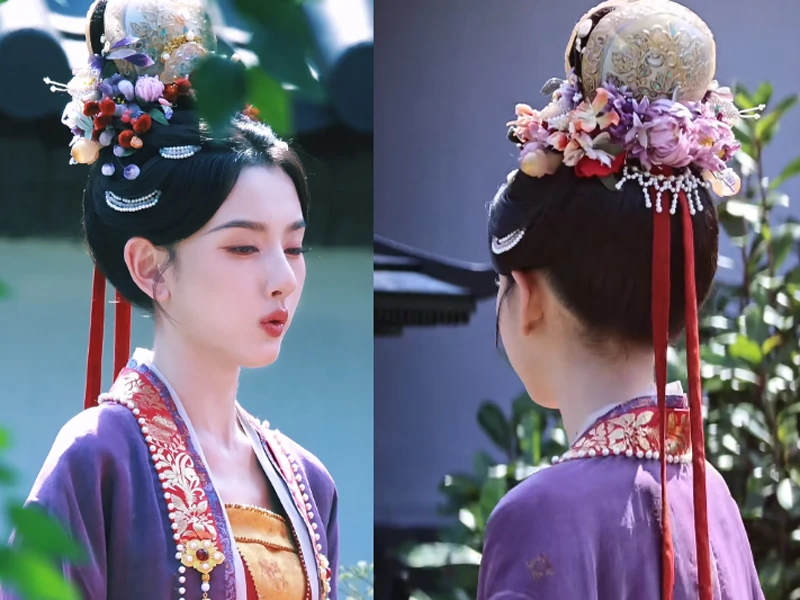
It became a relic of the past. Yet, we see it now on Song Zuer’s head in the drama Si Gong Ling. Why? Because she plays an official in the palace, a woman who holds a specific rank. This isn’t just a random fashion accessory; it is a uniform. In the context of the show, she doesn’t wear the ceremonial crown reserved for grand festivals. She wears the practical, daily-wear hat of the working noble. The slight ornamentation—the pearls and the subtle floral motifs—elevates her status, but the “seashell” shape anchors her firmly in the reality of a woman on the move.
It may have looked strange to modern eyes unfamiliar with it, but it is a testament to the production team’s dedication to historical accuracy. It feels alien because we are used to the stereotypes of ancient Chinese fashion—the towering Tang bun or the Ming phoenix crown. The Song Dynasty shell is the forgotten middle child. Seeing it now feels fresh, alien, and deeply authentic.