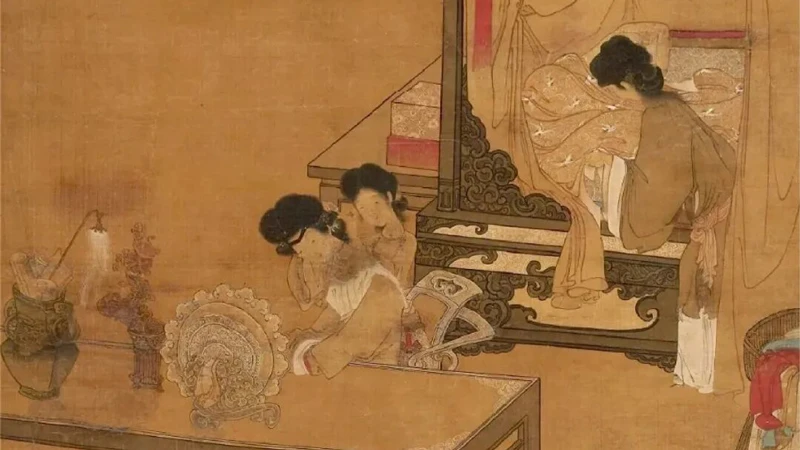
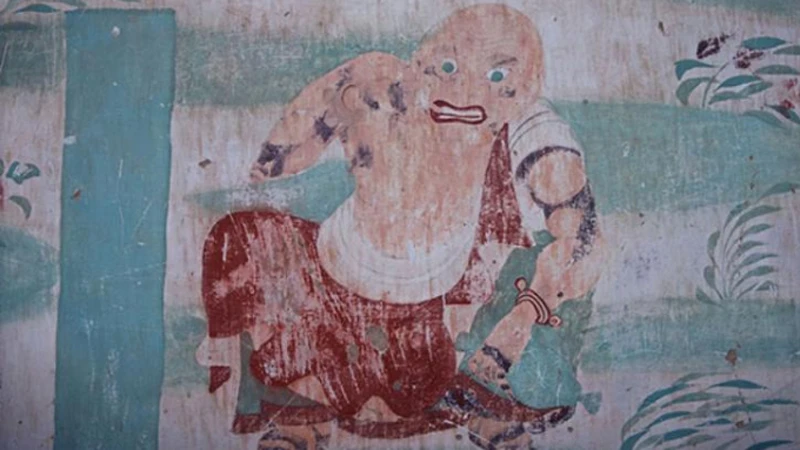
Every morning, you squeeze toothpaste, wet your brush, and scrub away. But what if you woke up in 800 AD China? No minty gel, no nylon bristles. Would you just accept a mouth full of yellow stumps? Not quite. History reveals that the ancient Chinese cared about their teeth far more than you might imagine. Deep inside the Dunhuang (敦煌) caves, a mural titled Lao Ducha Dousheng Bian (劳度叉斗圣变) shows a monk squatting on the ground. He holds a water bottle in his left hand, and his right index finger is stuck inside his mouth. He is, unmistakably, brushing. That scene from the Tang Dynasty proves that a sophisticated dental routine existed over a thousand years ago. They didn’t have supermarkets, but they had something perhaps even smarter: nature’s own toothbrush.
The Willow Stick
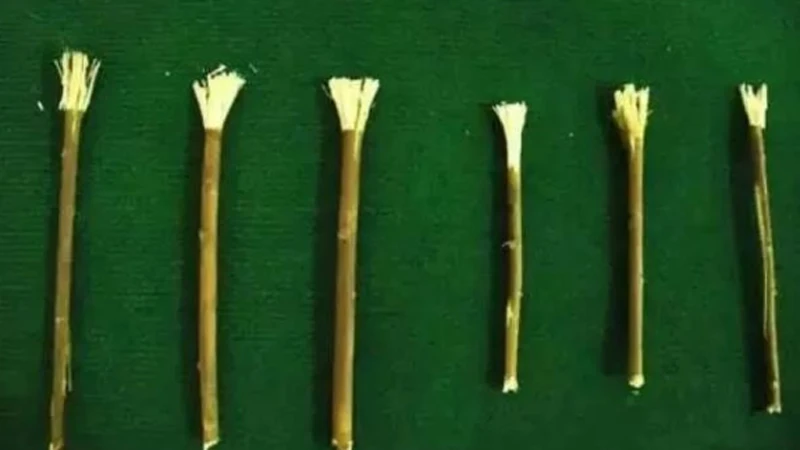
What did that monk use? A twig from a willow tree. The ancient tool, called Yang Liu Zhi (杨柳枝), was simple but brilliant. People soaked the branch in water until it softened. Then they chewed on one end to mash the fibers, creating a small, brush-like head with tiny wooden bristles. In the morning, they dipped this natural brush into salt or powdered herbs and scrubbed their teeth back and forth. It was the Tang dynasty version of a morning ritual.
Buddhist texts refer to this twig as Chi Shu (齿木), or “tooth wood,” a necessary item for monks during their daily practice. The technique soon spread to ordinary households. Even Li Shizhen (李时珍) took note. In his famous Bencao Gangmu (本草纲目), he wrote that willow twigs “remove wind, reduce swelling, and stop pain.” Modern science backs him up: willow bark contains natural salicylic acid, a chemical cousin to the active ingredient in aspirin. So that simple twig didn’t just clean—it also soothed sore gums.
It might sound rustic, but it worked remarkably well. People in the Tang dynasty didn’t suffer from plaque buildup because they lacked modern tools. Instead, they turned a common tree into a daily health device. And they weren’t done innovating. The willow stick was only the beginning.
Bone and Bristle
By the Song Dynasty, things got much more sophisticated. Craftsmen began selling real toothbrushes on the streets of Lin’an (临安, today’s Hangzhou). They carved handles from bone or bamboo, drilled dozens of tiny holes into one end, and threaded bundles of wild boar bristles through them. That’s right—one thousand years ago, Chinese people used a tool almost identical to the brush you hold today. Wu Zimu (吴自牧), a writer from the Southern Song, recorded in Dream Pool Essays (梦粱录) that vendors everywhere sold “brushing sticks” just like supermarkets sell toothpaste now.
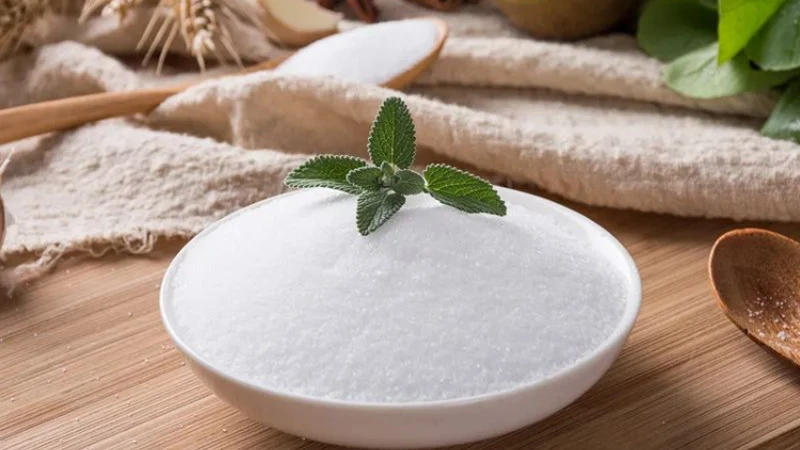
With a proper brush came proper toothpaste. The most basic version was simple: salt. A finger dipped in salt, rubbed across the teeth—it cleaned, reduced inflammation, and cost almost nothing. Many rural families kept this habit well into the 20th century. But if you had taste, you mixed fancier recipes. The Taiping Shenghui Fang (太平圣惠方), a Song dynasty medical text, lists a powder made from borneol, mint, green salt, gypsum, and burdock root. You ground these into a fine dust, stored it in a porcelain bottle, and dipped your wet brush into it each morning. The result? A cool, fresh mouth that any modern herbal toothpaste would envy.
The recipes only grew more elaborate. Some added Poria to strengthen teeth. Others used Psoralea to nourish the kidneys—traditional Chinese medicine holds that teeth are the “remnant of the bones,” and kidney health directly affects dental strength.
Rinsing and Clicking
If all that sounds like too much work, you might appreciate their simplest trick: rinsing. The Book of Rites (礼记), written over two thousand years ago, states: “At the first crow of the rooster, wash your hands and rinse your mouth.” The Zhou Dynasty people had already turned mouth rinsing into a daily ritual. Wealthy families used tea, wine, or ginger soup. Ordinary folks used warm water or salt water. Tea was especially popular—it contains polyphenols that fight bacteria and fluoride that prevents cavities. The ancients didn’t know the chemistry, but they knew tea left their mouths feeling clean and refreshed.
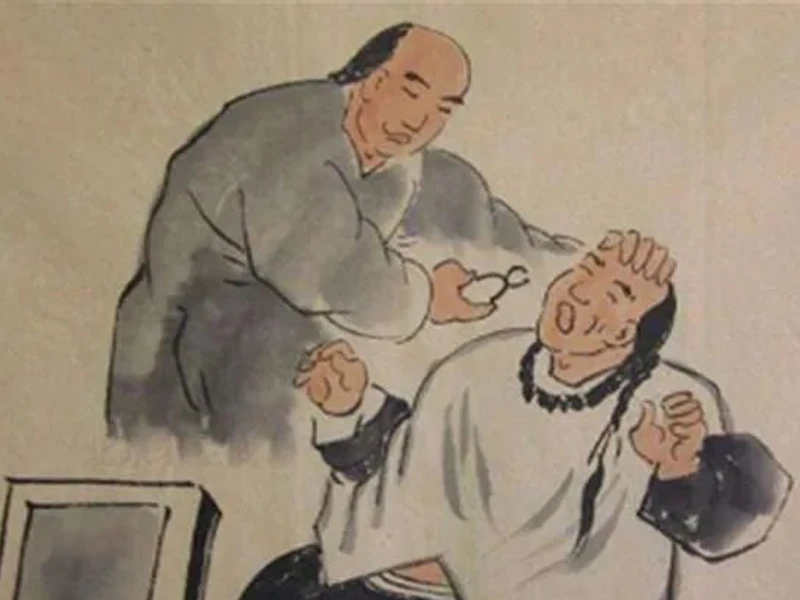
The poet Su Dongpo (苏东坡) was a true believer. In his essay “On Tea Rinsing,” he wrote: “After every meal, rinse with strong tea. The greasiness disappears, and the stomach becomes harmonious.” He specifically warned against brushing with tea, saying it would damage the teeth—a point modern dentists agree with. Then there was the secret technique: Kou Chi (叩齿), or tooth tapping. You gently click your upper and lower teeth together dozens of times each morning and evening. It sounds silly, but the ancients swore by it as a longevity secret.
Sun Simiao (孙思邈), the famous Tang dynasty physician, wrote in his Qianjin Fang (千金方): “Every morning, put a pinch of salt in your mouth, hold warm water, and tap your teeth a hundred times. Do this without stopping, and in five days, your teeth will be firm.” Modern medicine suggests that gentle tapping can stimulate blood circulation in the gums and help maintain periodontal health. The ancients didn’t have X-rays or clinical trials, but their methods survived for millennia because they worked. And behind every rinse and every click was a deeper belief: your teeth reflect your whole body. Healthy kidneys, healthy teeth. Respect your body, and it will serve you well.