The annual Qing Ming (清明) festival arrives with spring’s first warmth. It marks both a solar term—“clear and bright”—and a solemn day to honor ancestors. Yet it also calls for outings, kite flying, and feasting on green rice balls. How does one choose Hanfu that respects the rituals of mourning while embracing the joy of spring? The answer lies in two distinct wardrobes: one somber and restrained, the other light and playful. This guide walks through each, from grave-sweeping robes to willow-branch headdresses, so you can move between reverence and revelry without missing a step.
Somber Respect
For ancestral rites, Hanfu becomes a vessel of propriety. The ancient principle “clothing carries the Way” demands muted colors, clean lines, and no flashy ornaments. Dark blues, off-whites, and deep greens set the tone. Two Ming dynasty styles work especially well: the round-collar overlapping jacket paired with a Mamian (马面) skirt. A bean-green or rice-white jacket embroidered with subtle Ru Yi (如意) and Ling Zhi (灵芝) motifs—symbols of blessing and longevity—keeps the look pious yet elegant. A touch of woven gold on the hem is acceptable if hair and makeup remain simple. The outfit speaks without shouting, honoring the departed while praying for family safety.
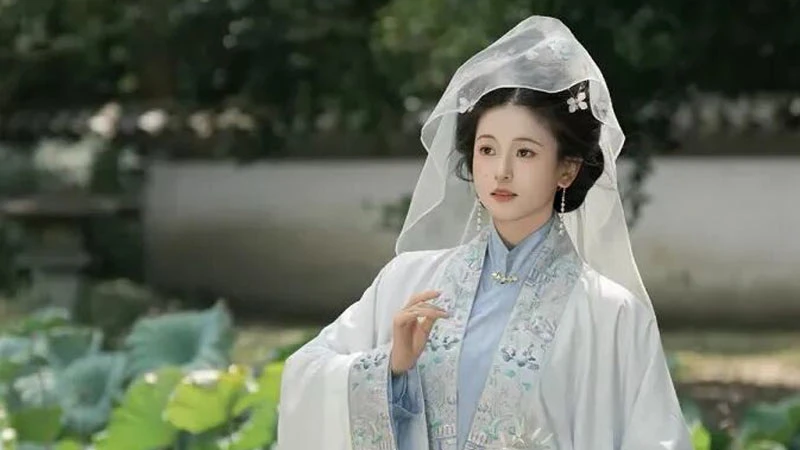
Another excellent choice is the standing-collar slanted-opening robe with a matching Mamian skirt, topped by a cape and a He Ye (荷叶) turban. Originating in the Song (宋) dynasty, the turban resembles a lotus leaf, its long ribbons fluttering behind. This ensemble—blue robe, light dragon-patterned skirt, white cape—is a formal classic for temples and ancestral halls. The cape’s landscape and lotus cloud motifs, together with the skirt’s azure dragon, form an auspicious phrase: “dragon guards the home, mountains guard fortune.” For ultimate austerity, choose plain silk without gold thread. Elders will nod in approval; tradition feels alive on your shoulders.
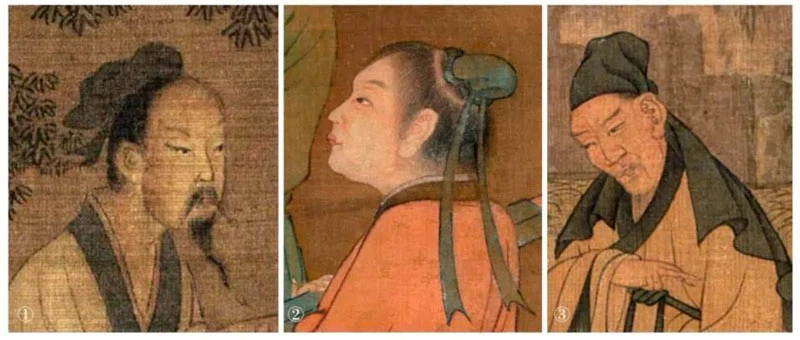
For those seeking the highest ritual standard, the Tai Chang (太常) Sheng Yi (深衣) deep robe is unmatched. Codified in the Book of Rites (礼记), it embodies cosmic principles: straight seams for righteousness, round sleeves for heavenly harmony, twelve lower panels for the months. The black-and-white version, restored from Zhu Zi’s Family Rituals (朱子家礼), pairs a plain white robe with a black Dong Po (东坡) turban. Qing Ming in such attire feels like stepping into a Song dynasty painting—silent, dignified, and deeply respectful. Even the Zhi Ju (直裾) robe, a straight-lapel variant from the Qin (秦) and Han (汉) dynasties, serves well. Its black-and-red palette, decorated with cloud and fret patterns, conveys both celestial blessing and earthly solemnity.
Spring Lightness
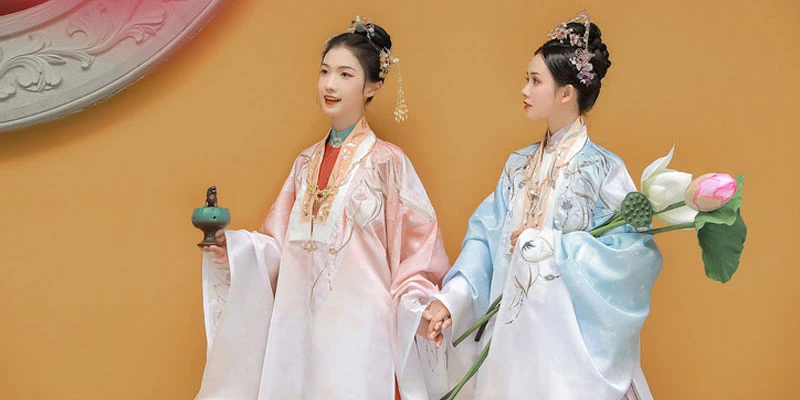
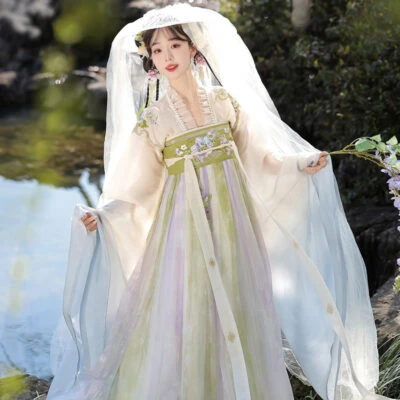
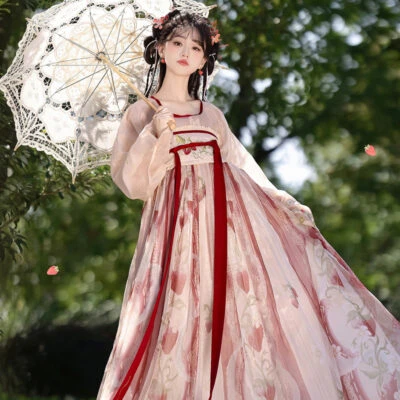
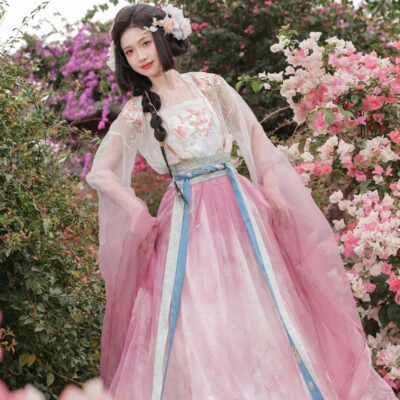
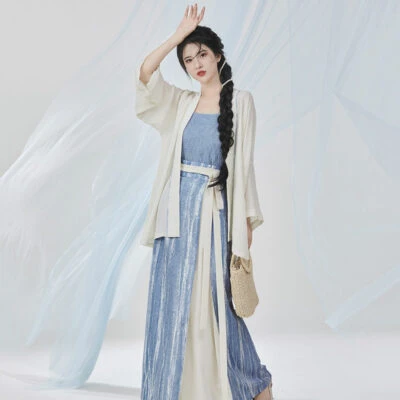
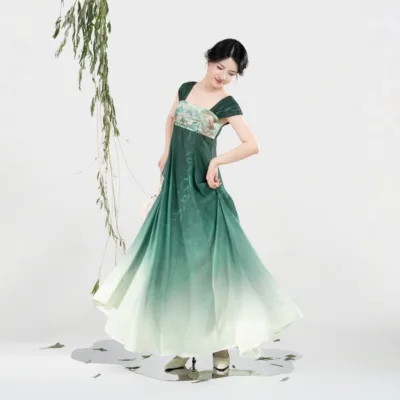
After the graves are swept, it is time to shed the heavy cloak. Qing Ming has always been a festival of spring outings. Back in the Tang (唐) dynasty, the Cold Food and Qing Mingholidays merged into a week-long break for cuju soccer, swinging, and flying kites. For such moments, choose Hanfu that breathes. Think thinner fabrics, wider sleeves that catch the breeze, and colors that mirror peach blossoms or fresh bamboo. A pale pink jacket over a cream skirt, or a sky-blue robe with embroidered butterflies—these whisper of renewal. Avoid heavy silks and multiple layers. The goal is to move freely, to let the hem dance as you walk through meadows.
A clever accessory transforms any outfit. The Qing Ming drizzle is famous; why not pair your Hanfu with a veiled bamboo hat or an oil-paper umbrella? The hat, once worn by Tang dynasty travelers, adds mystery and practicality. The umbrella, painted with flowers or landscapes, doubles as a prop for photos. Neither looks out of place among spring greenery. You will stay dry while evoking ancient poetry—”a drizzling rain falls like tears” no longer a nuisance but a mood. Just remember to keep your steps unhurried. This is not a race but a ramble.
For footwear, abandon platform boots. Straw sandals or soft-soled cloth shoes let you feel the earth. A simple sash tied at the waist can hold a small pouch for snacks—perhaps a few Qing Tuan (青团) rice balls. The entire ensemble should whisper, “I am here to enjoy the day.” Nothing stiff, nothing precious. Even your hair can be looser: a half-up style with a single jade hairpin, or a braid threaded with fresh flowers. The Song dynasty poet Wu Weixin wrote, “Willow branches bend at Qing Ming; wanderers return drunk with spring.” Let your clothes mirror that light intoxication.
Willow Wishes
Beyond clothing, Qing Ming offers small rituals that connect you to nature and community. The simplest is plucking a willow branch. According to the Jingchu Suishiji (荆楚岁时记), every household during Cold Food would insert willow twigs above their doors. An old saying warns, “If you don’t wear willow on Qing Ming, your youthful face will age soon.” Tuck a sprig behind your ear or weave it into a bun. It is both decoration and protection—warding off evil spirits as you walk among graves and green fields. The willow’s early leaves, bright and tender, carry the season’s promise of resilience.
Active pleasures await too. Cuju (蹴鞠), an ancient sport resembling soccer, was a Tang dynasty favorite. Gather a few friends in a park, kick a leather ball stuffed with feathers, and let your Hanfu sleeves fly. Or try the swing—Qiu Qian (秋千)—which poet Wang Wei described as “soaring out of weeping willows.” The back-and-forth motion, with skirts billowing, feels like flying. Both activities embody the festival’s dual spirit: mourning the dead while celebrating the living’s energy. Do not worry about dirt on your hem. That smudge is a badge of a day well spent.
Finally, taste the season. Qing Tuan, glossy green dumplings made from glutinous rice and mugwort juice, are Qing Ming’s edible signature. Sit on a stone bench under a flowering tree, unwrap a leaf-wrapped bundle, and bite into the soft, chewy skin. The red bean paste inside releases a subtle sweetness balanced by the herb’s clean bitterness. It tastes like rain on new grass. Pair it with a cup of spring tea, and you have a moment of pure contentment. Whether you are dressed in somber silk or light cotton, that quiet bite connects you to centuries of Qing Ming traditions—ancestors remembered, spring embraced, and life, fragile and lovely, carried forward one garment, one gesture, one green dumpling at a time.