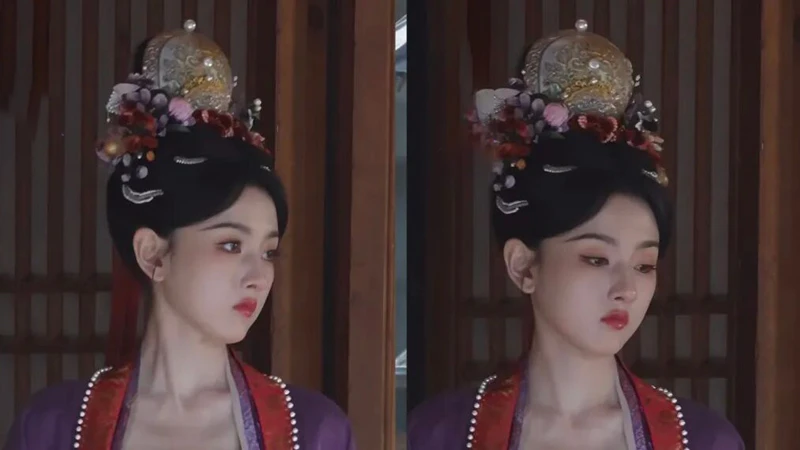
When photos from the set of Si Gong Ling (司宫令) surfaced online, fans did a double take. There stood Song Zuer (宋祖儿), dressed in period costume as Wu Mangmang (吴蒖蒖), with what looked like a giant scallop shell perched on her head. Social media erupted in amused confusion. Was this a quirky new fashion statement? A props department joke?
Actually, it was neither. That “seashell” is a faithful—if slightly dramatized—recreation of a Tuan Guan (团冠), a round crown worn by women in the Song Dynasty. What seems bizarre to modern eyes was once a symbol of elegance, status, and everyday practicality. Let’s crack open this historical headwear and see what lies beneath the glossy surface.
Not a Seashell
The crown on Song Zuer’s head follows a distinct curve: arched at the top, slightly tapered on the sides, and rounded like an inverted bowl. From the front, it really does resemble half a scallop shell. That’s because the Tuan Guan’s basic silhouette is round, plump, and gently domed—think of a shallow ceramic bowl or a flattened ball. The drama’s costume department made it flatter and shinier for the camera, which amplified the seafood resemblance. But the original was never meant to look like marine life.
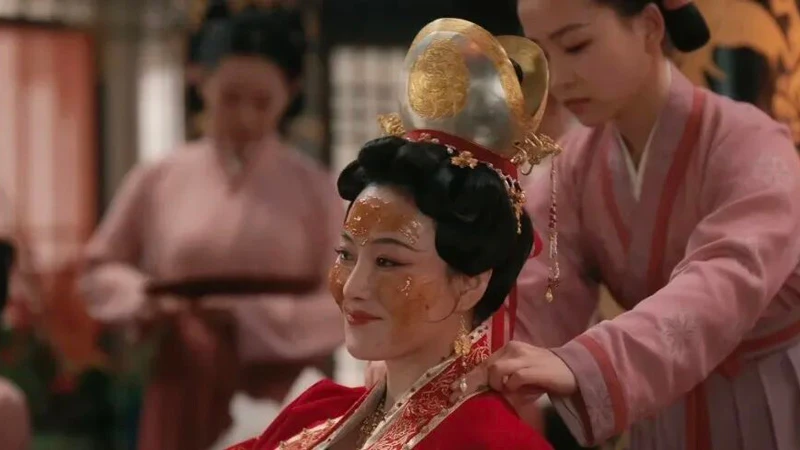
Was it heavy? Surprisingly, no. The earliest Tuan Guan had a base woven from bamboo strips. Wang Dechen (王得臣), a Song scholar, wrote in his book Zhu Shi (麈史) that women first braided bamboo into a round shape, painted it green, and wore it as a lightweight, affordable crown. It was the budget-friendly option of its day. Later, wealthy women upgraded to white horn, ivory, tortoiseshell, or even gold and silver leaf. But the bamboo version remained popular among commoners because it was cheap and practical.
For ordinary Song women, leaving home without a crown was almost unthinkable. From the empress dowager to the maid in the marketplace, wearing a Tuan Guan was a matter of basic decency and social expectation. It wasn’t reserved for weddings or festivals—it was everyday attire, like putting on shoes before stepping out. The crown’s shape evolved over time, but its role as a daily essential never faded.
Materials and Evolution
As the Song Dynasty progressed, the humble bamboo crown got a luxury makeover. Aristocratic women began using white horn (bleached and carved), ivory, tortoiseshell, and deer hide. Some coated the base with yellow gold paint, others added silver filigree or strings of pearls. The more ornate versions were called “white horn crowns” because the material itself became a status symbol. Restrictions soon followed: the imperial court banned tortoiseshell and deer hide due to cost and rarity, but women simply switched to white horn, which became the new craze.
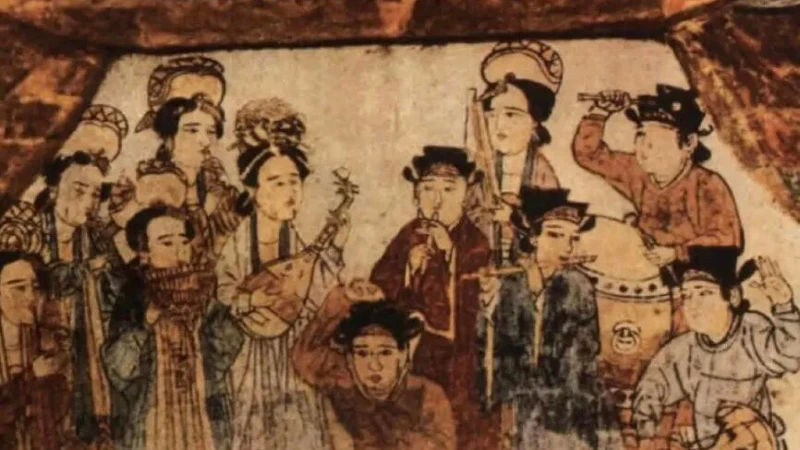
Shape-shifting was also in fashion. The basic Tuan Guan spawned several variations. One was the Shankou Guan (山口冠), or “mountain-pass crown,” which narrowed at the sides and rose higher at the front and back. It looked like two small hills—or a clam shell snapped half-open. Another extreme version was the Dengjian Guan (亸肩冠), also called the “shoulder-draping crown.” It stretched the Tuan Guan sideways until its ends touched the wearer’s shoulders. At its most ridiculous, during Emperor Renzong’s reign, it measured three feet wide. The court had to issue a ban because women could barely walk through doorways.
Then came the Ruyi Guan (如意冠), named after the curved ruyi scepter. This version was broader and flatter, with a wavy edge that evoked the auspicious symbol. It bridged the late Song and early Ming dynasties, proving how adaptable the round crown concept really was. Whether narrow or wide, tall or flat, all these styles traced their DNA back to that simple bamboo ring. They just added more bling, more drama, and occasionally, more legal trouble.
Then and Now
If you look at actual Song Dynasty artifacts and murals, you’ll notice a difference. In the tomb murals at Baisha (白沙), Henan, women wear Tuan Guan that are thicker, rounder, and softer in contour—more like a padded hat than a sharp shell. The crowns sit snugly on the head, with a gentle, almost pillowy curve. They don’t jut out or gleam like polished plastic. So why does Song Zuer’s headpiece look so different? Television demands exaggeration. A historically accurate crown might read as a dull blob on screen. The production team thinned it, brightened it, and gave it that scallop-like edge to catch the light and read clearly as “crown” rather than “hat.”
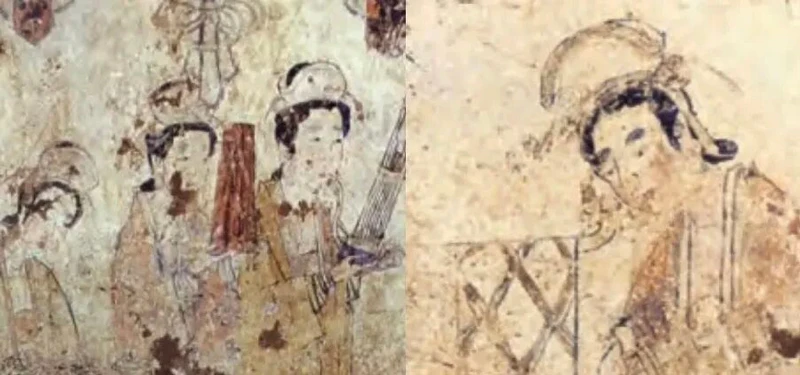
This kind of creative transformation is exactly how ancient fashion stays alive. Without dramas like Si Gong Ling, most people would never hear the words Tuan Guan, Shankou Guan, or Dengjian Guan. The costumes spark curiosity, which leads to research, which leads to appreciation. And today, technology is making these crowns wearable again—not just for actors, but for anyone. Using 3D printing and lightweight polymers, modern designers can recreate the exact shapes and patterns of Song Dynasty crowns at a fraction of the weight. You lose the texture of real horn or tortoiseshell, but you gain the ability to wear history without a neck ache.
What was once a bamboo basket painted green is now a 3D-printed accessory you can buy online. The materials change, but the silhouette endures. That “scallop” on Song Zuer’s head isn’t a mistake or a fantasy. It’s a bridge between a 1,000-year-old fashion tradition and a Netflix-binging audience in the 21st century. Would you wear a Tuan Guan to a party? Or do you think it belongs only in period dramas? Either way, the next time you see a strange headpiece on screen, don’t laugh too fast. It might just be history trying on a new pair of shoes.