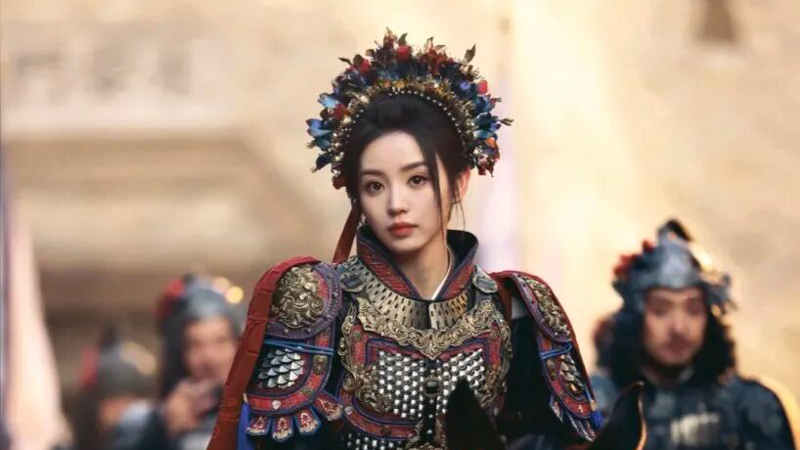
A female general strides onto the battlefield. Her body is wrapped in dark iron armor, yet her hair blooms with a cascade of fresh peonies, jasmine, and roses. This is the image of Fan Changyu (樊长玉), played by Tian Xiwei (田曦薇), in the historical drama Pursuit of Jade (逐玉). The moment the stills dropped online, Chinese social media exploded.
Some called it a breathtaking fusion of steel and softness. Others mocked it as a ridiculous costume fail—asking, “How can she fight with flowers wobbling on her head?” The debate isn’t just about a TV show. It cuts to the heart of how traditional culture should be adapted for modern screens. Should armor be purely menacing? Can delicate beauty ever share space with bloody conquest? And what does a real female warrior from 400 years ago have to do with a fictional character’s hairdo? Let’s walk through the petals and the plate metal.
History vs. Fantasy
The loudest critics point to one word: authenticity. They argue that a military commander’s first duty is to intimidate enemies, not to look pretty for a photoshoot. “Flowers on a general feel too feminine and distracting,” one Weibo user wrote. “In a real fight, those petals would fly into her eyes.” Others accuse the show of turning serious history into a lightweight Gu’ou (古偶 )—a costumed idol drama where everyone looks like a magazine cover model. Tian Xiwei’s naturally sweet face, they say, makes the problem worse. Her delicate features plus the floral crown turn a supposed warrior into a garden fairy in chainmail. The armor itself looks thin and decorative, not like something that would stop an arrow.
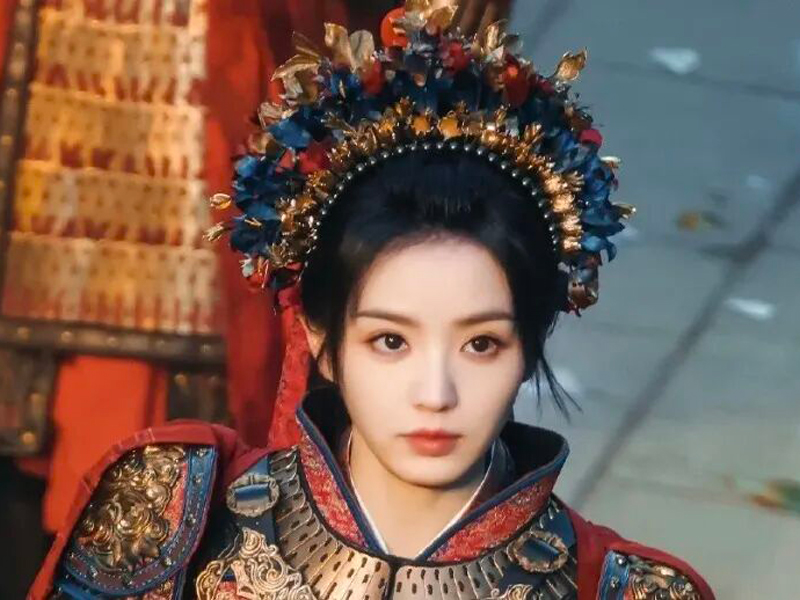
Then come the history buffs with their receipts. They bring up the Song Dynasty, when the story is set. Yes, historical records show that Song emperors did give flowers to victorious generals. But here’s the catch: those flowers were pinned on official hats or helmets, not woven directly into loose hair buns. The drama’s version—where fresh blossoms sit right on top of a styled wig—feels like an artistic exaggeration. The production team admits they took inspiration from traditional opera costumes. But for critics, that’s not enough. “Opera is stylized fantasy,” one commentator said. “A period drama claiming historical roots should follow stricter rules.”
The debate grows even sharper when people compare Pursuit of Jade to other recent shows. Several highly praised historical dramas have won awards for their accurate armor designs—scratched, heavy, and practical. Against that standard, Fan Changyu’s look seems almost like a parody. But is that fair? After all, no one expects every show to be a documentary. The real question might be where to draw the line between creative license and reckless anachronism.
Honor and Symbolism
Defenders of the design fire back with their own historical facts. They remind everyone that the Song Dynasty had a unique tradition: the emperor would award flowers to military heroes during victory parades and banquets. This wasn’t about decoration—it was a high honor, similar to receiving a medal today. The flowers were called “Zanhua (簪花),” and wearing them meant the state recognized your courage. So in Pursuit of Jade, Fan Changyu’s floral headpiece is not a fashion statement. It’s a visual metaphor for a military medal. One supporter wrote, “When you see those flowers, you should think ‘hero’ not ‘bride.’”
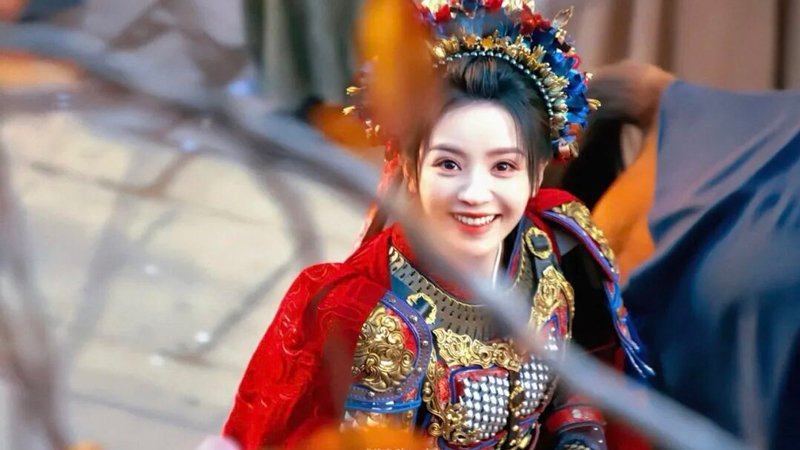
Beyond the Song precedent, fans point to a real-life legend: Qin Liangyu (秦良玉), a female general from the Ming Dynasty who actually led troops into battle. While no painting shows her with flowers in her hair, her story represents the very idea that a woman can be both fierce and feminine. The show’s styling team explicitly said they wanted to honor Qin Liangyu’s spirit—a warrior who never lost her humanity. In that light, the iron armor is her backbone, the fresh flowers her unbroken tenderness. The contrast isn’t a mistake; it’s the whole point.
This brings us to a deeper Chinese aesthetic principle: the integration of toughness and tenderness, or the harmony of hardness and softness. A true master, whether in martial arts or painting, knows that pure force is crude. Real power includes flexibility, grace, and even beauty. Think of a calligraphy stroke that looks sharp but flows like water. Fan Changyu’s look embodies that same idea. She doesn’t have to give up her femininity to be respected as a soldier. And for many young viewers—especially young women—that message resonates powerfully. “This is exactly how I feel as a working woman,” one fan commented. “I can be tough in meetings and still love pretty things.”
Cultural Roots and Future
The flowers on Fan Changyu’s head are not random. They directly copy a living tradition from Quanzhou’s Xunpu (蟳埔) fishing village. There, women have worn Zanhua Wei (簪花围)—elaborate floral wreaths—for over a thousand years. This custom grew from the Maritime Silk Road, when ships brought exotic flowers and headwear styles from Southeast Asia and the Middle East. Local women mixed those influences with their own beliefs, creating a unique look: a colorful ring of fresh flowers around a central hairpin. In 2008, UNESCO recognized Zanhuawei as part of China’s intangible cultural heritage. For Xunpu women, these flowers are not mere decoration. They are prayers for their husbands’ safe return from the sea, expressions of resilience, and symbols of daily hope.
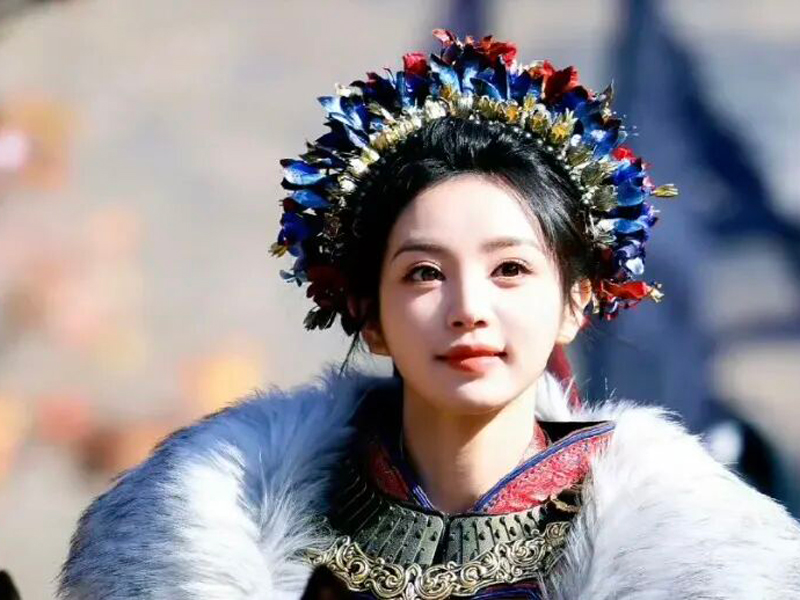
Now, because of the Pursuit of Jade controversy, millions of young people have searched for “Xunpu Zanhuawei” online. Travel vloggers rushed to the village. Local salons that offer flower-wearing experiences saw a boom in customers. In a strange way, the debate made this ancient craft go viral. Even critics of the show admit that the cultural spotlight is a good thing. One museum curator wrote, “I would rather people argue about flowers on armor than ignore our heritage completely.” The conversation has pushed many to ask: What other beautiful traditions are hiding in small villages? How can modern media bring them back without distorting them?
There is no final verdict on whether Pursuit of Jade got it right. The show’s costume director explained that the controversial look only appears in a single victory-parade scene, not on the actual battlefield. That context softens the criticism—after all, ceremonial dress has always been more ornate than combat gear. But the larger lesson remains. Every adaptation of traditional culture walks a tightrope. Fall too far toward dry replication, and the art feels dead. Swing too far toward wild invention, and it loses its soul. The best path, as the Xunpu flower-sellers know, is to respect the roots while letting new branches grow. Whether Fan Changyu’s iron armor and fresh flowers will be remembered as a brave innovation or a silly gimmick? That answer will come not from historians, but from the audience’s own evolving taste. Either way, the conversation itself has already made Chinese tradition a little more alive.