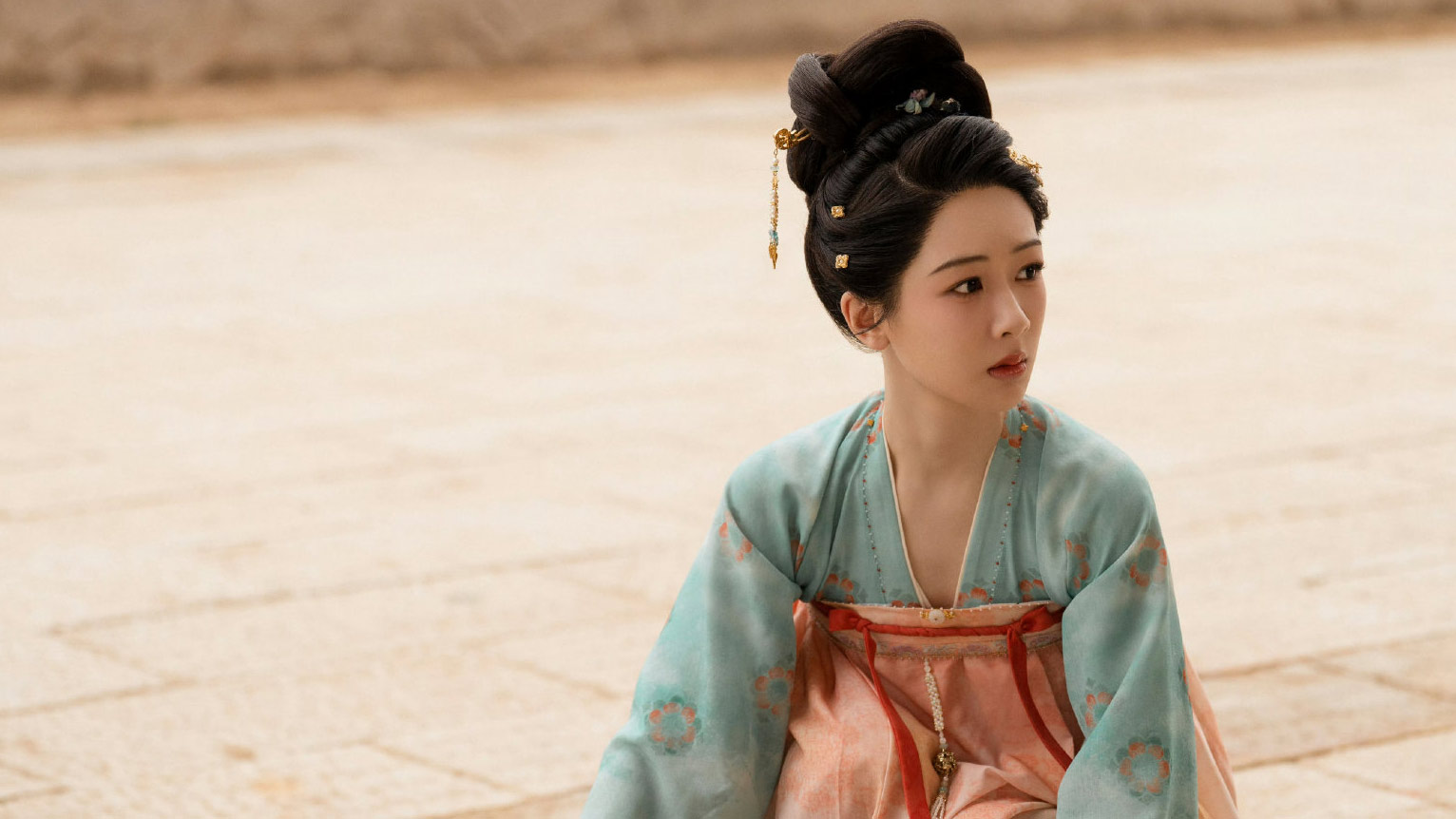
The crimson robes shimmer like liquid sunset, azure silks hold captured mist, and golden threads pulse with imperial legacy. When Hanfu flows, it's not merely fabric in motion; it's a millennia-old chromatic saga whispering secrets of the East. Each hue, meticulously extracted from roots, leaves, and blossoms, carries profound narratives of status, season, and spirit, woven into the very warp and weft of Chinese civilization. Far more than aesthetic choices, these colors formed a silent language – a vibrant lexicon where every shade spoke volumes about the wearer's place in the cosmic and social order. Today, as this ancient attire experiences a renaissance, the timeless palette of Hanfu continues to captivate, bridging dynasties past with the bold expressions of modern style.
Crimson
No color resonates deeper in the Chinese soul than crimson. Revered since the Shang and Zhou dynasties, this potent hue symbolized supreme nobility and auspicious fortune. It pulsed at the heart of life's most sacred ceremonies. Imagine heavy silk blazing with China Red, embroidered golden phoenixes and peonies dancing on phoenix coronets and ceremonial capes. Sunlight catching intricate Pan Jin embroidery creates a regal shimmer reserved for emperors and empresses.
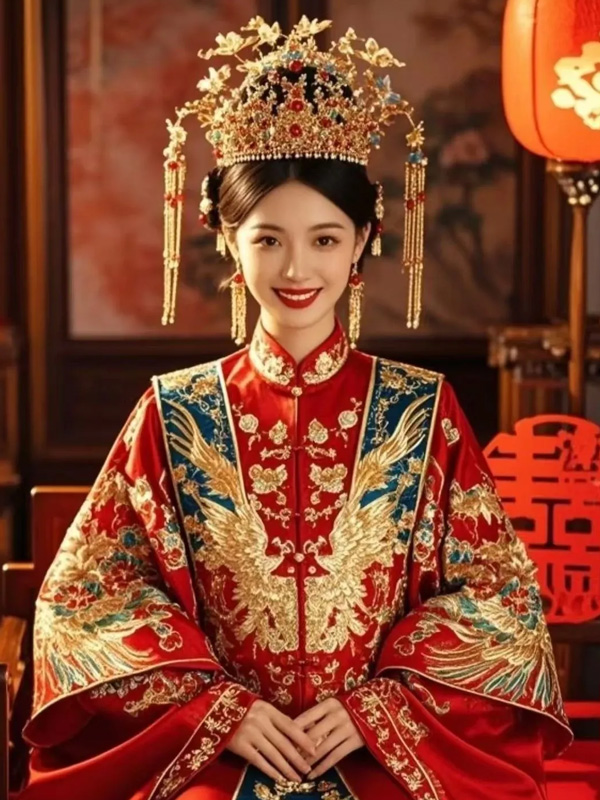
Beyond the bridal chamber, crimson commanded reverence in sacred spaces. Ritual garments often featured the profound pairing of deep black upper robes with vermillion lower garments. This combination embodied the harmony of heaven (black, profound mystery) and earth (vermilion, the life-giving soil). To don these colors was to literally drape oneself in the fundamental forces of the universe, moving with the solemn grace of twilight descending.
The mastery behind this enduring red lay in nature's alchemy. Artisans extracted the vibrant dye from the humble madder root, a process demanding immense skill and patience. This organic origin imbued the fabric with a unique, living depth, a richness impossible to replicate with synthetic means. The color wasn't applied; it was coaxed forth, becoming an intrinsic part of the textile's soul.
Celestial Blues
If crimson embodies power, the blues of Hanfu capture the elusive essence of poetry and transcendence. This spectrum, vast as the sky meeting distant mountains, ranges from profound indigos to the most ethereal, misty tones. The phrase "sky-blue awaits misty rain" finds its tangible form in layered silks. Picture a deep Zhiju (直裾) robe over a moon-white underlayer, evoking the stark beauty of an ink-wash landscape. A soft green Ruqun skirt paired with a pale spring-onion shawl mirrors the tender willow buds of a Jiangnan spring.
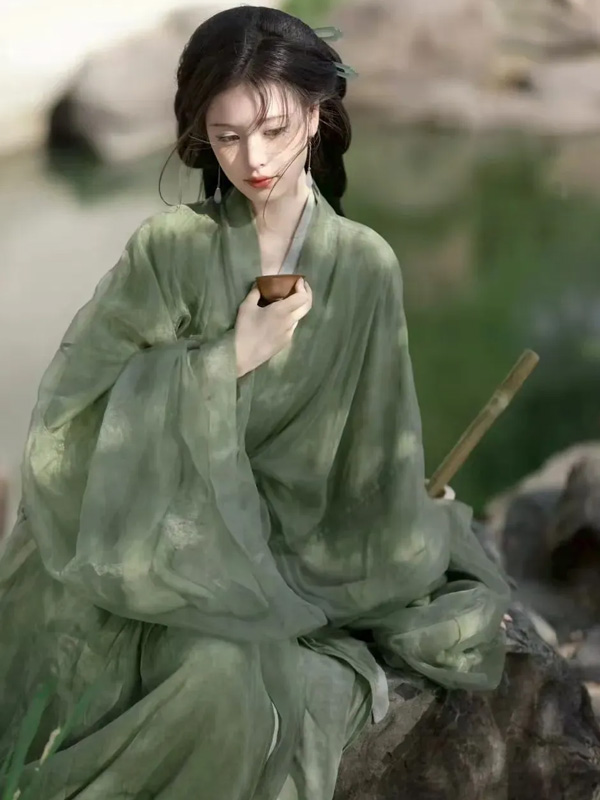
Scholars of the Song Dynasty held a particular fondness for Tianshui Bi – "sky-water jade." Legend tells this ethereal greenish-blue required fog or light rain during dyeing to achieve its perfect, misty saturation. Woven into scholarly robes, it created an aura of quiet contemplation; the wearer seemed enveloped in mountain haze, a walking embodiment of refined detachment.
Officialdom found its voice in deeper blues. The Ming Dynasty elevated mineral blue to prominence in court attire. This dignified, solid hue, often adorned with intricate rank badges, projected authority and unwavering stability. Derived from the indigo plant, these blues spoke of depth, knowledge, and the vastness of the heavens they sought to emulate.
Golden Threads
The journey of yellow in Hanfu mirrors a celestial decree turned earthly mandate. Ancient reverence for "heaven's mystery, earth's yellow" saw bright yellow initially linked to fertile soil and bountiful harvests, reserved for rituals honoring the earth. Its brilliance mirrored the life-giving sun. However, the Sui and Tang dynasties witnessed a dramatic shift: Zhehuang ascended to become the exclusive prerogative of the emperor, strictly forbidden to commoners.
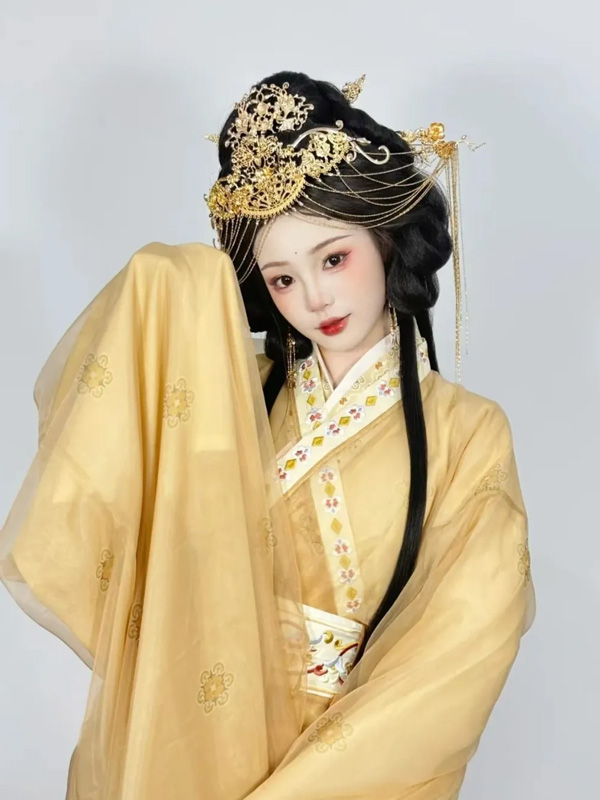
Yet, the allure of yellow couldn't be entirely confined. In the vibrant world beyond the palace walls, softer yellows flourished. Young women adorned themselves in Ehuang Ruqun skirts, perhaps accented with lilac shawls, embodying the fresh elegance of magnolia blossoms in spring. Luxurious Mamian skirts (马面裙) woven from amber-toned brocade captured sunlight, radiating a warm, luminous glow that celebrated nature's golden gifts.
Creating this imperial and beloved hue relied on the humble gardenia fruit. The extraction process yielded a spectrum of yellows, from pale sunshine to deep, rich golds. Techniques like Kesi tapestry weaving and intricate embroidery allowed these golden threads to create dazzling, textured effects. Yellow remained a color touched by the divine, whether worn by the Son of Heaven or subtly celebrated in the attire of the people.
Colorful Hanfu Tales
Today's Hanfu designers are breathing fresh life into this ancient palette. Revivalists meticulously recreate elusive historical shades like Haitianxia (sea-sky pink) documented in classical texts. Innovators boldly experiment, pairing traditional plant-dyed silks like Xiangyun Sha (香云纱) with contemporary elements such as contrasting fastenings. This dynamic interplay ensures the "Nation's Resplendent Colors" continue to evolve, their stories unfolding anew on global stages and city streets.
To wear Hanfu is to drape oneself in living history. Every fold whispers tales of emperors and poets, artisans and brides. The crimson pulse, the celestial blue sigh, the golden thread of destiny – these are not mere pigments, but the enduring heartbeat of a culture expressed through its cloth. Which hue speaks most profoundly to your sense of China's chromatic soul? Share your color story below!