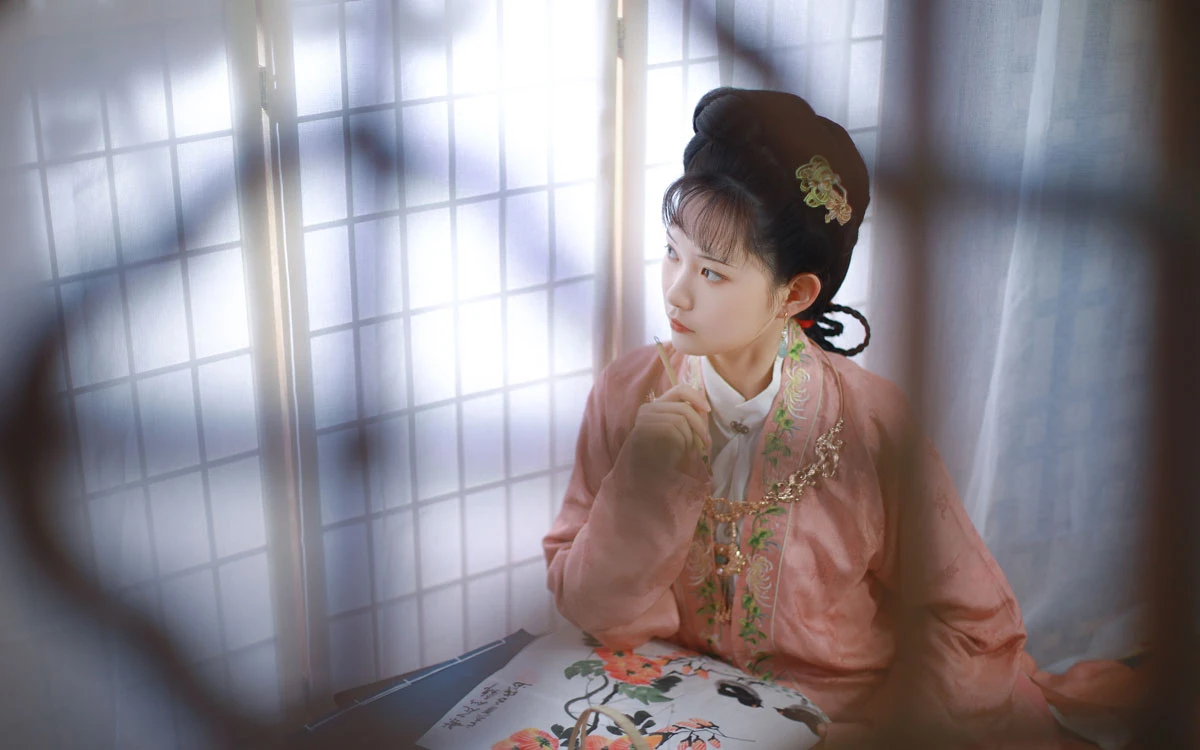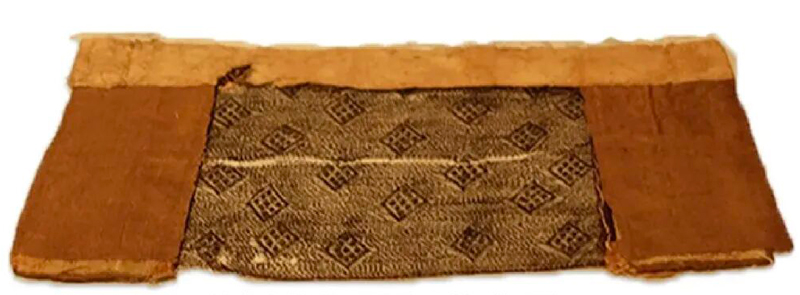
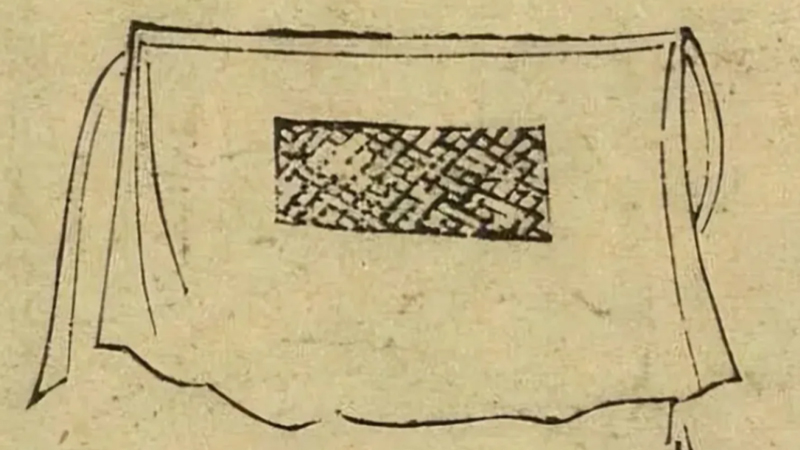
In a world where social anxiety feels like a modern epidemic, imagine stepping out with a face covering that hides your expression, blocks the sun, and excuses you from awkward greetings. Sounds like a designer gadget from today’s e-commerce sites, right? Surprisingly, this accessory existed centuries ago in Ming Dynasty China. It wasn’t a medical mask or a fashion statement for celebrities—it was the“eye veil,” a square silk cloth with two narrow slits for the eyes.
People wore it alone, tied behind the head, often made of thin gauze decorated with pearls. It kept dust away, shaded the face from harsh sun, and—most intriguingly—offered a perfect escape from social obligations. Think of it as a portable invisibility cloak for the socially overwhelmed. And one of its most famous fictional users? Jin Ping Mei’s (金瓶梅) notorious playboy, Ximen Qing (西门庆), who donned it to hide his identity while sneaking around town. But was he hiding from enemies—or from having to bow and chat? Let’s pull back the veil.
Face Hiding, Freedom Finding
Why would a grown man in the Ming Dynasty walk around with his face nearly covered? Portuguese missionary Álvaro Semedo, in his book History of the Great and Renowned Monarchy of China (大中国志), observed that officials often veiled their faces in public. He wrote: “They go masked through the streets, not only to protect against the immense dust but also for convenience, avoiding the ceremonies and expenses required by their rank. Since no one recognizes them, they can pretend not to see others, not stop, and not bow. This proves a truth: he who is not seen enjoys greater happiness and freedom.” In other words, the eye veil was a bureaucratic loophole. A covered face meant no mandatory greetings, no stopping for small talk, no draining social rituals. It gave the wearer permission to ignore.
Imagine that: an accessory designed for strategic avoidance. For the introverted scholar or the tired official, the eye veil was a godsend. He could walk down a crowded street, notice an acquaintance approaching, and simply keep walking—because “sorry, didn’t see you” was perfectly believable. This wasn’t just about shyness; it was about reclaiming autonomy in a society drowning in etiquette manuals. The Ming Dynasty had strict rules for every encounter: who bows first, how deep, what to say. The eye veil cut through all that. It offered a kind of silent rebellion, a way to move through the world without performing constant politeness. No wonder men wore it far more often than women.
Men’s Mask, Women’s Bare Face
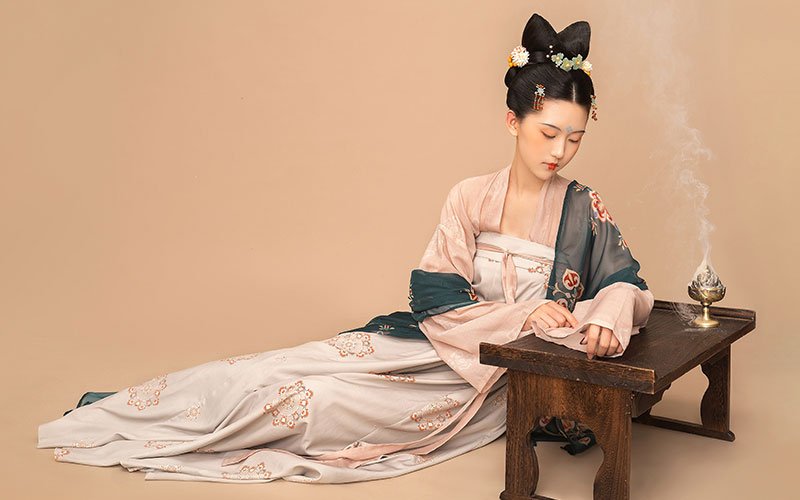
Here’s a twist: though we often assume ancient women were the ones hiding behind veils, the eye veil was primarily a male accessory. Women in the Tang Dynasty had used long veils like Mi Li (幂篱) or Wei Mao (帷帽) for modesty and protection, but by the Ming, that tradition had faded. Instead, elite women often went uncovered, while men covered up. Why? Because the eye veil served practical, not moral, purposes. Men used it to dodge tedious rituals, shield themselves from weather, or move incognito. Women, bound by different social codes, didn’t have the same excuse. A woman veiling her face might be seen as suspicious or immodest; a man doing the same was simply being clever. It reveals a curious gender dynamic: sometimes, covering up gave men more freedom, not less.
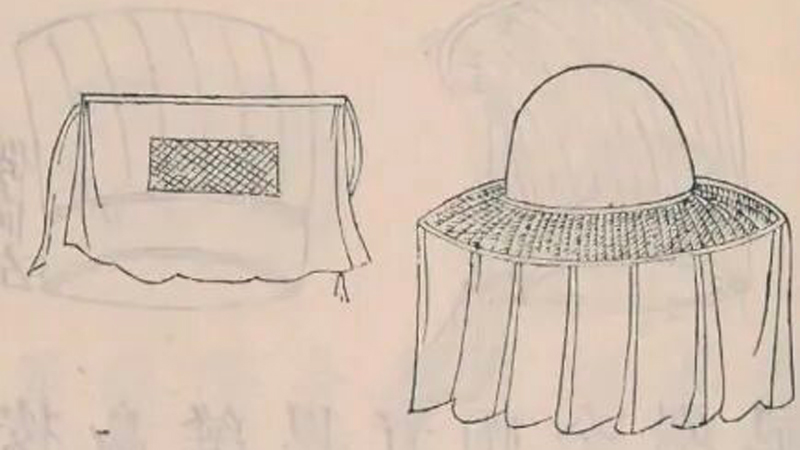
Take Ximen Qing from Jin Ping Mei. He wasn’t an introvert—quite the opposite. But he used the eye veil multiple times to hide his identity while visiting secret lovers or conducting shady business. The veil’s slits were often covered with dark gauze, making it easy for him to see out while others couldn’t see in. It was a one-way mirror for the street. For a character like him, the veil wasn’t about social anxiety—it was about power and deception. Yet the same tool could serve the shy scholar who just wanted to buy tea without exchanging pleasantries. That’s the beauty of the eye veil: it adapted to the wearer’s needs, whether villainous or vulnerable.
A Defiant Throw, A Lost Fashion
Not everyone appreciated the veil’s convenience. One famous story tells of Liu Tianmin (刘天民), a Ming official known for his integrity. When he was demoted and ordered to leave the capital, the custom required him to wear an eye veil as a sign of shame—admitting guilt. But Liu refused. In front of his former colleagues, he ripped off the veil and threw it away. He wanted everyone to see his face clearly, to know he had nothing to be ashamed of. That act of defiance turned the veil from a shield into a symbol. For him, hiding was lying. He chose exposure over comfort. It reminds us that even a simple piece of cloth can carry heavy meaning.
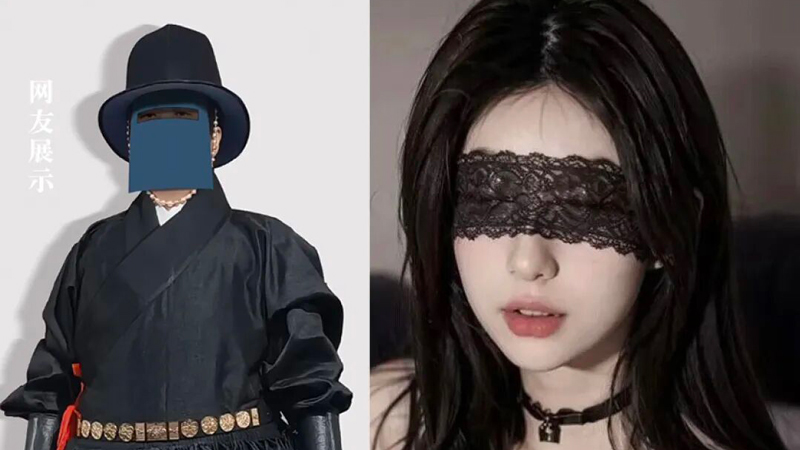
So what happened to the eye veil? By the late Ming and into the Qing, it gradually faded from daily use. Perhaps social norms shifted, or people found other ways to avoid each other. But the instinct behind it—the desire to be unseen, to slip through the world without constant social friction—has never disappeared. Today, we have sunglasses, hoodies, noise-canceling headphones, and even face masks that serve similar purposes. The Ming dynasty introvert’s welding-style face cover wasn’t so strange after all. It was just an early version of “please don’t talk to me.” And if you’ve ever crossed the street to avoid a chatty neighbor, you already understand why someone, centuries ago, tied a square of gauze around their head and breathed a sigh of relief.