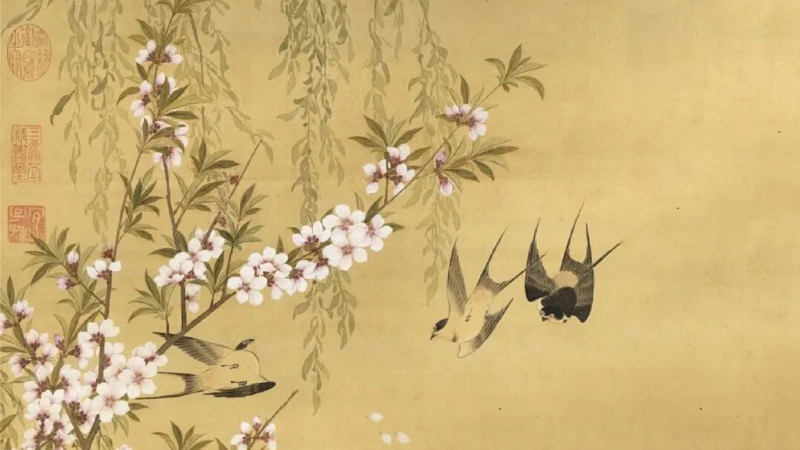
Before smartphones and roller coasters, how did the Chinese enjoy spring? The answer might surprise you. They didn’t just go outside—they turned every breeze, blade of grass, and blooming flower into a ritual of joy. From riverbank parties that produced masterpieces to kite-flying that cleansed the soul, ancient spring was anything but boring. Let’s step into their world and see why they laughed louder, played harder, and lived more poetically than we ever do with our screens.
1. Riverbank Outing
On the third day of the third lunar month, the Shangsi Festival (上巳节), everyone in Chang’an (长安) headed to the water. Du Fu (杜甫) captured it in his poem Beautiful People Walk (丽人行): “The air is fresh, and by the river, lovely ladies gather.” But this wasn’t a simple walk in the park. People bathed in the river to wash away bad luck, then picnicked on the grass. Nobles and commoners alike wore new clothes and carried food boxes filled with spring treats.
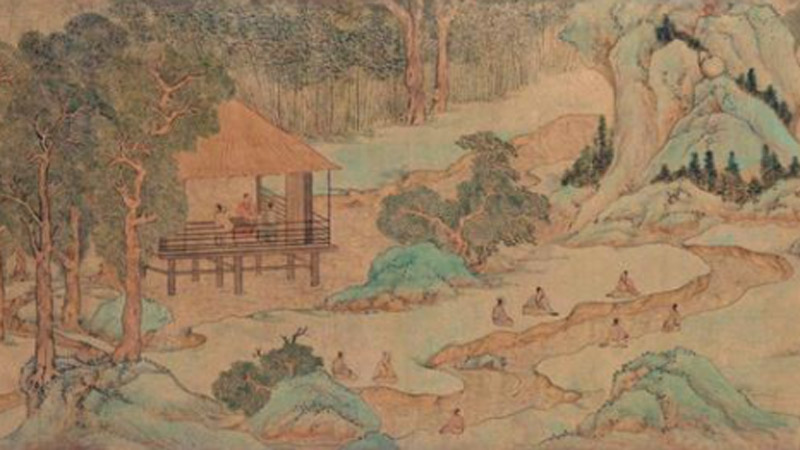
The real fun was Qushui Liushang (曲水流觞)—placing wine cups on a winding stream. Wherever a cup stopped, that person had to recite a poem. Fail? Drink three cups as punishment. During one such party in Shaoxing (绍兴), the calligrapher Wang Xizhi (王羲之) wrote Preface to the Orchid Pavilion Collection (兰亭集序), later called the greatest running-script work in history. We post selfies; they created timeless art.
Think about the difference. Our spring outings are filtered through a lens—what will look good on social media? Theirs was about being present: feeling the water, tasting the wine, hearing the rhymes. No wonder Du Fu’s poem still breathes with life over a thousand years later. The riverbanks of Chang’an taught them to celebrate not just the scenery, but each other.
2. Kite Cutting
For ancient children, spring meant one thing: flying kites. But these weren’t just toys. Originally called Zhi Yuan (纸鸢), kites served as military signaling devices during wars. By the Tang Dynasty, they had transformed into a widespread spring tradition. Yet the most fascinating ritual happened when the kite soared high. People would deliberately cut the string and watch it drift away.
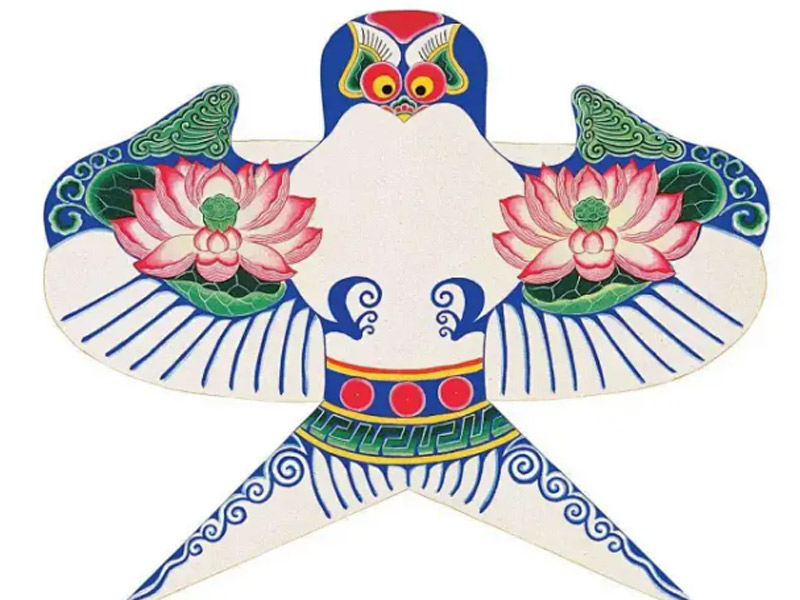
Why cut something you worked hard to fly? They called it Fang Huiqi (放晦气)—sending away bad luck. Every illness, every worry, every bit of misfortune from the past year was tied to that kite. As it disappeared into the clouds, people exhaled deeply, feeling the weight lift from their shoulders. It wasn’t just entertainment; it was therapy. A symbolic deep breath for the soul, high above the earth.
Today, we might scroll through bad news or vent on group chats. The ancients chose a simpler, more beautiful release. They watched their troubles float away on silk and bamboo. And then they smiled, ready for a fresh spring. Next time you hold a kite string, consider: what would you cut loose?
3. Swing Flying
The poet Li Qingzhao (李清照) wrote of a young girl just off a swing: “Lazy, she doesn’t bother to wipe her slender hands. Dew clings to thin petals, light sweat soaks her silk robe.” That image—breathless, rosy-cheeked, utterly alive—captures why swings were beloved by ancient women. Emperor Xuanzong (玄宗) of Tang called swings Banxian Zhi Xi (半仙之戏), or “half-immortal games,” because the flying maidens looked like celestial beings.
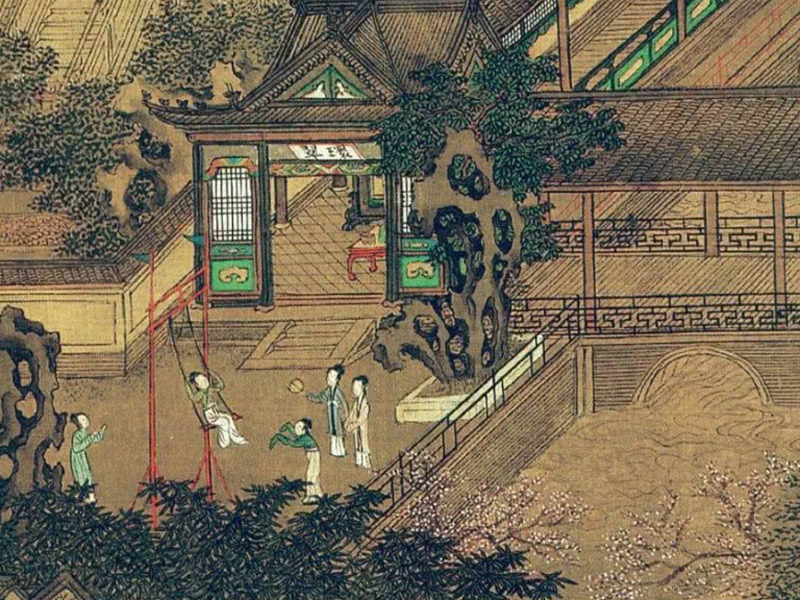
Swings weren’t just for giggles. The higher you soared, the more fortune you invited into your life. Courtyards echoed with laughter that drifted on spring breezes, breaking through the quiet walls of traditional homes. For women who rarely left their compounds, the swing offered a rare taste of freedom—a moment of weightlessness, both physical and emotional.
Think of it as their version of a roller coaster, but with grace instead of screams. No safety harnesses, no long lines. Just a rope, a plank, and the sky. Every push upward meant shaking off the earth’s worries. Every downward swoop brought them back to joy. In that rhythm, they found the heartbeat of spring itself.
4. Grass Duels
Children in ancient times played a game called Dou Cao (斗草), or grass duels. It came in two forms. The first was “martial”: two kids each pick a tough grass stem, cross them, and pull. Whoever’s stem breaks loses. Simple, noisy, and perfect for spring afternoons. The second was “civil”—a battle of wits. Players gathered hundreds of plants and took turns matching names in couplets.
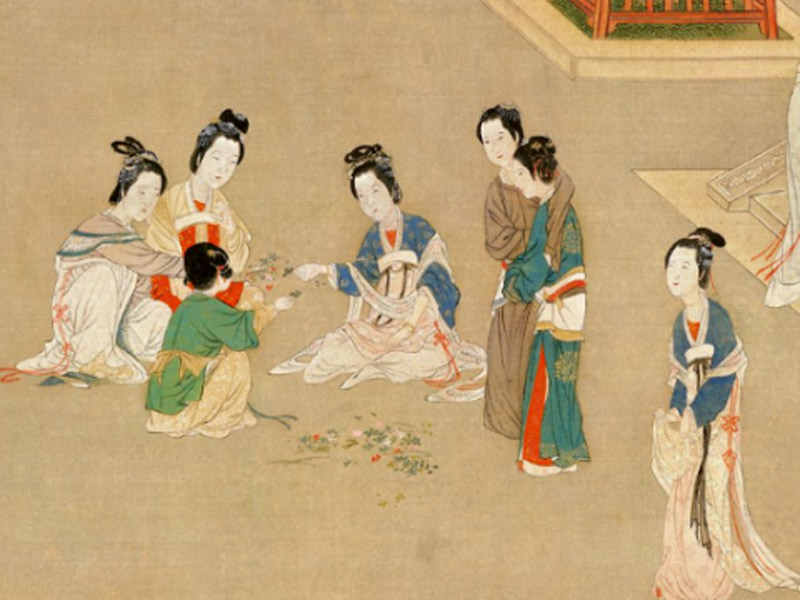
“I have Guanyin (观音) Willow.” “Then I have Arhat Pine.” “I bring Gentleman’s Bamboo.” “And I bring Beauty’s Banana.” These verbal duels taught children botany, poetry, and quick thinking. They learned the names of every flower as the twenty-four seasonal winds blew past. By spring’s end, a child could identify dozens of plants just by their literary aliases.
No flashcards, no apps. Just hands in the dirt and words in the air. That’s how ancient kids became nature’s experts. They didn’t study spring; they played with it. And in playing, they memorized every leaf, every petal, every hidden root. Today’s children might know Pokémon names. Those kids knew the real creatures growing under their feet.
5. Flower Festivals
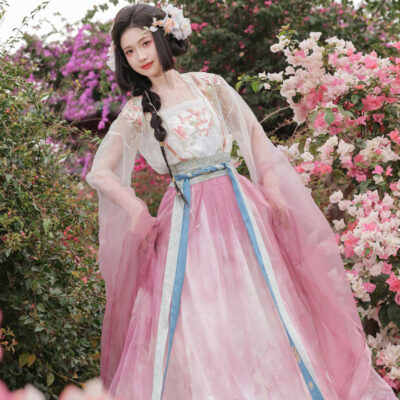
When peonies bloomed in Tang-era Chang’an, the city emptied. As the poet Liu Yuxi (刘禹锡) wrote, “Only the peony, true national beauty, moves the capital when it flowers.” People held feasts for the flowers, inviting friends to sit on the ground, drink wine, and admire petals until drunk. It was less a walk in a garden and more a full-blown celebration.
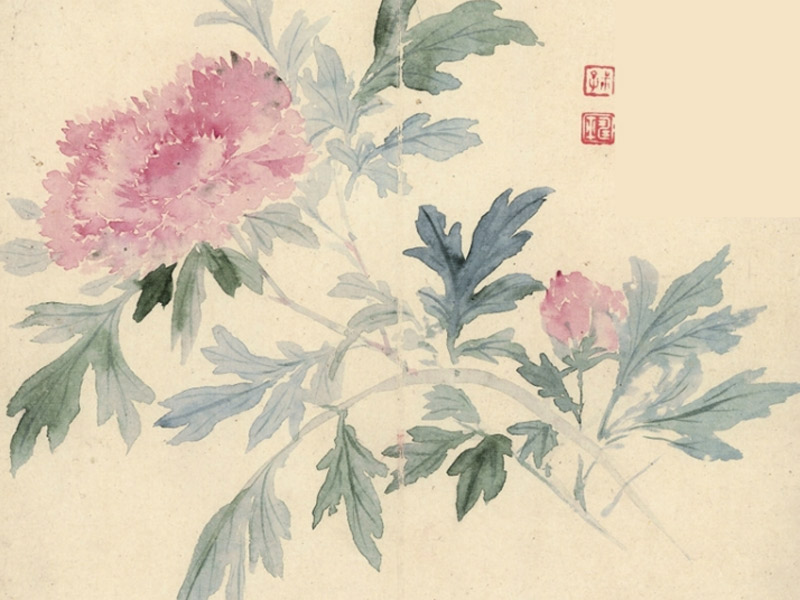
The Song Dynasty elevated this into the Huazhao Festival (花朝节) on the fifteenth day of the second lunar month—the birthday of all flowers. Women who rarely left home could finally go out, tie red ribbons on branches to “reward” the blossoms, and join butterfly-chasing parties. They honored the Flower God with incense and offerings, treating each bloom as a living guest.
Compare that to today: we snap a photo, apply a filter, and move on. The ancients sat with flowers. They drank to them, wrote poems for them, dressed up for them. A single blossom could inspire a whole afternoon of conversation and wine. They understood that flowers don’t exist for our cameras. They exist to remind us to pause, breathe, and feel awe. That’s not a hobby. It’s a way of living.
6. Willow Wearing
During the Qingming (清明) season, every household in ancient China inserted fresh willow branches above their doors. Children wove the green twigs into crowns and perched them on their heads. Young women tucked a single sprig behind an ear. Old folks hung willow over their eaves. The whole village turned a pale, lively green—the color of life returning.
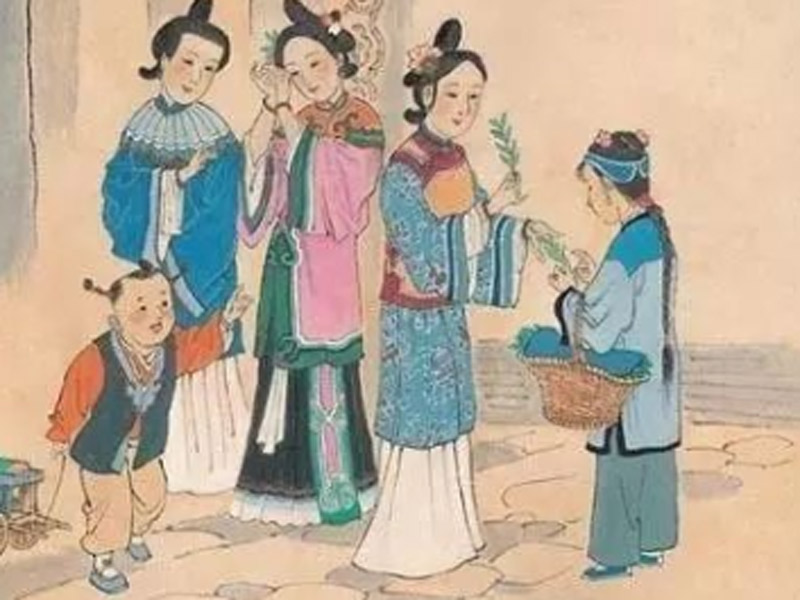
Why willows? Because they are the first trees to sense spring. The saying “Willow planted without intention grows into shade” (无心插柳柳成荫) speaks to their stubborn vitality. The ancients believed that wearing willow warded off evil and disease. It also meant capturing spring itself—keeping its freshness close to the body, like a living talisman.
This was spring worn as jewelry. No gold, no jade—just tender branches and soft leaves. The sound of willow whistles (柳笛) blown by running children filled the air. The sight of green against dark hair brightened every lane. We spend fortunes on designer brands. They spent nothing but a moment’s reach into a tree. And yet, their adornment breathed with the season. Ours just sits in a closet.
So what’s the real difference between their spring and ours? Not technology. Not money. Just a willingness to slow down, to touch the earth, to play without purpose. The ancients had no WiFi, but they had wind. They had no filters, but they had flowers. And they knew—every spring comes only once. Don’t scroll past it. Step into it.







this was a fantastic article, thank you!!!
So glad you enjoyed it! 😊